













Table of Contents
Related Products
$0.50 Original price was: $0.50.$0.10Current price is: $0.10.
In Stock
$0.50 Original price was: $0.50.$0.10Current price is: $0.10.
In Stock
$0.50 Original price was: $0.50.$0.10Current price is: $0.10.
In Stock
$0.50 Original price was: $0.50.$0.10Current price is: $0.10.
In Stock
Get A Free Quote
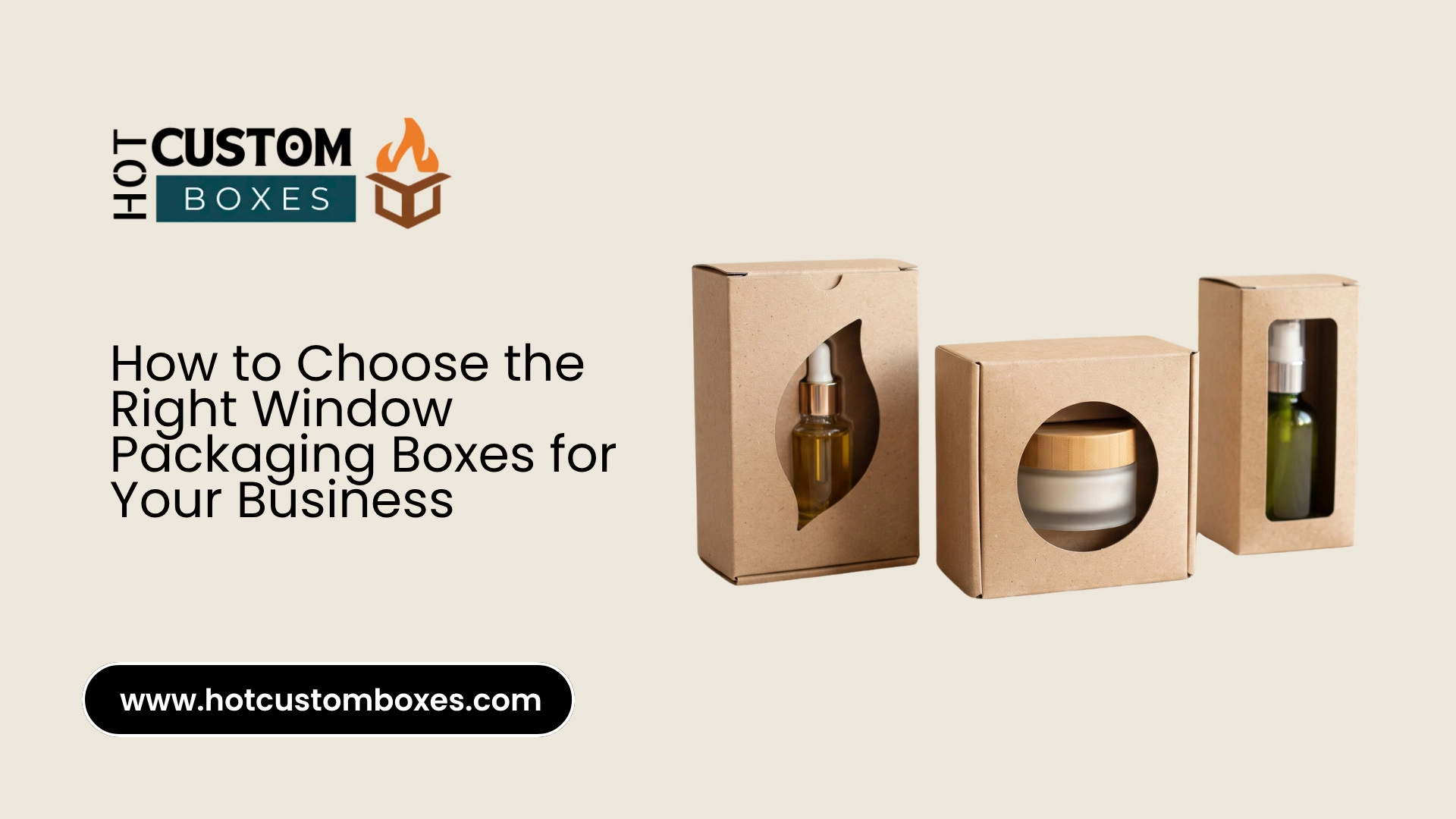
Start with the product when choosing window packaging boxes. It needs a box that fits, offers suitable protection and shows the details customers want to see. A handmade soap bar has different needs from a fragile candle jar. A bakery assortment needs a different approach again.
Give the window a clear job. Perhaps it needs to show the product’s colour or a decorative pattern. For a gift set, it might reveal several items together. Either way, its size and position should leave the box strong enough to support what’s inside.
Choosing a suitable design means checking product requirements and materials first. Window placement and branding matter too, along with how the box will work during packing and everyday handling.
What Should You Consider Before Choosing Window Packaging Boxes?
First, work out what the packaging needs to do. Is it holding one item on a retail shelf? Will it present a gift assortment or sit inside a shipping carton?
Custom window packaging boxes combine a visible opening with a surrounding structure. Both parts need to suit the contents. Note the product’s size and weight, then write down its protection requirements and the detail customers should see.
Think about the people packing it too. A sample carton might look right but take too long to put together during a busy production run.
Understand Your Product’s Packaging Requirements
Let the product lead the decision. Look at its shape and surface, then consider its condition. Those details affect how the box should hold it and what customers should see.
Product Type and Physical Features
Measure the whole product. Include the lid and handles, along with wrappers or anything else that sticks out. Check its weight and whether it stands securely in the planned position.
A simple folding carton may work for a lightweight cosmetic tube. A heavy glass jar may need a stronger base with an insert to hold it steady.
Fragility and Surface Protection
Consider what happens if the contents shift. Glass might hit the carton walls. A decorated surface could rub against the window film instead.
Add suitable supports where they’re needed. Keep the product in view while limiting movement and pressure on delicate areas.
Moisture, Grease and Light Sensitivity
An ordinary window carton can’t provide every kind of protection by itself. Soap may need suitable wrapping. Bakery items might require a grease resistant liner.
Check light sensitive products carefully too. A transparent opening exposes part of the contents or container, so the display design needs to suit the product’s storage requirements.
Choose a Box Size That Fits the Product
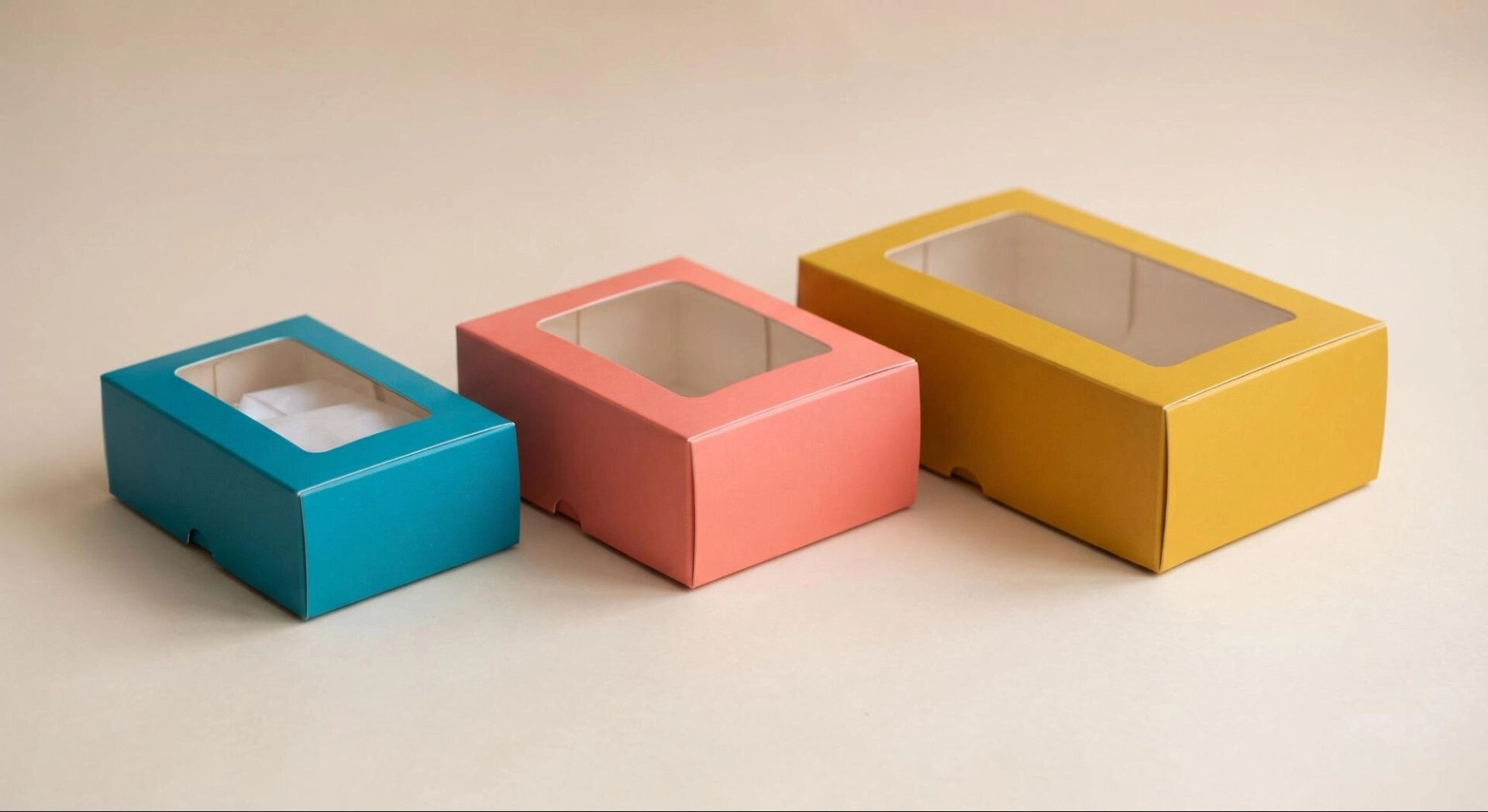
Getting the fit right makes packing easier. It also helps the product line up with the window. A tight box can make loading awkward while too much space lets the contents shift.
Check window packaging box dimensions using the correct measurement reference. Internal dimensions help you assess product fit. External dimensions describe the closed box and are useful for planning shelf space, storage and shipping cartons.
Take a product measuring 5 × 3 × 2 inches. An insert or loading clearance will need extra room. Don’t order a box with those exact measurements until you’ve checked how the complete product fits inside.
Packing a set? Arrange the items first. Include dividers and accessories when measuring the full layout.
Custom window box sizes can help if stock formats waste space or don’t hold the planned arrangement properly. Check the suggested size with an assembled sample before deciding.
Select a Suitable Packaging Material
Consider how much the product weighs and how people will handle it. Presentation matters too. When choosing materials for window packaging boxes, compare the actual board grades rather than relying on material names alone.
| Material | When to consider it | What to check |
|---|---|---|
| Kraft paperboard | Simple designs with a natural brown appearance | Strength and print appearance, plus product compatibility |
| SBS paperboard | Folding cartons with white surfaces and detailed graphics | Board thickness and rigidity, along with printed sample quality |
| Corrugated board | Products needing greater structural support or cushioning | Flute type and packed strength, plus window construction |
| Rigid board | Structured gift presentations and selected premium sets | Weight and insert fit, along with assembled storage space |
“Cardboard” covers a broad range of materials. Two cardboard window boxes may have quite different thicknesses and strengths.
Choose around the product itself. Appearance is only part of the decision. A heavier board won’t automatically fix a weak closure or a base that lacks support.
Decide What the Window Should Reveal
Clear product visibility is one of the benefits of custom window packaging boxes. The opening should show something that helps customers assess the item. Making it larger only helps if it reveals a relevant detail and leaves enough board to support the box.
Show the Most Useful Product Detail
What would customers otherwise open the box to check? It might be a soap pattern or a cookie decoration. For a skincare jar, it could be the label.
Place the opening where that detail sits. An insert, wrapper seam or patch of empty space shouldn’t take up most of the view.
Match the Window to the Display Position
Work out how the box will sit. An upright carton may suit a front window. A gift box displayed flat might work better with an opening in its lid.
Then look from the customer’s angle. A window can look effective on a flat drawing yet be hard to see once the box reaches a shelf.
Balance Visibility With Structural Support
The board left around the opening helps hold the carton together. Cut away too much and the borders may become narrow. Folds or closures could be affected too.
Have the supplier check the window on the dieline. Its position and size need to suit the chosen structure and the product’s weight.
Choose Between a Covered Window and an Open Cutout
You can cover a window with transparent film or leave the opening uncovered. Each format serves a different purpose.
With a covered opening, a screen sits between the visible product area and anyone handling the box. That may suit products whose surfaces customers should see without touching.
An open cutout exposes the displayed area unless separate wrapping covers the product. It can work for selected products. But you’ll need to consider dust and handling, as well as storage.
Film covered window boxes aren’t automatically airtight or waterproof. They aren’t automatically tamper evident either. If the product needs a moisture barrier or sealed container, it still needs those parts. The same applies to protective wrapping.
Check that the chosen film suits the intended use. Confirm its suitability for any potential contact with the product too.
Pick a Box Style That Works in Daily Use
Think through packing and display, then consider how customers will handle the box. Compare the way each structure opens and closes. Check how it supports the contents as well.
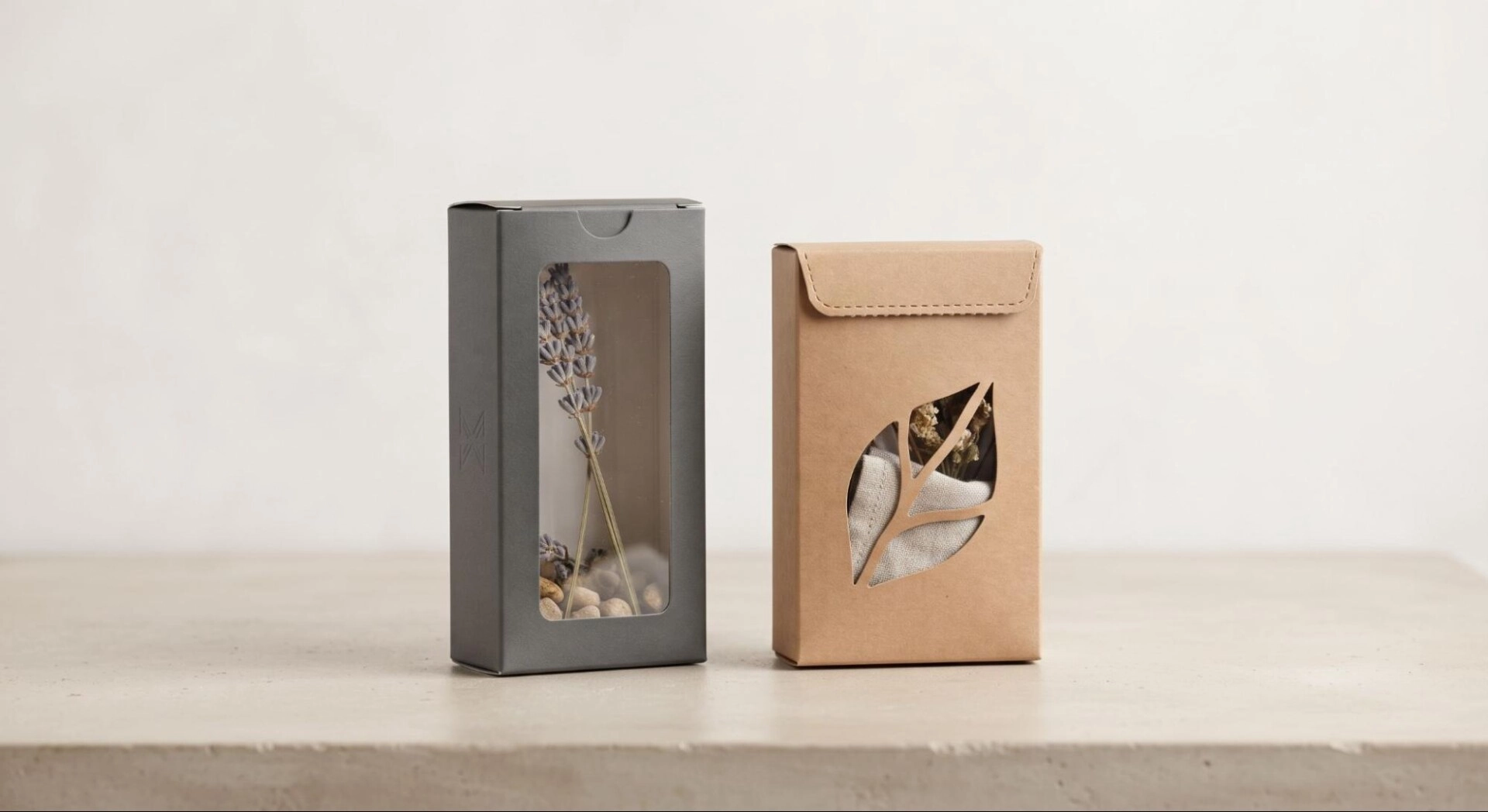
Tuck End Window Boxes
For individual retail products, tuck end boxes can provide a compact folding carton. Printed panels sit around an opening on the front or side.
Check that the closure holds and the product doesn’t push against the flaps. The team packing the order should be able to load it easily too.
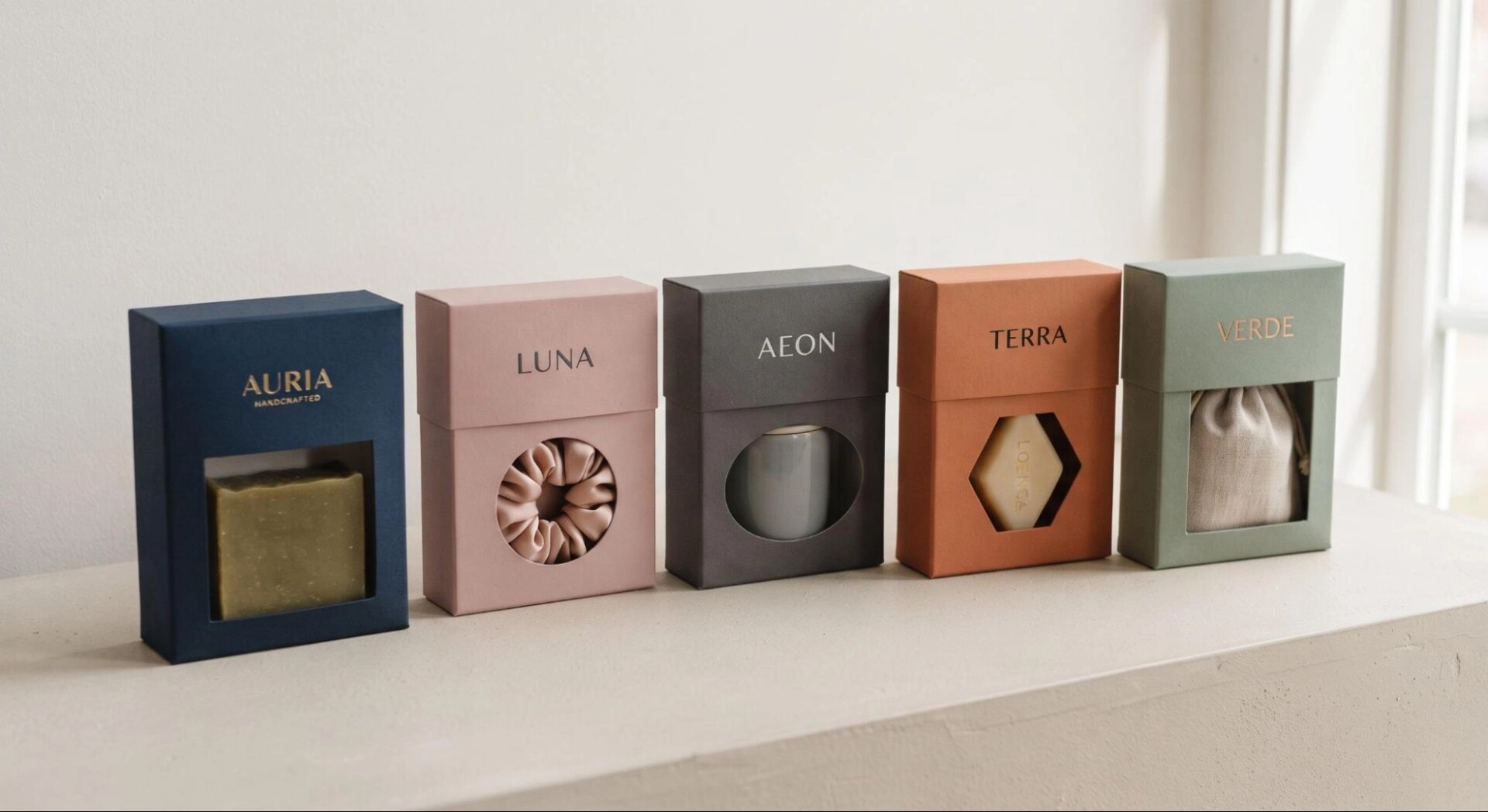
A sleeve may show part of the product or slide over a separate tray. Organised assortments and gift presentations can suit this format.
The tray needs to keep the contents secure. Check that the sleeve stays in place during expected handling but still comes off without difficulty.
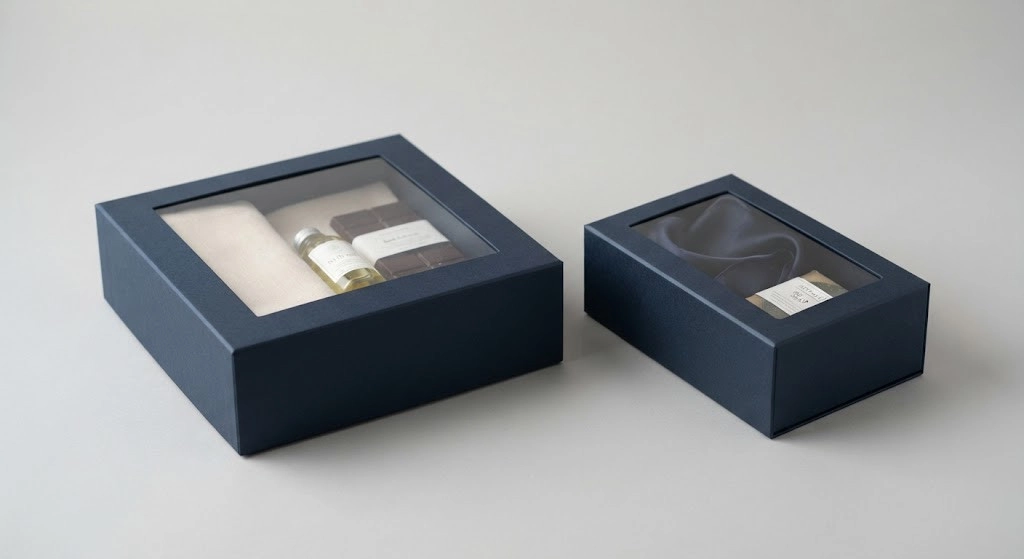
Window Gift Boxes
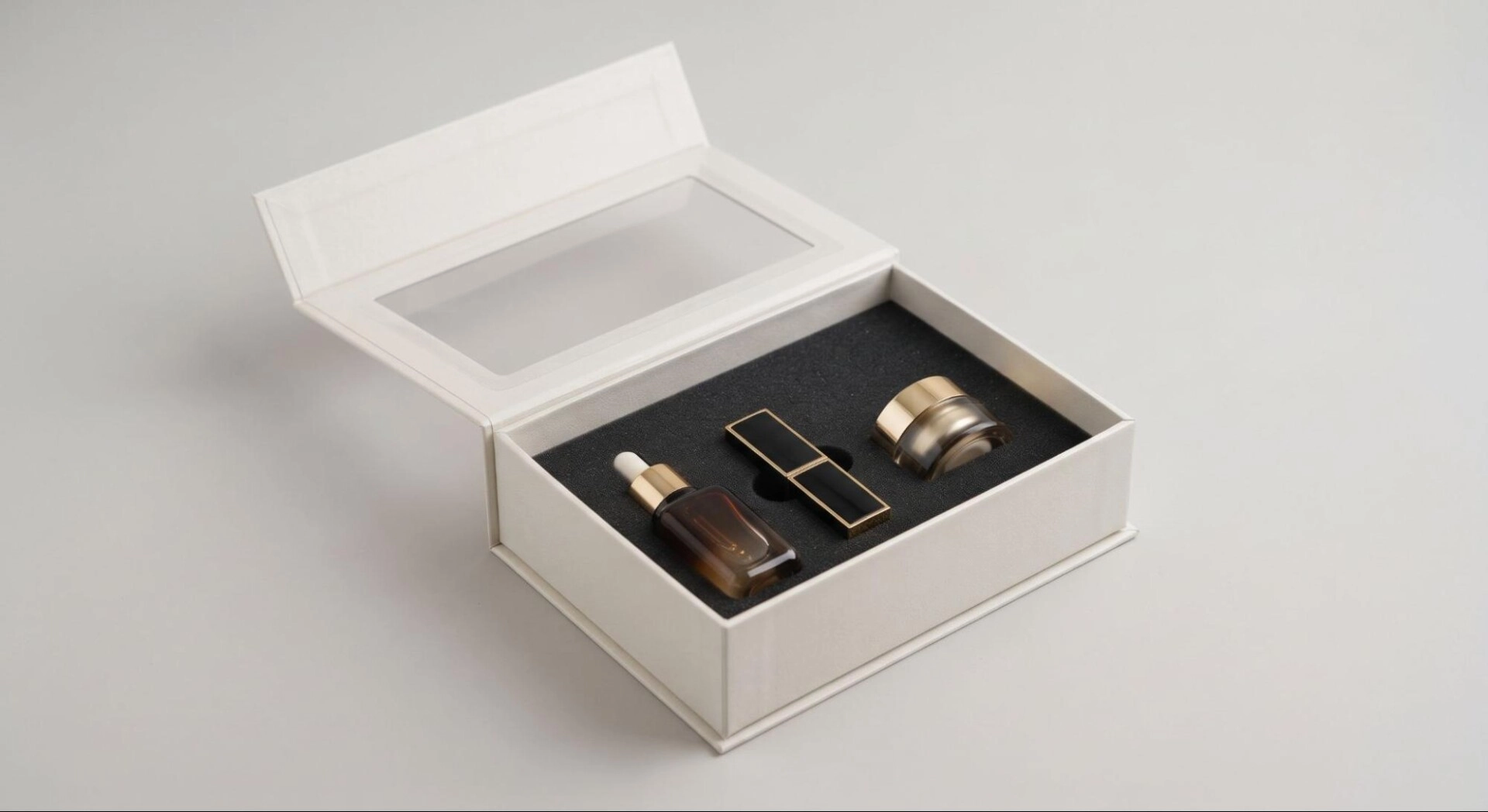
Several coordinated items can share one opening in window gift boxes. How well that works depends on whether the contents stay in their planned positions.
An insert can hold each item facing the window. Look at the shorter products too. Taller containers shouldn’t hide them.
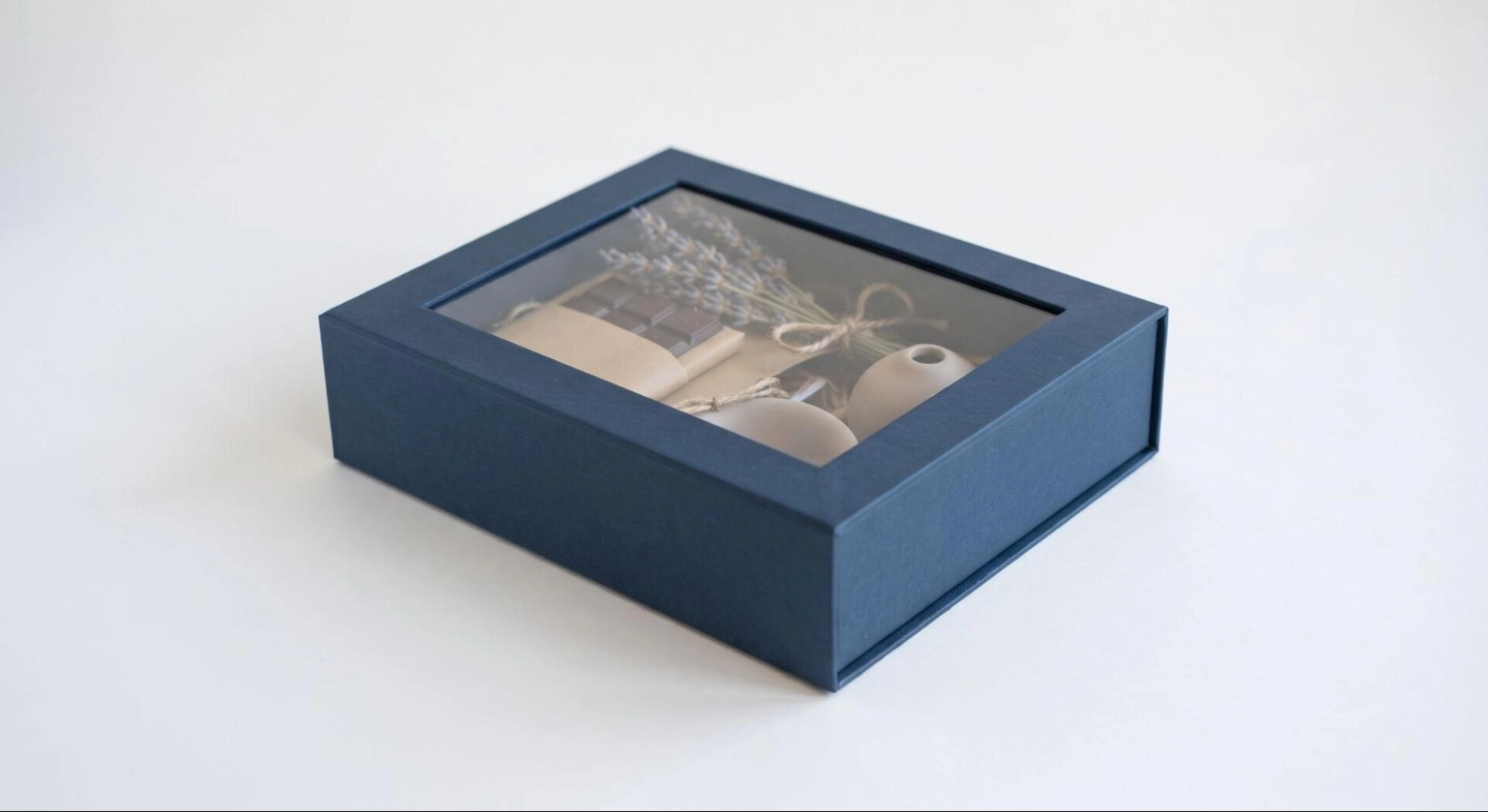
Window Display Boxes
When seeing the product helps customers compare options, window display boxes can support its retail presentation. Check the planned shelf position before settling on the format.
Consider replenishment and how staff will handle the pack. It needs to stand steadily on display and be easy to identify from the front.
Use Inserts When Products Need Support
Protective inserts and dividers limit movement inside the box. They can be particularly useful with fragile containers or several items. Products that need to face a set direction may need them too.
For example, a candle jar can rotate in a loose carton. Its label then turns away from the opening. A fitted insert can help hold it in line.
In window boxes for soap and skincare packaging, inserts can keep a soap pattern or container label facing the customer. They can also organise several products within one gift set.
Choose an insert for a specific reason. It should hold the product without making removal awkward. It shouldn’t cover the detail you added the window to show.
Check the insert with the product in place. An empty carton won’t tell you whether the packed arrangement actually works.
Keep Branding and Product Information Clear
Plan the information before finalising the cutout. Custom printed window boxes need enough room for a readable brand name and product name. Key details need space alongside the opening too.
The front panel should help customers identify the product quickly. Longer information can go on other panels where that makes sense.
Products in a range can share a consistent design. For example, Several soap varieties might use one window shape. Different printed colours and scent names can separate the varieties.
Check which labelling requirements apply to your product and sales market. Don’t assume a label visible inside the box replaces information that must appear on the outer packaging.
Match the Packaging to Your Sales Channel
Where and how you sell a product can change the support its packaging needs. The product may stay the same. Its packaging requirements may not.
Retail Stores
Plan retail window packaging around its shelf or counter position. Customers should be able to read the product name and see the relevant detail without moving several boxes.
Check how steadily it stands. Tall cartons need to stay secure and the planned display should leave the window visible.
Online Orders
A presentation carton may need cushioning inside a separate shipping box for delivery. Don’t expect a window box made for shelves to withstand parcel handling on its own.
Test the whole packed order with the outer carton included. The product needs to arrive with its display packaging in suitable condition.
Gift and Seasonal Sales
Gift packaging often holds several products in a planned arrangement. Allow for accessories and message cards. Include any wrapping around individual items too.
Think through the recipient’s first opening. The contents should stay supported as the lid lifts or the tray comes out.
Review Environmental Claims Carefully
Assess the whole pack if sustainable packaging forms part of your brief. Brown board alone doesn’t establish environmental performance. Neither does a small window.
Find out what the carton and film contain. Ask about inserts and coatings too. Check whether customers need to separate the parts and whether the intended disposal route exists where they live.
When comparing eco-friendly window packaging, ask for evidence behind specific claims. Broad descriptions don’t give you much to assess. Clear details about materials and disposal provide a firmer basis for comparison.
You can also simplify the pack by removing parts it doesn’t need. Keep enough protection, though. Damaged or wasted products still need to be prevented.
Compare Complete Quotes and Practical Costs
Several specifications affect window packaging box costs, so give each supplier the same requirements. Otherwise, quotes become hard to compare. One might include an insert and delivery while another covers the printed carton alone.
Check the following details:
- Box and window specifications: Confirm the internal dimensions and board grade. Check the opening position and film requirements too.
- Printing and additional components: Find out which printing and finishes are included. Check inserts and any setup work charged separately.
- Supply and delivery terms: Review the order quantity and production time. Confirm delivery charges and whether the boxes arrive flat or assembled.
The price per box is only part of the cost. Assembly takes time. Storage uses space and unused stock also affects how well an order suits your business.
Bulk window packaging may reduce the unit cost. Still, the quantity needs to fit expected demand and the storage you have available.
Request a Sample Before Approving Production
Put the actual product inside a sample. That gives you a chance to assess the packaging properly and find problems that artwork can be hard to show.
Try loading it first. Check that the closure holds securely and the contents stay aligned with the window. Look through the visible area for glare or distortion. Watch for anything blocking the view too.
Read the printed information at its finished size. Text can look clear on a large screen and become difficult to read on the actual carton.
Where relevant, test the complete packaging in the storage and display conditions you expect. Include transport conditions too. Discuss any changes before approving the production specification.
Common Mistakes to Avoid When Choosing Window Packaging
Approving the look before checking how the box works can cause several problems.
- Choosing an oversized opening: A wider view doesn’t always make a better pack. Leave enough support around the window and room for information.
- Using external dimensions to judge fit: Check the internal space available for the product. Board layers and closures take up room, as do inserts.
- Overlooking the packed product: Include the lid and wrapper when testing. Accessories need to go in too. An empty carton can’t confirm the final fit.
- Treating display packaging as complete protection: The product may still need wrapping or a primary container. Inserts or a separate shipping carton may also be necessary.
- Ordering before checking a sample: Check the product’s alignment and the closure. Test handling too, before committing to the full quantity.
Choose Window Packaging Around Your Product
A suitable window packaging box fits the product and shows a useful detail. It also supports normal packing and handling. The material and structure need to work with the inserts and printed information.
Set out the product requirements first. Then check the proposed design with a sample. It’s easier to judge presentation and everyday use when you can assess them together.
Businesses considering custom window packaging can discuss their requirements with Hot Custom Boxes. Share the product details and explain the intended display to help identify a suitable design.
Frequently Asked Questions About Choosing Window Packaging Boxes
Measure the product as it will sit inside the box. Include lids and wrapping, plus any accessories. Allow room for inserts and suitable loading clearance.
Use internal box dimensions to check the fit. Then confirm the proposed size with an assembled sample containing the actual product.
Product weight and handling affect the choice. Presentation matters too. Paperboard may work for lightweight retail items while other needs may call for corrugated or rigid structures.
Compare actual board grades. Test the complete design instead of relying on the material name alone.
Show the product detail customers need to see. A small window might reveal a pattern or colour perfectly well. A gift set may need more of the contents on view.
Check the structure before deciding. The opening still needs to leave enough support and space for printed information.
Some can work within a shipping system. A display carton may require cushioning and an outer shipping box. Suitability comes down to the product and complete packed design.
Assess transport protection separately. How the carton looks on a shelf doesn’t confirm how it will handle delivery.
Yes, if the products have similar sizes and weights, with similar support needs. Different inserts or printed details may help customers tell the variants apart.
Test each item separately if the products vary greatly. A shared structure could leave empty space or put the product out of line with the window.
Send product measurements and weight, along with quantity and intended use. Explain the preferred structure and which area should be visible. Include artwork and any protection requirements too.
Photos can help the supplier assess fit and window placement. A physical product sample can help with that assessment as well.
Related Products
$0.50 Original price was: $0.50.$0.10Current price is: $0.10.
In Stock
$0.50 Original price was: $0.50.$0.10Current price is: $0.10.
In Stock
$0.50 Original price was: $0.50.$0.10Current price is: $0.10.
In Stock
$0.50 Original price was: $0.50.$0.10Current price is: $0.10.
In Stock