













Table of Contents
Get A Free Quote
Choosing a greeting card size may feel simple until you compare card codes, folded dimensions, envelopes and printing requirements. A birthday card needs enough room for a personal message while a photo card must suit the image proportions. Business greetings may also need space for branding and signatures without increasing mailing costs.
This guide explains common greeting card dimensions. It also clarifies the difference between North American stationery formats and ISO paper sizes. You will learn how to measure folded cards, select matching envelopes, prepare artwork with bleed and choose suitable dimensions for birthdays, holidays, invitations and other occasions.
What Are Standard Greeting Card Dimensions?
There is no same standard greeting card size works for every country, occasion or printing company. In the United States, 5 × 7 inches is one of the most common finished sizes. Smaller A2 cards measuring 4.25 × 5.5 inches are also widely used for thank you notes and personal correspondence.
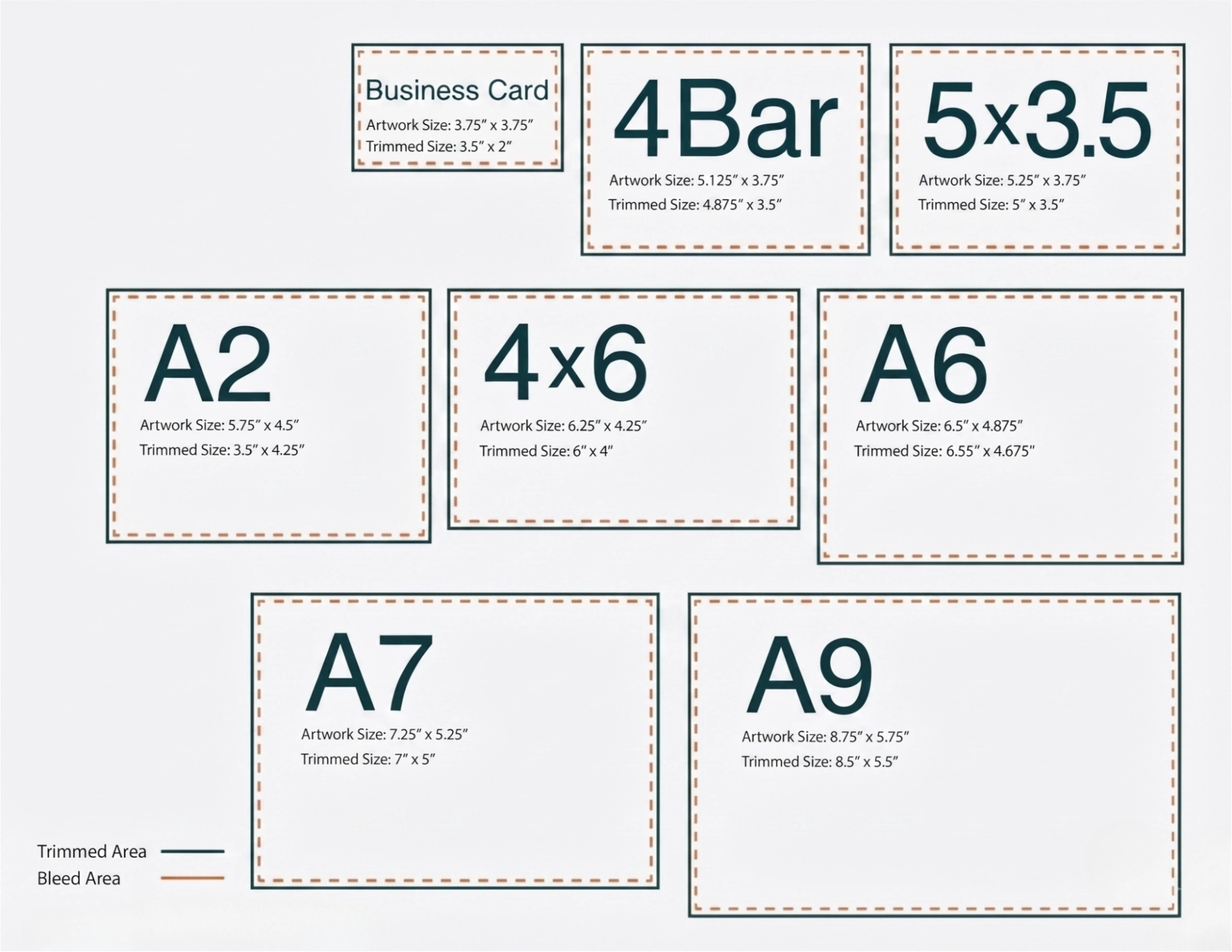
The term “standard” generally refers to dimensions that work with readily available envelopes and common printing equipment. North American A2, A6, A7 and A9 card codes describe stationery formats. These codes should not be confused with ISO paper sizes used internationally.
For example, a North American A7 greeting card commonly measures 5 × 7 inches. ISO A7 paper measures only 74 × 105 millimeters. Always confirm which sizing system a printer or supplier uses before moving forward.
Understand Folded Size, Flat Size and Orientation
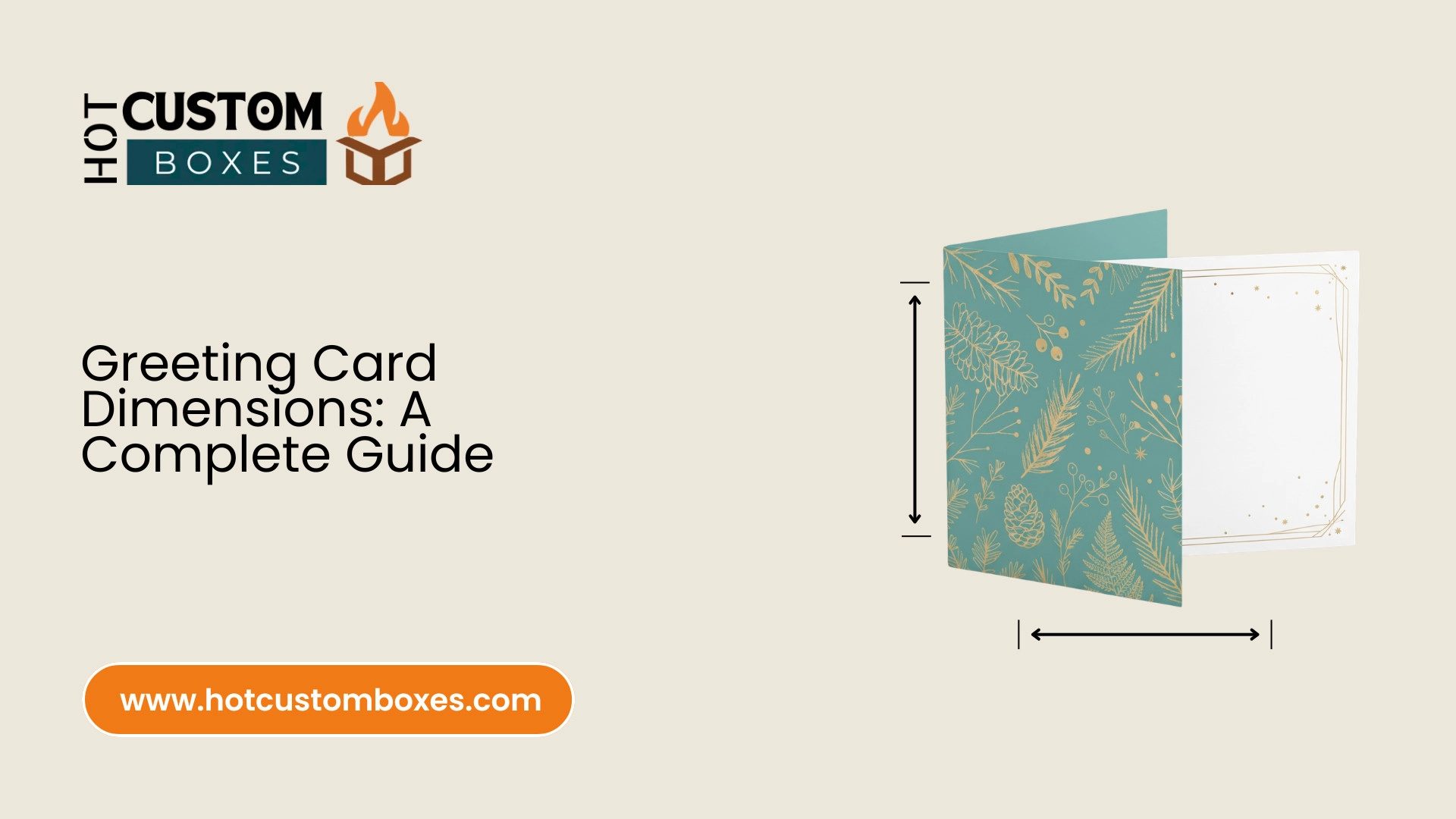
Greeting card dimensions may refer to the finished card, its open flat sheet or the complete artwork file. Understanding these measurements helps prevent printing and envelope fitting problems.
Folded or Finished Size
The folded size is the card’s final width and height after production. A 5 × 7 inch folded card. Product listings and envelope recommendations typically use this finished measurement.
Flat or Unfolded Size
The flat size represents the complete open sheet before folding. A side fold card has twice the finished width while a top fold card has twice the finished height.
| Card Format | Finished Size | Flat Size |
| Side fold A2 card | 4.25 × 5.5 in | 8.5 × 5.5 in |
| Top fold A2 card | 4.25 × 5.5 in | 4.25 × 11 in |
| Side fold A7 card | 5 × 7 in | 10 × 7 in |
| Top fold A7 card | 5 × 7 in | 5 × 14 in |
Portrait and Landscape Orientation
A portrait card is taller than it is wide. A landscape card is wider than it is tall. Changing the orientation does not normally change its size category. A 5 × 7 inch portrait card and a 7 × 5 inch landscape card use the same basic dimensions.
Common North American Greeting Card Sizes
North American stationery sizes are used throughout the United States and Canada. Their letter and number codes do not correspond directly with ISO paper formats.
| Card Code or Format | Finished Size | Approximate Metric Size | Common Uses |
| A1 | 3.5 × 4.875 in | 89 × 124 mm | RSVP cards and short notes |
| A2 | 4.25 × 5.5 in | 108 × 140 mm | Thank you and everyday cards |
| A6 | 4.5 × 6.25 in | 114 × 159 mm | Invitations and photo cards |
| A7 | 5 × 7 in | 127 × 178 mm | Birthday, holiday and formal cards |
| A9 | 5.5 × 8.5 in | 140 × 216 mm | Large greetings and group cards |
| Photo format | 4 × 6 in | 102 × 152 mm | Flat greetings and photo cards |
| Small square | 5 × 5 in | 127 × 127 mm | Modern greetings and invitations |
| Large square | 6 × 6 in | 152 × 152 mm | Decorative and premium cards |
| Slim format | 4 × 9 in | 102 × 229 mm | Panoramic artwork and announcements |
ISO Greeting Card Sizes in Inches, Millimeters and Centimeters
The ISO 216 system is common outside North America. Each A series sheet maintains the same aspect ratio when divided in half. This relationship makes the system convenient for printing and folding.
| ISO Format | Millimeters | Centimeters | Approximate Inches | Common Use |
| A7 | 74 × 105 mm | 7.4 × 10.5 cm | 2.9 × 4.1 in | Mini cards and gift notes |
| A6 | 105 × 148 mm | 10.5 × 14.8 cm | 4.1 × 5.8 in | Compact greeting cards |
| A5 | 148 × 210 mm | 14.8 × 21 cm | 5.8 × 8.3 in | Large greetings and invitations |
| DL | 99 × 210 mm | 9.9 × 21 cm | 3.9 × 8.3 in | Slim cards and announcements |
| Square | 148 × 148 mm | 14.8 × 14.8 cm | 5.8 × 5.8 in | Contemporary square cards |
Greeting Card Dimensions by Occasion
The best card size depends on the message, artwork, number of photographs and available writing space. The following formats suit common personal and commercial use on different occasions.
Birthday Card Dimensions
- 5 × 7 inches: Ideal for illustrations, wishes, and handwritten messages.
- 4.25 × 5.5 inches: Best for brief messages and compact designs.
- 5 × 5 inches: Great for modern artwork and decorative layouts.
- 6 × 6 inches: Suitable for creative and detailed designs.
- 5.5 × 8.5 inches: Best for group messages and multiple signatures.
Holiday and Christmas Card Dimensions
- 4 × 6 inches: Best for simple photo greetings.
- 5 × 7 inches: Ideal for family photos and longer messages.
- 4.25 × 5.5 inches: Good for bulk mailing.
- 5 × 5 inches: Offers a unique square design.
- 4 × 9 inches: Great for panoramic photos and business greetings.
Thank You Card Dimensions
- 4.25 × 5.5 inches: Popular for thank you notes and handwritten messages.
- 3.5 × 5 inches: Best for short notes and product inserts.
- 4 × 6 inches: Suitable for printed messages.
- 5 × 7 inches: Ideal for formal messages, photos, or multiple signatures.
Wedding and Invitation Card Dimensions
- 5 × 7 inches: Ideal for names, dates, locations, and decorative details.
- 4.25 × 5.5 inches: Suitable for information cards and event details.
- 3.5 × 4.875 inches: Common for RSVP cards.
- 4 × 9 inches: Works well for programs, menus, and schedules.
Business Greeting Card Dimensions
- 4.25 × 5.5 inches: Great for customer notes and order inserts.
- 5 × 7 inches: Provides space for formal greetings and illustrations.
- 4 × 9 inches: Suitable for announcements and additional information.
Sympathy and Get Well Card Dimensions
- 4.25 × 5.5 inches: Suitable for short, personal messages.
- 5 × 7 inches: Offers more room for detailed wishes and group messages.
Mini and Gift Card Dimensions
- 2 × 3.5 inches: Compact option for small gift messages.
- 2.5 × 2.5 inches: Suitable for favors and small packages.
- 3 × 3 inches: Works well for gift baskets and retail purchases.
- 3.5 × 5 inches: Provides slightly more room for messages and branding.
Standard Greeting Card Envelope Sizes
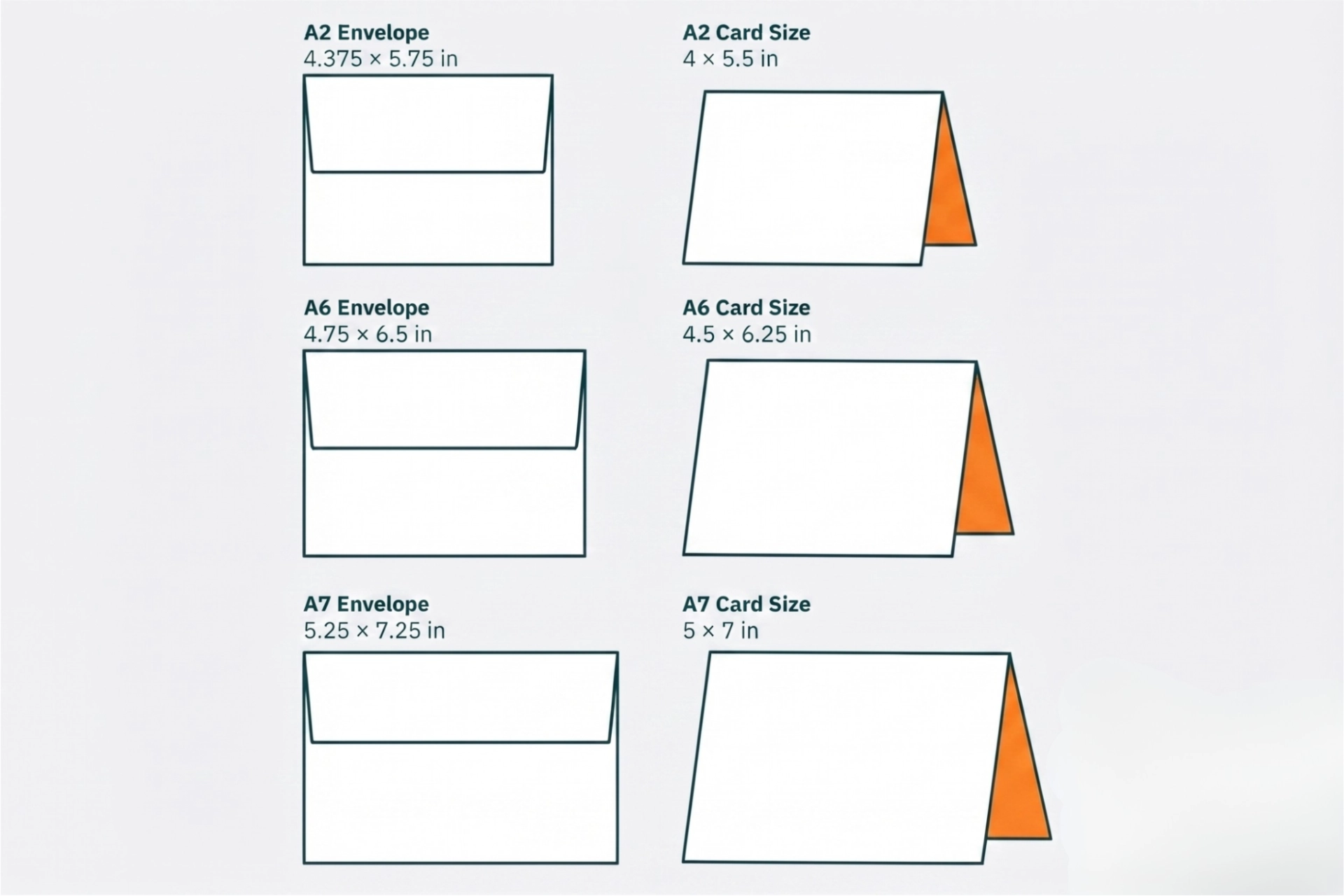
An envelope must be slightly larger than the finished card so the card can be inserted without bending or damaging its edges.
| Finished Card Size | Recommended Envelope | Typical Envelope Size |
| 3.5 × 4.875 in | A1 | 3.625 × 5.125 in |
| 4.25 × 5.5 in | A2 | 4.375 × 5.75 in |
| 4.5 × 6.25 in | A6 | 4.75 × 6.5 in |
| 5 × 7 in | A7 | 5.25 × 7.25 in |
| 5.5 × 8.5 in | A9 | 5.75 × 8.75 in |
| 5 × 5 in | Square | Approximately 5.25 × 5.25 in |
| 6 × 6 in | Square | Approximately 6.25 × 6.25 in |
These measurements are common examples rather than universal manufacturing standards. An envelope liner, folded insert or thick embellishment can reduce the usable interior space.
How Much Larger Should an Envelope Be?
A greeting card envelope is often around 0.25 inch wider and taller than the finished card. For example, a 5 × 7 inch card commonly fits an envelope measuring 5.25 × 7.25 inches.
This clearance is not a fixed rule for every project. Heavy cardstock, several inserts or raised decorations may require additional space. Excessive clearance can also allow the card to move and become damaged during mailing.
Greeting Card Sizes and Mailing Requirements
A card may fit inside an envelope but still require special postal handling because of its shape, thickness or rigidity. Rectangular envelopes generally pass through automated equipment more easily than square or unusually shaped formats.
Square envelopes have an aspect ratio of 1 and may be treated as nonmachinable by USPS. Clasps, buttons, excessive rigidity and uneven objects can also affect machine processing. The position of the delivery address and total thickness may influence classification.
The complete mailpiece includes the card, envelope, inserts and decorations. Always check current requirements with the relevant postal service before mailing a large campaign. Postal standards and charges can change over time.
How to Measure a Greeting Card Correctly
Follow these steps to record accurate greeting card dimensions:
- Fold and close the card completely.
- Place it on a level surface without compressing the edges.
- Measure the horizontal front edge to determine the width.
- Measure the vertical front edge to determine the height.
- Check the closed thickness at its thickest point.
- Open the card and record the complete flat dimensions.
- State whether the card is side folded or top folded.
- Write the measurements as width × height and identify the unit.
Measure the envelope’s usable interior rather than relying only on its external dimensions. Seams, liners and adhesive areas can reduce the available space.
How to Calculate the Flat Size of a Folded Card
A simple calculation can determine the open sheet size for a standard single fold card.
Side Fold Card
For a side fold card:
- Flat width = finished width × 2
- Flat height = finished height
A 5 × 7 inch side fold card requires a 10 × 7 inch flat sheet before bleed is added.
Top Fold Card
For a top fold card:
- Flat width = finished width
- Flat height = finished height × 2
A 5 × 7 inch top fold card requires a 5 × 14 inch flat sheet before bleed.
These formulas apply to basic single fold cards. Gate folds, tri folds and specialty structures require a printer supplied dieline or artwork template.
Bleed, Trim and Safe Areas
Greeting card artwork needs production allowances so backgrounds reach the edges and important content remains safely inside the trimmed area.
Trim Size
The trim size is the final dimension after the printer cuts the card. A card sold as 5 × 7 inches should measure approximately 5 × 7 inches after trimming and folding.
Bleed Area
Bleed extends background colors and images beyond the trim edge. This additional artwork prevents unprinted lines from appearing because of minor movement during cutting.
Many printers request 0.125 inch of bleed on each side. A 5 × 7 inch panel would therefore require a 5.25 × 7.25 inch artwork area. Requirements vary, so always use the printer’s template.
Safe Area
The safe area keeps text, logos and essential artwork away from cuts and fold lines. A margin of around 0.125 to 0.25 inch may be suitable for many designs. More space can improve readability and visual balance.
| Design Measurement | Example for a 5 × 7 Inch Card |
| Finished trim size | 5 × 7 in |
| Panel size with 0.125 in bleed | 5.25 × 7.25 in |
| Approximate safe content area | 4.5 × 6.5 in |
| Side fold flat size before bleed | 10 × 7 in |
For a folded card, the final file must also account for the back panel, front panel and fold position.
How to Choose the Right Greeting Card Size
Consider the following factors before selecting dimensions.
Purpose and Occasion
A short thank you note needs less space than a wedding invitation or group birthday card. The format should support the message without leaving the design crowded or unnecessarily empty.
Amount of Content
Photographs, event details, signatures and longer messages need sufficient usable space. Remember that bleed, safe margins and folds reduce the available design area.
Envelope Availability
Standard card dimensions usually work with readily available envelopes. Custom shapes may require made to order envelopes, additional setup and longer production times.
Printing Requirements
Printing presses use particular sheet sizes and imposition layouts. A small change in finished dimensions can affect how many cards fit on a sheet and may change production costs.
Mailing Considerations
Evaluate the complete envelope rather than only the card. Weight, shape, flexibility, thickness and decorations can influence postage and processing.
Display and Storage
Retail cards must fit display racks and protective sleeves. Business cards may need to fit product boxes while stationery sets must fit their presentation packaging.
Standard vs. Custom Greeting Card Dimensions
| Factor | Standard Dimensions | Custom Dimensions |
| Envelope availability | Commonly available | May need custom envelopes |
| Printing setup | Usually straightforward | May require a special dieline |
| Mailing | Easier to estimate | Shape may affect processing |
| Visual appearance | Familiar and practical | More distinctive |
| Production cost | Often economical | May increase setup costs |
| Best use | Everyday and bulk cards | Premium and specialty projects |
Custom dimensions work best when they support a genuine design, presentation or functional requirement.
Common Greeting Card Sizing Mistakes
Avoid these common errors when preparing a greeting card:
- Confusing North American card codes with ISO paper sizes
- Listing the flat size as the finished card size
- Ordering envelopes without considering paper thickness
- Treating bleed as part of the finished dimensions
- Positioning text too close to a trim or fold line
- Ignoring the postal implications of square envelopes
- Forgetting to include liners and inserts during fit testing
- Submitting artwork without checking the printer’s template
- Converting dimensions between units with excessive rounding
- Printing the full quantity before evaluating a physical proof
Quick Greeting Card Size Selection Chart
| Intended Use | Recommended Finished Size | Why It Works |
| Short personal note | 3.5 × 4.875 in | Compact with usable writing space |
| Thank you card | 4.25 × 5.5 in | Familiar and practical |
| Flat photo greeting | 4 × 6 in | Matches a common photo proportion |
| Birthday card | 5 × 7 in | Balances artwork and message space |
| Holiday card | 5 × 7 in | Accommodates photos and greetings |
| Large group card | 5.5 × 8.5 in | Provides room for signatures |
| Modern square card | 5 × 5 in | Creates a distinctive presentation |
| Panoramic design | 4 × 9 in | Supports wide artwork |
| Gift enclosure | 2.5 × 2.5 or 3 × 3 in | Fits compact gift packaging |
Ready to Create the Right Greeting Card Size?
Greeting card dimensions affect artwork, writing space, envelope compatibility, printing costs and mailing requirements. Always distinguish the finished size from the open flat size and the full artwork size with bleed. North American card codes must also be kept separate from ISO paper classifications. Before production, confirm the printer’s template, test the complete card and envelope combination and verify current mailing requirements.
Frequently Asked Questions
A 5 × 7 inch folded card is one of the most common greeting card sizes in the United States. It provides enough space for photographs, illustrations and personal messages.
Common folded greeting card dimensions include 4.25 × 5.5 inches, 4.5 × 6.25 inches and 5 × 7 inches. The best option depends on the occasion, message length, artwork and envelope.
No. In North American stationery terminology, an A7 card commonly measures 5 × 7 inches. Under the ISO 216 paper system, A7 measures 74 × 105 millimeters.
A North American A7 envelope measuring approximately 5.25 × 7.25 inches commonly fits a 5 × 7 inch card. Heavy paper, multiple inserts and decorative additions may require more clearance.
They can. Square envelopes may fall outside standard machine processing requirements and attract an additional postal charge. Weight, thickness, rigidity and decorative elements can also affect classification.
Many printing companies request 0.125 inch of bleed beyond each trimmed edge. However, the exact requirement depends on the printer and production method.
No single thickness suits every greeting card. The choice depends on the desired feel, printing process, fold style, envelope and mailing requirements. Heavy cardstock should usually be scored before folding.
Yes. Custom sizes can support unusual artwork, retail displays or premium presentations. They may also require custom envelopes, specialized cutting and additional postage.