




















Table of Contents
Related Products

$0.50 Original price was: $0.50.$0.10Current price is: $0.10.
In Stock

$0.50 Original price was: $0.50.$0.10Current price is: $0.10.
In Stock
$0.50 Original price was: $0.50.$0.10Current price is: $0.10.
In Stock

$0.50 Original price was: $0.50.$0.10Current price is: $0.10.
In Stock
Get A Free Quote
Packaging symbols appear on shipping boxes, food containers, retail packages, and many other commercial products. These simple images tell people how to handle, store, transport, open, or dispose of a package. They help delivery workers, warehouse teams, retailers, and customers understand important instructions quickly. Some packaging icons protect delicate goods, while others warn about safety risks or required storage conditions. Recycling marks also identify materials and explain proper disposal methods. Since pictures cross language barriers, international packaging symbols support safer trade between different countries. Understanding packaging symbols and their meanings helps businesses prevent damage, reduce confusion, and meet relevant packaging requirements.
What Do the Symbols on Packaging Mean?
Packaging symbols are visual marks that share instructions about a package, its contents, or its packaging material. Each recognized symbol communicates a specific message without requiring a long written explanation. For example, upward arrows show the correct package orientation, while an umbrella means the box must remain dry. International packaging symbols help people understand these directions even when they speak different languages. Many standard handling marks follow guidance from the International Organization for Standardization, commonly called ISO. However, businesses must still check the standards and legal requirements that apply within each destination market. Clear symbols on shipping boxes reduce mistakes during storage, loading, transportation, delivery, and final use.
Why Are Packaging Symbols Important?
Packages often pass through several warehouses, vehicles, and handling teams before reaching their final destination. Packaging signs give each person immediate instructions without requiring them to read detailed product information. The fragile symbol encourages gentle handling, while stacking symbols help warehouse workers avoid dangerous loading arrangements. Storage marks protect temperature sensitive products from heat, moisture, sunlight, magnets, and other harmful conditions. Warning symbols alert users to possible hazards and support safer opening, lifting, storage, and disposal. These visual directions also help businesses prevent breakage, product loss, workplace injuries, and customer complaints. When used correctly, package symbols improve product protection throughout local deliveries and long distance shipping.
Main Categories of Packaging Symbols
Most symbols on packaging belong to four broad groups based on their purpose and intended audience. Package protection symbols explain how workers can prevent impact, moisture, sunlight, or opening related damage. Handling and storage symbols provide instructions about lifting, stacking, orientation, weight, and suitable storage conditions. Safety and warning marks identify possible hazards, approved uses, or compliance with specific product requirements. Recycling and environmental symbols show material types, responsible sourcing, recycling potential, and correct disposal behavior. A single package may require marks from several groups, depending on its contents and transportation risks. Businesses should select only relevant symbols because too many marks can create confusion and hide essential instructions.
Package Protection Symbols
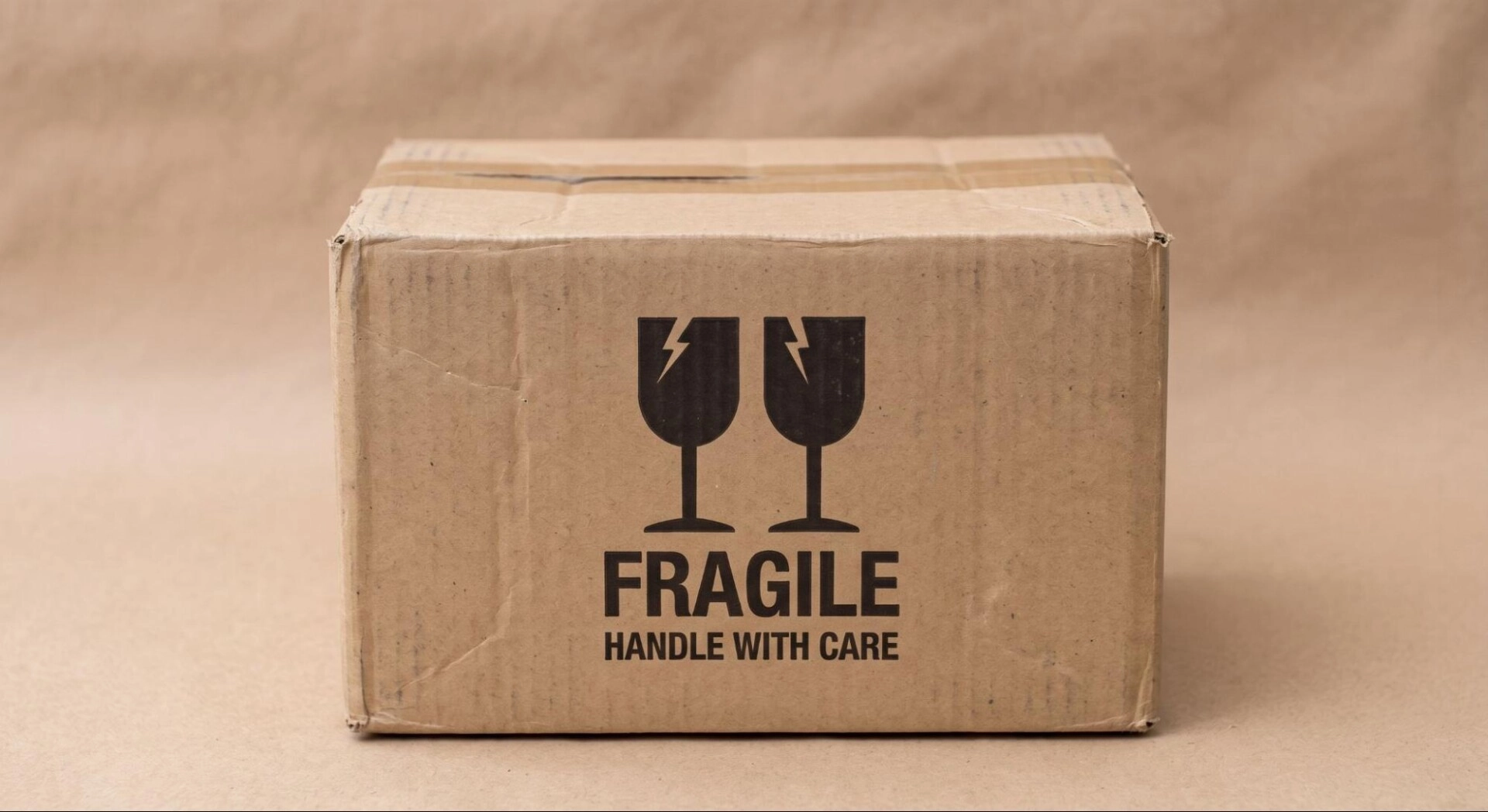
Fragile Symbol
The Fragile Symbol usually shows a cracked wine glass and identifies contents that could break from impact. Workers should move these packages gently and avoid dropping, throwing, crushing, or placing heavy items above them.

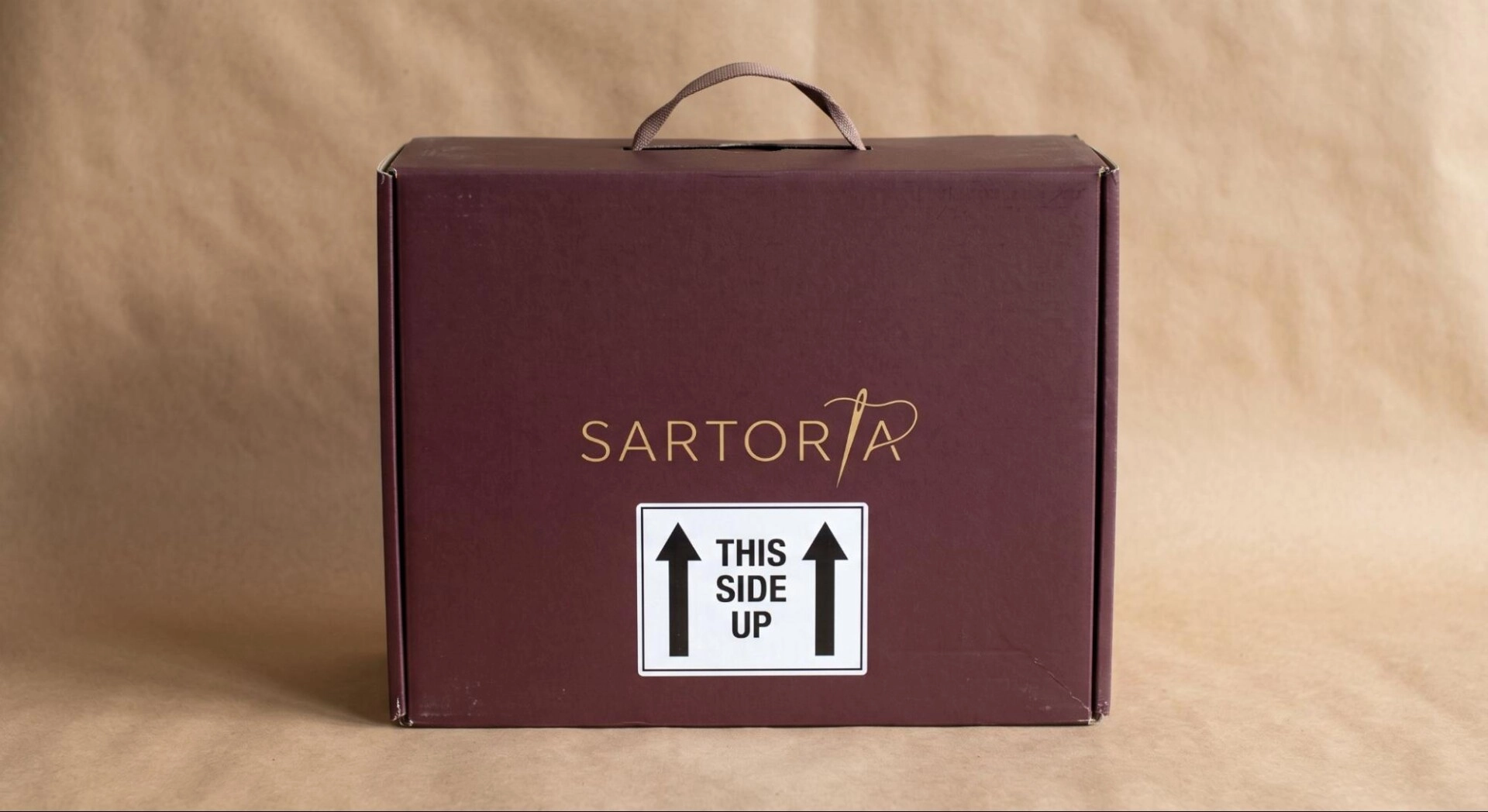
This Side Up Symbol
The This Side Up Symbol uses two vertical arrows pointing toward the package’s correct upright direction. It protects liquids, machinery, glassware, electronics, and fitted products that may become damaged when turned sideways.
Handle With Care Symbol
The Handle With Care Symbol asks workers to move the package carefully, even when breakage seems unlikely. It commonly appears on electronics, assembled products, instruments, and goods with parts that could shift during transit.


Do Not Use a Knife Symbol
This packaging icon warns customers against cutting through the box with a sharp blade during opening. Knives can damage clothing, mattresses, books, cushions, soft goods, or products placed close to package walls.

Keep Away From Sunlight Symbol
This symbol directs workers to protect the package from direct sunlight and extended ultraviolet exposure. It suits medicines, printed items, cosmetics, food products, chemicals, and materials that may fade or degrade.

Keep Dry Symbol
The Keep Dry Symbol normally shows an umbrella and indicates that moisture could harm the package. Paper goods, electronics, metal parts, and moisture sensitive products often require this clear storage instruction.

Temperature Sensitive Symbol
A thermometer or stated temperature range identifies goods that need controlled storage and transportation conditions. Food, medicines, cosmetics, liquids, and chemicals may lose quality when exposed to unsuitable temperatures.

Packaging Handling Symbols
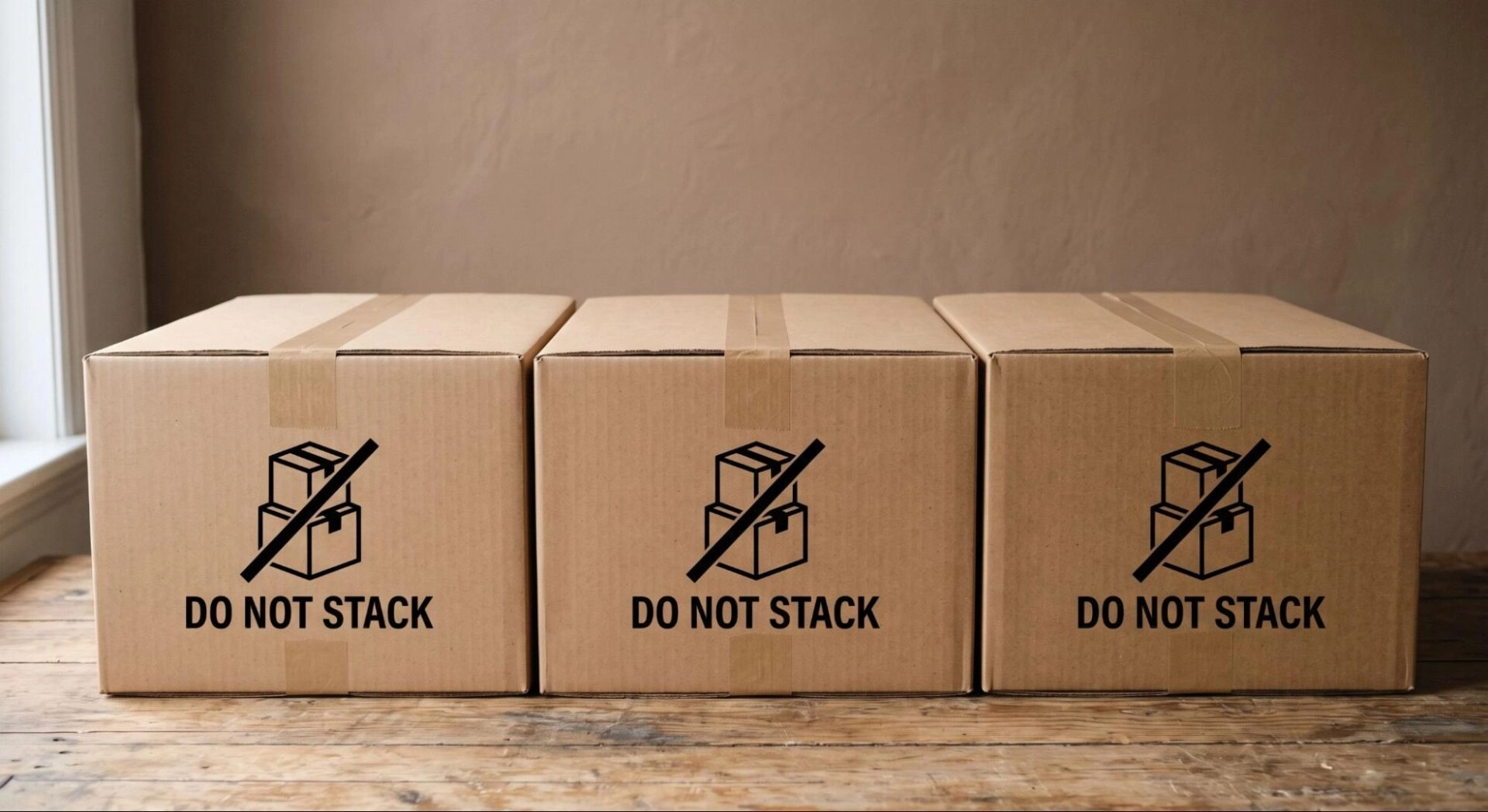
Do Not Stack Symbol
The Do Not Stack Symbol shows packages with a crossed upper box, warning against vertical stacking. It protects weak cartons, uneven packages, gift boxes, and products that cannot support additional weight safely.
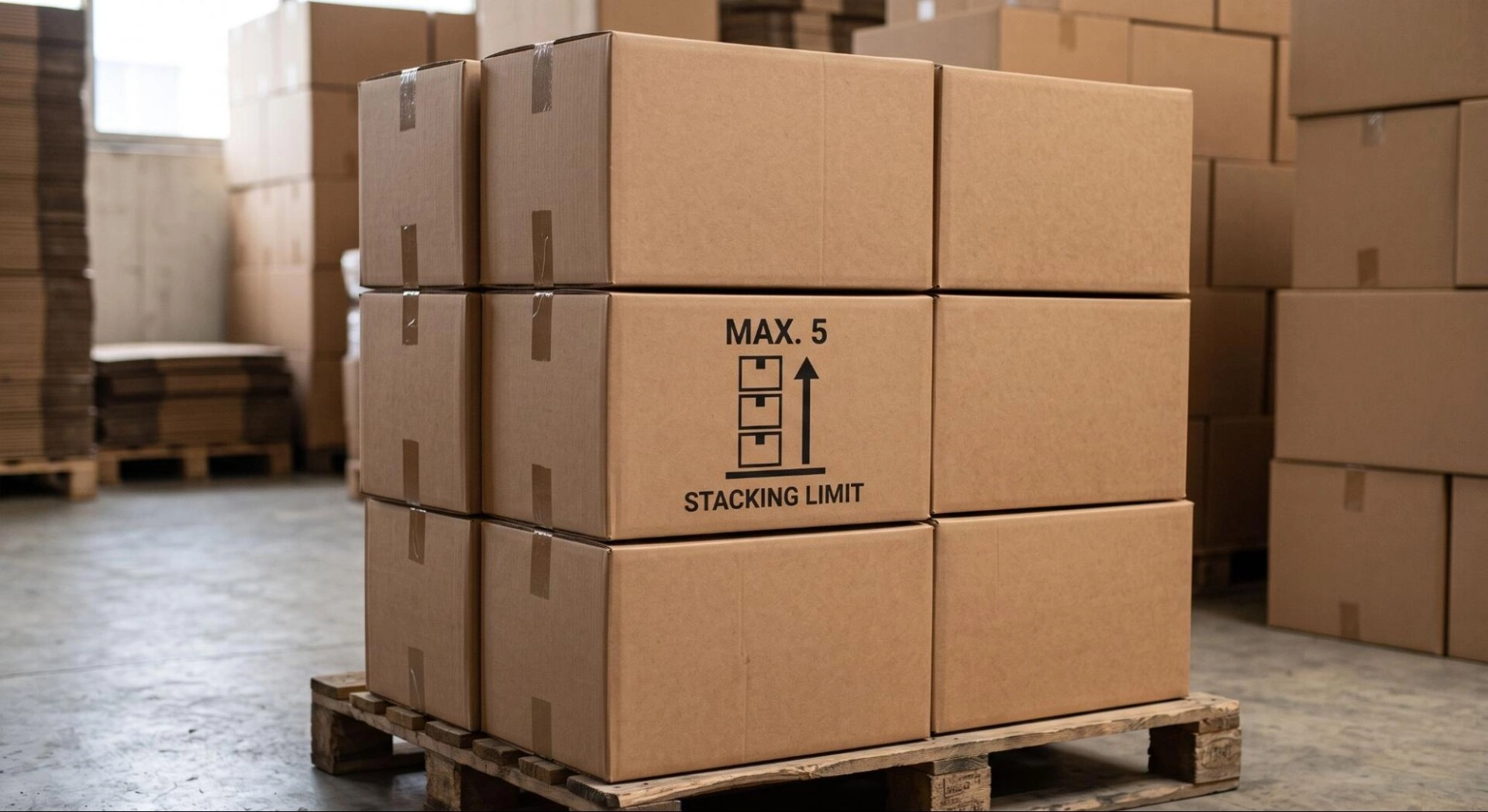
Stacking Height Symbol
This mark states how many packages may be stacked without crushing lower cartons or damaging products. Some versions show a number, while others display an approved height or maximum stacking limit.
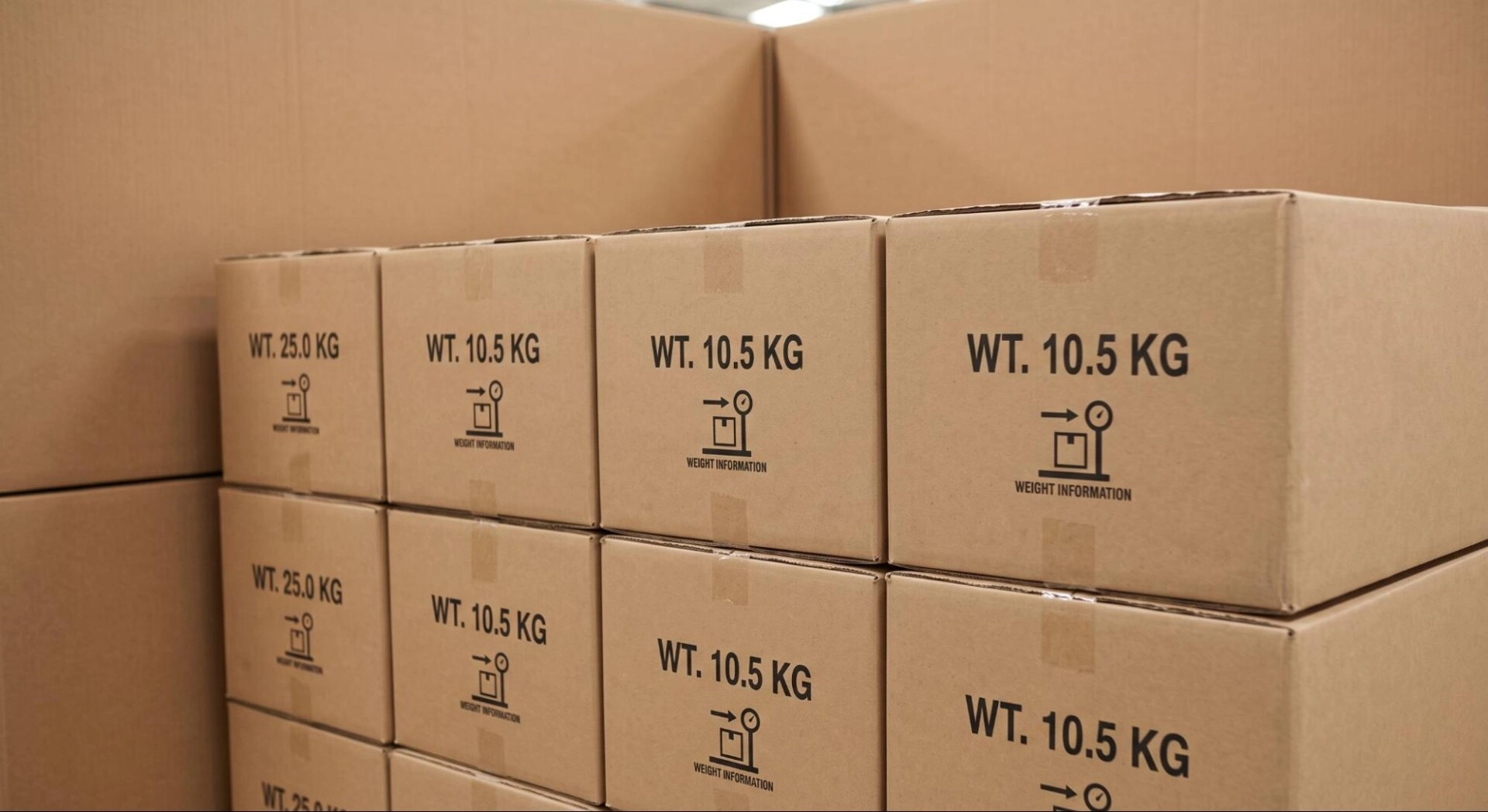
Weight Information Symbol
A weight mark states the total package weight using pounds, kilograms, or another required measurement unit. Accurate weight details help workers choose suitable equipment and plan safer lifting, loading, and storage methods.
Center of Gravity Symbol
This shipping symbol identifies the point where the package’s weight remains balanced during lifting and movement. It becomes especially important for large, uneven, tall, or unusually shaped machinery and commercial equipment.

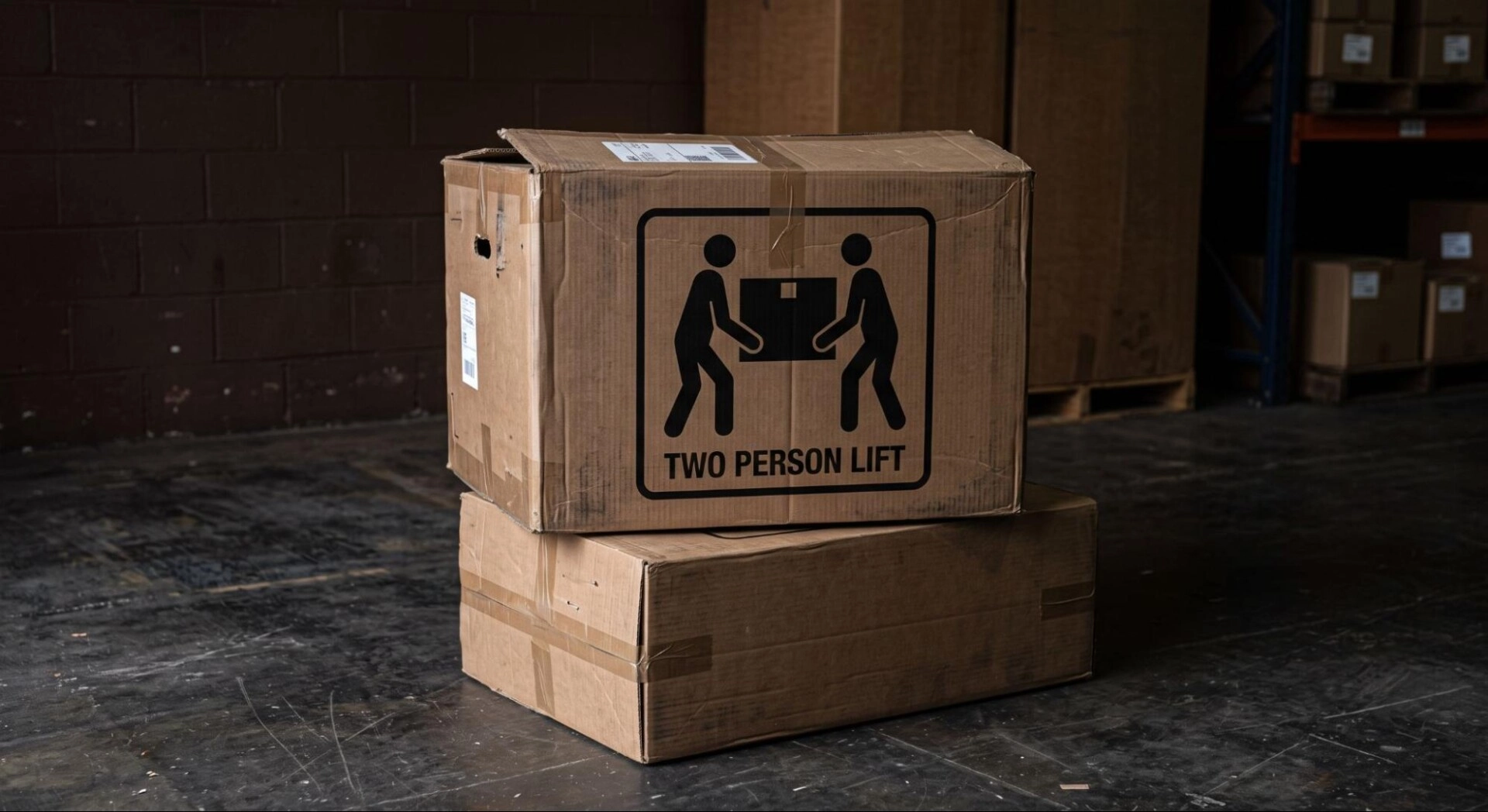
Two Person Lift Symbol
The Two Person Lift Symbol warns that one worker should not move the package without assistance. Businesses should use it when size, weight, or shape makes individual lifting unsafe or difficult.
Use a Trolley Symbol
A trolley image directs workers to move heavy or bulky packages with suitable wheeled handling equipment. This method reduces physical strain while lowering the chance of dropping or dragging valuable commercial products.

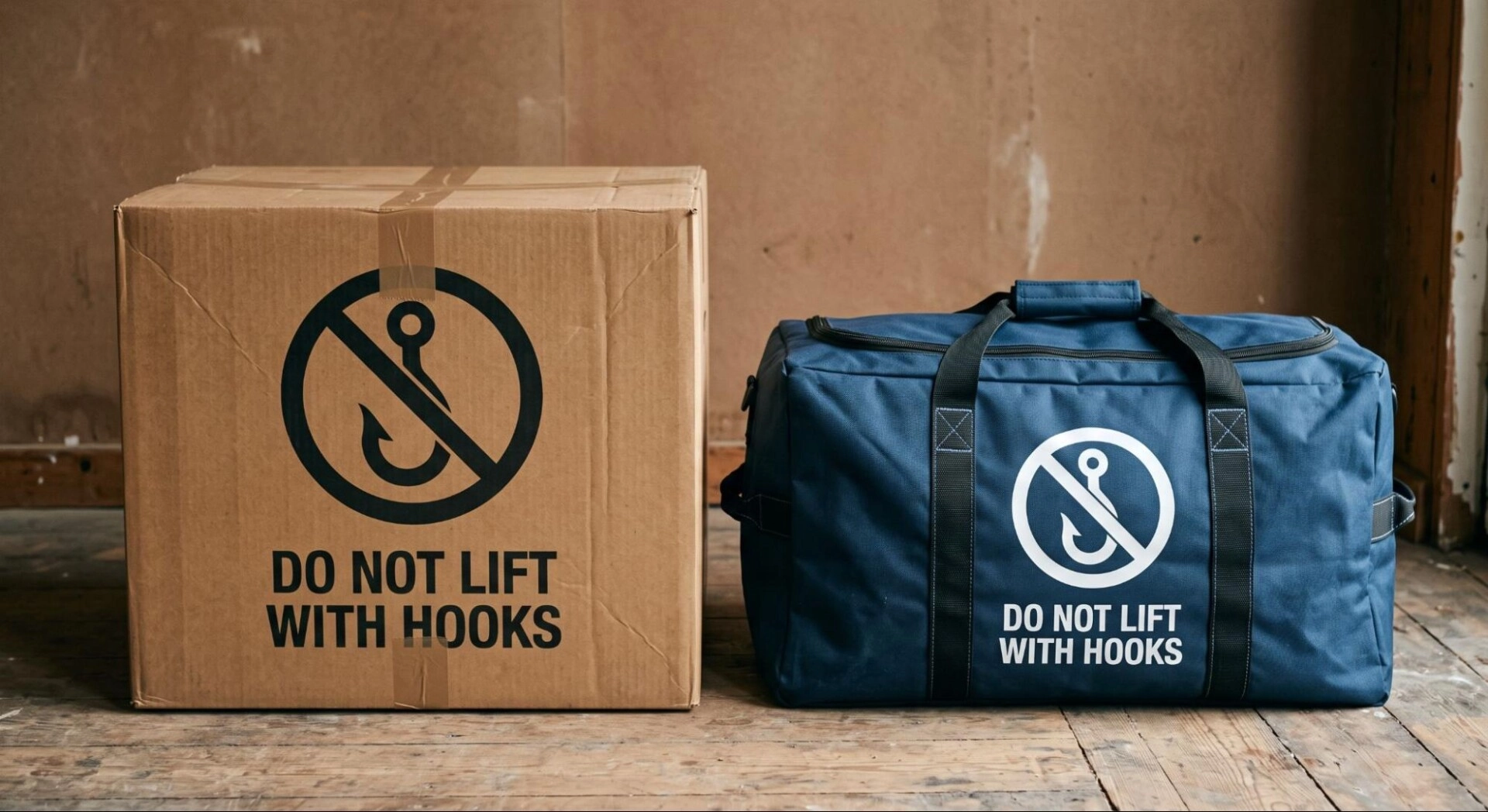
Do Not Lift With Hooks Symbol
This mark prohibits lifting the package with hooks because they could tear or puncture the material. It commonly appears on bags, wrapped loads, large cartons, and packages with vulnerable outer surfaces.
Safety and Warning Symbols
Food Safe Symbol
The Food Safe Symbol commonly shows a glass beside a fork, indicating suitability for food contact. It applies to packaging materials designed and assessed for contact with food under their intended conditions.

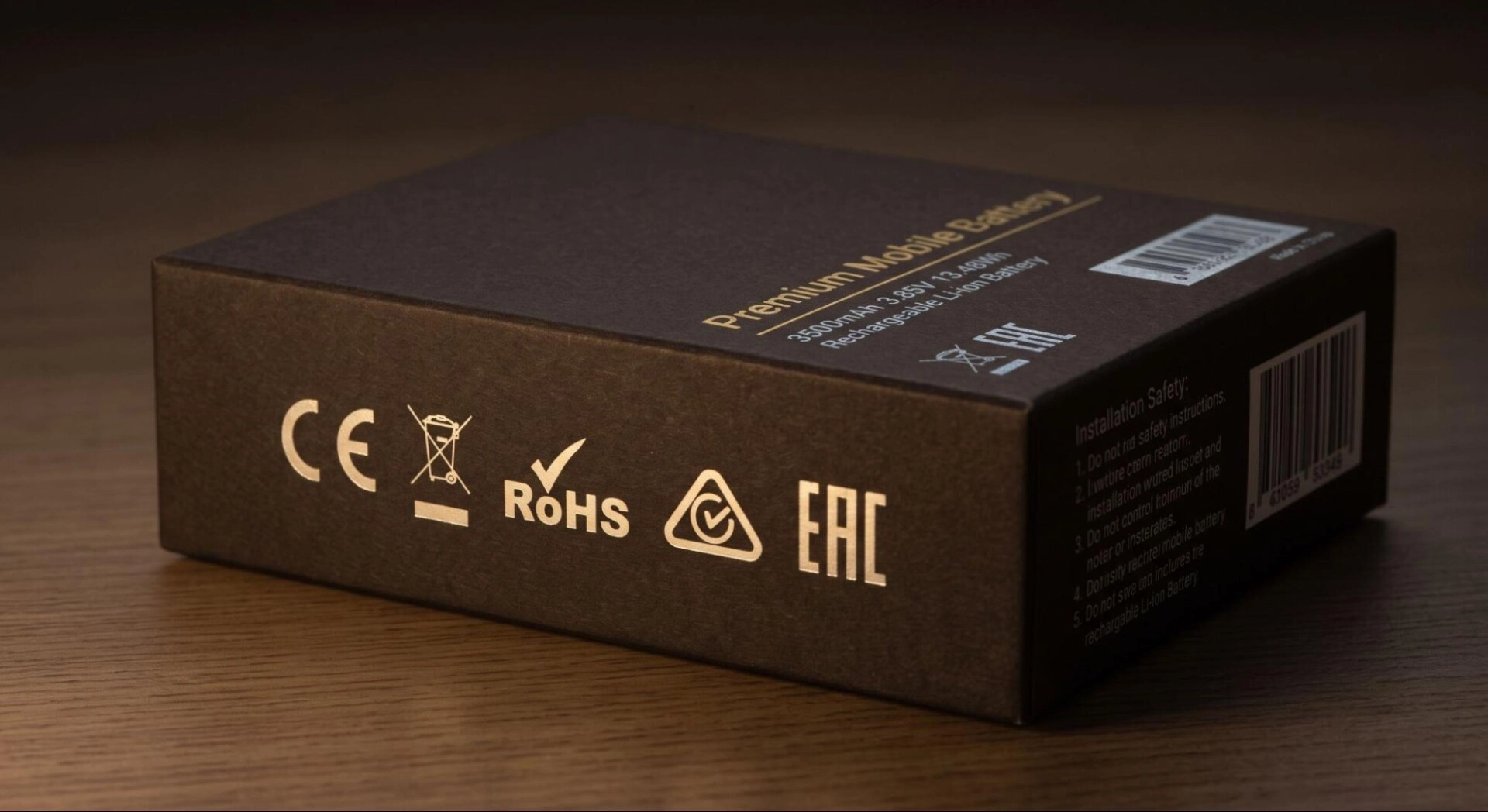
CE Mark
The CE Mark shows that a covered product meets applicable European Union requirements declared by its manufacturer. It is not a general packaging quality mark and should only appear on qualifying regulated products.
General Warning Symbol
A triangle containing an exclamation mark alerts users to a potential hazard requiring closer attention. Supporting text should explain the exact danger, required action, or safety step whenever further detail remains necessary.

Flammable Symbol
A flame image warns that the package contains materials that may ignite under certain conditions. These goods require appropriate handling, labeling, storage, and transportation based on applicable hazardous material regulations.

Other Hazard Symbols
Packages containing chemicals may need specific marks for toxicity, corrosion, compressed gases, or environmental danger. Businesses must identify hazards correctly and follow current rules for classification, labeling, documentation, and transportation.
Recycling and Environmental Symbols
Recycling Symbol
The Mobius Loop contains three chasing arrows and generally shows that a material may be recyclable. However, local facilities, contamination, coatings, and mixed materials determine whether people can actually recycle the package.

Plastic Resin Identification Codes
Plastic Resin Codes use numbers from one through seven to identify the primary plastic resin type. They help sorting operations but do not guarantee that local recycling programs accept every numbered material.

FSC Symbol
The Forest Stewardship Council logo identifies paper or cardboard connected with certified forest based supply chains. Companies need proper certification and authorization before printing an FSC mark on custom packaging boxes.

Tidy Man Symbol
The Tidy Man Symbol reminds users to place used packaging in a waste or recycling container. It encourages responsible disposal but does not confirm that the package is recyclable or contains recycled material.

Recycled Material Symbol
A recycled content statement shows that some or all packaging material came from recovered sources. Businesses should provide accurate percentages and avoid claims they cannot support with dependable supplier documentation.

Choosing the Right Packaging Symbols
Consider the Product Inside
Begin by identifying the product’s main risks, including breakage, leakage, crushing, heat, moisture, or light exposure. A glass bottle may need fragile and upright symbols, while frozen food requires clear temperature information.
Consider Shipping and Handling Requirements
Review every handling stage, including packing, warehousing, loading, transportation, unloading, and final delivery. Large packages may require weight, center of gravity, trolley, or two person lifting instructions.
Check Storage Conditions
Determine whether sunlight, moisture, magnets, stacking pressure, or temperature changes could affect the product. Print storage symbols where workers can easily see them before placing packages inside warehouses or vehicles.
Follow Applicable Regulations
Different products and destinations may follow different labeling, safety, recycling, and transportation requirements. Confirm current rules before using CE marks, hazard signs, food contact symbols, or environmental certifications.
Use Clear and Recognizable Symbols
Print every symbol with enough size, contrast, and open space for quick recognition. Avoid decorative changes that could alter its meaning or make an established packaging mark difficult to understand.
Packaging Symbols vs. Packaging Labels: What Is the Difference?
Packaging symbols deliver quick visual instructions through simple, recognized images that people can understand immediately. Packaging labels provide detailed written information, including ingredients, warnings, addresses, directions, codes, and product facts. A shipping carton may display fragile and upright symbols beside a label containing weight and destination details. Food packaging may require both food safety marks and written information about ingredients, allergens, storage, and use. Symbols work well when rapid recognition matters, while labels explain points that images cannot communicate fully. Many packages need both because each format provides a different level of information. Together, they support safer handling, informed use, product identification, and regulatory compliance.
Common Mistakes When Using Packaging Symbols
Choosing a familiar looking symbol without confirming its meaning can create unsafe or costly handling errors. Adding every available symbol also reduces clarity and makes genuinely important instructions harder to notice. Some businesses use generic marks while ignoring actual product risks, package strength, or transportation conditions. Symbols may become unreadable when printed too small, placed across folds, or covered by shipping labels. Poor contrast and heavy decoration can also prevent warehouse workers from recognizing instructions quickly. Another serious mistake involves printing certification marks without permission, evidence, or required supply chain approval. Businesses should review their artwork, package tests, product needs, destination rules, and relevant international standards before production.
Add Clear Symbols to Your Custom Packaging
Well chosen packaging symbols can protect products and give every handler clear, useful instructions. Hot Custom Boxes can help you create custom printed packaging boxes with visible handling, storage, and recycling marks. Our team can place your approved symbols, product details, and branding within a clean packaging design. Contact us to discuss your product, material, box style, printing needs, and shipping conditions. A careful packaging plan can improve protection while keeping essential information easy to find and understand.
Frequently Asked Questions About Packaging Symbols
Many international packaging symbols use common designs, but requirements can still vary between countries and industries. Businesses should check destination rules and applicable standards before preparing packages for international shipping or retail sale.
Businesses may create icons for brand specific instructions, but custom designs may not receive universal understanding. Standard symbols remain better for important handling, safety, storage, certification, and recycling information.
Symbols should remain clearly visible and readable from a practical handling distance on the finished package. Required size may depend on the symbol, package dimensions, destination, industry, and applicable regulation.
Place handling symbols on visible outer panels where workers can notice them before lifting or stacking. Important orientation marks often appear on multiple sides to remain visible throughout transportation and storage.
Many handling marks work in high contrast colors, provided their meaning remains clear and recognizable. Regulated hazard signs, certification marks, and compliance symbols may have specific color and design requirements.
Incorrect symbols can cause mishandling, product damage, unsafe storage, failed inspections, customer confusion, or legal problems. Businesses should correct artwork before production and replace inaccurate packaging whenever the error creates meaningful risk.
Related Products
$0.50 Original price was: $0.50.$0.10Current price is: $0.10.
In Stock
$0.50 Original price was: $0.50.$0.10Current price is: $0.10.
In Stock
$0.50 Original price was: $0.50.$0.10Current price is: $0.10.
In Stock
$0.50 Original price was: $0.50.$0.10Current price is: $0.10.
In Stock