














Table of Contents
Related Products
$0.50 Original price was: $0.50.$0.10Current price is: $0.10.
In Stock
$0.50 Original price was: $0.50.$0.10Current price is: $0.10.
In Stock
$0.50 Original price was: $0.50.$0.10Current price is: $0.10.
In Stock
$0.50 Original price was: $0.50.$0.10Current price is: $0.10.
In Stock
Get A Free Quote
A playing card box needs enough room for the entire deck, including jokers, instruction cards, and protective sleeves. Choosing a box based only on the cards’ width and height can make the packaging too tight or too shallow.
A commonly quoted poker tuck box size is approximately 2.625 × 3.625 × 0.75 inches, or 66.7 × 92.1 × 19.1 mm. However, this is a reference size rather than a universal standard. The right measurements depend on the finished deck and the box construction.
This guide covers playing card box dimensions in inches, centimetres, and millimetres. It also explains suitable box sizes for poker, bridge, tarot, oracle, and children’s card decks.
What Are Playing Card Box Dimensions?
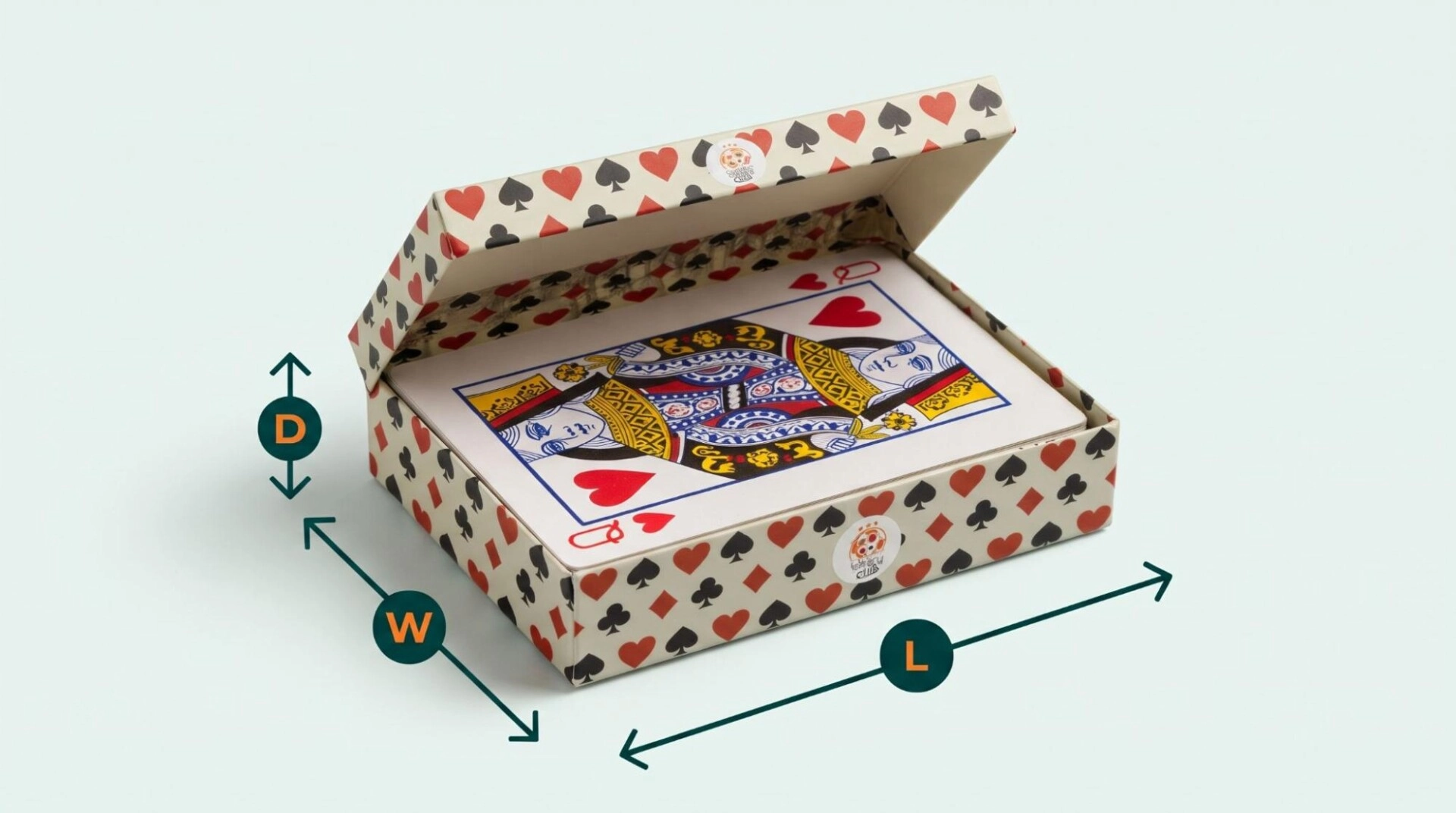
Playing card box dimensions describe the width, height and depth of the packaging. Each measurement serves a different purpose:
- Width: The space across the face of the deck.
- Height: The space from the bottom to the top of the cards.
- Depth: The space needed for the thickness of the complete stack.
Throughout this guide, measurements follow width × height × depth.
Some packaging suppliers use length × width × height instead. Label each measurement when sharing specifications so the supplier knows how the deck will sit inside the box.
Card Size, Deck Size and Box Size
These measurements are related, but they describe different things.
| Measurement | What It Describes | What to Measure |
|---|---|---|
| Card size | The face of one card | Width and height |
| Deck size | The complete stack of cards | Width, height and stack thickness |
| Internal box size | The usable space inside the packaging | Space available for the deck and extras |
| External box size | The finished outside dimensions | Overall box width, height and depth |
A box with outside dimensions matching the cards will generally be too small inside. Its walls, folds and closure take up space.
What Is the Standard Playing Card Box Size?
For a conventional unsleeved poker deck, a compact tuck box is a useful starting point. However, two decks with the same card dimensions can need different box depths.
One may contain only 52 cards. Another may include two jokers, advertising cards and a folded instruction sheet. Card stock also affects the thickness of the packed deck.
Card manufacturers therefore offer packaging templates based on both card count and stock, rather than using one box for every deck.
Poker Tuck Box Reference Size in Different Units
The following table converts the approximate reference size mentioned above.
| Unit | Width | Height | Depth |
|---|---|---|---|
| Inches | 2.625 | 3.625 | 0.75 |
| Centimetres | 6.67 | 9.21 | 1.91 |
| Millimetres | 66.7 | 92.1 | 19.1 |
Confirm whether a supplier’s listed size is internal or external before using it. These measurements should not replace a fit test with your actual deck.
Playing Card Box Size Guide by Deck Type
The table below shows how different card formats affect packaging. Card measurements are references; final box dimensions must allow for the complete contents.
| Deck Type | Card Face Size | What Determines the Box Size? |
|---|---|---|
| Poker | Commonly 2.5 × 3.5 in | Finished stack thickness, jokers and instructions |
| Bridge | Commonly 2.25 × 3.5 in | Narrower card width and total deck thickness |
| Tarot | A common format is approximately 2.75 × 4.75 in | Card format, deck count and guidebook |
| Oracle | Varies by publisher | Actual card size, card count and accessories |
| Trading cards | Many use approximately 2.5 × 3.5 in | Sleeve dimensions, card count and dividers |
| Children’s cards | Varies by game and age group | Card shape, finished stack and instruction sheet |
| Mini or oversized cards | Custom or manufacturer-specific | Actual deck measurements and box style |
Poker and bridge are familiar card formats, while tarot, oracle and children’s decks can vary considerably. Avoid choosing packaging from the game name alone.
Poker Playing Card Box Dimensions
Poker cards commonly measure 2.5 × 3.5 inches. Their box needs slightly more usable width and height, plus enough depth for the finished stack.
Count every included card before measuring. A box intended for 52 cards may fit additional cards, but that depends on the stock and available clearance.
Bridge Playing Card Box Dimensions
Bridge cards commonly measure 2.25 × 3.5 inches. They have the same familiar height as poker cards but a narrower width.
A poker box may leave unnecessary space around a bridge deck. A box made for bridge cards provides a closer fit without needing extra packing material.
Tarot Card Box Dimensions
Tarot packaging usually needs a larger footprint than a poker tuck box. A common tarot card format is approximately 2.75 × 4.75 inches, although other sizes are available.
Measure the complete deck together with its guidebook. A thin folded leaflet may fit alongside the cards, while a substantial book may need a separate compartment.
Oracle Card Box Dimensions
Oracle cards have no single standard format. Some decks are compact, while others use tall, wide, square or oversized cards.
Choose oracle card box dimensions from the actual finished set. If the package includes a booklet, measure the cards and booklet in their intended arrangement.
Trading Card Deck Box Dimensions
Trading card boxes need particular attention when cards are sleeved. A sleeve increases the card’s outer width and height, as well as the thickness of the full stack.
Measure the deck after sleeving it. For double-sleeved cards, test the exact sleeve combination you intend to use. Capacity labels such as “60 cards” or “100 cards” should also be checked against the supplier’s sleeve assumptions.
Children’s Playing Card Box Dimensions
Children’s cards are not always smaller than adult cards. Some games use larger cards to make pictures and numbers easier to see.
Measure the specific deck rather than assuming that Old Maid, Slap Jack or Crazy Eights has one fixed packaging size. Include any rules or extra pieces packed with the game.
How Does Card Count Affect Box Depth?
When cards are stacked in one pile, adding cards mainly increases the required box depth.
For example, suppose each finished card measures 0.30 mm thick. The calculated stack thickness would be:
| Number of Cards | Calculated Stack Thickness |
|---|---|
| 52 | 15.6 mm |
| 54 | 16.2 mm |
| 60 | 18.0 mm |
| 78 | 23.4 mm |
| 100 | 30.0 mm |
These are calculation examples, not finished box dimensions. They exclude sleeves, booklets, wrapping and fitting clearance.
Use the complete physical stack whenever possible. Measuring it gives a more useful result than estimating thickness from card count alone.
How to Measure a Deck for a Playing Card Box
A ruler can measure the card face. A calliper is useful for checking stack thickness more closely.
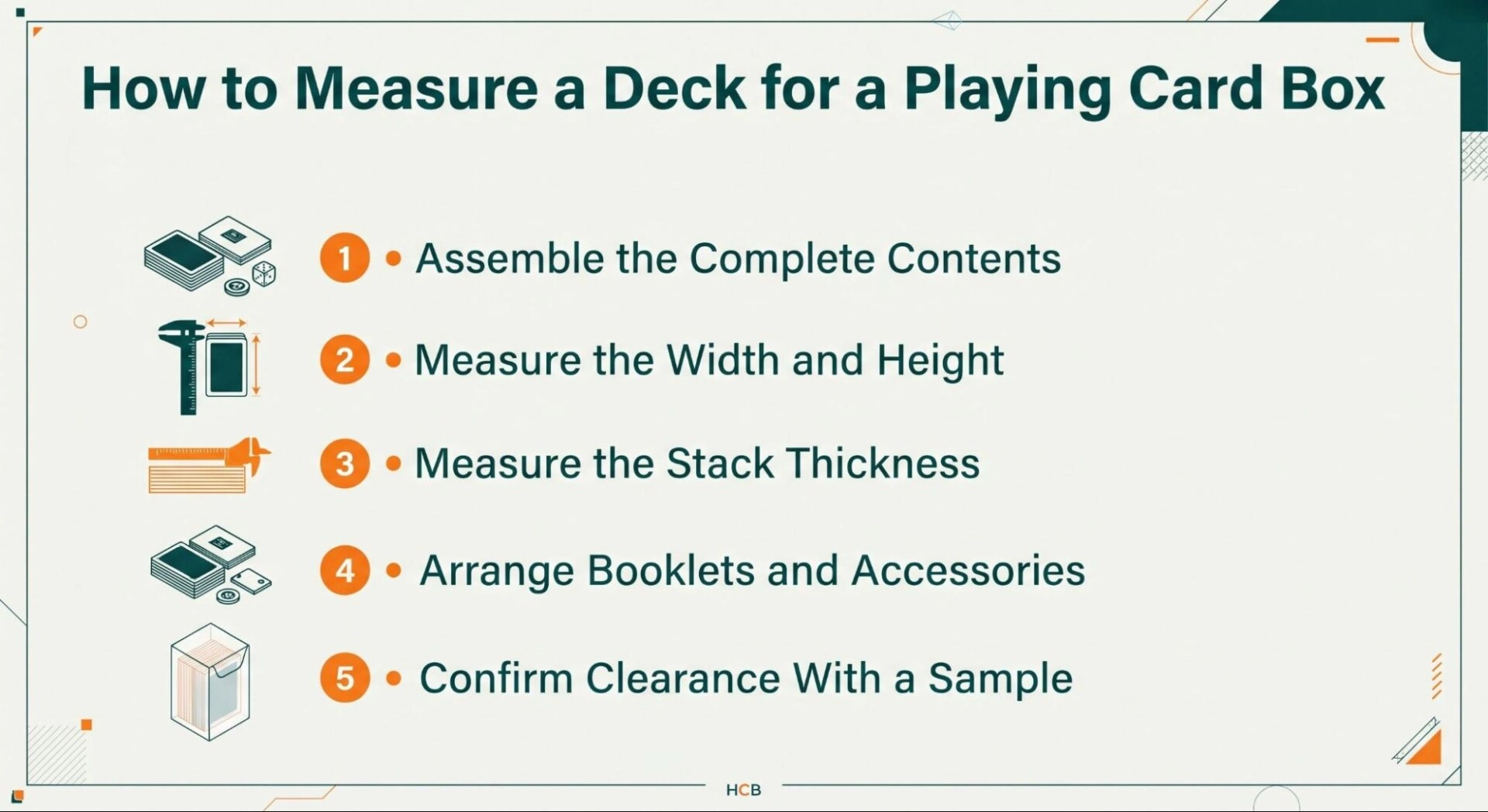
1. Assemble the Complete Contents
Gather everything that belongs inside the box. Include cards, jokers, rules, promotional inserts and accessories.
If the cards will be sleeved, sleeve the entire deck first.
2. Measure the Width and Height
Place the cards in a neat stack on a flat surface. Measure across the widest and tallest points.
For circular or unusual shapes, measure the full outer footprint. An insert may be needed to hold the cards in position.
3. Measure the Stack Thickness
Measure the deck in its normal packed condition. Keep the stack aligned without pressing it tightly together.
Include any wrapper or band that will remain around the cards inside the box.
4. Arrange Booklets and Accessories
Position extra items where they will sit in the finished package.
A booklet placed on top increases depth. A booklet placed beside the deck increases the required footprint. Dividers and trays also need their own space.
5. Confirm Clearance With a Sample
The box should let the cards slide out without catching their edges. It should also hold them closely enough to limit movement.
There is no single clearance allowance suitable for every material and box style. Confirm the fit through a physical sample before approving production.
Example of Calculating Internal Box Dimensions
Suppose a finished poker deck measures:
- Width: 63.5 mm
- Height: 88.9 mm
- Stack thickness: 16.2 mm
For an initial mockup, imagine adding 2 mm of total clearance to each measurement.
| Measurement | Deck Size | Illustrative Total Allowance | Initial Internal Size |
|---|---|---|---|
| Width | 63.5 mm | 2 mm | 65.5 mm |
| Height | 88.9 mm | 2 mm | 90.9 mm |
| Depth | 16.2 mm | 2 mm | 18.2 mm |
The resulting internal space would be 65.5 × 90.9 × 18.2 mm.
This is a worked example, not a production specification. The allowance is total extra space across each measurement, rather than 2 mm on every side. The manufacturer must adjust the structure for the board, folds and closure.
How Box Style Affects Playing Card Packaging Size
The same deck can have different external packaging dimensions depending on the box style.
| Box Style | Suitable Uses | Main Sizing Consideration |
|---|---|---|
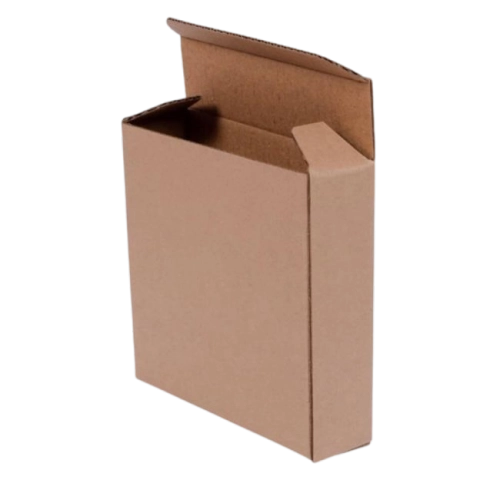
| Tuck box | Single decks and compact card games | Closure flaps and folded seams |
| Two-piece rigid box | Tarot, oracle and collector sets | Thick walls, base and lid |
| Drawer box | Gift decks and presentation packaging | Inner tray plus outer sleeve |
| Magnetic closure box | Sets with books or accessories | Panels, hinge and insert space |
| Storage box | Multiple decks or sleeved cards | Compartments, dividers and removal space |
A rigid box generally occupies more outside space than a thin folding carton holding the same contents. Compare usable internal space when assessing different styles.
Boxes for Two or More Decks
Decide how the decks will be arranged before calculating the box size.
Placing decks side by side increases width. Stacking them increases depth. Separate compartments also require space for dividing walls.
If each deck has its own tuck box, measure those finished boxes rather than the loose cards.
Do Materials Change Playing Card Box Dimensions?
Material thickness affects how much outside space the finished package occupies.
A folding paperboard carton and a rigid board box can provide similar internal capacity while having different external dimensions. Folded overlaps and inserts can also reduce usable space.
Confirm the material before finalising the packaging template. Paper weight alone should not be treated as an exact measure of board thickness.
Box Dimensions vs. the Printing Dieline
The finished box size is different from the size of its flat artwork template.
A dieline includes front, back and side panels, along with closure flaps and glue areas. Bleed extends the printed artwork beyond cutting edges; it does not add storage space inside the box.
Use the manufacturer’s approved dieline for the selected structure. Stretching a generic template can change flap alignment and prevent the box from closing properly.
Common Playing Card Box Sizing Mistakes
Several small errors can lead to a poor fit:
- Measuring one card only: This leaves the full stack thickness unknown.
- Forgetting extra contents: Jokers, instructions and wrappers still need space.
- Using outside dimensions to judge capacity: The walls and folds reduce the interior.
- Ignoring sleeves: A sleeved deck needs more room than loose cards.
- Adding excessive clearance: Cards can move around during handling.
- Skipping a sample: A digital layout cannot confirm how easily the deck loads and closes.
Check the packed sample for smooth removal, comfortable closure and excessive movement.
Get Playing Card Boxes Sized for Your Complete Deck
Need packaging for your poker, tarot, oracle or custom game cards? Hot Custom Boxes can help you create playing card boxes around your deck’s measurements. Share your card size, total card count and any extras, such as sleeves or a guidebook. Request a custom quote to get your packaging order started.
Frequently Asked Questions About Playing Card Box Dimensions
A commonly quoted poker tuck box reference is approximately 2.625 × 3.625 × 0.75 inches. Actual dimensions vary with the card count, stock and construction. Confirm whether the measurements are internal or external.
The box needs enough internal width and height for the cards, plus depth for the measured 52-card stack. Include jokers and instructions if they will be packed with the deck.
They usually have different widths because bridge cards are narrower. Their required depths depend on the complete deck rather than the card format alone.
Measure the tarot cards, the complete 78-card stack and any guidebook. Tarot formats vary, so there is no single box size that fits every deck.
Do not assume they will. Sleeves increase the overall dimensions of the deck. Measure the sleeved stack or choose packaging specifically sized for it.
Yes. Custom box dimensions can accommodate unusual card formats, multiple decks, booklets and accessories. Base the specifications on the complete finished contents.
A retail card box may need a protective outer mailer or shipping carton. Size the outer packaging around the finished card box and any cushioning required for delivery.
Related Products
$0.50 Original price was: $0.50.$0.10Current price is: $0.10.
In Stock
$0.50 Original price was: $0.50.$0.10Current price is: $0.10.
In Stock
$0.50 Original price was: $0.50.$0.10Current price is: $0.10.
In Stock
$0.50 Original price was: $0.50.$0.10Current price is: $0.10.
In Stock