















Table of Contents
Get A Free Quote
Rigid jewelry box dimensions shape how jewelry fits, looks, ships and stores. A box should protect the piece without hiding its beauty. It should also support retail display, shelf space and the unboxing experience.
For rings, earrings, pendants, necklaces, bracelets, watches, anklets and jewelry sets, the right jewelry box dimensions help balance product protection with premium presentation.
What Rigid Jewelry Box Dimensions Mean
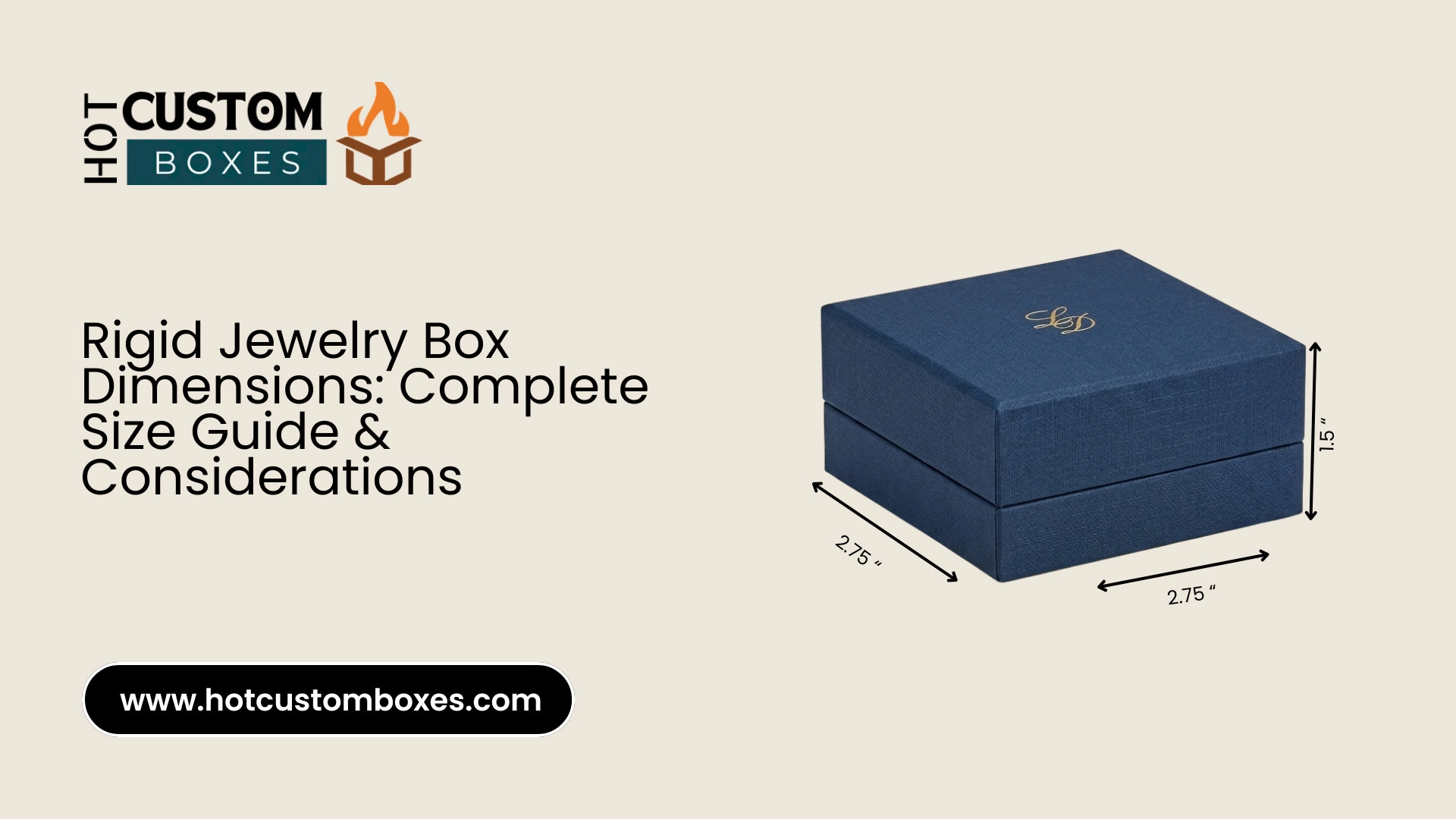
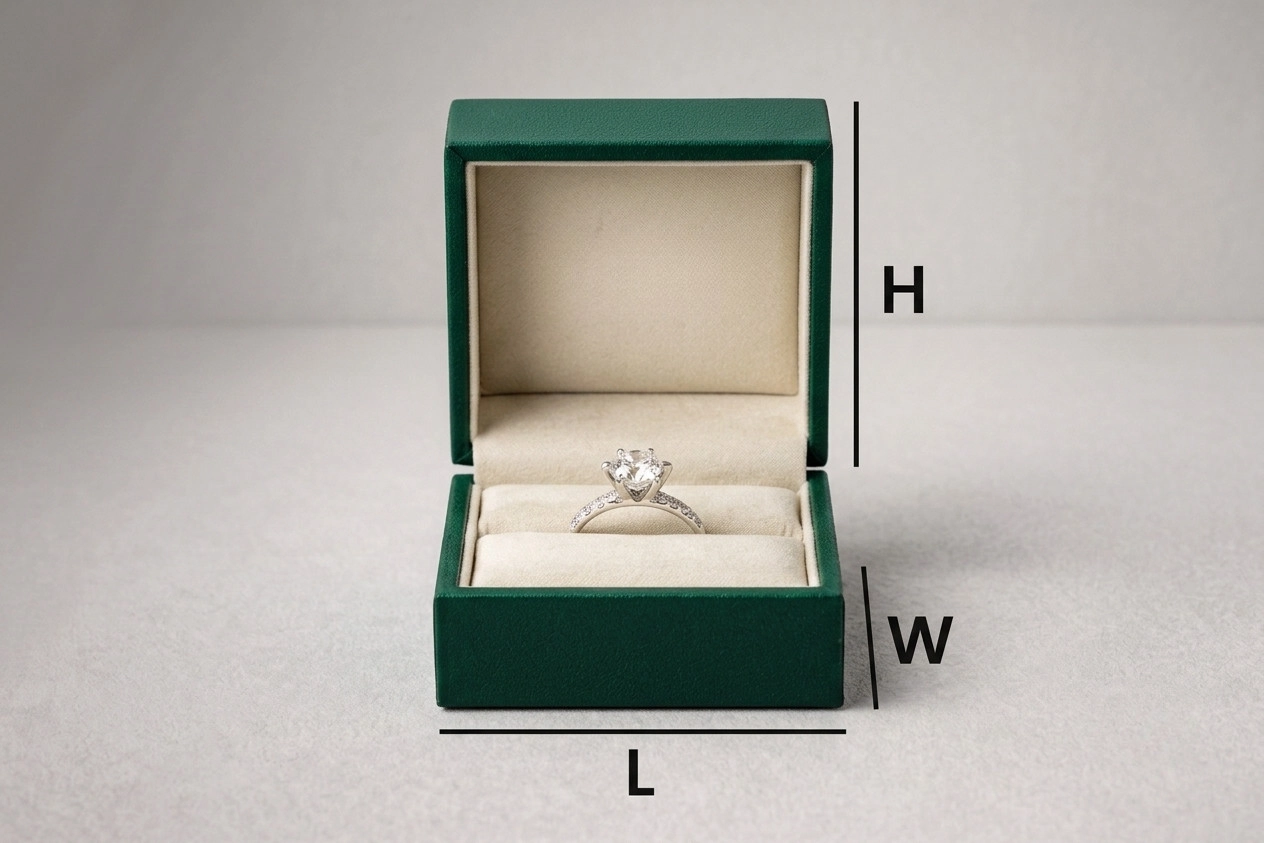
Rigid jewelry box dimensions usually refer to Length × Width × Height, written as L × W × H. Length is the longest side, width is the shorter side and height is the depth from bottom to lid. These rigid jewelry box measurements can describe internal dimensions or external dimensions.
Internal measurements show the usable space. External measurements show the full box size after rigid board, box walls, lid clearance and decorative elements are added.
Internal Space Is More Important Than It Looks
A common mistake is approving a 2 × 2 × 1.5 inch ring box, or 5.1 × 5.1 × 3.8 cm, using only the external dimensions.
After adding a 2 mm rigid board, or about 0.08 inch and velvet lining, the usable interior may shrink enough that taller engagement rings no longer sit correctly.
Internal dimensions matter most for precious jewelry with height, curves, stones, clasps, or delicate chains. Always check interior clearance before final box assembly.
Standard Jewelry Box Dimensions by Jewelry Type
Standard jewelry box dimensions give a helpful starting point, but they are not final rules. Ring box dimensions often start near 2 × 2 × 1.5 inches, or 5.1 × 5.1 × 3.8 cm. Earring box dimensions may sit around 2.5 × 2.5 × 1 inch, or 6.4 × 6.4 × 2.5 cm. Pendant box dimensions often use 3 × 3 × 1 inch, or 7.6 × 7.6 × 2.5 cm. Necklace box dimensions may reach 7 × 5 × 1.25 inches, or 17.8 × 12.7 × 3.2 cm, while bracelet box dimensions and watch box dimensions need more room for inserts and cushioning materials.
| Jewelry Type | Common Box Size |
|---|---|
| Rings and engagement rings | 2 × 2 × 1.5 inches |
| Stud earrings | 2.5 × 2.5 × 1 inch |
| Pendants | 3 × 3 × 1 inch |
| Necklaces | 7 × 5 × 1.25 inches |
| Bracelets and tennis bracelets | 8 × 2 × 1.25 inches |
| Bangles | 4 × 4 × 1.5 inches |
| Watches | 4.5 × 4.5 × 3 inches |
| Jewelry sets | 8 × 6 × 1.5 inches |
Small, Medium and Large Jewelry Box Sizes
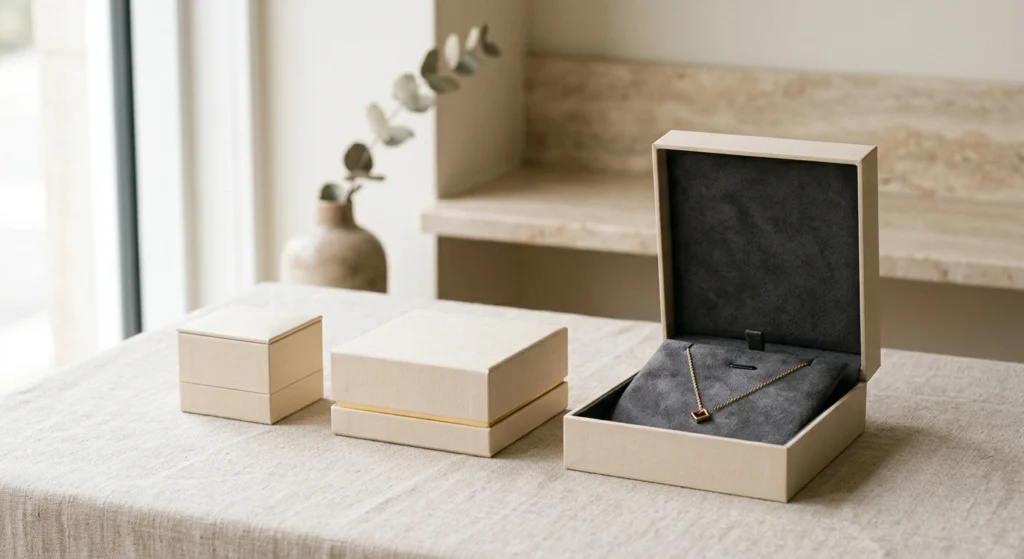
Small jewelry boxes contain rings, stud earrings, anklets and small gemstones. Medium jewelry boxes are suitable for pendants, bracelets, bangles and lightweight chains. Large jewelry boxes are perfect for necklaces, watches, jewelry sets, and multi-piece jewelry.
The useful rigid jewelry box size guide should list products by jewelry type, internal space, insert style and external shipping measurements, not just box sizes.
Clearance Rules That Prevent Fit Problems
Most pieces will have a clearance of 3 to 5 mm or roughly 0.12 to 0.20 inch to provide a breathing room for jewelry. Very tight foam inserts may only need 0.5 to 1 mm clearance, or around 0.02 to 0.04 inch.
Velvet inserts, cotton fill, padded inserts, EVA foam, molded inserts and molded cushions often need one eighth to one quarter inch extra space, or about 3 to 6 mm.
Larger jewelry sets may need one quarter to one half inch clearance, or about 6 to 13 mm.
| Jewelry | Recommended Clearance | Insert Type | Typical Box Style |
|---|---|---|---|
| Rings | 3 to 5 mm, or 0.12 to 0.20 inch | Slotted velvet insert or EVA foam holder | Two piece rigid box or magnetic closure box |
| Engagement rings | 5 to 8 mm, or 0.20 to 0.31 inch | Raised velvet insert with center cut | Extra tall ring box with thick lid clearance |
| Stud earrings | 2 to 4 mm, or 0.08 to 0.16 inch | Paired holes in velvet card or foam pad | Small earring box or gift style jewelry box |
| Pendants | 4 to 6 mm, or 0.16 to 0.24 inch | Neck card with hook and groove support | Pendant box or compact drawer box |
| Chains | 5 to 8 mm, or 0.20 to 0.31 inch | Hooked insert with anti tangle groove | Flat necklace box or sliding rigid box |
| Bracelets | 6 to 10 mm, or 0.24 to 0.39 inch | Long padded insert with soft strap | Bracelet packaging or slim rigid box |
| Bangles | 8 to 13 mm, or 0.31 to 0.51 inch | Molded cushion or round padded holder | Square rigid box or deep bracelet box |
| Watches | 10 to 15 mm, or 0.39 to 0.59 inch | Molded cushion with side support | Watch box with hinged or magnetic closure |
| Anklets | 4 to 6 mm, or 0.16 to 0.24 inch | Flat velvet card with light grooves | Small drawer box or compact rigid box |
| Jewelry sets | 8 to 13 mm, or 0.31 to 0.51 inch | Multi compartment insert with separate slots | Large jewelry set box or luxury presentation box |
| Gemstone jewelry | 5 to 10 mm, or 0.20 to 0.39 inch | Soft foam insert with stone clearance | Protective rigid packaging box |
| Multi piece jewelry | 10 to 15 mm, or 0.39 to 0.59 inch | Custom compartment insert with padding | Large magnetic closure box or drawer box |
How Inserts Change the Final Size
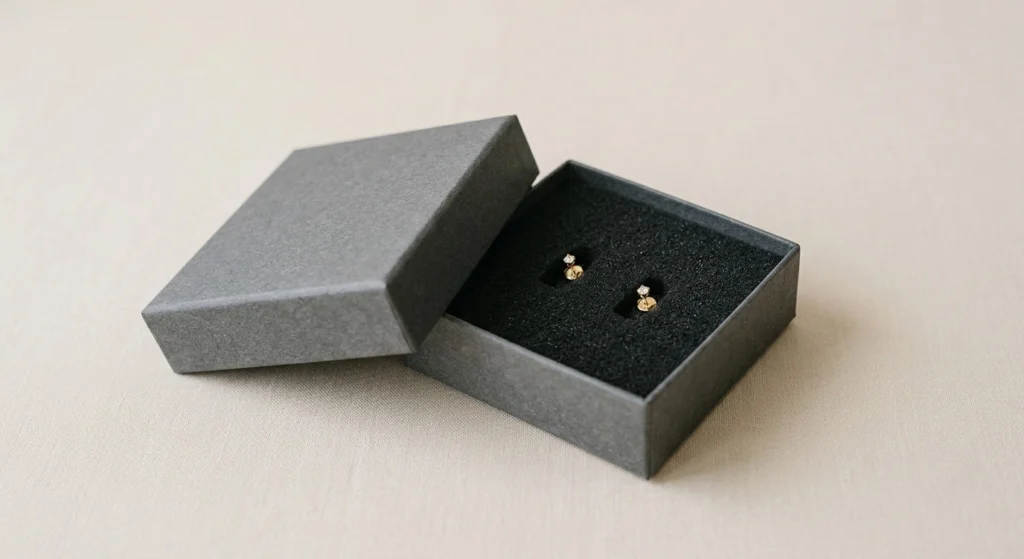
Packaging inserts do more than hold jewelry in place. They change the real usable space inside the packaging. Slotted inserts help rings and earrings stand upright. Hooks and grooves keep necklaces and delicate chains from tangling. Compartments organize jewelry sets, while molded cushions support watches and bangles.
Each insert adds height, width, or depth, so custom jewelry box dimensions should include insert thickness from the first design stage.
Box Style Affects Measurements
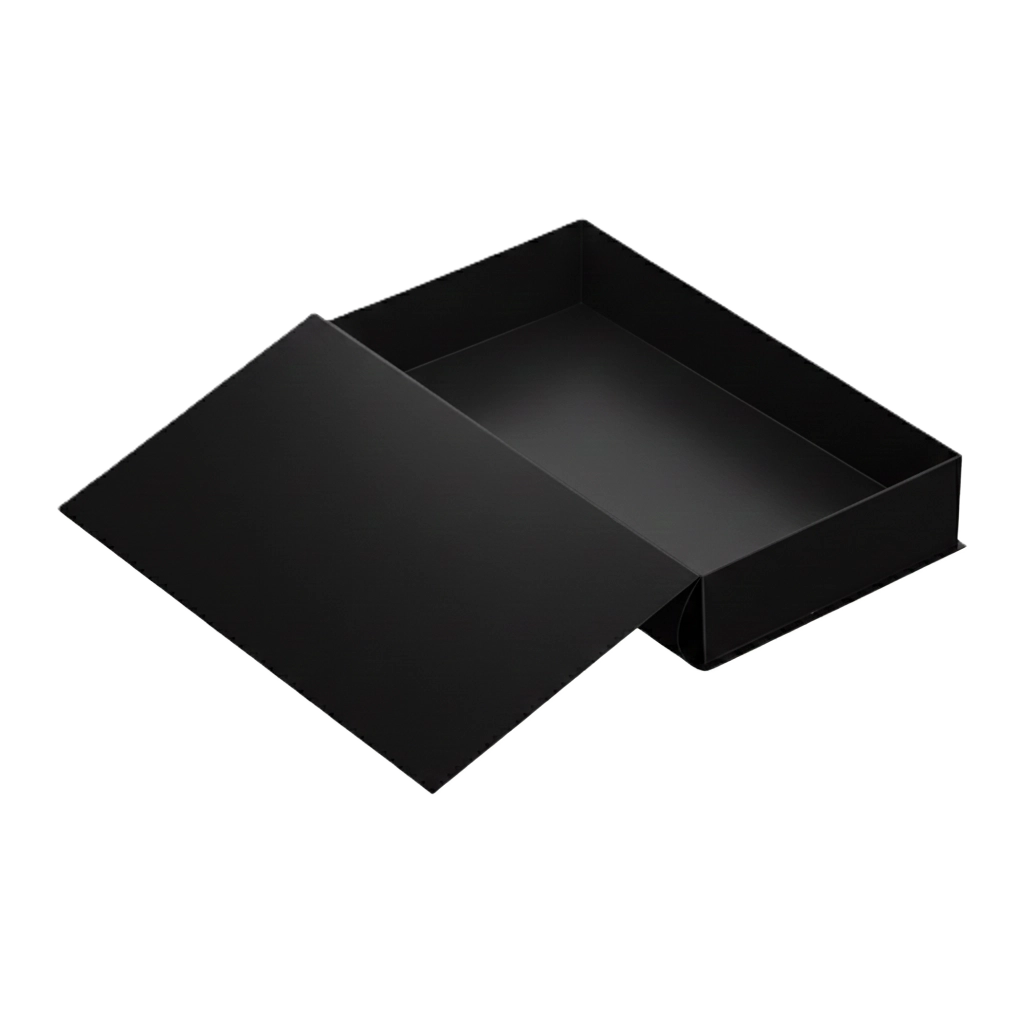
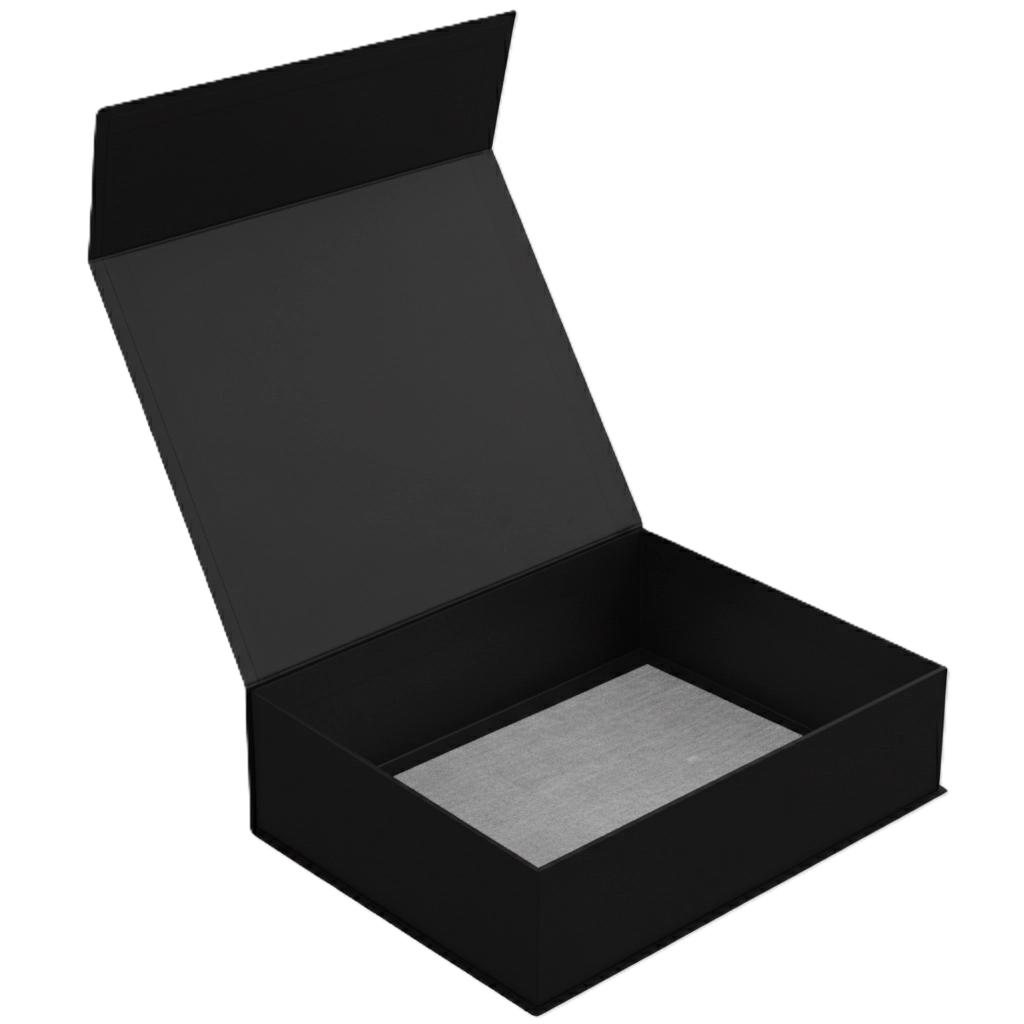
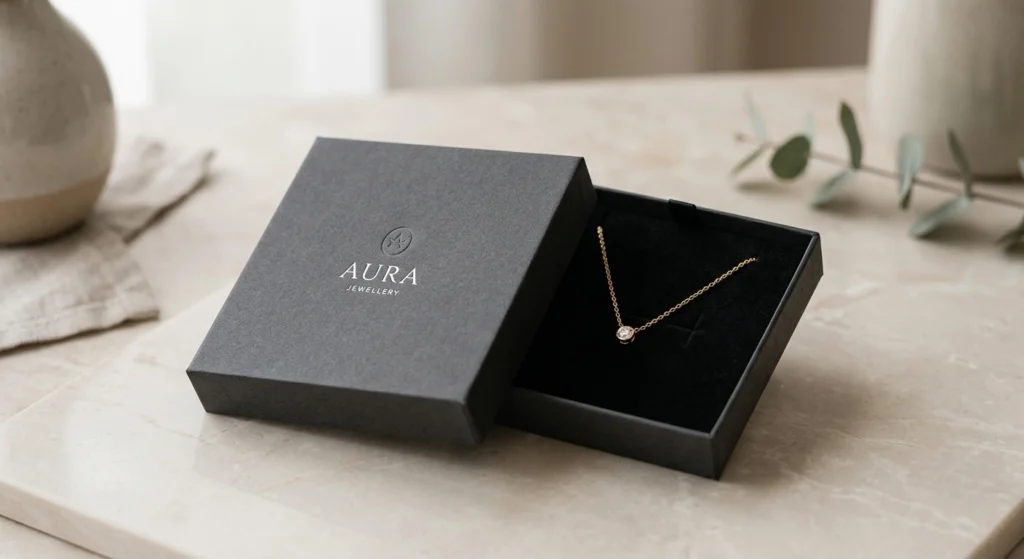
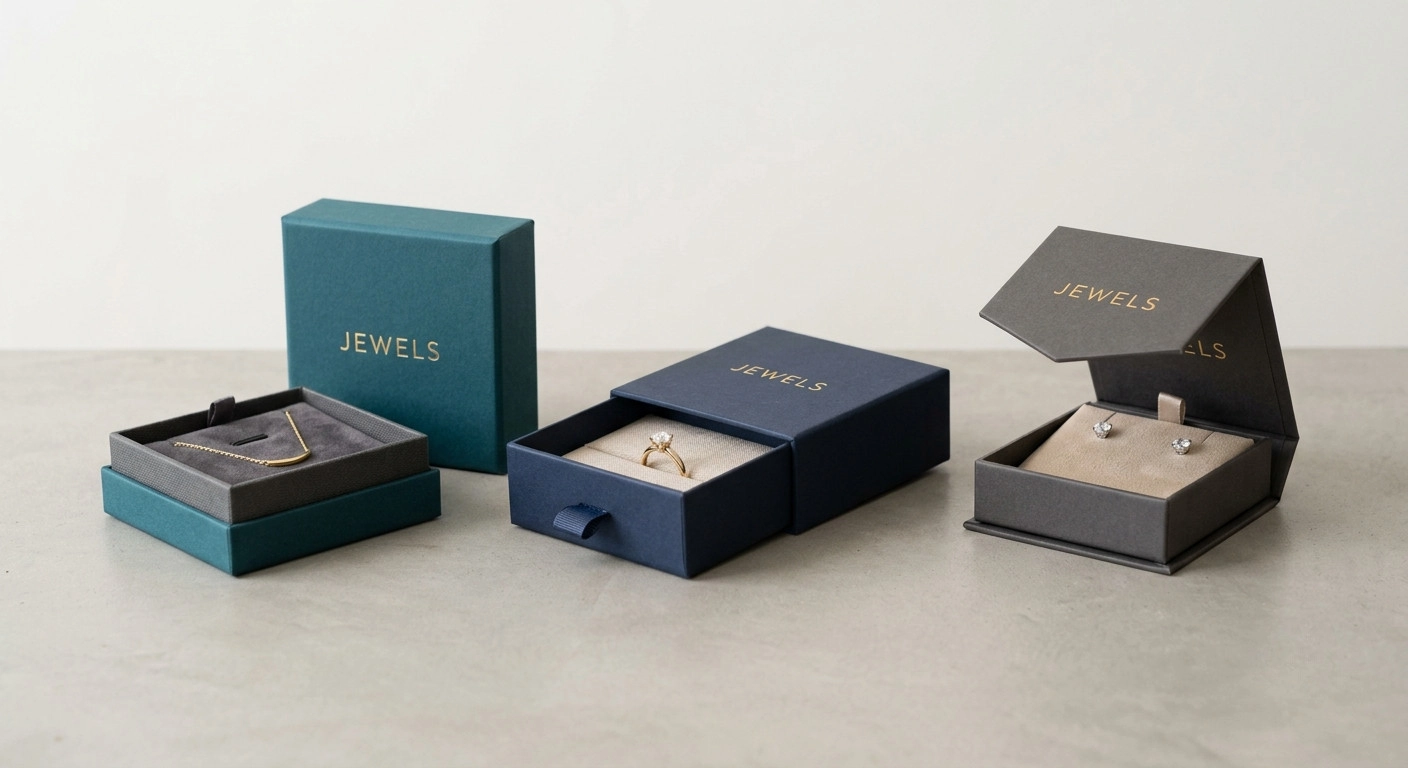
Two piece rigid boxes need sufficient lid clearance so the lid slides on smoothly and doesn’t feel loose. Rigid drawer boxes need side space to move easily. Flip top boxes require space for the hinged lid and other structural parts. Magnetic closure boxes require space for the magnets, the flap thickness and other structural parts.
Gift style jewelry boxes often include thick lids, velvet lining and decorative panels. These features improve luxury presentation, but they also increase external dimensions and shipping volume.
Material Thickness and Wall Planning
Rigid board, cardboard, kraft paperboard, thick paperboard, wooden jewelry boxes and rigid stock all affect rigid jewelry packaging dimensions. A 2 to 3 mm rigid board can reduce usable interior dimensions by several millimeters once wall thickness, lining and wrapping materials are included. Packaging manufacturers should calculate wall thickness before making dielines. This step protects the design from tight fits, weak corners and poor lid alignment.
Shipping Dimensions and DIM Weight
Shipping dimensions affect shipping costs, especially for ecommerce sellers. A larger luxury rigid jewelry box may look better in photos, but it can raise dimensional weight, also called DIM weight.
Volume based shipping charges can increase long term shipping costs across repeat orders. Smart packaging optimization keeps the box compact while still protecting the product. Better sizing also supports storage efficiency, stack storage and shipping optimization.
Retail Display and Shelf Space
Retail packaging needs a different sizing approach than plain shipping boxes. A retail jeweler may need rigid jewelry boxes that sit neatly inside counters, drawers, display trays, or gift cabinets.
Shelf space matters when stores carry rings, necklaces, bracelets, watches and jewelry sets in several sizes. Consistent external dimensions improve stack storage, product showcasing and brand image across a full premium jewelry packaging line.
Custom Dimensions for Better Presentation
Custom jewelry box dimensions help when standard jewelry box sizes do not match the product shape. A custom box manufacturer can create exact fit inserts, custom silhouettes, extra tall lids and personalized dimensions for special collections. This is useful for engagement rings with high settings, thick bangles, layered necklaces and multi piece jewelry. Precision packaging improves product presentation and creates a cleaner brand experience.
Dielines and Packaging Templates
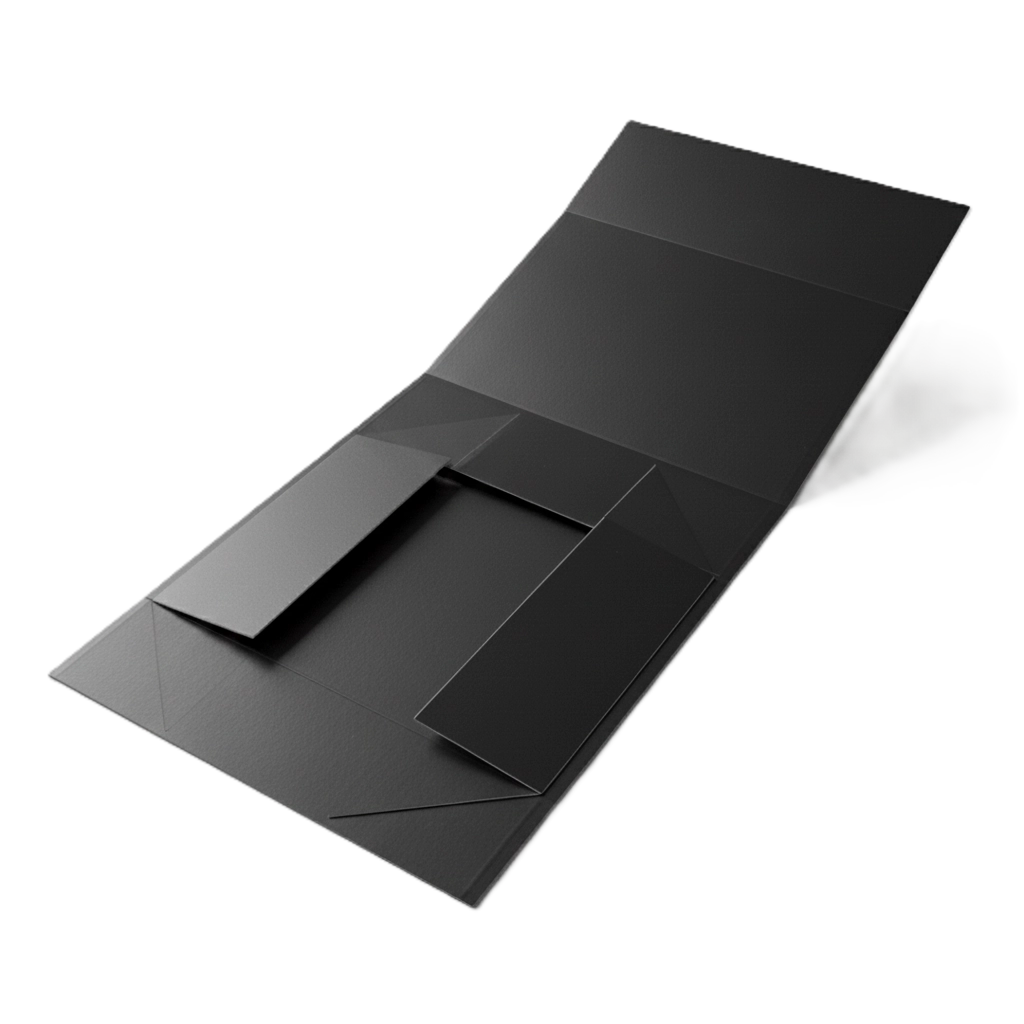
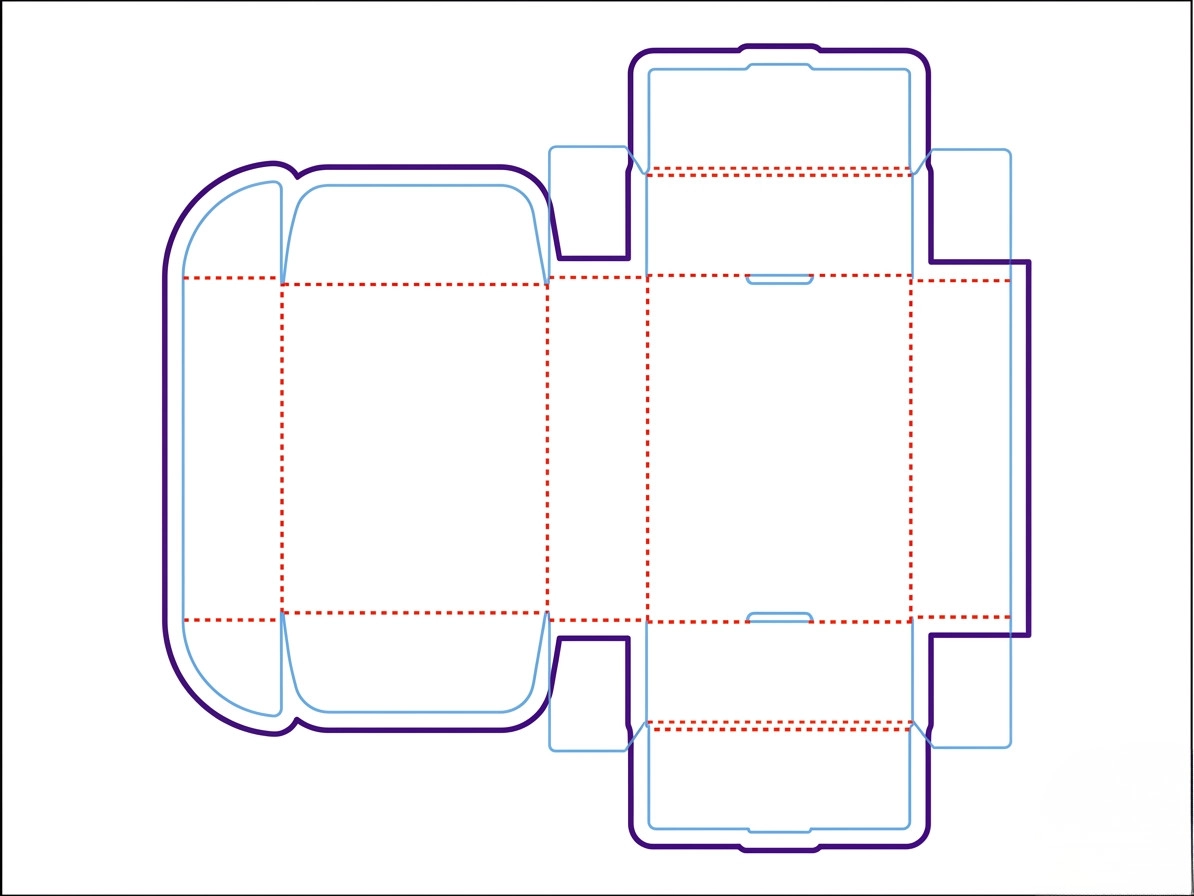
Jewelry box templates and dielines convert measurements into a production-ready packaging structure. Good package templates have fold lines, cut lines, glue regions, panel layout and artwork placement.
Professional design software also allows packaging professionals to evaluate the box before production. Clean dielines also reduce material waste, improve box assembly and support sustainability. For custom jewelry packaging, the template should match the final material thickness.
Testing Before Full Production
Samples help catch problems that flat measurements cannot show. Test box indicates if lid sticks, insert is too high or product moves during handling.
Protective packaging should be tested for both shipping performance and product safety. A simple drop test can help avoid damage, loose stones, and poor customer experiences.
Choosing the Right Box Size
Start by measuring the jewelry, then choose the box. Product size and insert style should be confirmed before approving custom packaging. Each jewelry type requires a different box structure. The right design improves product protection, presentation, and shipping performance. Careful internal measurements, appropriate clearance and compatible inserts result in stronger premium jewelry packaging.
Our team at Hot Custom Boxes can help you create custom jewelry packaging with personalized dimensions, rigid packaging boxes, luxury finishes and exact fit inserts for your brand.