















Table of Contents
Get A Free Quote
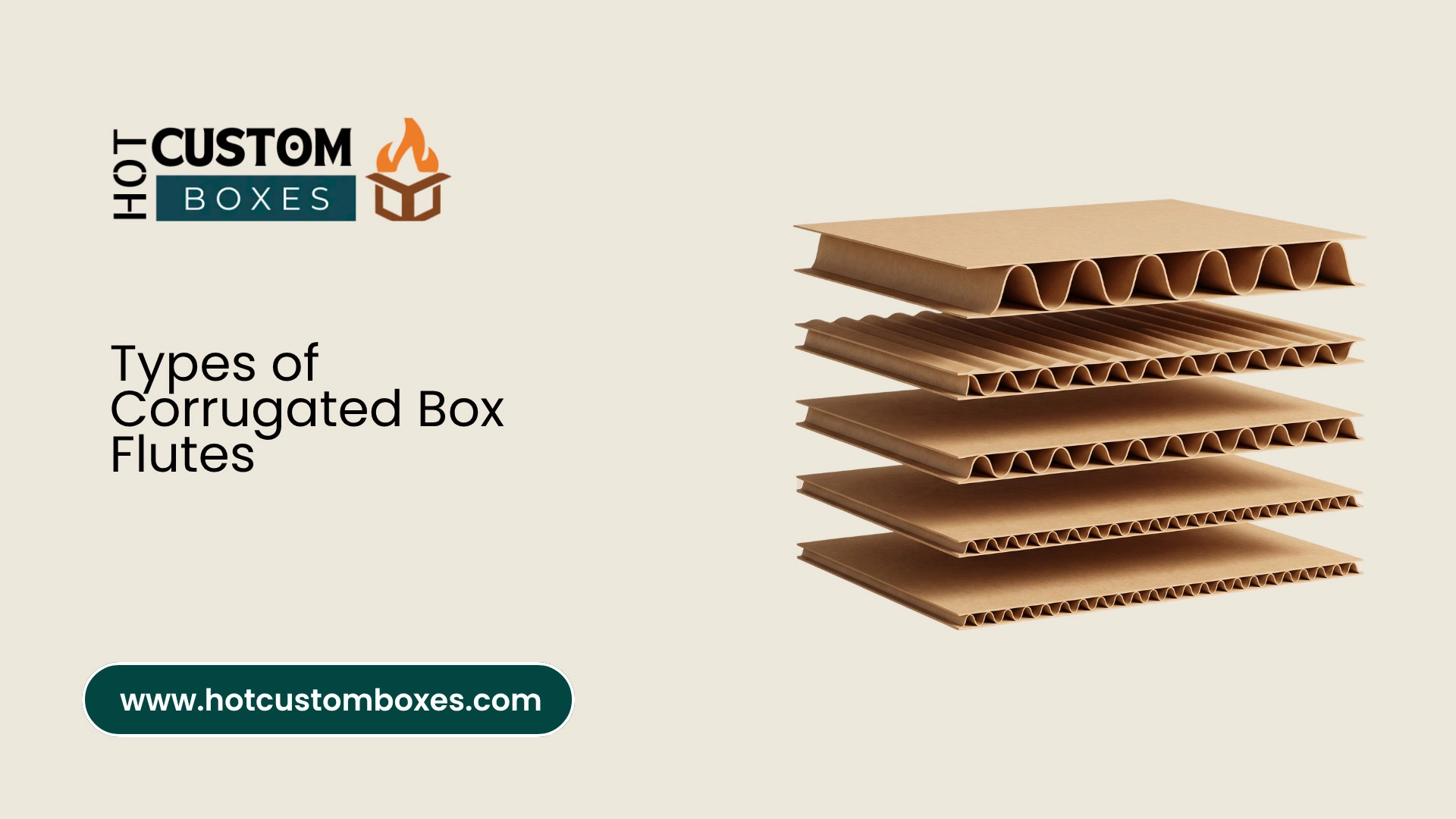
Corrugated flutes are the wave shaped layers placed between linerboards in corrugated cardboard. They influence how a box performs during packing, storage, and shipping. Common flute profiles include A, B, C, E, and F, with each suited to different packaging needs.
Understanding these flute types helps businesses choose corrugated boxes that match their products and handling requirements.
What Is a Corrugated Box Flute?
A corrugated box flute is the wave shaped medium placed between flat sheets of linerboard.
Manufacturers form arches within the corrugated medium before bonding it securely to kraft liners. This corrugated flute construction distributes pressure while creating cushioning space around the packaged product.
Finer profiles contain more arches, giving a smooth corrugated printing surface for detailed sharp graphics.

Different Types of Corrugated Box Flutes
2.1 A Flute
A flute is the thickest one profile, approximately 1/4 inch with 36 flutes per foot. Its large arches provide strong cushioning, compression resistance, insulation, and dependable vertical stacking strength.
A flute corrugated box construction works perfect for fragile goods, glass products, heavy items, and protective inserts. Their thicker walls absorb impacts during transportation and help products handle changing warehouse temperatures. However, A flute cardboard needs more storage space and provides a less refined printing surface.

2.2 B Flute
B flute measures approximately 1/8 inch and commonly contains about 49 flutes per linear foot. Its smaller arches provide excellent crush resistance, puncture resistance, and structural support during regular handling.
B flute corrugated boxes suit food packaging, retail cartons, partitions, displays, and die cut packaging. The board supports accurate folding and scoring while offering a better printing surface than A flute.
B flute packaging also performs well when boxes face outside pressure during shipping or storage. However, it offers less cushioning than thicker profiles when fragile products require greater impact protection.

2.3 C Flute
C flute measures approximately 11/64 inch and contains around 41 flutes per linear foot. It balances cushioning, compression strength, crush resistance, printability, and general shipping performance.
C flute corrugated boxes commonly protect furniture, glassware, food products, electronics, and ecommerce orders. Its flexible performance makes C flute cardboard suitable for many general purpose shipping cartons. The board offers more cushioning than B flute while using less space than A flute.

2.4 E Flute
E flute is a micro flute measuring approximately 1/16 inch with about 90 flutes per foot. Its thin flute structure creates strong crush resistance and a smooth surface for detailed printed corrugated packaging.
E flute corrugated boxes support cosmetics, electronics, ceramics, displays, mailers, and consumer product packaging. The reduced thickness saves storage space and allows more room inside boxes with fixed dimensions. E flute cardboard also works effectively with folding, scoring, and custom die cutting processes.

2.5 F Flute
F flute is an especially fine profile measuring approximately 1/32 inch with 128 flutes per foot. Its high flute density creates an even surface for graphics, branding, and premium shelf presentation.
F flute corrugated boxes often package cosmetics, jewelry, shoes, small electronics, and lightweight retail goods. The thin board folds easily and can create firm structures while using relatively little fiber. It also provides reliable crush resistance for its size and supports high quality printing.

Comparing A, B, C, E, and F Corrugated Flute Types
| Flute | Approx. Thickness | Flute Density | Characteristics | Best For |
| A | 1/4 inch | 36 per foot | Cushioning and stacking | Heavy or fragile products |
| B | 1/8 inch | 49 per foot | Crush and puncture resistance | Retail and shipping packaging |
| C | 11/64 inch | 41 per foot | Balanced protection | General purpose boxes |
| E | 1/16 inch |
How Do You Choose the Right Corrugated Flute?
Start with product weight because heavy items require enough compression strength and structural support. Fragile products may need tall flutes, cushioning foam inserts, or double wall corrugated packaging boxes. So always review shipping distance, carrier handling, moisture exposure, warehouse conditions, and possible impacts during handling, storage and transportation.
Stacking height and load distribution also influence the required corrugated board structure. Box dimensions matter because large panels may bend more easily as compared to the smaller panels. E and F flute support detailed printing, while A and C prioritize cushioning and protection. Thin board saves storage space, yet thicker board may prevent expensive product damage.
Benefits of Choosing the Right Corrugated Flute
A cereal boxes needs enough space to hold the filled inner bag without excessive pressure. However, too much empty space can waste material and disappoint customers.
Finer flutes improve shelf appeal and make printed graphics appear cleaner over retail packaging. Efficient board choices may reduce package weight, fiber use, warehouse space, and transportation expenses. Corrugated cardboard recycling also supports material recovery when packaging boxes remain clean and local facilities accept them.
Choosing the Right Flute for Your Packaging Needs
A flute prioritizes cushioning, while B flute offers strong puncture and crush resistance. C flute balances shipping protection, and E flute combines thin construction with good printability. F flute delivers the finest surface for lightweight retail and premium product boxes.
The best option depends on weight, fragility, handling, stacking, box size, storage, and presentation requirements. Always test the complete package solution because the flute thickness itself cannot predict real shipping performance.
Frequently Asked Questions
No single flute is strongest under every condition. Strength also depends on liners, board construction, dimensions, moisture and box design.
A flute corrugated is approximately ¼ inch, which is a more thick flute as compared to the B flute.
Yes. C flute provides balanced cushioning, compression strength, and crush resistance for many general shipping cartons.
The E flute is thicker and commonly offers more cushioning while the F flute gives a smooth painting surface.
E and F flute suit detailed retail graphics, while B flute supports retail boxes needing greater durability.
A flute offers strong cushioning, but product testing may indicate C flute or double wall construction.
Larger flutes improve cushioning, while smaller flutes often improve crush resistance, folding accuracy, and surface quality.
Choose according to product weight, fragility, dimensions, shipping conditions, stacking requirements, printing needs, and verified testing.