















Table of Contents
Get A Free Quote
A little product doesn’t require a large box, layers of wrapping, and plastic filler. Additional packaging consumes resources. It also leaves customers with too much garbage to dispose of after they place an order.
The first question to ask on the journey toward zero-waste packaging is: What does your product really need? The primary objective is to prevent waste without compromising the integrity of your product during transport. This isn’t something that can be done simply by replacing plastic bags with paper. The size of the box, the strength of the materials, printing, shipping conditions, and the means of disposal are all important factors.
E-commerce makes this easy to understand. Shipping needs light, strong packaging to survive long journeys. However, a significant number of retail stores continue to box products in oversized packages, plastic film, and foam. This creates a garbage problem for customers. It also adds a cost for businesses, which pay to store and ship empty space.
You don’t have to fix it all at once. This guide covers the benefits of low-waste packaging, the key materials and what to cut. It also gives you a design process and ways to track your progress.
Zero-Waste Packaging: What Does It Mean?
Zero-waste packaging is a packaging design approach that prevents packaging waste. It also keeps useful materials in use for longer. It removes excess components, reduces material consumption, and provides clear pathways for reuse, repurposing, or composting.
It does not mean every package leaves no waste behind. Rather, it is a long-term objective. You skip unnecessary components, save material, and give each part a realistic end-of-life option.
Even a simple package can generate waste if it breaks the product or can’t be recycled locally. A recyclable box isn’t a complete solution for zero waste on its own. That sort of material still requires a local center that accepts and processes it.
Source reduction and reuse are more preferred waste management options than recycling and disposal, according to the U.S. Environmental Protection Agency (EPA). Source reduction includes reducing packaging, redesigning products, and preventing waste from entering the waste stream.
Here is a real-life scenario. The right-sized corrugated box requires less empty space and less filler. A fitted paperboard insert keeps the product in place. Clear instructions help customers separate and dispose of each part. Planning for such a job starts before production. Each component, from the outer box to the tape, label, coating, and insert, should serve a clear purpose.
Main Principles of Zero-Waste Packaging
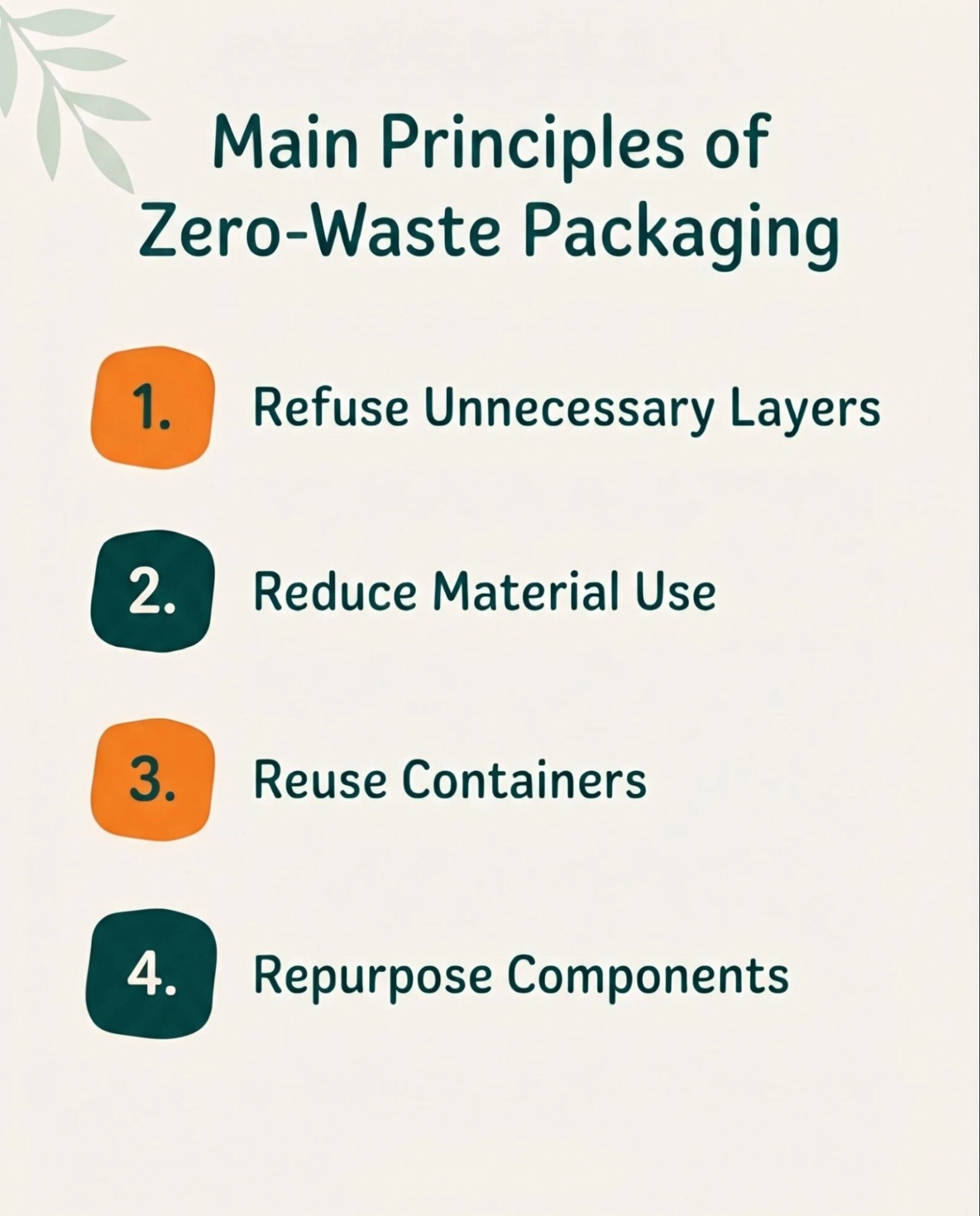
A practical zero-waste packaging system is based on five principles. Their effectiveness improves when prevention, protection, and recovery complement each other.
1. Refuse Unnecessary Layers
When decorative sleeves, duplicate wraps, extra bags, and printed inserts provide no protection or information, remove them. Before starting work, first explore what each layer does. A sleeve might contain needed product information, and a liner might prevent leakage.
2. Reduce Material Use
Select a box that fits the product and protects it. Larger empty spaces require more filler. The more volume you ship, the more filler you need. Structure is important as well because a good design can use less board while providing the same strength.
3. Reuse Containers
Create boxes, mailers, or totes designed for multiple uses. Where appropriate, use refillable containers. The reuse process must be practical. Customers need to understand how to return or refill the package. The business also needs to manage collection, cleaning, and replacement.
4. Repurpose Components
Use inserts and boxes for other purposes, such as storage or returns.
5. Recycle or Compost Properly
Select materials and components with an actual recovery path. Ensure that customers can separate the parts and that local programs accept them.
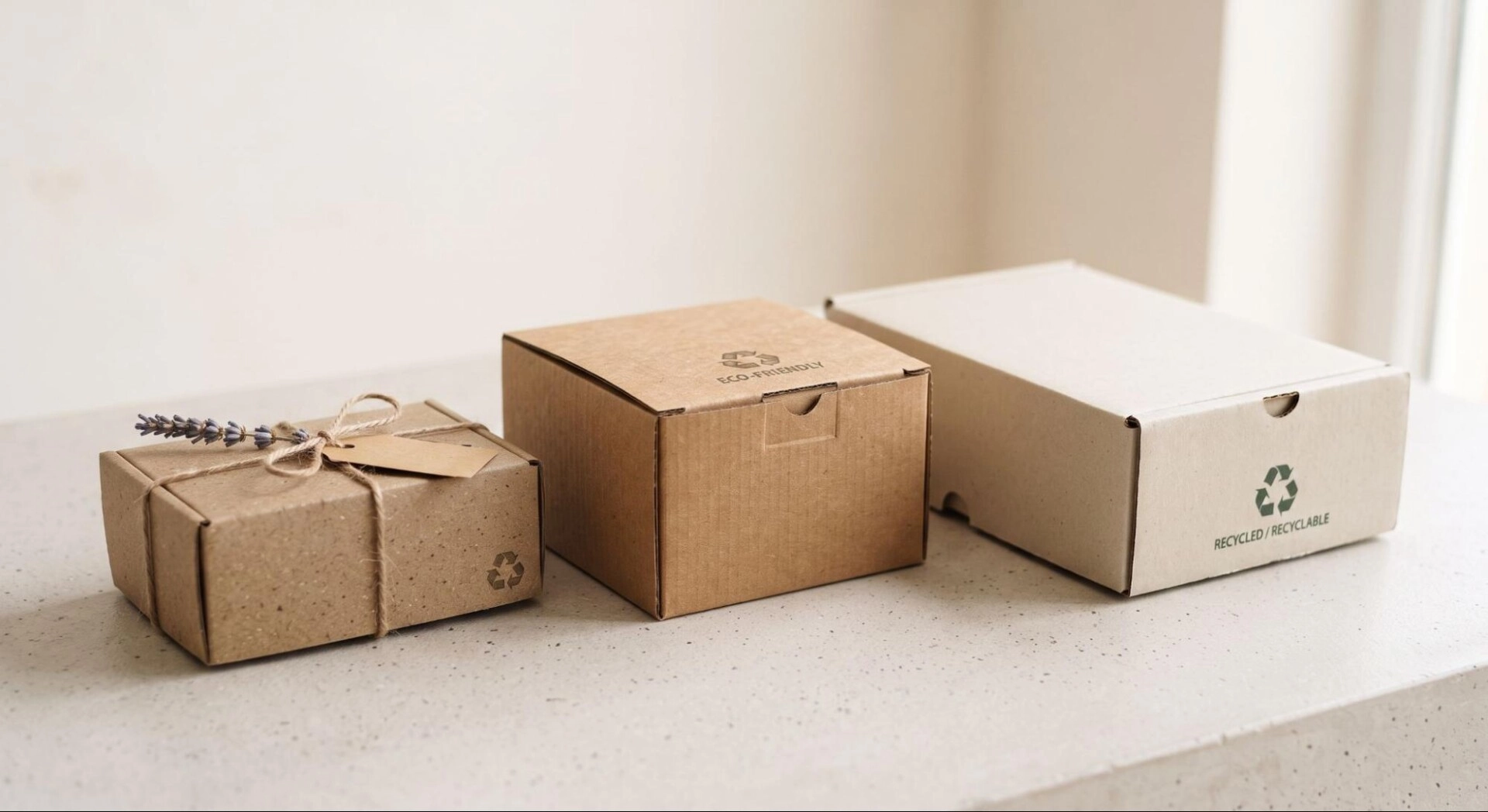
Zero Waste vs. Other Sustainable Packaging Terms
Packaging terms refer to various features. Each term points to a particular disposal path. This knowledge enables brands to make informed comparisons of sustainable packaging options without using ambiguous terms.
| Packaging Term | What It Means | What to Check |
|---|---|---|
| Zero waste packaging | A strategy to prevent waste and keep materials in use | The complete package and actual recovery route |
| Sustainable packaging | An effort to reduce environmental impacts across the lifecycle | Material use, protection, transport and disposal |
| Recycled packaging | Packaging containing recovered material | The verified recycled content percentage |
| Recyclable packaging | Packaging that an appropriate recycling system can process | Local collection, sorting and processing access |
| Reusable packaging | Packaging designed for repeated use | Durability, cleaning and actual reuse |
| Refillable packaging | A container that customers can refill through an available option | The refill system and replacement packaging |
| Compostable packaging | Packaging that breaks down under specified composting conditions | Certification, conditions and processor acceptance |
| Biodegradable packaging | Material that breaks down through biological activity under certain conditions | Evidence about conditions, timing and customary disposal |
| Plastic-free packaging | Packaging without plastic components | Windows, coatings, liners, labels and adhesives |
The term ‘eco-friendly packaging’ should always refer to specific, clear improvements. A simple statement of verified post-consumer recycled content is more helpful than an empty promise of “zero impact.
Not all plant material will decompose in the garden, either. This applies specifically when making claims for compostability, recyclability, and recycled content.
The Federal Trade Commission (FTC) Green Guides advise businesses to back up all environmental claims with reliable evidence. This is for claims relating to compostability, recyclability, and recycled content.
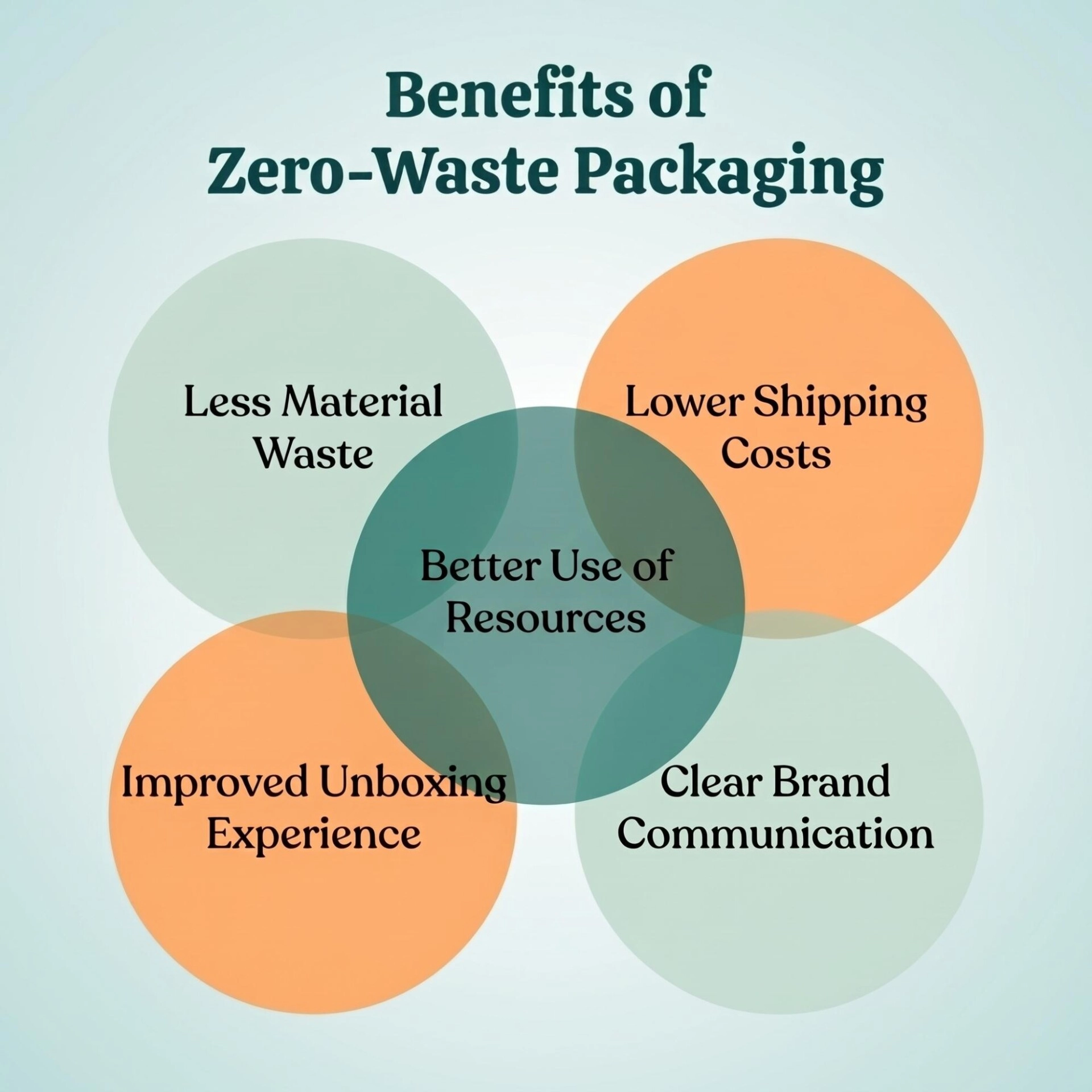
Benefits of Zero-Waste Packaging
What’s the real impact of a low-waste design? It will depend on what you’re changing and how the package does during transit.
Less Material Waste at the Source
The easiest way to cut waste is by using less material from the start. Right-sizing custom corrugated boxes is one simple method. A box that fits your product uses less board and less void fill. Standards like ISO 18602 guide makers toward lower packaging weight without sacrificing structural strength. Removing an unneeded part stops waste before it ever exists.
Lower Freight and Shipping Costs
Oversized boxes leave empty spaces that require extra filler. Shipping carriers often charge by dimensional weight (DIM weight), which means larger boxes cost more to ship. Right-sized boxes take up less room in delivery trucks. They let you fit more units on every pallet, which lowers your shipping costs while using fewer raw materials.
Better Use of Resources
Smaller packages lower raw material demand across your supply chain. Using verified recycled content supports the market for recovered fibers. Reusing containers spreads the production footprint over many deliveries. However, you must balance these material savings with product safety. Saving a few cents on paperboard while breaking items creates far more waste in the end.
A Better Unboxing Experience
Shoppers dislike digging through foam peanuts and plastic film to reach their order. Simple cardboard folds, paper inserts, and molded pulp trays protect products while displaying them neatly. A clean layout presents a product well, and a snug fit often looks better than extra layers. Fewer parts also mean less material for your customers to sort at home.
Clearer Brand Communication
Specific changes give your customers real facts they can trust. For example, you can share a verified drop in packaging weight compared to your old design. Clear details build consumer trust when backed by proof.
Types of Packaging That Support Zero-Waste Goals
These categories cover both material choices and operating systems. A reusable container can also use recycled materials.
Reusable and Returnable Systems
Rigid boxes, shipping totes, fabric pouches, and durable mailers stay in use across many delivery cycles. This approach works best with predictable delivery patterns:
- Closed-loop B2B deliveries
- Local food delivery services
- Subscription box programs
- In-store refill systems
Always track how often customers return each container. Rarely returned boxes fail to deliver their expected environmental gains. Freight, cleaning steps, and physical damage all impact your final results.
The Ellen MacArthur Foundation highlights four main reuse models: refill at home, refill on the go, return from home, and return on the go. Refillable bottles and jars require easy stations or lightweight refill packs to work well.
Recyclable Paper and Corrugated Systems
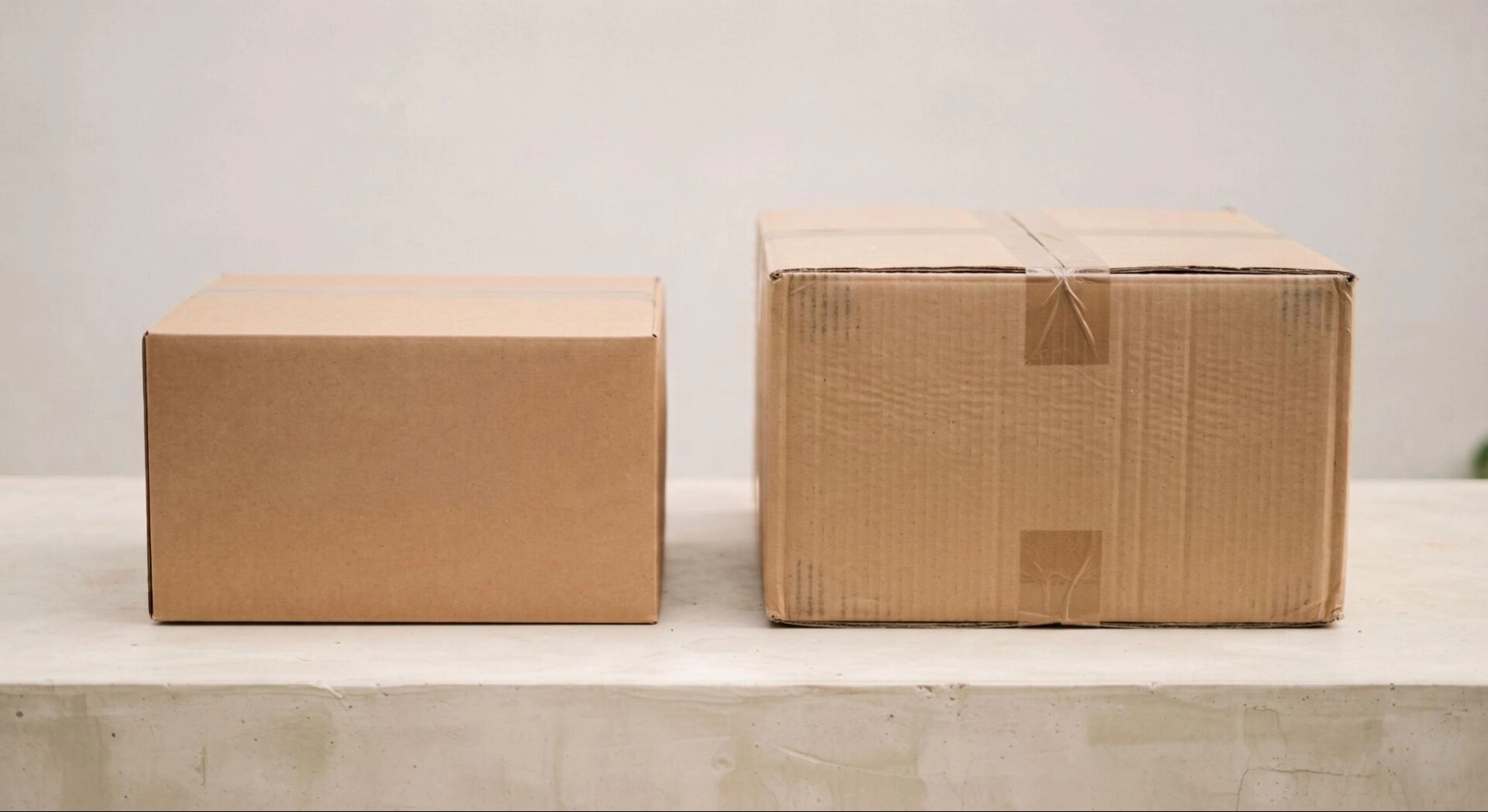
Folding cartons, corrugated boxes, and paper inserts support recycling when local programs accept the final items. Heavy coatings, plastic windows, glues, and food stains can hurt acceptance. Always check the full structure before labeling a package recyclable.
Packaging With Recycled Content
Recycled paperboard and recovered fibers support demand for recycled materials. Ask your supplier for official paperwork, as brown paper color alone does not prove a box contains recycled content.
Certified Compostable Options
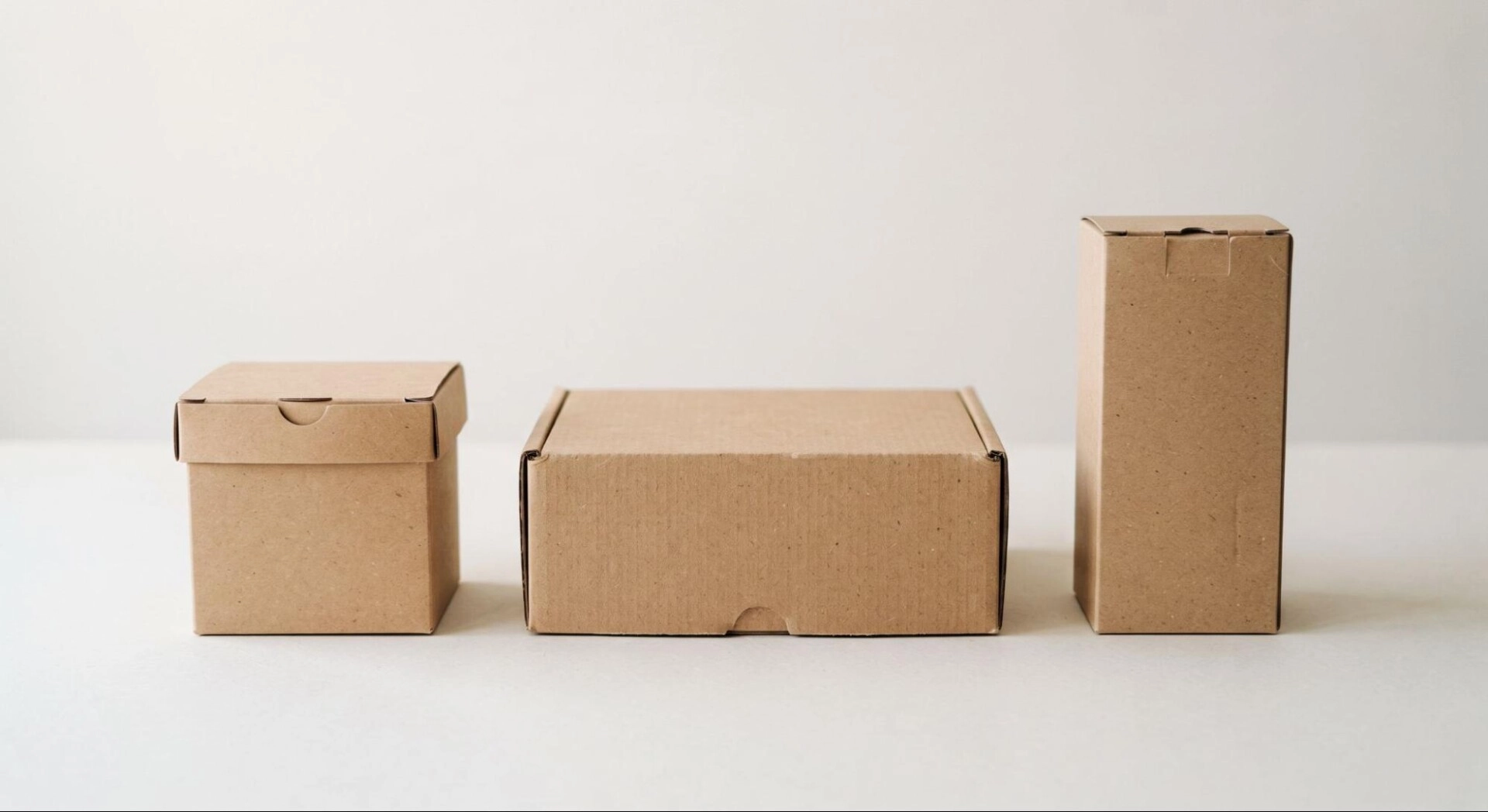
Certified compostable packaging suits specific uses that have a clear collection route, like food delivery. Commercial and home composting need very different conditions. A package built for commercial facilities shouldn’t be sold as garden-friendly.
Minimal Formats
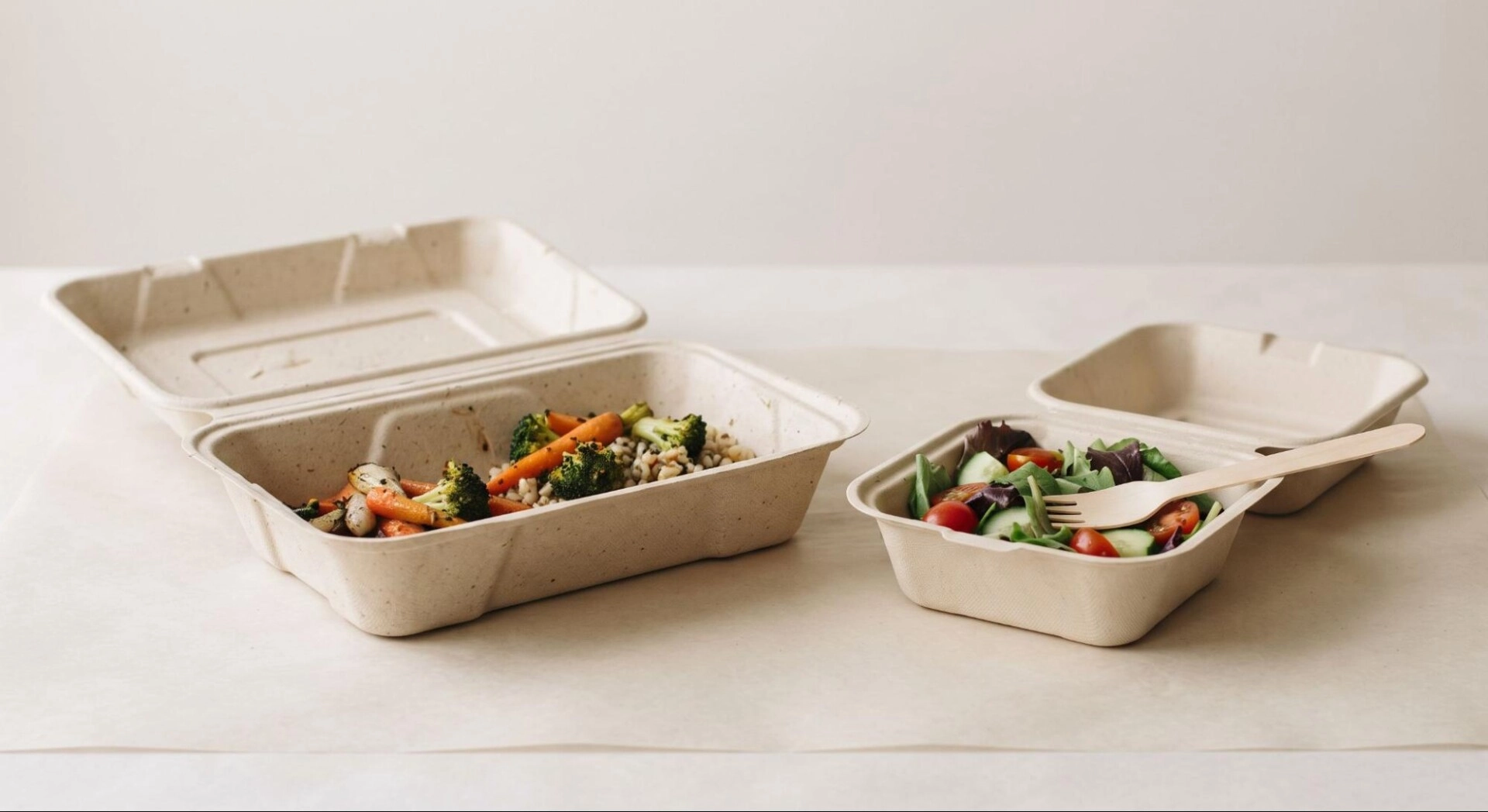
Some products work well with just a paper band, a simple sleeve, or no outer box at all. Safety, hygiene, and product labeling rules still apply.
Materials to Consider for Lower Waste Packaging
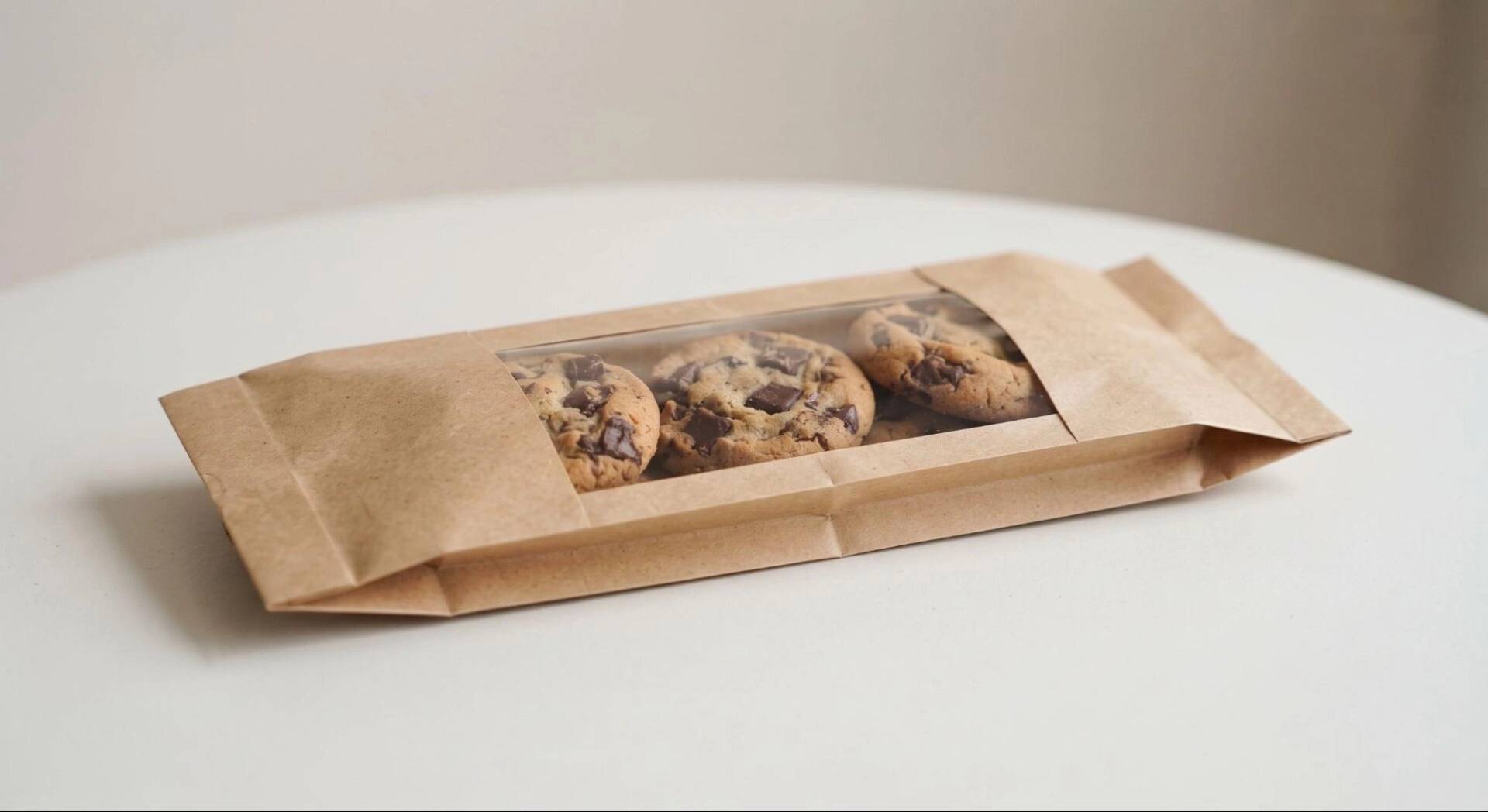
Select your zero-waste packaging materials based on structural strength and available local recovery options.
| Material | Suitable Uses | Main Checks |
|---|---|---|
| Kraft paperboard | Lightweight cartons, sleeves and retail packaging | Strength, coatings and documented recycled content |
| Corrugated board | Shipping boxes, mailers and protective outer packaging | Product weight, flute, stacking and transit conditions |
| Recycled paperboard | Suitable retail and product cartons | Grade, appearance and intended contact requirements |
| Molded pulp | Fitted trays and protective inserts | Cushioning, moisture exposure and local acceptance |
| Paper cushioning | Wrapping and filling necessary gaps | Required quantity and tested product protection |
| Glass | Suitable refillable or returnable containers | Weight, breakage, cleaning and repeated use |
| Metal | Durable containers and selected reuse systems | Product suitability, cleaning and recovery access |
| Certified compostable materials | Applications with an accepted composting route | Certification scope and processing requirements |
Kraft Paperboard and Corrugated Boxes
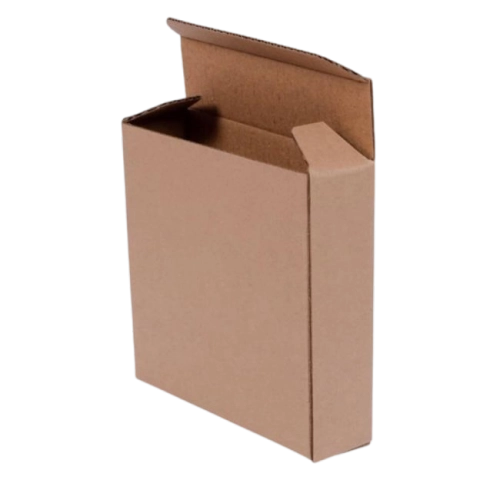
Kraft paperboard and corrugated board form the backbone of sustainable packaging. Corrugated cardboard stays the top choice for shipping because it protects goods without adding unnecessary weight. Its strength comes from a fluted paper layer glued between two flat outer liners.
Always match the board grade to your product’s weight instead of choosing by look alone. FSC certification helps verify responsible forest sourcing through the supply chain.
Molded Fiber and Sugarcane Bagasse
Molded fiber comes from recycled paper or agricultural waste like sugarcane bagasse. Both options replace plastic trays and foam inserts nicely. Test them for moisture resistance, surface shedding, and proper fit before starting full production.
Mycelium and Agricultural Residues
Mycelium packaging mixes agricultural waste with fungal root networks. Manufacturers grow it into custom protective shapes to replace expanded polystyrene (EPS). Check official certifications and required disposal steps, as not all mycelium breaks down in home gardens.
Plant-Based Films and Bioplastics
Plant-based films made from PLA or cellulose give products grease and moisture resistance. Check local processing access before printing disposal claims on bioplastic bags.
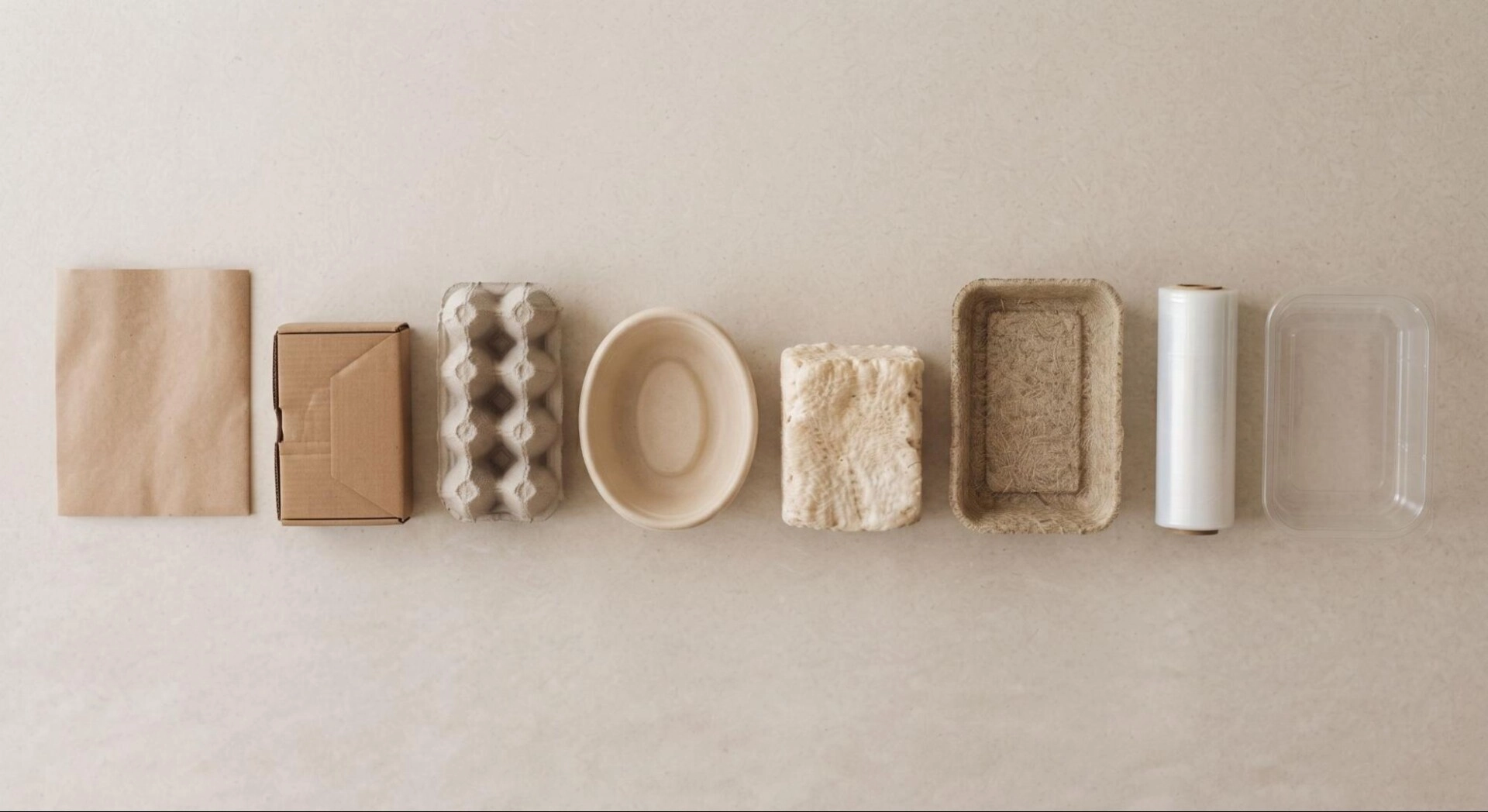
What to Remove From Plastic Packaging
Replacing only the outer box is often not enough. If you want to move toward a plastic-free packaging system, you have to review the smaller components as well. Look at these:
Plastic Tape
Plastic tape makes paper boxes much harder to recycle. Water-activated paper tape is a clean alternative. Its starch adhesive bonds directly to cardboard fibers, so the box and tape recycle together.
Plastic Void Fill
Air pillows and plastic peanuts add non-recyclable waste to empty box space. Crinkle paper, honeycomb paper, and cardboard dividers fill those gaps using renewable fibers.
Poly Mailers
Plastic shipping bags are common for clothing. Heavy-duty kraft paper mailers protect soft goods well, while padded paper envelopes cushion items that need extra care.
Plastic Windows and Coatings
Plastic display windows complicate box recycling. You can remove them when seeing the product inside is not essential. Water-based barriers and algae-based coatings can replace petroleum-based plastic laminates.
Petroleum-Based Inks
Petroleum inks cause issues during paper de-inking. Soy-based inks and vegetable-based inks de-ink easily during recycling, leaving less chemical residue behind.
How to Design Low-Waste Packaging, Step by Step
Good design starts with the product inside. Exact dimensions, total weight, and shipping routes dictate your packaging structure.
Step 1: Audit Your Current Packaging
List every part used for a single order. Record its weight, cost, and purpose. Measure the package dimensions carefully. Note all labels, coatings, tape, and inserts. Count damaged items and record pre-shipping waste like offcuts or rejected boxes.
Step 2: Define Protection Requirements
Check product weight, fragility, shape, and surface finish. Consider moisture, grease, leakage, and temperature during transit. Food items require materials approved for specific storage and contact rules.
Step 3: Right-Size the Package
Measure internal length, width, and height. Leave minimal room for needed inserts and protective clearance. A snug fit limits movement and cuts filler without making packing difficult.
Step 4: Choose Board Grade and Fluting
Base your board grade on product weight and transit needs. Corrugated options include E-flute, B-flute, and C-flute, which offer different strength levels and board thickness. Check compression strength and humidity resistance. Pick the lightest board that passes your tests.
Step 5: Replace Loose Filler With Fitted Protection
A fitted insert holds items in place without loose fill. Paperboard dividers suit multi-item orders well. Molded pulp cushions fragile items safely.
Step 6: Check Recovery Options for Every Component
Confirm which materials your customers can place in local recycling bins. Review the box, insert, tape, label, and liner together. Use single-material structures that customers can separate easily.
Step 7: Compare Total Cost
Factor in raw materials, packing labor, storage, shipping, and damage rates. A lower box price can be wiped out by extra filler or slower packing times. Sustainable options may cost more up front due to raw material sourcing. However, right-sized boxes often reduce freight fees.
Step 8: Prototype and Run Transit Tests
Ask for physical samples before production starts. Test your packages using standard ISTA transit procedures to check drop, vibration, and compression strength.
Step 9: Give Clear Disposal Instructions
Tell your customers how to handle each part after opening:
- “Flatten box for paper recycling.”
- “Remove paper tape before composting.”
- “Check local facilities for commercial composting.”
Step 10: Match Order Quantities to Demand
Avoid over-ordering seasonal packaging that becomes useless later. Balance bulk discounts against storage costs and potential material waste.
Step 11: Pilot Before Full Rollout
Start with a single product line or a small order run. Track packing speed, damage rates, transit protection, and customer reviews before updating your whole catalog.
Practical Zero-Waste Packaging Ideas for Different Products
Useful zero-waste packaging ideas address a specific product problem. The examples below provide starting points for testing.
| Product | Packaging Idea | Protection Check |
|---|---|---|
| Apparel | Appropriately sized mailer with fewer extra wraps | Moisture exposure and cleanliness |
| Cosmetics | Folding carton with fitted paperboard protection | Leakage, breakage and movement |
| Soap | Paper sleeve or compact carton where suitable | Product condition and required labeling |
| Bakery products | Suitable carton with necessary barriers | Food contact and product freshness |
| Fragile gifts | Corrugated box with fitted protection | Drop performance and compression |
| Subscription products | Several box sizes for different contents | Secure fit across order combinations |
| Refillable products | Minimal outer packaging supporting an existing refill system | Protection of the container and refill components |
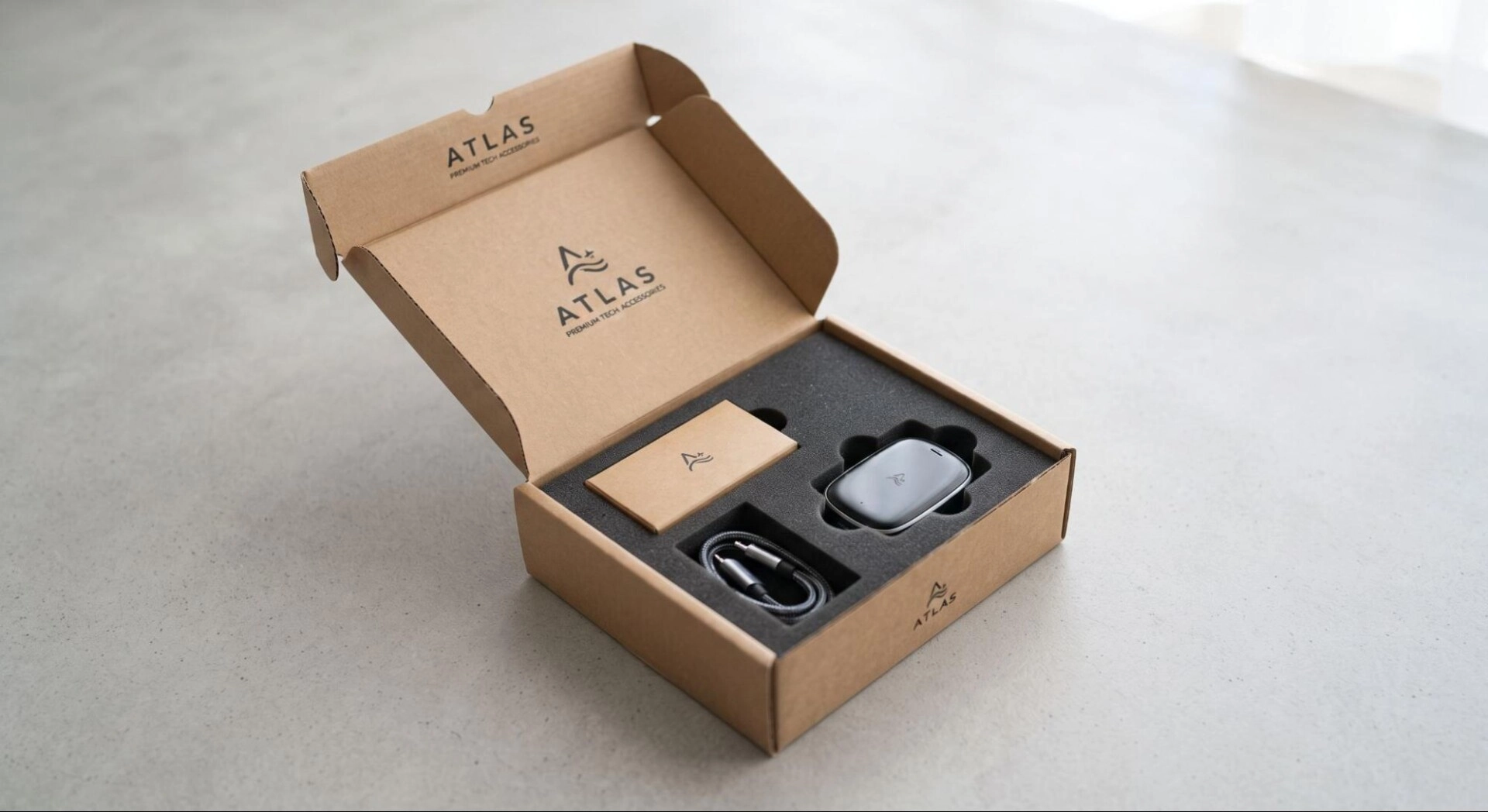
Shipping and Ecommerce
Zero-waste shipping packaging should begin with order contents and transit conditions. One oversized box for every shipment often leaves room for improvement.
Different box sizes can reduce empty space. Shipping directly in suitable packaging may remove an extra layer where testing and product requirements allow.
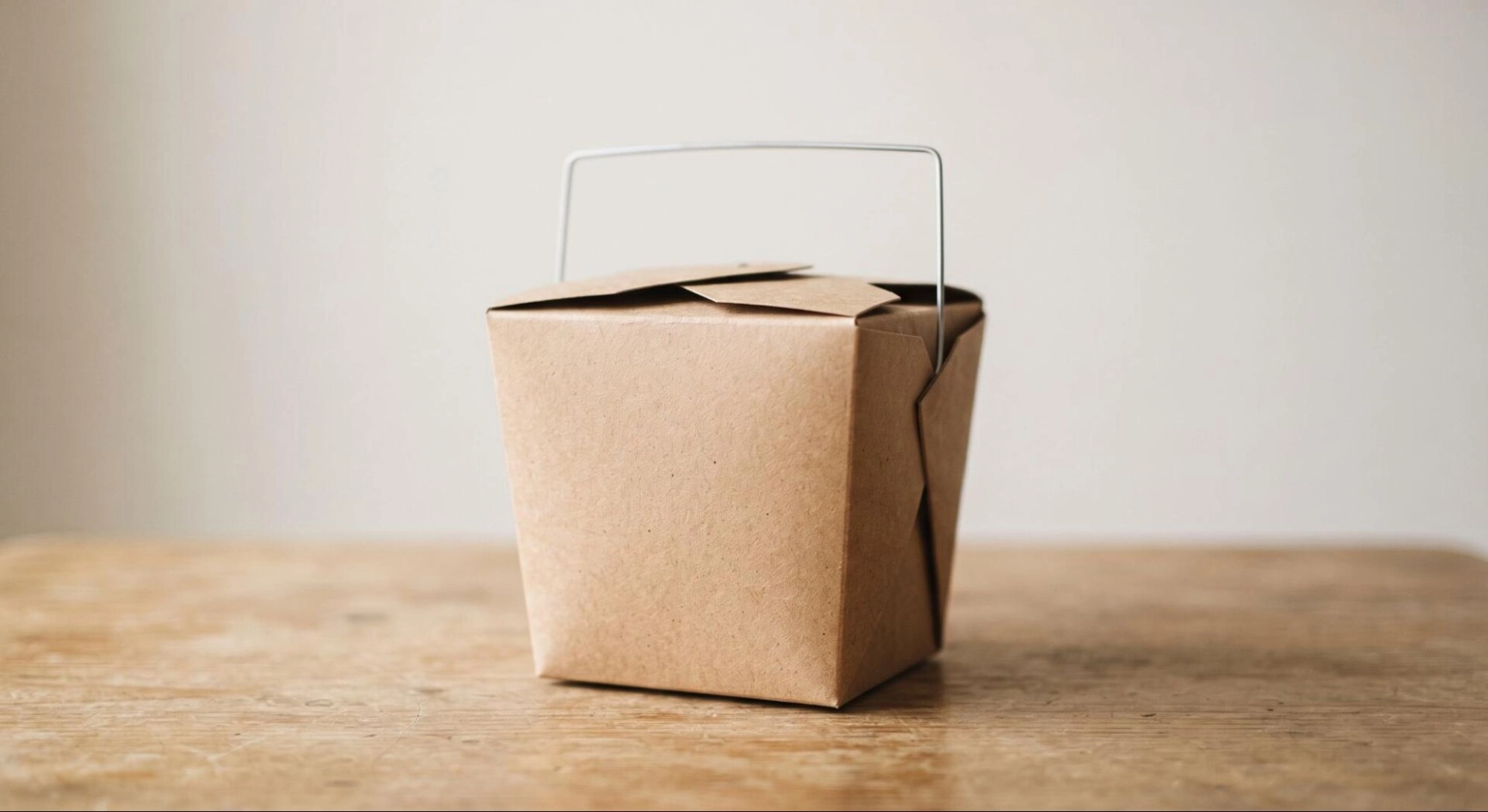
Food Packaging
Zero-waste food packaging must balance waste reduction with food protection. Removing a necessary barrier can lead to spoiled products.
Confirm material suitability and storage requirements. Choose the recovery route based on the complete package and likely contamination after use.
Retail Packaging
Zero-waste retail packaging can focus on compact cartons, useful sleeves and fewer decorative components.
Products still need clear information and suitable shelf protection. A smaller design should keep the product easy to identify and handle.
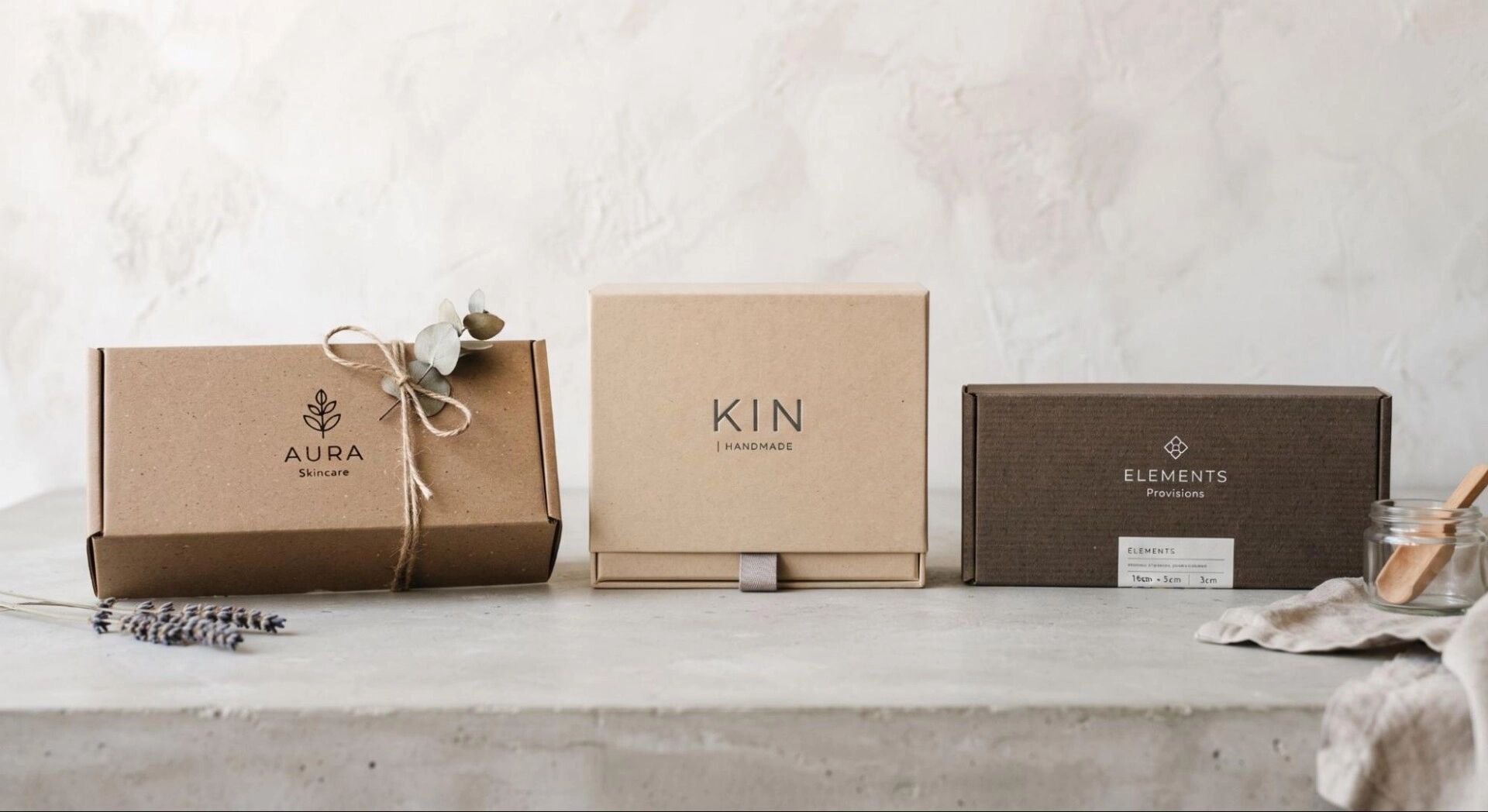
Gifts and Product Presentation
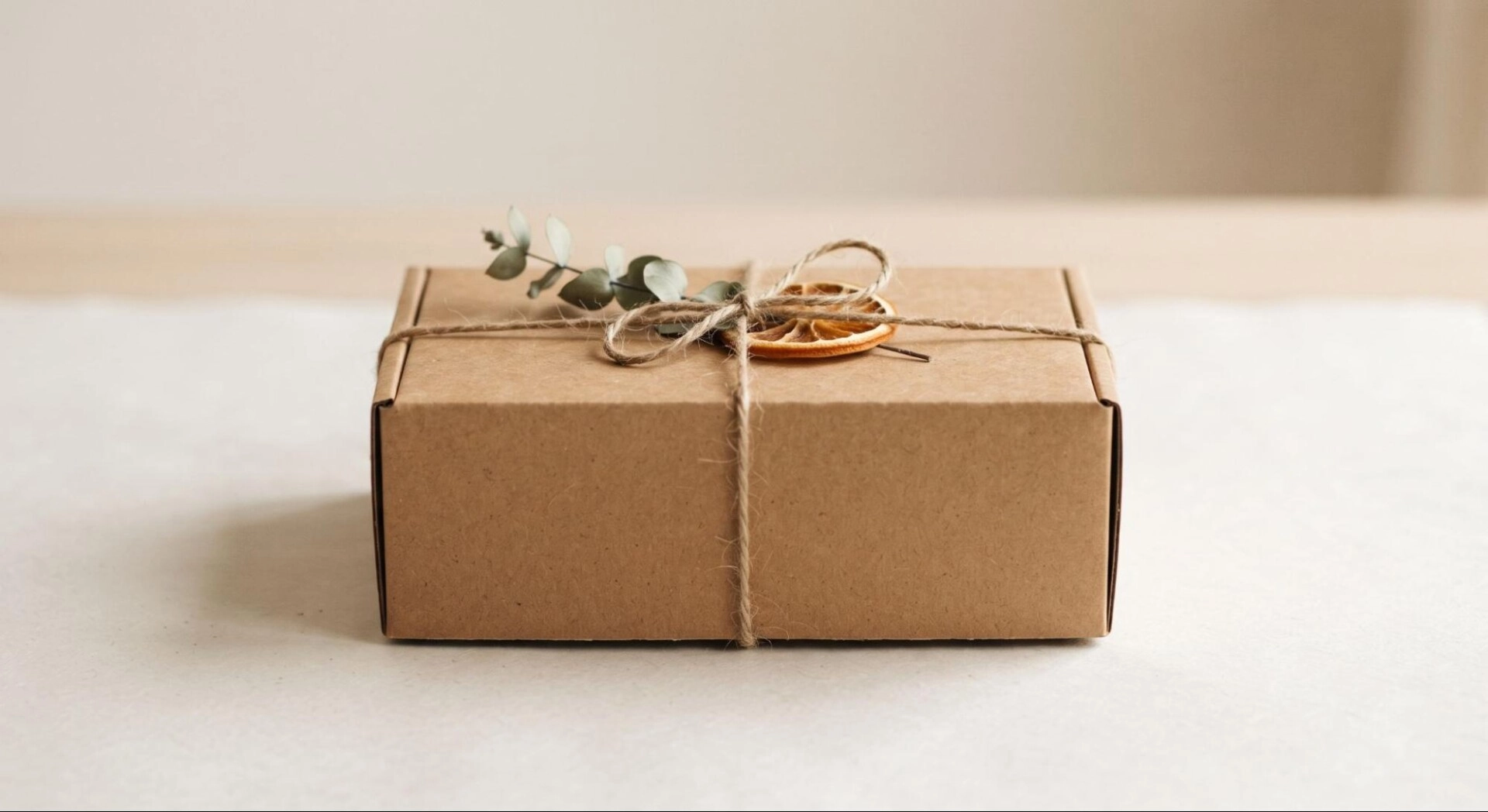
Zero-waste product packaging can provide a strong presentation through fit, artwork and structure.
For gifting, removable decoration and simple inserts may reduce unnecessary material combinations. Avoid assuming customers will reuse every gift box.
Eco-friendly packaging for brands should reflect how customers actually use and dispose of the package.
How to Measure Packaging Waste Reduction
Set a baseline before you change anything. Then compare the new package with the original. Use the same method both times. Useful metrics include:
- Packaging weight per order
- Number of components per package
- Filler weight per shipment
- Verified recycled content percentage
- Packing time and total packaging cost
- Product damage and return rates
- Completed cycles in a reuse system
- Production and packing waste
A Simple Weight Reduction Example
Say the original packaging weighs 120 grams per order. The new design weighs 90 grams. The reduction is:
(120 − 90) ÷ 120 × 100 = 25%
That’s a 25% cut in packaging weight. It isn’t a 25% cut in carbon emissions. Emissions depend on material production, transport, processing and other lifecycle factors. Judge sustainable packaging solutions by what you actually measured.
Partnering with HotCustomBoxes for Sustainable Solutions
We hope this guide gives you clear steps toward better packaging choices. Sustainable packaging is about more than trading plastic for paper. Box dimensions, structural design, inks, raw materials and disposal paths all shape the real footprint. Small design tweaks often save a lot of material.
HotCustomBoxes works with you directly. We build packaging that protects your product and meets your eco goals. We go through the details with you, from box structure and dimensions to printing methods and manufacturing limits. You end up with the right materials for the job.
You may need custom Kraft boxes, heavy-duty corrugated shipping cartons or another eco-friendly layout. We turn custom ideas into packaging that works in the real world. Stock boxes waste space and push up freight costs. Find where to buy custom made boxes built to your product’s exact dimensions, and cutting your shipping volume gets surprisingly easy. We build each setup around what your business actually needs.
Want to cut packaging waste without damaged goods or a spoiled unboxing? Take a look at our custom packaging options. Build shipping solutions that work for your products, your customers and your brand.
FAQs About Zero-Waste Packaging Solutions
Global databases list over 6,000 specialized makers and suppliers today. They supply certified packaging built for low-waste systems.
The United States has the most sustainable packaging suppliers. Many of the top companies behind circular models are based there. Several European countries also have strong circular packaging systems.
Before you pick a supplier, ask about these:
- Materials: Board grades and recycled content percentages.
- Coatings: Whether the coatings and glues suit your target recovery system.
- Printing: Ink types, and how easily they clean off during recycling.
- Samples: CAD dielines and real physical samples.
- Testing: Drop, compression and vibration test results.
- Documents: Box dimensions, volumes, lead times and material records.
A few official badges show that packaging meets real standards:
- FSC covers responsible paper sourcing and confirms good forestry habits.
- BPI and ASTM D6400 cover standards for commercial composting.
- OK Compost Home applies to items designed for backyard compost bins.
- GRS (Global Recycled Standard) tracks and confirms post-consumer recycled content.
Can custom-printed cardboard boxes be 100% sustainable?
Yes, if you build them right. Make them from FSC-certified recycled board. Print them with soy or vegetable inks that clean off easily during recycling. Then seal them with water-activated paper tape instead of plastic tape.