













Coated vs. Uncoated Paper: How to Choose the Right Paper Stock
Home » comparisons » Coated vs. Uncoated Paper: How to Choose the Right Paper Stock
Table of Contents
Get A Free Quote
Unsure if coated or uncoated paper is the right choice for your next printing project?
Both paper types have wide use in commercial printing, branding and product presentation. But how do you know which one fits your project? Worry not!
We’ve made this a comprehensive comparison for coated and uncoated paper. It will help you find the right finish. Learn how each option works with your designs. You will also get expert advice and useful print insights. Before choosing a paper maker or printing partner, compare your options carefully!
What Is the Difference Between Coated and Uncoated Paper?
Coated paper has a surface treatment that reduces porosity and gives the sheet a smoother, more controlled surface. Uncoated paper does not have this added layer, so its natural fibers remain more exposed and absorb more ink.
The practical difference comes down to how each surface behaves during printing and use. Coated paper usually supports sharper detail and more consistent color while uncoated paper offers a softer appearance and more noticeable texture.
In simple terms:
- Coated paper is better suited to projects where image detail and print consistency matter most.
- Uncoated paper is a stronger fit when texture, readability or writability are more important
The better choice depends on the project, not on one paper type being universally superior.
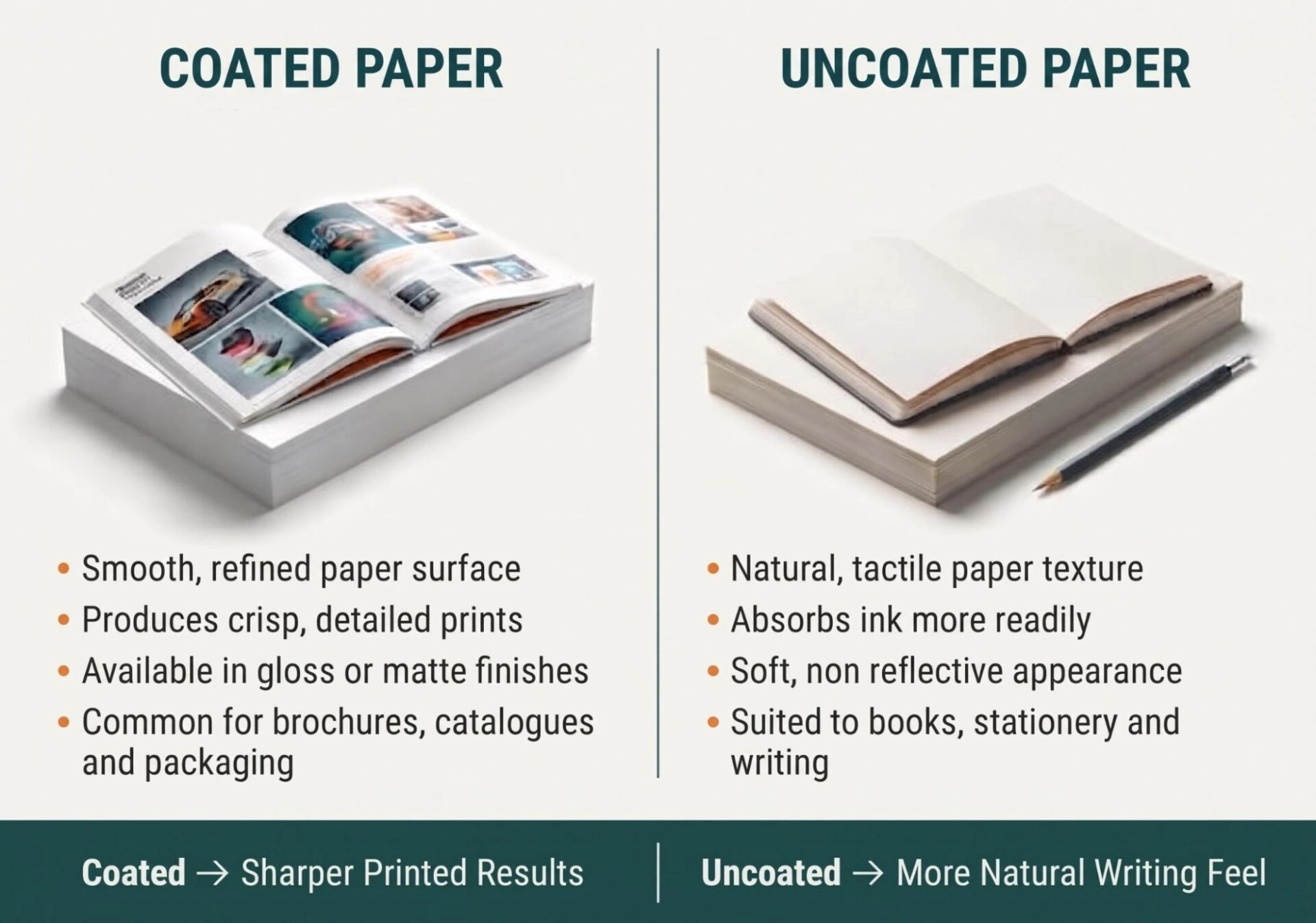
Coated vs. Uncoated Paper at a Glance
| Factor | Coated Paper | Uncoated Paper |
|---|---|---|
| Surface | Smooth and less porous | Open and more tactile |
| Ink absorption | Lower | Higher |
| Image reproduction | High detail and sharpness | Softer reproduction |
| Color appearance | Often stronger saturation | More muted or natural |
| Writability | Limited on some finishes | Generally very good |
| Texture | Gloss, matte, dull, silk, satin | Smooth, vellum, linen, laid, eggshell |
| Readability | Depends on coating and glare | Strong for text heavy work |
| Folding | Often requires careful scoring | Varies by weight and grain |
| Common uses | Catalogs, brochures, posters | Books, stationery, forms |
| Brand feel | Polished and controlled | Natural, warm or tactile |
How the Surface Changes Printing Performance
The paper surface directly affects how ink settles after printing. Coated paper holds more ink near the surface, which helps preserve fine detail, sharper edges and more controlled solid colors.
Uncoated paper absorbs more ink into the fibers. This can soften fine detail and reduce color intensity, but it can also create a more subdued print style that suits certain designs.
For image heavy or detail focused work, coated stock generally offers more predictable print reproduction. For softer visual results, uncoated stock can be a better fit.
Other paper properties can also influence the final result. Brightness can make colors appear cleaner and more defined while good paper formation helps ink reproduce more evenly across the sheet.
Opacity matters when printing on both sides. A more opaque stock reduces show through from the reverse side. This works especially well for books, brochures and double-sided printed materials.
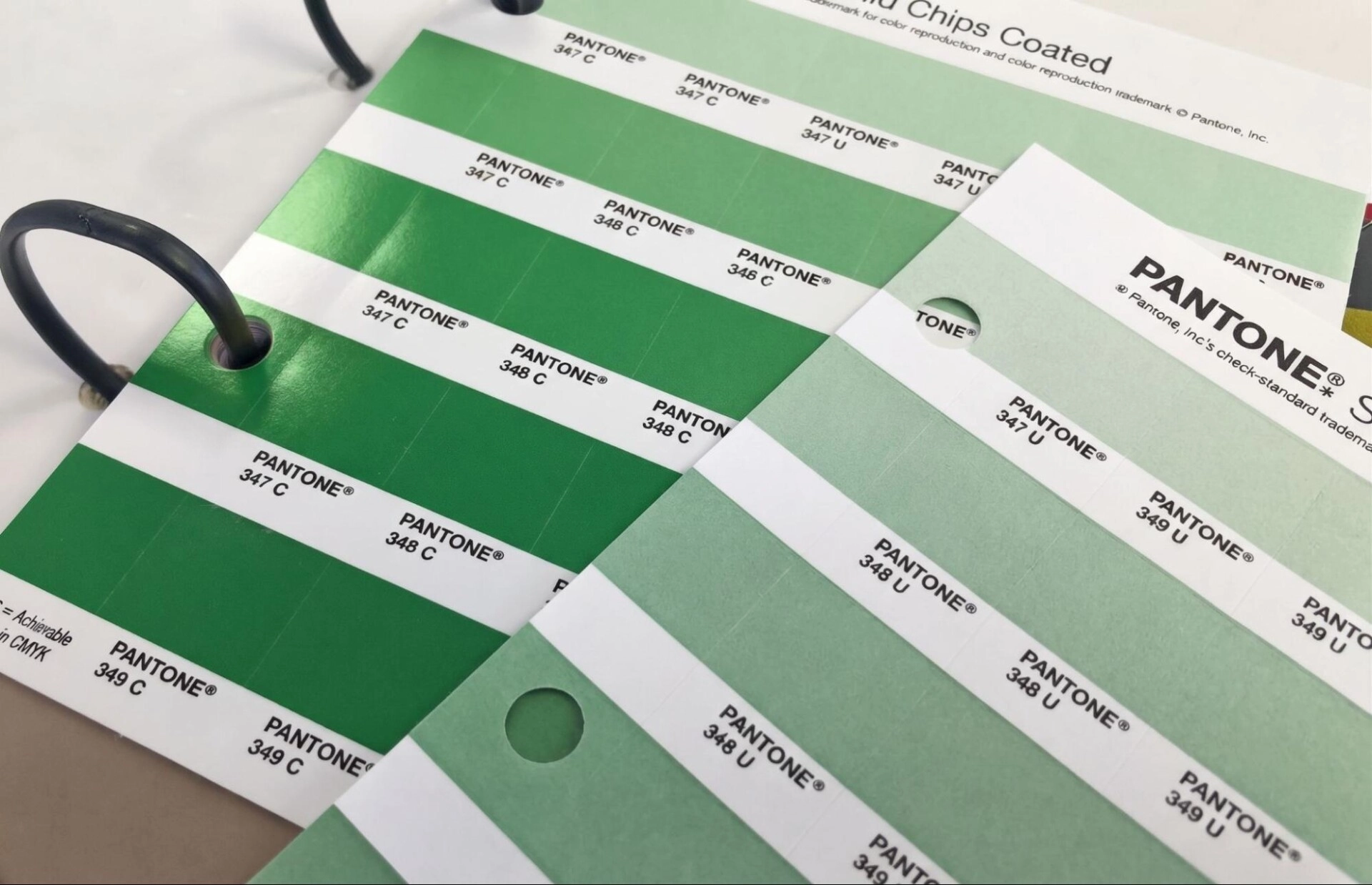
Choose the Surface Finish Based on the Intended Appearance
Coated and uncoated papers are available in different finishes, so the final look depends on more than the coating type alone.
Common coated finishes include:
- Gloss:High shine with a smooth reflective surface
- Matte: Low sheen with a softer, more restrained appearance.
- Dull or silk:A balanced finish between gloss and matte.
- Cast coated: Very smooth with a highly polished surface.
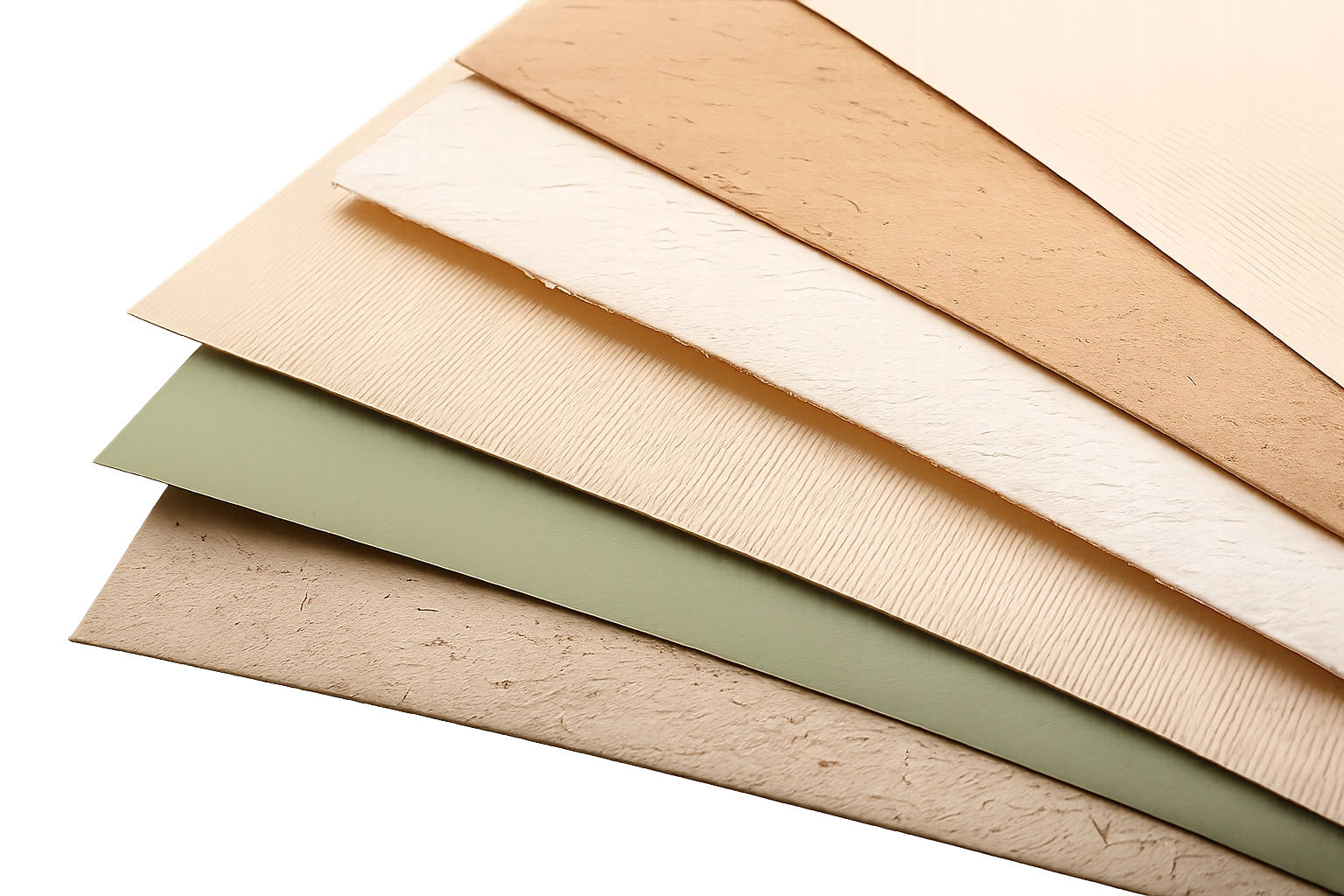
Uncoated papers can also vary from smooth to heavily textured. Vellum adds a slight tooth while linen, laid and eggshell finishes create more noticeable surface character.
The best finish depends on the visual and tactile effect you want to achieve. A smoother finish creates a cleaner, more refined look while textured stocks add more natural surface character.
Consider Reading and Writing Requirements
Uncoated paper is often the better choice when the finished piece needs to be written on or read for longer periods. Its more absorbent surface gives pens and pencils better grip, which makes it practical for:
- Business stationery and letterheads
- Forms and worksheets
- Envelopes and note cards
- Books and educational materials
- Menus and other text heavy print pieces
Coated paper can still work well when reading is important, especially with matte or dull finishes. These are commonly used for brochures, catalogs and reports where text needs to remain easy to read alongside photographs or graphics.
For projects that require signatures, handwritten notes, form filling or extended reading, writability and glare should be considered before choosing the paper stock.
Compare Finishing Options Before Selecting the Stock
The paper stock should support the finishing process you plan to use after printing. Coated paper generally provides a more consistent surface for:
- Varnish and spot UV on product packaging or promotional covers
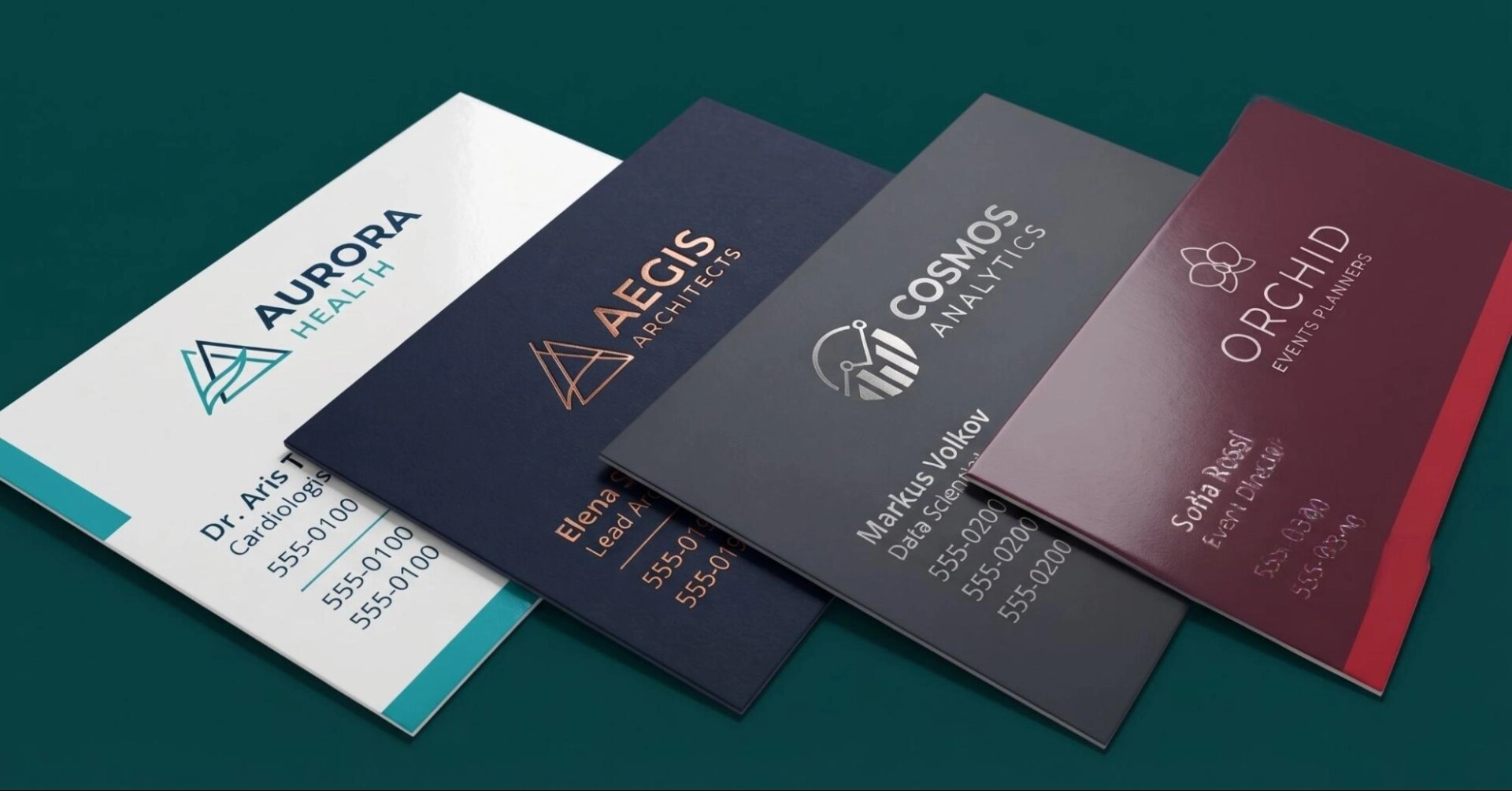
- Foil stamping on labels, invitations or premium boxes
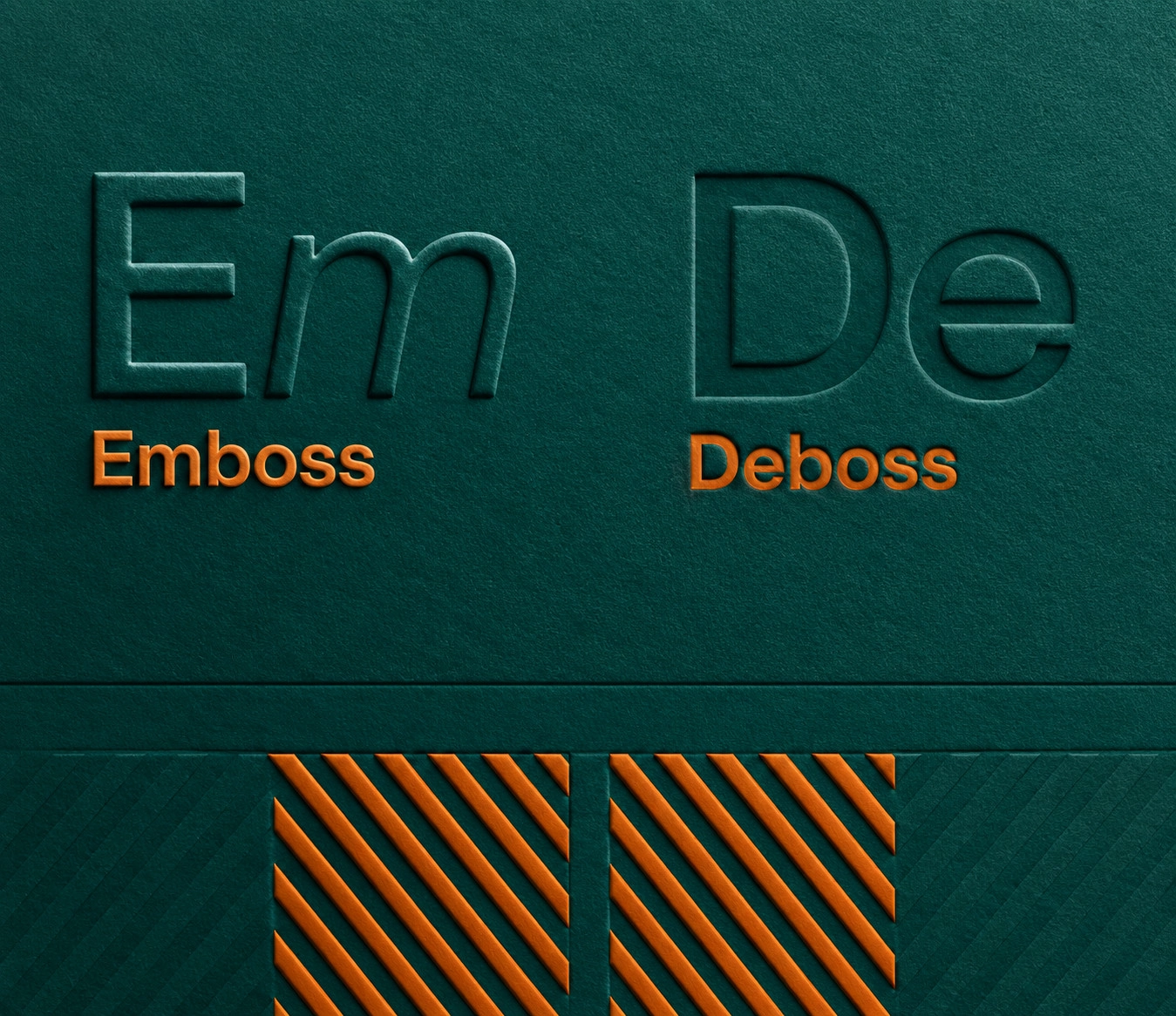
- Embossing and debossing on branded cards, sleeves or packaging
Uncoated paper can also support foil, embossing and debossing, but absorbent or heavily textured stocks may affect how evenly some finishes are applied. Letterpress is often used on uncoated cards and stationery because the paper can hold the pressed impression well.
If specialty finishing is important, confirm compatibility before production. A spot UV logo on a smooth coated sheet, for example, is usually easier to control than the same finish on a highly textured uncoated stock.
Think About Folding, Scoring and Converting
If the printed piece will be folded, scored or converted into a structure, paper behavior during production becomes an important part of the choice.
Heavier stocks usually need scoring before folding, especially when the fold crosses the paper grain. Without proper scoring, the surface can crack or the fold may look uneven. This matters for items such as folding cartons, presentation folders, sleeves and multi panel brochures.
Before selecting the stock, check:
- Grain direction: Folding with the grain generally produces a cleaner fold than folding against it.
- Thickness and stiffness: Thicker paper may provide more structure but can require deeper scoring.
- Ink near fold lines: Heavy ink coverage can make cracking more visible, particularly on coated stocks.
- Number of folds: Complex designs with several folds may need a stock that bends more easily without losing shape.
Don’t rely on GSM alone. GSM or basis weight measures paper weight, while caliper measures physical thickness.
Two papers with the same GSM can differ in thickness, stiffness and folding performance. Use samples or production testing to confirm the right paper when fold quality matters.
Where Does Each Paper Type Work Best?
Choose the paper based on what the finished piece needs to do.
Coated paper works well for projects where images, color and fine detail carry most of the message. Common examples include magazines, product catalogs, promotional brochures and cosmetic cartons with detailed graphics.
Uncoated paper is often a better fit for text heavy or writable pieces such as books, letterheads, forms, worksheets and direct mail.
In fact, it matters less what category you’re in than what you plan to do with it. A photo-heavy brochure might do well with coated stock, whereas a text-focused company booklet might be better with an uncoated paper.
Is Coated Paper More Expensive Than Uncoated Paper?
Not always. Cost depends on the paper grade, weight, order size, availability and finishing requirements rather than coating alone.
A premium textured uncoated stock can cost more than a standard coated sheet. Likewise, coated paper may become more expensive when the job includes foil, spot UV or other added finishes.
For a fair comparison, look at the total production cost:
- Paper price
- Printing and finishing
- Folding or converting
- Shipping or mailing weight
The low priced sheet is not always the lower cost option once production and delivery are included.
How to Choose Between Coated and Uncoated Paper
Start with how the finished piece needs to perform.
Choose coated paper when sharp photography, detailed artwork, heavy color coverage or controlled image reproduction is central to the project.
Consider uncoated paper when the piece needs easy writing, comfortable long form reading, tactile character or a softer visual style.
Before placing a print order, ask:
- Does the design rely heavily on photographs or fine artwork?
- Will customers need to write on the piece?
- How much text will people read at one time?
- Does the design require foil, UV, embossing or another finish?
- Will the paper be folded or converted?
- How much handling will the piece receive?
- Does mailing weight affect the project budget?
- What surface best fits the intended brand presentation?
For projects that are straddling the line between imagery and readability a matte or dull coated sheet can be a good compromise. A smooth premium uncoated stock can also reproduce cleaner images without sacrificing the tactile qualities of an uncoated surface.
Find the Best Fit for Your Printing Needs
The selected paper should back the whole project. Should work on production. It should be compatible with how the finished piece will be used.
Don’t just look at the surface type of a stock before you approve it. Think about how printing, folding, handling and finishing will all work together. Usually the best result comes from selecting paper as part of the whole production plan, not as a separate design decision.
Need some help narrowing down the options? Hot Custom Boxes can help you select suitable paper stocks, printing techniques and finishing options for custom papers and packaging solutions as per your project needs.