












SBS vs. CCNB Paperboard: A Complete Guide to Choosing the Right Paperboard
Home » comparisons » SBS vs. CCNB Paperboard: A Complete Guide to Choosing the Right Paperboard
Table of Contents
Get A Free Quote
Two cartons can look similar on a screen yet differ in print quality, product support and cost. The paperboard you choose helps determine whether the finished box meets your expectations.
When comparing SBS and CCNB paperboard, paying more only makes sense if the material adds value to your packaging. This packaging comparison explains the differences that matter when selecting paperboard for product packaging.
SBS vs. CCNB Paperboard: Quick Comparison
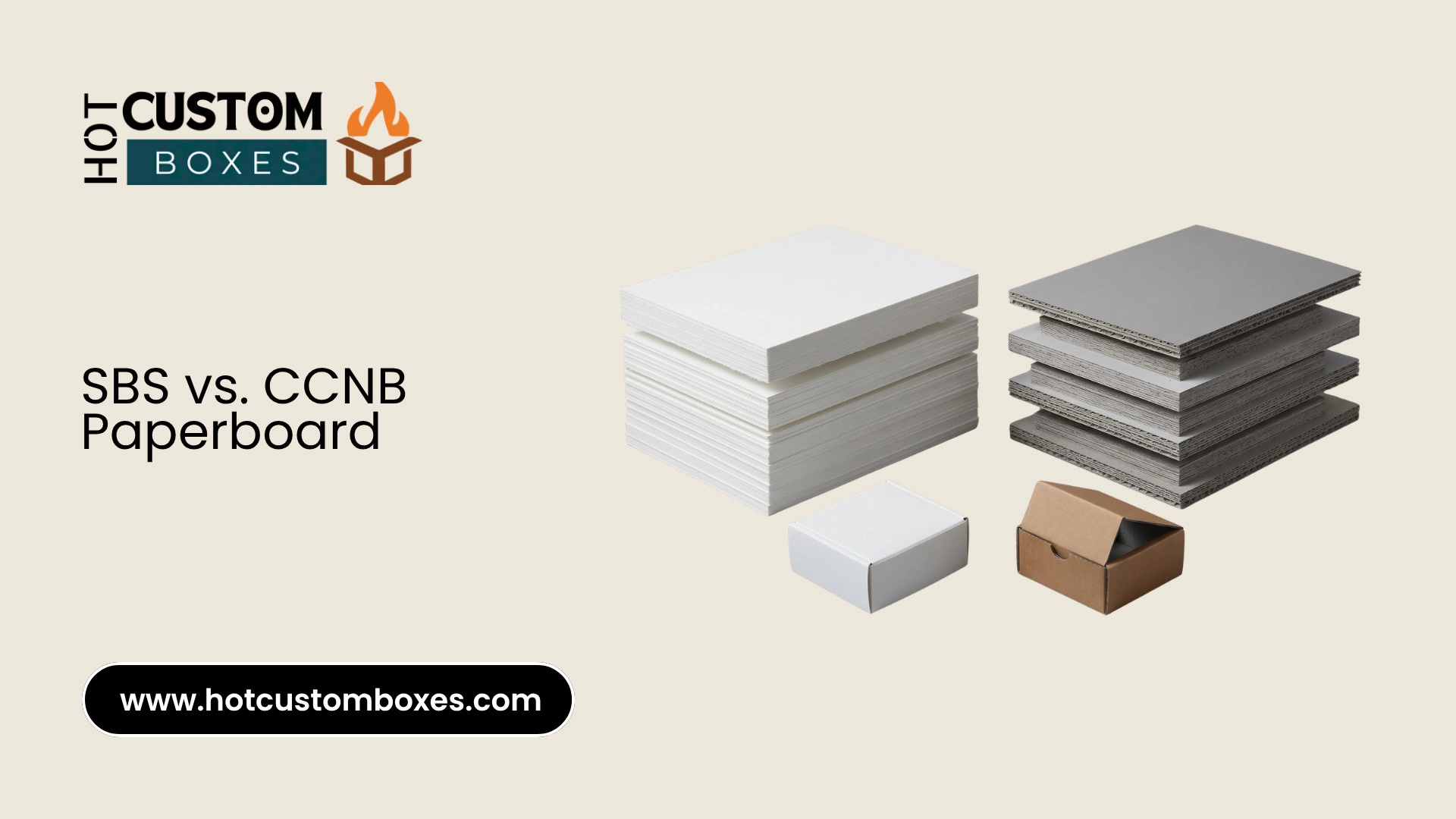
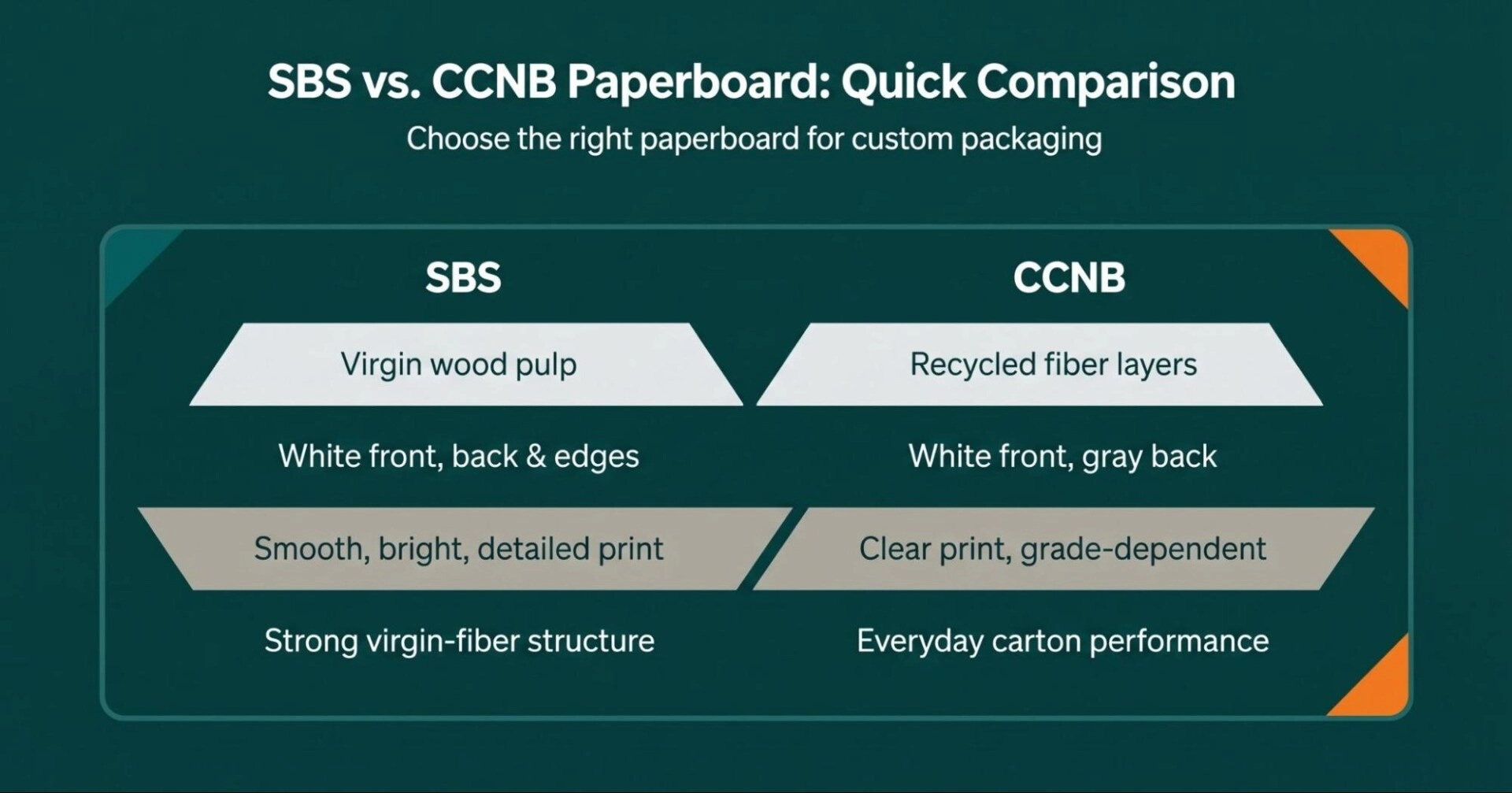
The main difference between the two is that SBS paperboard uses virgin pulp and is white throughout. CCNB uses recycled fibers with a white front and gray back, usually at a lower cost.
| Feature | SBS Paperboard | CCNB Paperboard |
|---|---|---|
| Material | Bleached virgin wood pulp | Layered recycled fibers |
| Front and back appearance | White front, back and cut edges | Coated white front with a typically gray back and edges |
| Printing quality | Smooth, bright surface suits detailed images and pale colors | Coated face supports clear graphics, though brightness and smoothness vary by grade |
| Board strength | Virgin fibers support strength. Performance depends on grade and design | Recycled board suits everyday cartons. Performance depends on grade and design |
| Food contact | Common choice for direct contact in suitable grades | Used around bagged or wrapped food |
| Typical material cost | Generally higher | Generally lower |
| Common applications | Cosmetics, skincare, confectionery and gift cartons with visible interiors | Cereal cartons with inner bags, tissue cartons, toy boxes and other everyday retail packaging |
SBS and CCNB Material Composition
Fiber source and construction distinguish SBS from CCNB.
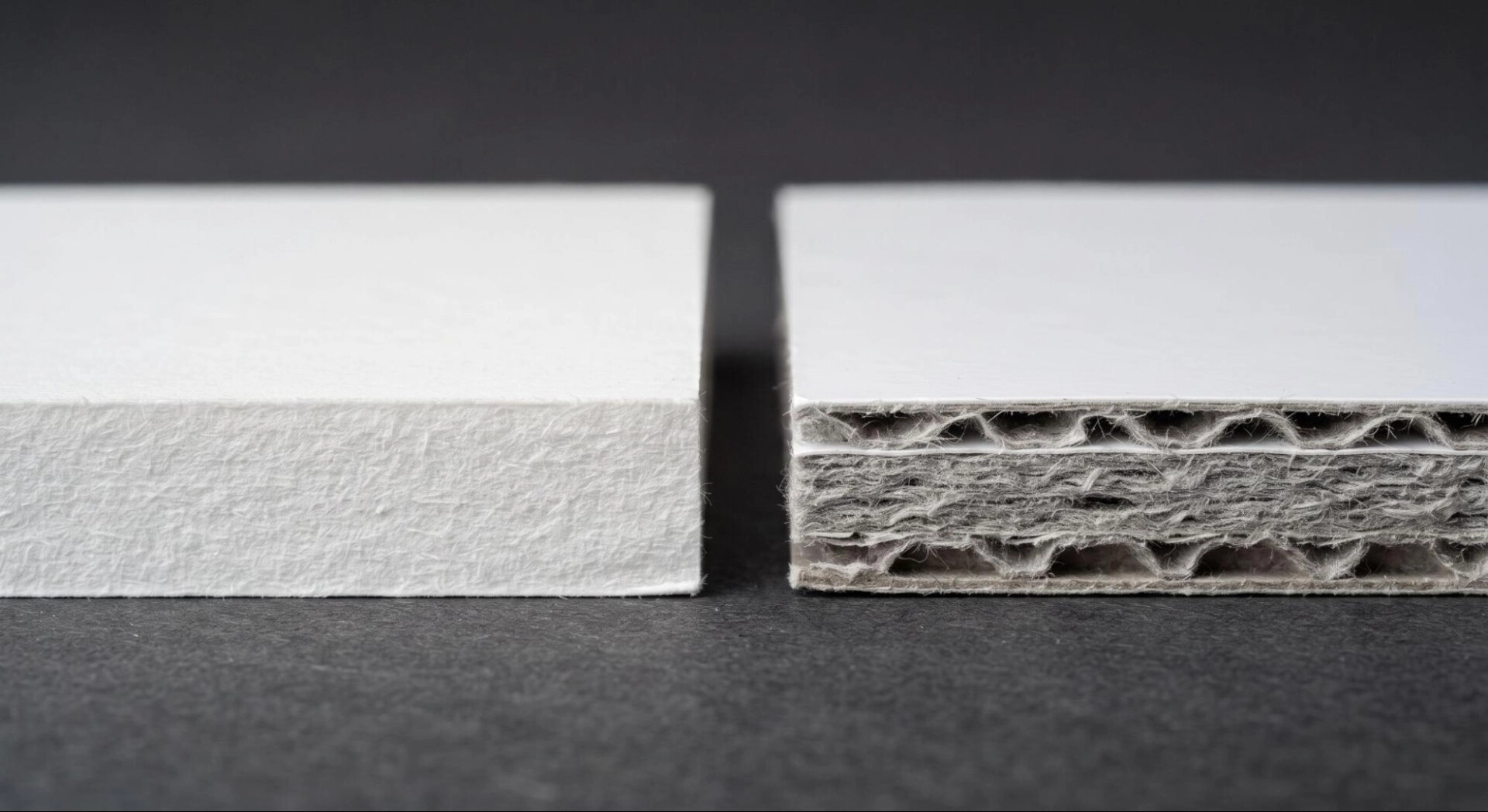
SBS stands for Solid Bleached Sulfate. Manufacturers use bleached virgin wood pulp to make a sheet that is white throughout its thickness. They commonly add a clay coating to packaging grades for printing.
CCNB stands for Clay Coated News Back. It typically combines layers of recycled fibers with a white printing face. Kaolin clay coats the front, while the reverse remains gray. Each mill uses a recovered paper mix that varies by grade.
CCNB belongs to the coated recycled board family. Suppliers also use duplex board and greyback board labels, but specifications can differ. Confirm fiber composition, coating and reverse color.
Board Specifications and Carton Stability
Compare measurable properties rather than assuming that equal board weight means equal performance.
GSM measures weight per square meter. The caliper measures thickness, usually in points or millimeters. Two boards with equal GSM can differ in thickness and stiffness.
For cardboard boxes, the finished structure matters as much as the sheet. Wide panels, heavy contents and unsupported bases place different demands on paperboard.
Check these factors together:
- Stiffness: Compare resistance to bending in both grain directions.
- Grain direction: Consider its effect on panel support and folding.
- Box design: Test the base, closures and loaded carton stability.
Appearance, Printing and Product Presentation
The printing face and visible interior shape how buyers see the package.
SBS has a white reverse and white cut edges. These suit exposed interiors and double sided printing. CCNB usually has a gray interior. It suits boxes where customers mainly see the exterior.
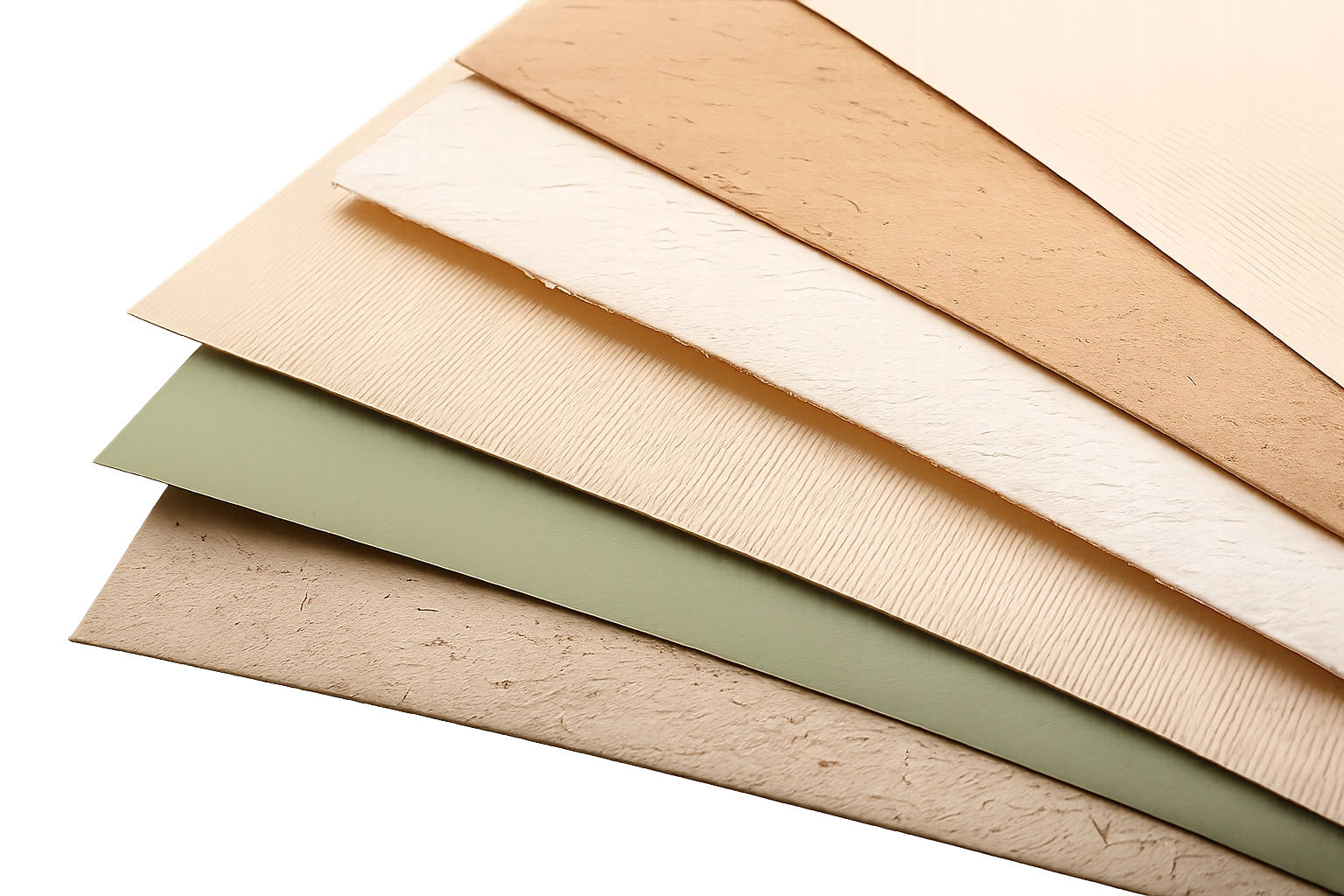
Both coated faces support CMYK printing and Pantone matching. Brightness, smoothness and ink absorption affect image sharpness and color reproduction. Approve a print sample on the actual board.Modern coated recycled grades can also produce high quality graphics.
For printed packaging with pale backgrounds or large areas of unprinted white, substrate differences become easier to notice. A digital mockup cannot show the board’s true shade, texture or ink response.
Converting and Finishing Options
SBS and CCNB both support die cutting, scoring, folding and gluing. Board thickness and grain direction affect how neatly each material forms into a carton. Either board can crack along folds if the scoring does not suit the sheet.
Both materials support embossing and debossing, foil stamping, spot UV and lamination. Results depend on the selected grade and its surface coating, so check a finished sample for clean folds and secure glue joints.
Protection and Packaging Applications
Choose the board around handling conditions and the product’s actual protection needs.
Neither standard SBS paperboard nor CCNB is waterproof. Humidity and moisture absorption can reduce stiffness, while clay coating primarily improves printing. Grease resistance requires a suitable functional barrier, liner or treatment.
Typical applications include:
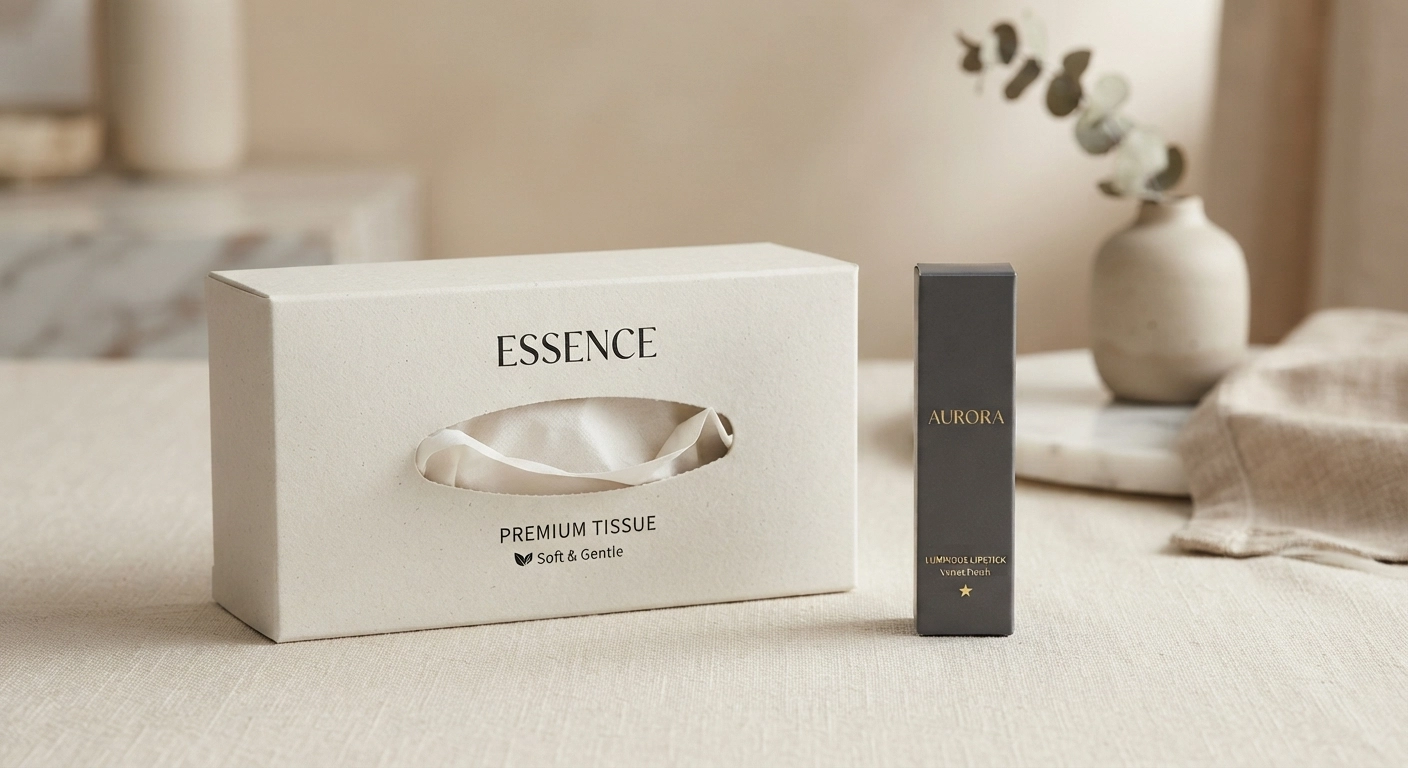
- SBS: Often suitable for skincare and cosmetic boxes where the interior is visible.
- CCNB: Suits tissue cartons and toy boxes where exterior printing takes priority.
- Confectionery boxes: Either grade, depending on the inner packaging and contact requirements.
- Cereal packaging: Recycled board cartons commonly surround a separate inner bag.
Inserts help restrain fragile contents and distribute loads. Corrugated boxes provide additional protection during rough transit, while heavy products may need a stronger structure altogether.
Rigid boxes generally use a thicker structural core with a separate covering material. Substituting folding carton stock does not recreate that construction.
Food Contact Suitability
Food suitability depends on the board grade and complete packaging system. The SBS or CCNB name alone does not establish suitability.
Direct contact places food against the board. Indirect use usually involves a separate bag, pouch or other barrier. This separation does not always prevent substances or odors from transferring to the food.
Before specifying either board, verify:
- Supplier documentation covering the intended food and conditions of use.
- Suitability of coatings, inks, adhesives and other added materials.
- Barrier needs for grease, moisture or potential contaminants.
- Odor and taste transfer performance for sensitive products.
Virgin fiber does not automatically make every SBS carton food compliant. Reclaimed fiber can serve food packaging applications when it meets applicable requirements.
Sustainability and Recyclability
Fiber content is one part of the environmental decision, rather than a complete sustainability assessment.
CCNB uses recovered paper and supports recycled content goals. SBS can use responsibly sourced virgin fiber. Verified certification, such as FSC, can support this claim. Certification and recycled content describe different attributes. Check each separately.
A lighter carton that passes performance tests can reduce fiber use, while damaged products and rejected cartons create avoidable waste. Neither grade automatically has the lower carbon footprint in every application.
Recyclability depends on local collection systems and the finished package. Plastic laminations, barrier layers and food contamination can affect acceptance or fiber recovery. Recyclable does not mean biodegradable or compostable and those claims require separate evidence.
Cost and Purchasing Considerations
CCNB generally carries a lower material price than SBS. Compare quotes at the same order volume with identical printing and finishing requirements.
Board grade and order volume affect the final quote. Printing, finishing and production waste also influence cost. A cheaper sheet may need extra finishing or produce more rejected cartons. These added costs can erase its savings.
Ask the packaging supplier for:
- Written specifications, including caliper and acceptable tolerances.
- Physical board samples and printed samples using your artwork.
- Finished cartons for packing and handling trials.
- Grade availability and consistency across repeat orders.
These checks reveal differences that a price sheet or 3D mockup cannot show.
SBS vs. CCNB: Choose the Right Paperboard for Your Product and Budget
Choose SBS when a white interior and detailed presentation justify the higher cost. CCNB is a practical option when exterior printing matters most and you want to control material costs. In either case, the selected grade must support your product and suit its storage conditions.
Our packaging team at Hot Custom Boxes helps you compare board options. We consider your product, box style and artwork. Share your requirements for material guidance and a custom quote before ordering.