















Table of Contents
Related Products
Get A Free Quote
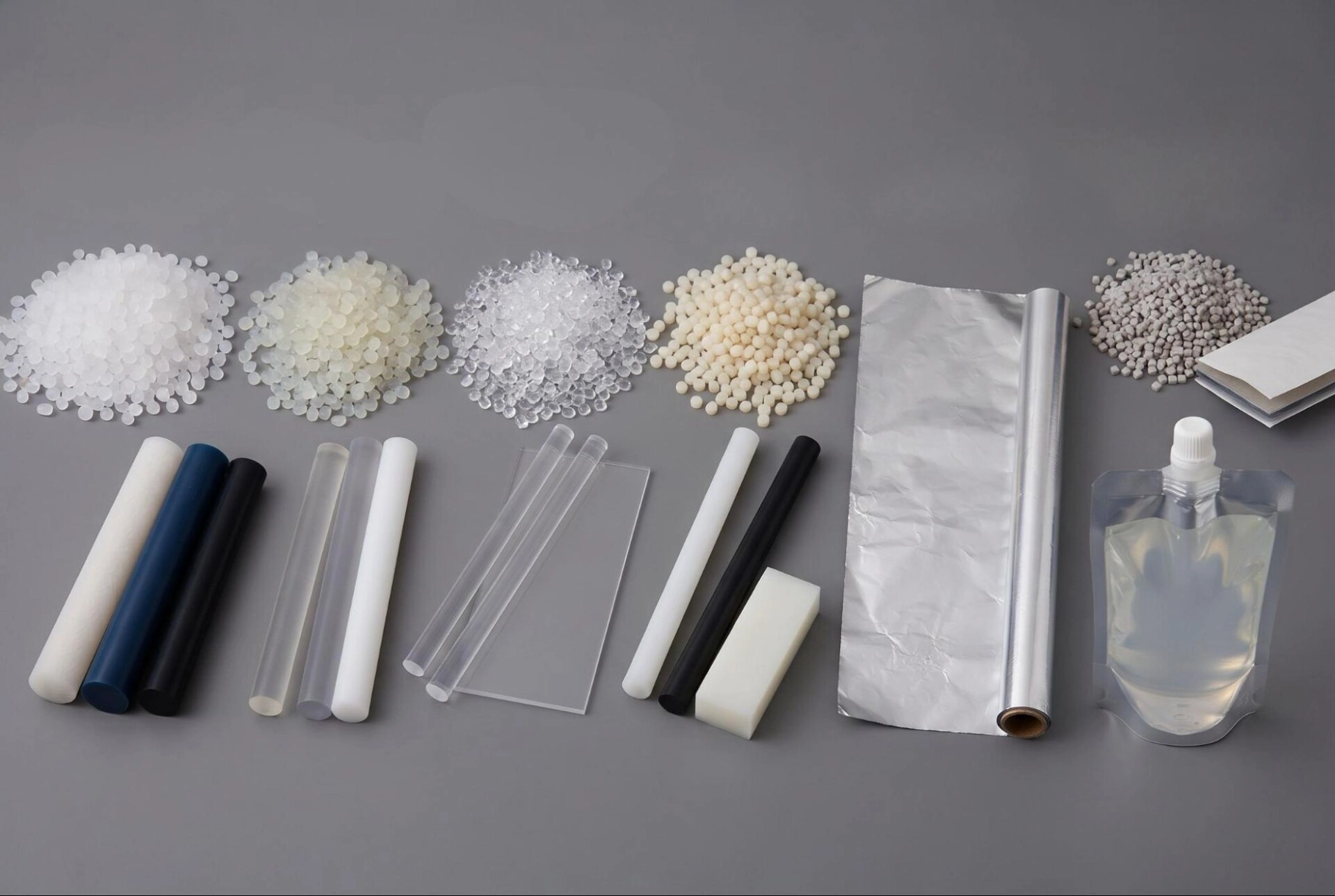
Spouted pouches are usually made from flexible films such as polyethylene (PE), polypropylene (PP), polyethylene terephthalate (PET) and nylon (PA). Some also contain aluminum foil or ethylene vinyl alcohol (EVOH) to protect the contents from oxygen, moisture or light. The pouch body, spout and cap have separate material requirements. They need to work together when the pack is filled, sealed, shipped and used.
The best material depends on what goes inside. A refrigerated juice may need a clear oxygen barrier. A shelf-stable purée may need a laminate that can withstand retort processing. A detergent refill needs film, seals and a closure that can tolerate the full cleaning formula. Start with the product and filling process. Then decide what each layer needs to do.
Spouted Pouch Materials Compared by Function
Each material has a different job. PET provides a smooth printing surface. Polyethylene forms the inner seal, while nylon helps the pouch resist punctures. The table below compares these materials by function and explains where each has limits.
| Material | Where it’s used | What to check |
|---|---|---|
| Polyethylene (PE) | Inner sealant and moisture-resistant layers. Also used in PE-based pouch structures. | PE alone offers limited oxygen protection. Heat tolerance varies by grade. |
| Polypropylene (PP) | Outer films and inner sealants. Cast PP is used as a sealant in some retort structures. | Check the specific grade. A standard PP film may be unsuitable for the intended heat process. |
| PET | Outer print layer. Coated or metallized PET can also provide barrier protection. | Standard oriented PET usually needs a separate inner sealant. |
| Nylon (PA) | Tough layer that helps resist punctures and handling damage. | Moisture can affect its properties. It usually works alongside other barrier or sealant layers. |
| Aluminum foil | Opaque layer that protects against oxygen, moisture and light. | Flexing or pinholes can reduce protection. Test the finished pack after handling. |
| EVOH | Clear oxygen barrier within a multilayer film. | Its barrier performance can fall as humidity rises. Check data under relevant conditions. |
These are typical roles. The actual performance depends on the grade, thickness and full construction. For example, a PET/PE pouch and a PET/foil/PE pouch can look similar from the outside but offer very different protection.
Polyethylene (PE)
PE often forms the inner layer of a spout pouch. It flexes when the user squeezes the pack and provides useful resistance to water vapor. During heat sealing, a suitable PE sealant bonds the film panels together. It can also bond around a compatible spout fitment.
Low-density polyethylene (LDPE) and linear low-density polyethylene (LLDPE) are two types used in flexible films. LDPE is often selected for flexibility and ease of processing. LLDPE can add toughness and puncture resistance. A film supplier may blend grades to get the seal strength and flexibility a pouch needs.
PE is a practical starting point for many liquids. An oxygen-sensitive juice or oil may also need a dedicated barrier layer. Ask for the film’s performance data if oxygen exposure matters.
Polypropylene (PP)
PP contributes moisture resistance and can serve different roles depending on how the film is made. Cast polypropylene (CPP) can form the inner sealing layer. Biaxially oriented polypropylene (BOPP) can serve as an outer print or structural film.
A retort-grade CPP sealant is designed for more demanding heat exposure than a standard CPP film. Even with a suitable sealant, the adhesives, other film layers, spout and cap must hold up through the intended process. Check the full pouch specification before using a PP-based pack for thermal processing.
Polyethylene Terephthalate (PET)
PET often forms the outside of a laminated pouch. It provides a smooth surface for graphics and helps the film retain its shape during printing and converting. An inner layer such as PE or CPP usually handles the sealing.
PET can also serve as the base for a barrier film. Metallized PET has a thin deposited metal coating. An aluminum foil laminate contains a separate sheet of foil. A transparent barrier-coated PET film, such as one with an aluminum oxide coating, is another option when shoppers need to see the contents. Compare the actual barrier data when choosing among these structures.
Nylon (PA)
Nylon is also called polyamide, or PA. It adds toughness to a flexible pouch. This can help when the contents contain particles or when the pack is likely to rub against other items during shipping.
A PA/PE film combines nylon’s mechanical strength with a PE sealing surface. Nylon can also sit inside a more complex laminate, including some retort pouch structures. It absorbs moisture, so its performance can change with humidity. Evaluate it as part of the complete film.
Aluminum Foil
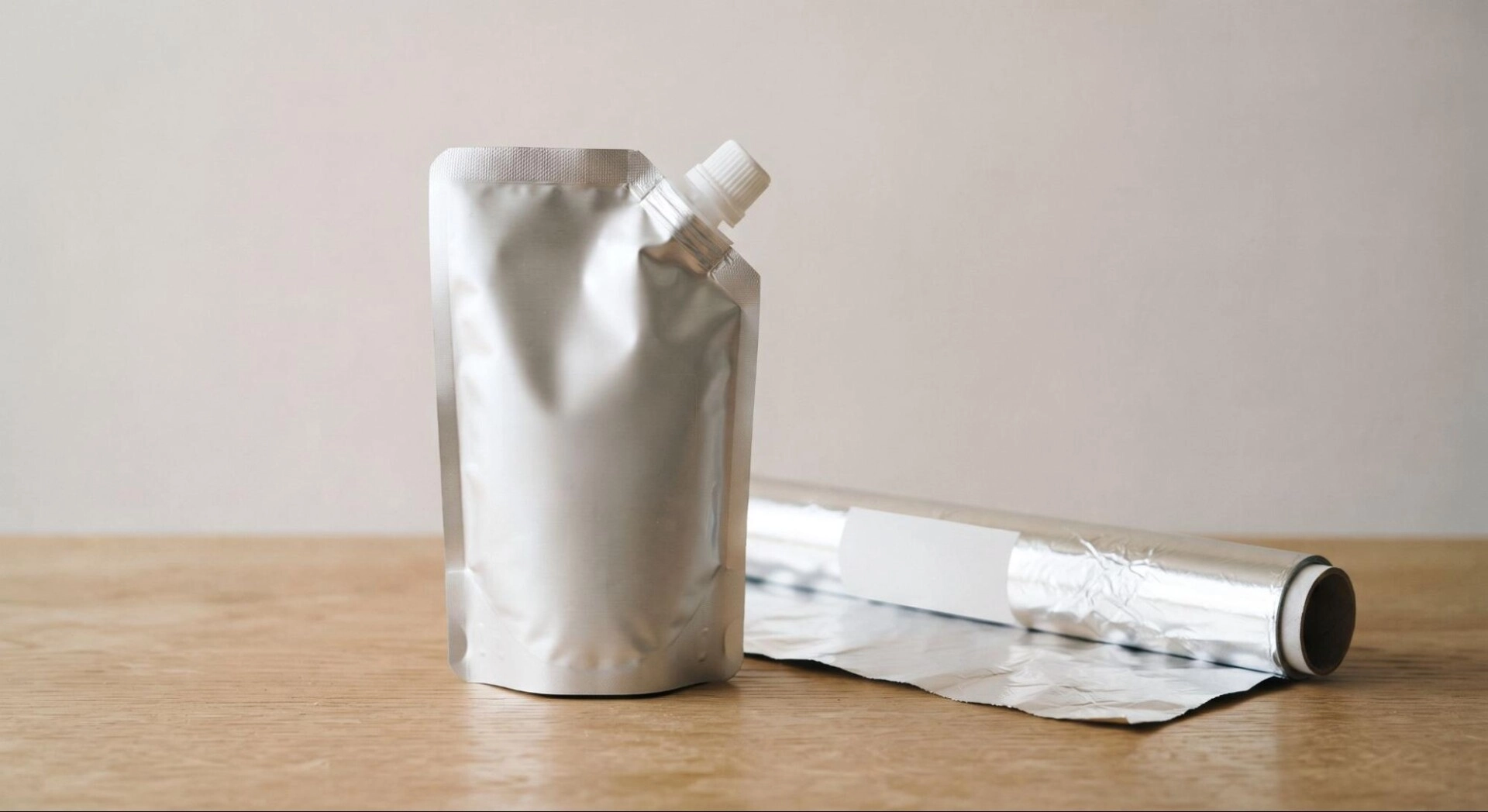
Aluminum foil is useful when a product needs protection from light as well as oxygen and moisture. It sits between other layers in a foil spout pouch. The outer film supports printing and handling. The inner film contacts the product and forms the seals.
Foil is opaque. That suits a light-sensitive product but rules out seeing the contents through the foil-covered area. Check the pouch after repeated bending, squeezing or transport. Small cracks and pinholes can reduce the protection of an otherwise strong barrier.
Ethylene Vinyl Alcohol (EVOH)
EVOH is an oxygen barrier used in transparent multilayer packaging. It can be useful for a juice, sauce or purée when the product needs more oxygen protection than PE or PP alone provides. Other layers supply the strength and sealing surface.
Humidity matters when comparing EVOH films. Moisture can weaken its oxygen barrier, so manufacturers typically place it between protective polymer layers. Ask for the oxygen transmission rate of the full film under conditions that reflect the intended use. A result from a dry test can give a different picture from one measured at higher humidity.
Why Do Spouted Pouches Use Multiple Material Layers?
A single film may seal well but offer too little oxygen protection. Another may print well but be difficult to seal directly. Multilayer spouted pouch films combine materials so each layer can handle a different job.
Lamination joins films that have already been made. An adhesive can bond the layers. Coextrusion forms several polymer layers together during film production. A pouch can use both methods. For example, a printable outer film can be laminated to a coextruded inner film that contains a barrier layer and a sealant.
Outer Layer for Printing and Strength
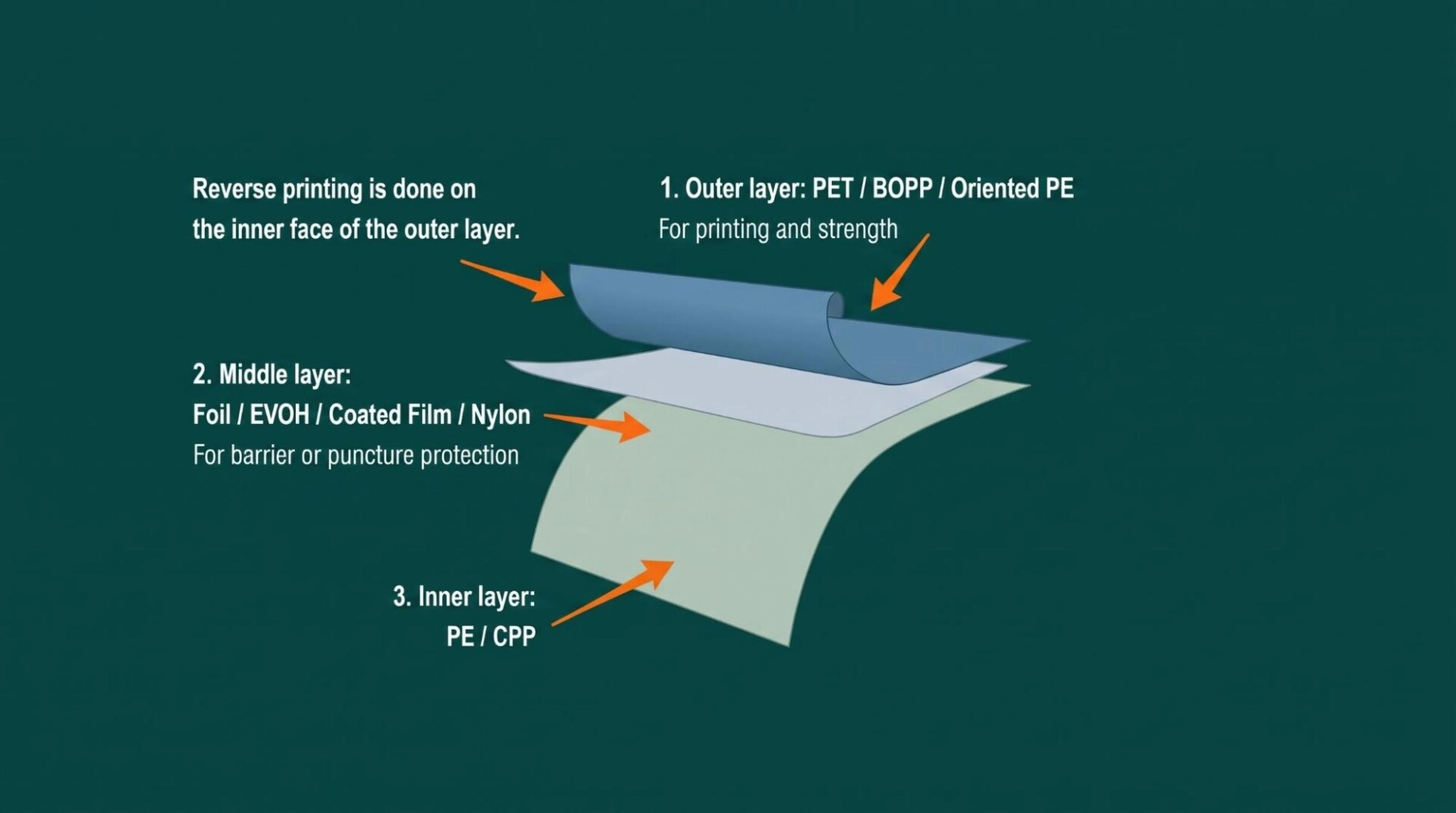
The outer layer supports graphics and helps the pouch keep its shape during converting. PET, BOPP and suitable oriented PE films can serve this role. With reverse printing, the printer places ink on the inner face of the outer film. Lamination then encloses the artwork between layers.
Middle Layer for Barrier or Puncture Protection
The middle layer may contain foil, EVOH or a coated film for barrier protection. Nylon can add toughness where the pack needs it. Some structures also use tie layers to help materials bond. These layers matter during storage and heat processing because the pouch needs to stay bonded under its intended conditions.
Inner Layer for Product Contact and Heat Sealing
The inner layer touches the contents and forms the pouch seams. PE and suitable CPP grades are common sealant options. The selected grade needs to seal at settings the filling line can maintain. Temperature, pressure and contact time all matter. So does any product residue that gets into the seal area.
Common Spouted Pouch Film Structures
Read the examples below from the outside layer toward the product-contact layer. A supplier specification may list additional adhesives, tie layers or individual sublayers.
| Film structure | What each part contributes | Where to start evaluating it |
|---|---|---|
| PET/PE | PET supports print and shape. PE provides the inner seal. | A liquid soap or sauce pouch with modest barrier needs. |
| PET/PA/PE | PET supports printing. PA adds toughness. PE seals the pouch. | A pouch that needs added resistance to handling or puncture. |
| PE-based film with EVOH | PE provides flexibility and sealing. EVOH adds oxygen protection. | A clear pouch for an oxygen-sensitive product. |
| PET/foil/PE | PET carries graphics. Foil adds an opaque barrier. PE creates the seal. | An oil or sauce that needs protection from light and oxygen. |
| PET/PA/foil/retort-grade CPP | PET supports printing. PA adds toughness. Foil protects the contents. CPP forms the inner seal. | A thermally processed food where the complete pouch can be qualified for the retort cycle. |
These structures are starting points. A layer list alone can’t confirm suitability for hot filling, shelf life, food contact or a specific formula. FDA
What Materials Are Used for the Spout and Cap?
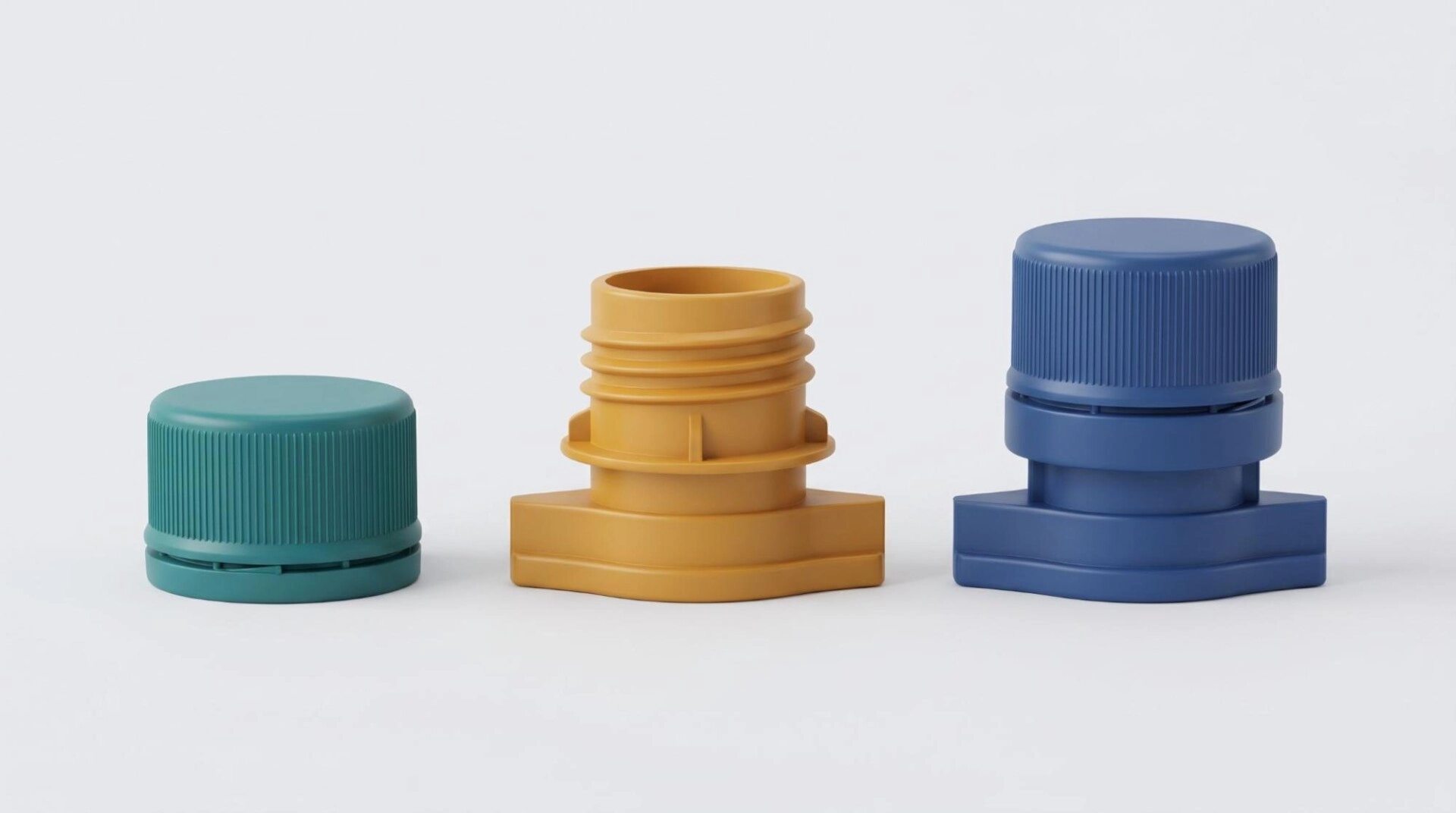
The spout fitment is the molded piece sealed into the pouch body. It includes the dispensing opening and a wider base that bonds to the film. Fitments and screw caps may use PE or PP, depending on the design. Ask for the exact resin and grade for each part. The cap and spout can use different materials.
Check the seal where the fitment meets the film. A supplier may have a sealant that bonds well to itself but requires different settings around the molded spout. Test both joints on the intended line. Then check the cap for leakage after filling, transport and repeated opening.
The intended use can change the material choice. A corner spout on a detergent refill needs to resist the cleaning formula. A fitment on a retort pouch has to withstand the full heating and cooling cycle. Food-contact documentation should cover the relevant fitment and closure components as well as the pouch film.
How Do Barrier Materials Protect Products Inside Spouted Pouches?
A high-barrier spout pouch needs a barrier suited to the product. A strong oxygen barrier can help a juice retain its quality. A light-sensitive oil may also need an opaque layer. Define the type of protection you need before comparing films.
| Protection needed | What to request or test | Practical example |
|---|---|---|
| Oxygen barrier | Ask for the oxygen transmission rate (OTR). Compare values measured under the same temperature and humidity conditions. | A juice that changes color or flavor as it oxidizes. |
| Moisture barrier | Ask for the water vapor transmission rate (WVTR). Compare results with matching units and test conditions. | A liquid concentrate that can thicken if it loses water during storage. |
| Light protection | Check how much light passes through the film. Include any transparent window in the evaluation. | A cooking oil that needs protection from light during display. |
| Aroma retention | Test the actual flavor or fragrance in the finished pouch. Some compounds can pass through the film or be absorbed by it. | A citrus drink or scented body wash that loses its characteristic aroma. |
| Puncture resistance | Check the filled pouch after expected handling, transport and dispensing. | A sauce with firm pieces or a refill pouch shipped alongside rigid containers. |
OTR and WVTR describe film performance under specified conditions. The cap, spout joint, seals and damage during shipping can all affect the finished package. Use film data to compare options. Use filled samples to check the pack you plan to sell.
Which Materials Suit Different Spouted Pouch Applications?
Juice and Beverage Pouches
Start with the way the drink will be processed and stored. A chilled juice with a short shelf life may have different barrier needs from a drink intended for room-temperature storage. If the product needs oxygen protection and shoppers need to see it, compare a clear EVOH structure with a suitable transparent coated film. If light protection matters more, consider an opaque structure.
Baby Food and Fruit Purée Pouches
Match the material to the preservation process. A refrigerated purée, an aseptically packed purée and a retorted purée have different requirements. A qualified PET, nylon, foil and CPP laminate is one possible starting point for retort. Check that the spout and cap can also handle the process. Then test how the pouch behaves when someone squeezes it.
Sauce and Cooking Oil Pouches
Look at the acidity, oil content and ingredients. A thick sauce with seeds can leave particles in the seal area. An oil-based dressing can leave a film on the sealing surface. Trial the real formula on the filling line to see how it affects seal quality. For oils that are sensitive to light and oxygen, compare opaque barrier structures using the intended storage conditions.
Detergent, Shampoo and Personal Care Refills
Test the complete formula against the film, adhesives, spout and cap. Fragrance, solvents and surfactants can affect the pack in different ways. A PE-based pouch may be a useful starting point for a hand soap refill. A concentrated cleaner may need a different structure. During storage trials, look for swelling, leakage, layers separating or a change in fragrance.
Mono-Material vs. Mixed-Material Spouted Pouches
Mono-material describes what the pouch is made from. Laminated describes how layers are joined. A mono-PE pouch can contain several PE films laminated together. A mixed-material laminate can combine PET, nylon, PE or foil to achieve different properties.
| Design question | Mono-material approach | Mixed-material approach |
|---|---|---|
| What forms the body? | One polymer family makes up most of the structure, such as PE or PP. | Different polymers or foil are combined in the same film. |
| How is the barrier added? | A compatible coating or barrier component may be used. Check the design rules for the target recycling stream. | A dedicated layer can be selected for oxygen, moisture or light protection. |
| How does it seal? | The structure balances a stable outside layer with a sealable inside layer within the chosen polymer family. | The outside film and inner sealant can use different polymers. |
| What affects recycling? | The complete package and local collection route determine acceptance. | Different materials bonded together can make conventional mechanical recycling more difficult. |
For a recyclable spouted pouch design, review the film, fitment, cap, inks, adhesives and barrier layers together. The amount of a barrier material such as EVOH can affect compatibility with a specific recycling stream. Check local collection acceptance before adding recycling instructions to the finished pack.
How Does Filling Temperature Affect Spouted Pouch Material Selection?
- Ambient or chilled filling. A PE sealant may suit the application if it works with the formula and filling line. Check seal strength after storage at the intended temperature.
- Hot filling. Record the actual fill temperature, exposure time and cooling conditions. Check whether the film softens, the pouch changes shape or the fitment distorts.
- Aseptic filling. Check compatibility with the package sterilization method as well as the filling process. The supplier needs to know which parts will contact the sterilizing agent.
- Retort processing. Evaluate the sealed pouch through the complete heat, pressure and cooling cycle. The laminate, adhesive, sealant, fitment and cap need to perform together.
Filling temperature and sealing temperature are separate settings. Filling temperature describes the product when it enters the pouch. Sealing temperature is a machine setting used to bond the materials. Record both during trials. In the US, FDA food-contact guidance distinguishes conditions such as refrigerated storage, hot filling and high-temperature sterilization. Check that the relevant substances are suitable for the actual food type and use conditions.
How to Choose the Right Material for Spouted Pouches
- Write down what goes inside. Include the product’s acidity, fat content, viscosity and any particles. For a nonfood refill, flag relevant fragrances, solvents or active ingredients.
- Define the storage period and conditions. Note whether the pouch will be chilled or kept at room temperature. Identify what would make the product unacceptable, such as a change in color, flavor or consistency.
- Set the barrier requirements. Request OTR and WVTR data with test conditions. If light exposure matters, ask about light transmission as well.
- Share the filling process. Give the supplier the fill temperature and any processing after the pouch is closed. Include the intended spout position and closure.
- Run trials with the actual product. Check film-to-film seals and the joint around the spout. Then test for leaks, cap performance, layer separation and damage during handling.
- Verify food-contact or recycling claims separately. Request documentation for the intended food-contact use. If the pouch will carry recycling instructions, check the full package against the target collection program.
Discuss Your Spouted Pouch Material With Hot Custom Boxes
Planning a pouch for juice, sauce or a refill product? Share the formula type, target fill volume, filling temperature and storage conditions with Hot Custom Boxes. If you have a sample or film specification, include it so we can discuss the barrier, sealing layer and spout together. Contact Hot Custom Boxes to discuss your pouch materials.
Frequently Asked Questions
Polyethylene is a common inner sealant. The rest of the pouch may include PET for printing, nylon for toughness or foil or EVOH for barrier protection.
Pouches intended for food need materials suitable for their specific food-contact use. Ask for documentation that covers the food type and the intended filling, processing and storage conditions. The same checks apply to the relevant spout and closure components.
Yes. Aluminum foil can sit between polymer layers to protect against oxygen, moisture and light. The inner sealant usually separates the foil from the contents.
Some PE-based pouches can be designed for compatibility with a PE film recycling stream. Acceptance depends on the full construction, including the spout, cap and barrier layers, and on the collection program available to the user.
A qualified PET-based laminate with a suitable heat-resistant PE or PP sealant may be an option. The supplier needs the actual fill temperature and exposure time to assess the laminate, fitment and cap together.