













Table of Contents
Related Products
Get A Free Quote
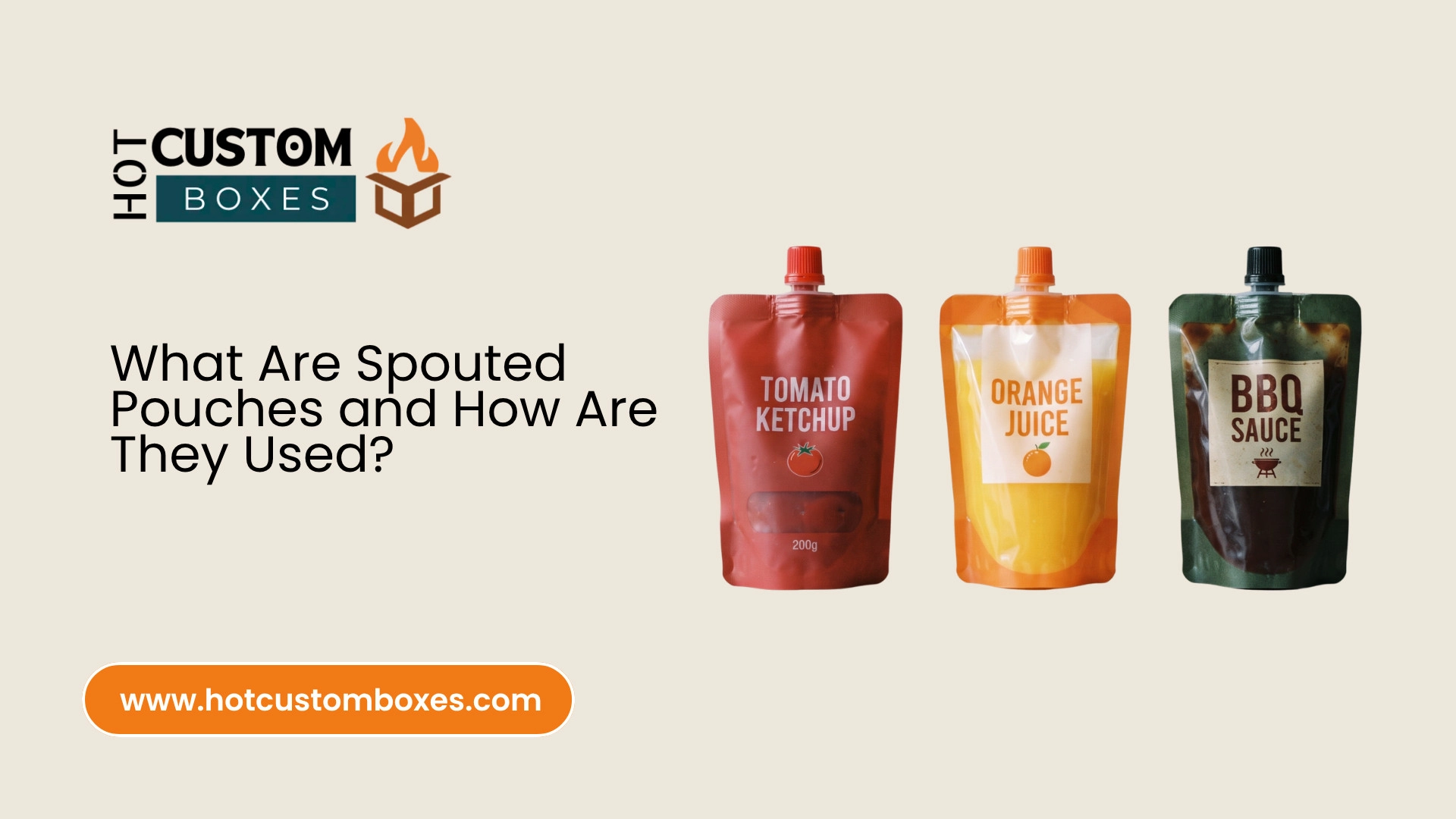
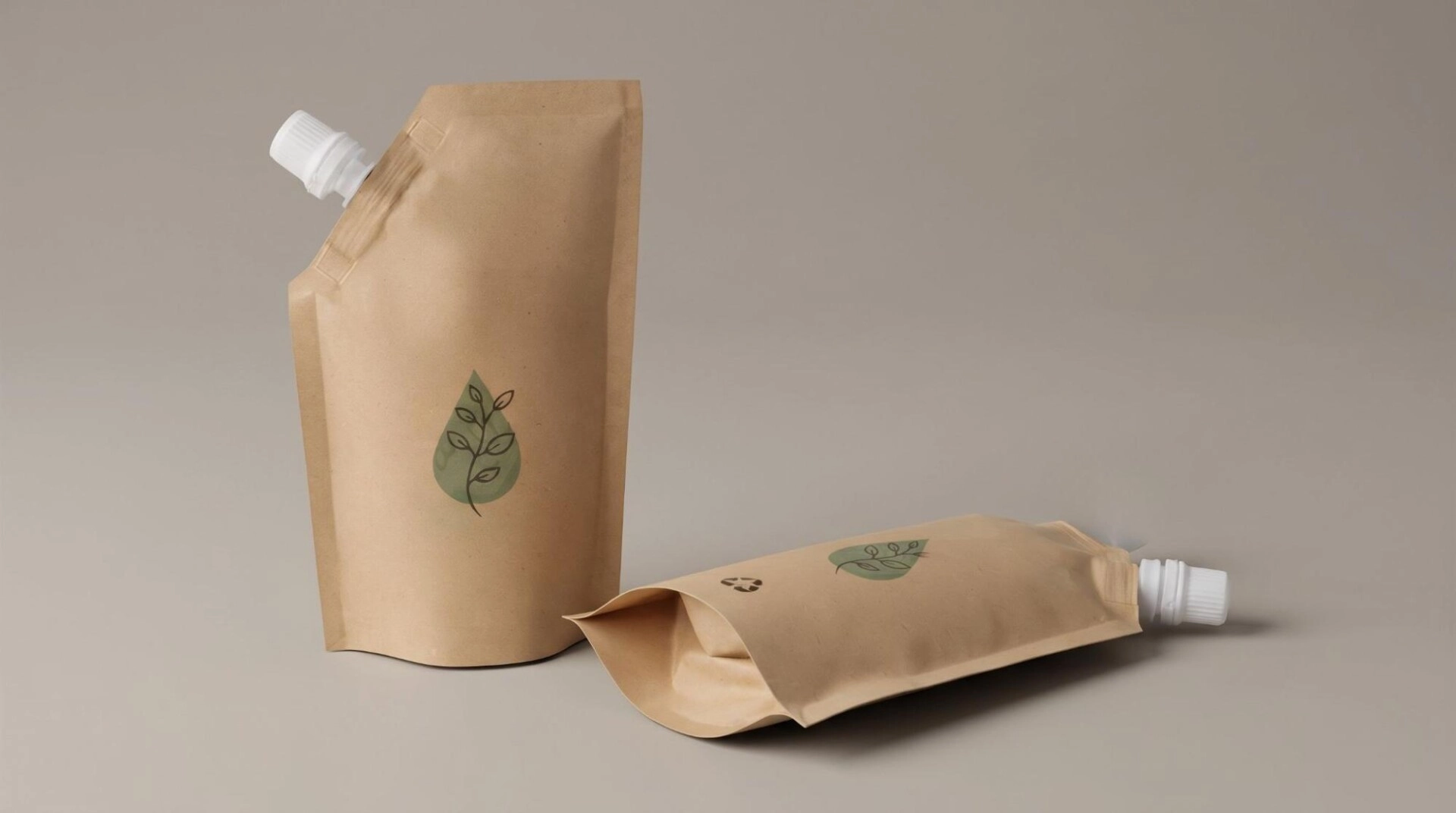
Spouted pouches are flexible bags with a built-in opening for pouring, squeezing or drinking. A screw cap usually covers the opening so the pouch can be closed again after use. Common examples include squeezable baby food, juice pouches and liquid soap refills.
People use the same basic pack in different ways. They may drink straight from a water pouch, squeeze yogurt onto a spoon or pour detergent into a measuring cap. The job determines the pouch shape, where the spout sits and how wide the opening needs to be.
What Are Spouted Pouches?
A spouted pouch is a flexible pouch with a dispensing spout sealed into its top or corner. The pouch holds the product. The spout gives it a controlled exit. On a screw-cap design, the user can close that exit between uses.
Here’s how spout pouches work. For a thin liquid such as juice, the user removes the cap and tilts the pouch. For something thicker such as fruit purée, the user squeezes the walls to move the product through the opening. When the cap goes back on, it closes the spout. The seals around the spout and along the edges keep the rest of the pouch closed.
The easiest way to understand flexible packaging with a spout is to compare it with a tear-open sachet. A sachet can work for a single serving of sauce. A capped pouch lets someone squeeze out a small amount and close the pack again. That makes it useful for products people dispense in portions.
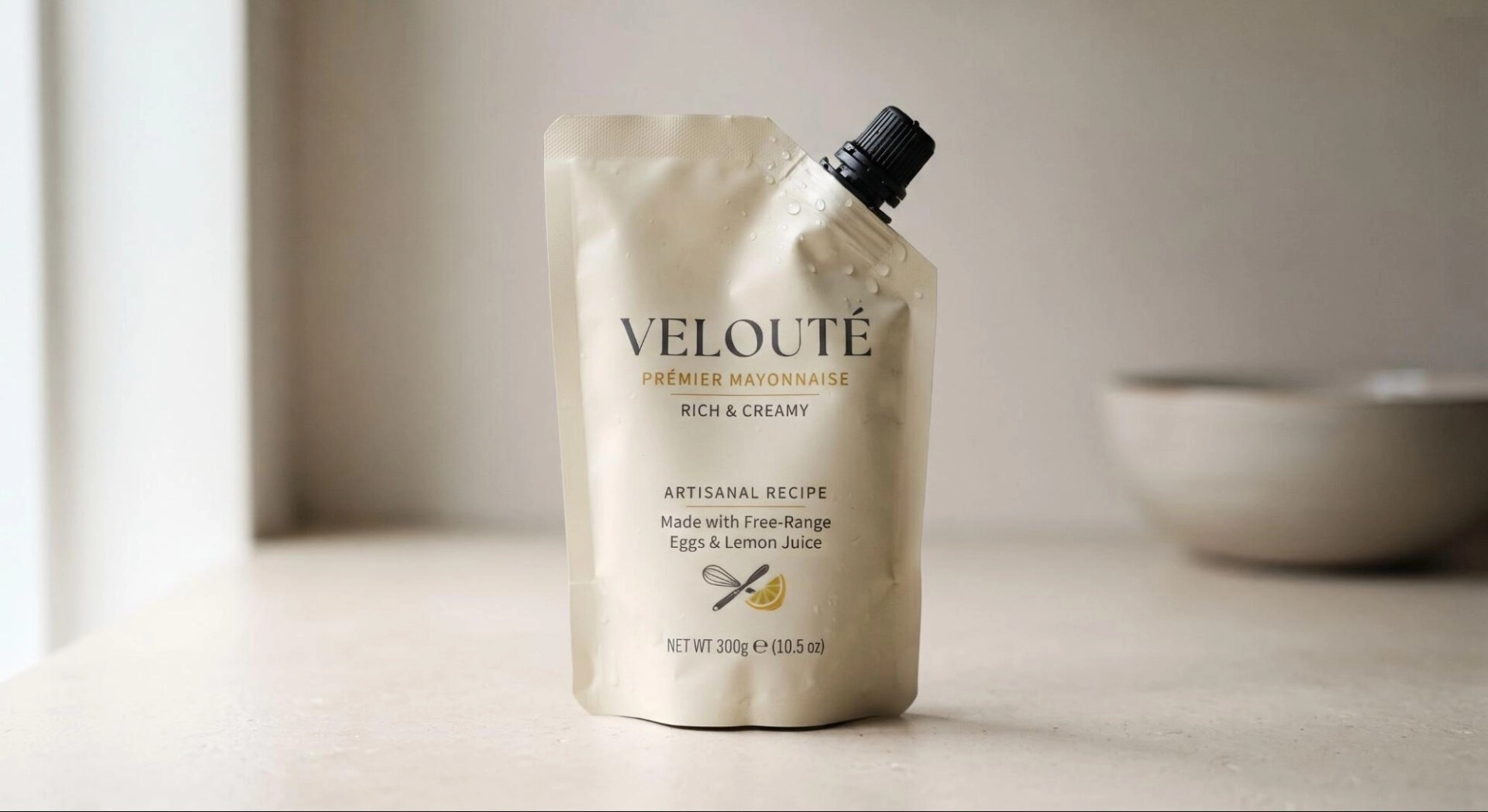
What Are the Main Components of Spouted Pouches?
| Component | What it does |
|---|---|
| Dispensing spout | Provides a channel for the product. The opening affects how quickly liquid pours and whether pulp or small pieces can pass through. |
| Screw cap | Creates a resealable closure over the spout. Some caps include a ring that breaks on first opening to show that the closure has been opened. |
| Pouch film | Forms the body. It flexes when squeezed and can include layers that add strength or limit exposure to oxygen, moisture or light. |
| Sealing layer | Bonds the film panels along the edges and around the base. The joint where the spout meets the film also needs a compatible seal. |
| Bottom gusset | Opens as a stand-up pouch fills. This folded section creates the base that lets the pouch sit upright. |
| Tear notch | Gives the user a place to start tearing on designs with a separate tear-open feature. A standard screw-cap pouch usually opens through the cap. |
The spout and cap system is the dispensing mechanism. The film and seals keep the contents inside the pack. If a capped pouch leaks when turned on its side, the leak could come from the closure, the spout joint or a seam. Each area needs to be checked separately.
What Materials Are Used to Make Spouted Pouches?
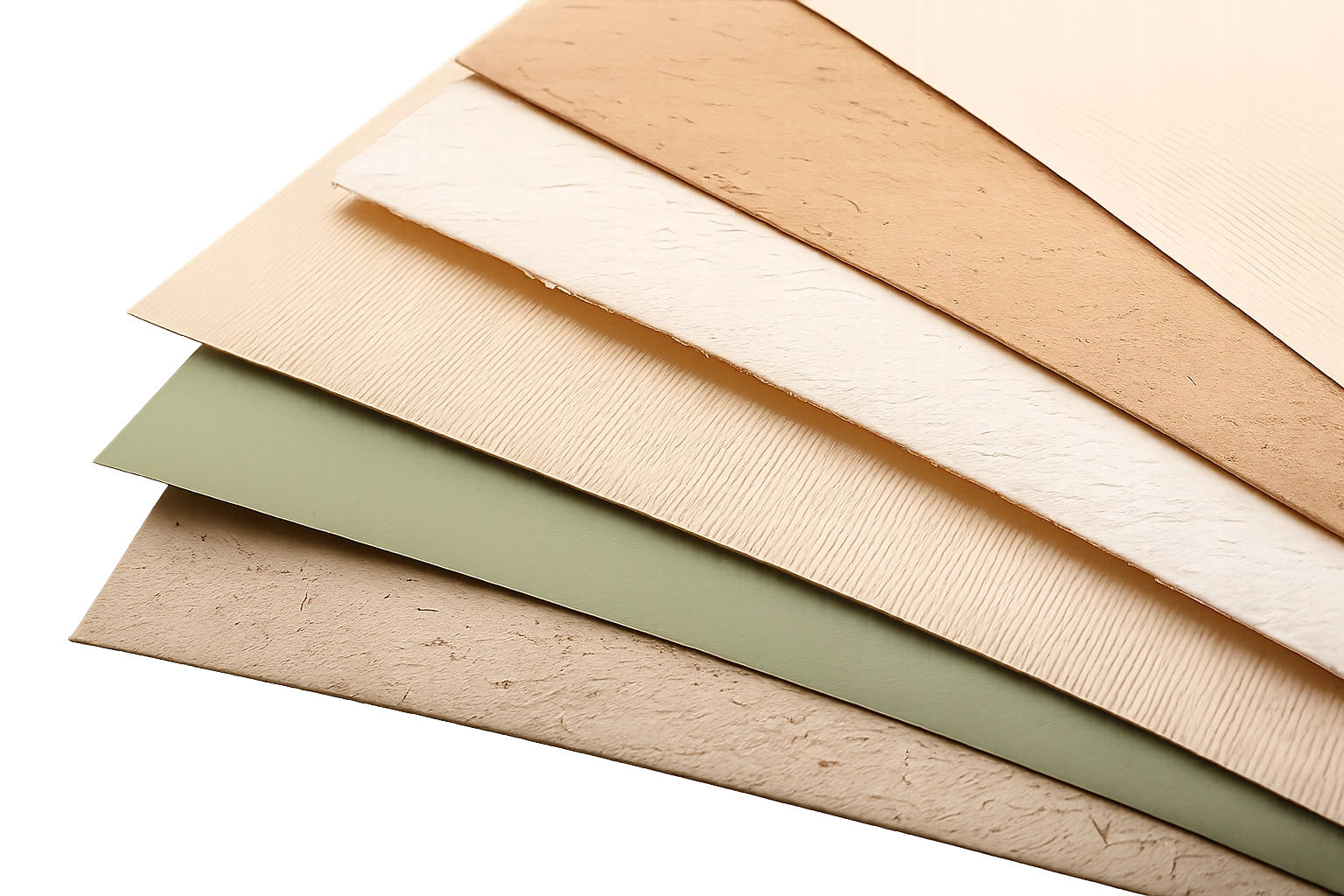
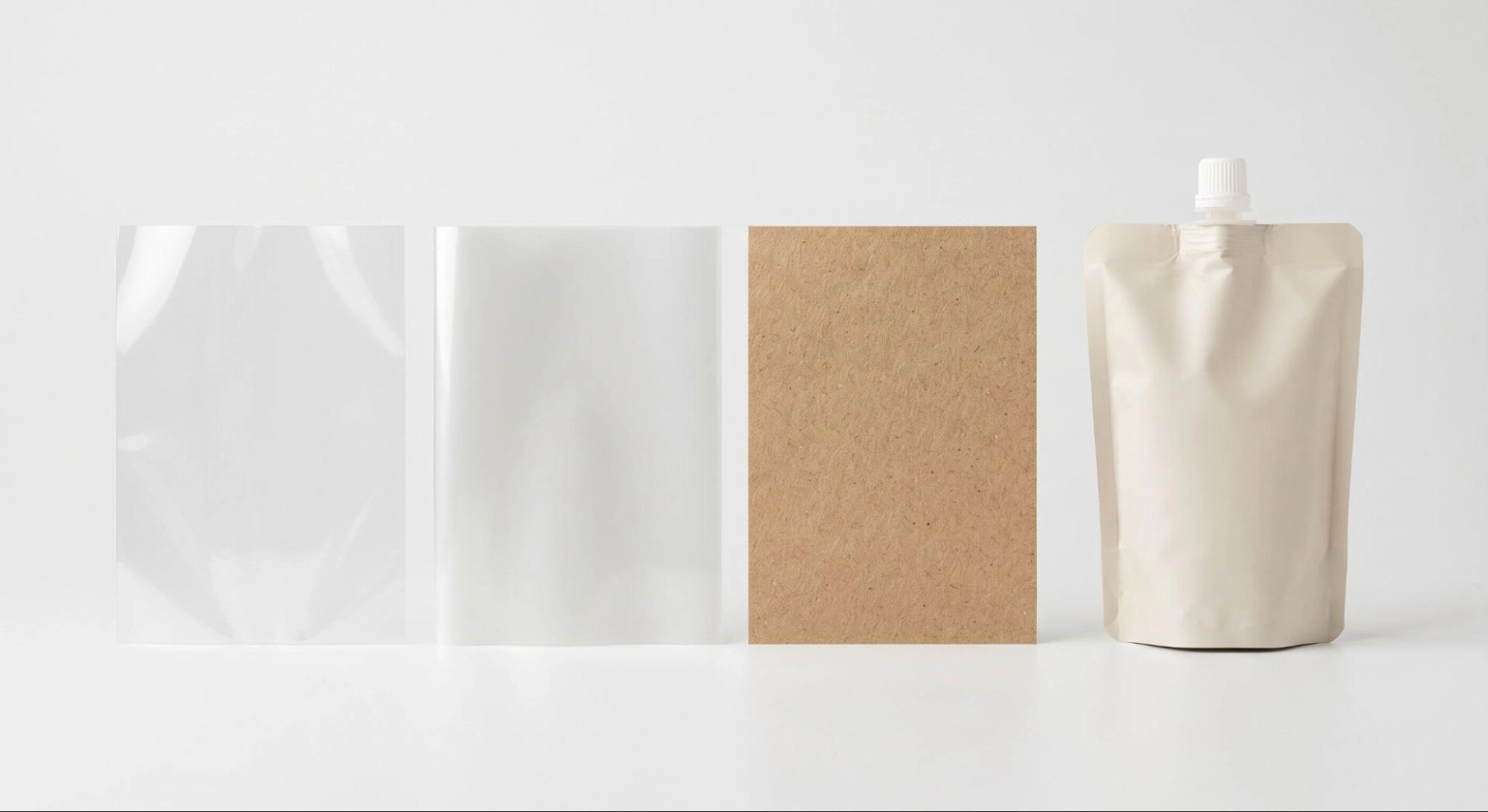
PET, BOPP and Kraft Paper on the Outside
Polyethylene terephthalate (PET) can serve as a printable outer film in a laminated pouch. Biaxially oriented polypropylene (BOPP) is another film option for some structures. Kraft paper can give the outside a paper feel, while the inner structure provides the liquid barrier and sealing surface. A paper exterior alone does not indicate how the pouch can be recycled.
Aluminum Foil for Barrier Protection
Some multi-layer packaging films include aluminum foil to limit the passage of oxygen, moisture and light. That can matter for a cooking oil when exposure to light or oxygen is a concern. A liquid soap refill may place more emphasis on how the film and spout hold up against the formula. Barrier needs depend on what can affect the product during storage.
PE and LDPE for Sealing
Polyethylene (PE) can form the inner sealing layer of a pouch. Low-density polyethylene (LDPE) is one type of PE used in flexible films. In a laminated film, pouch lamination joins layers that serve different purposes, such as providing a print surface, a barrier or a surface that bonds during heat sealing.
Material selection depends on product compatibility, barrier needs and filling conditions. For example, a pouch for a refrigerated drink and one for a hot-filled sauce may need different structures even if they hold the same volume.
What Are the Different Types of Spouted Pouches?
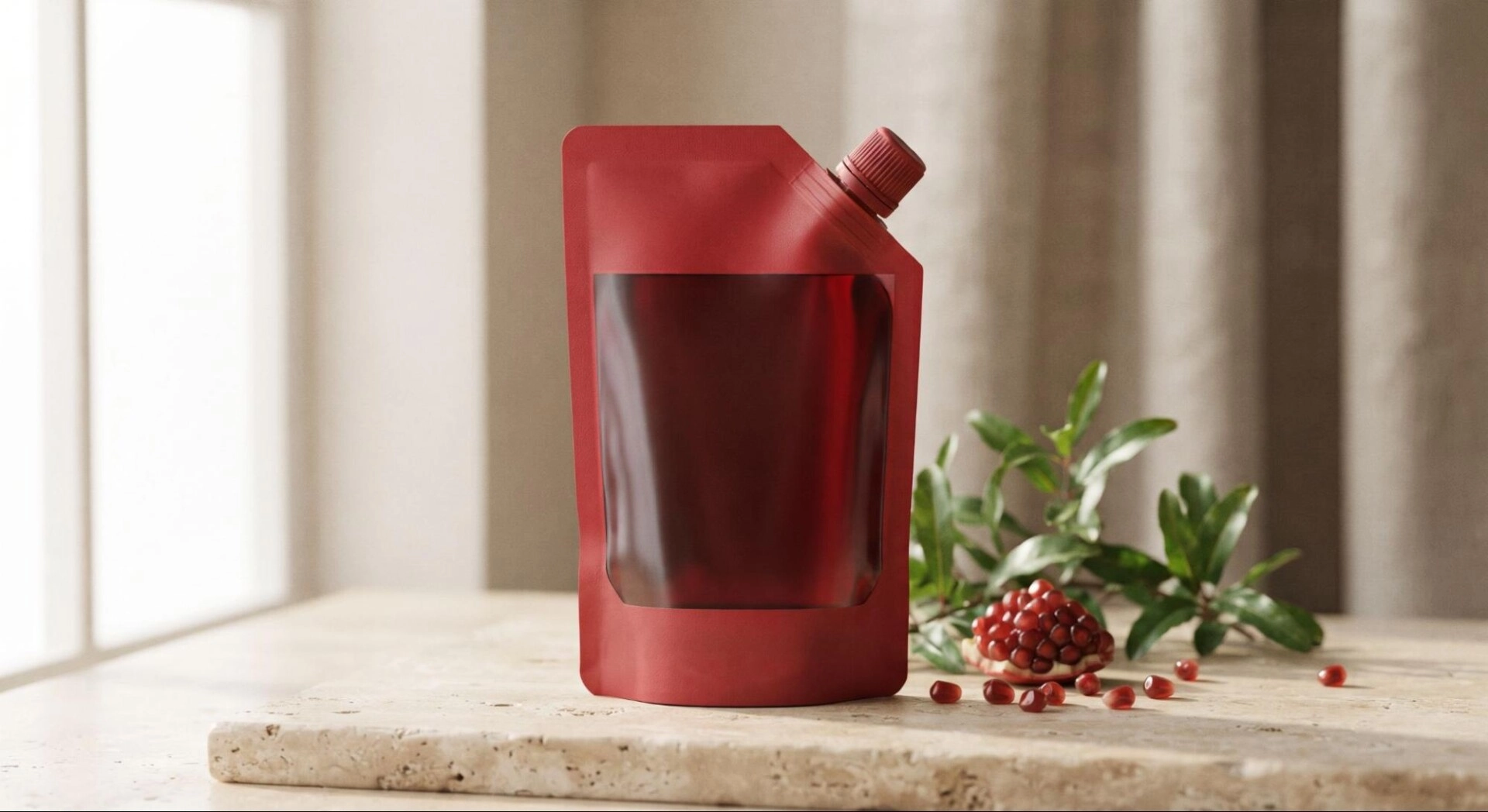
Stand-Up Spout Pouches
Stand-up spout pouches have a gusset at the bottom. The stand-up pouch design works well when users want to set the pack down between uses, such as with a sauce kept in the refrigerator. Test how stable the pouch is when it’s partly empty. A pack that stands firmly when full can behave differently after several pours.
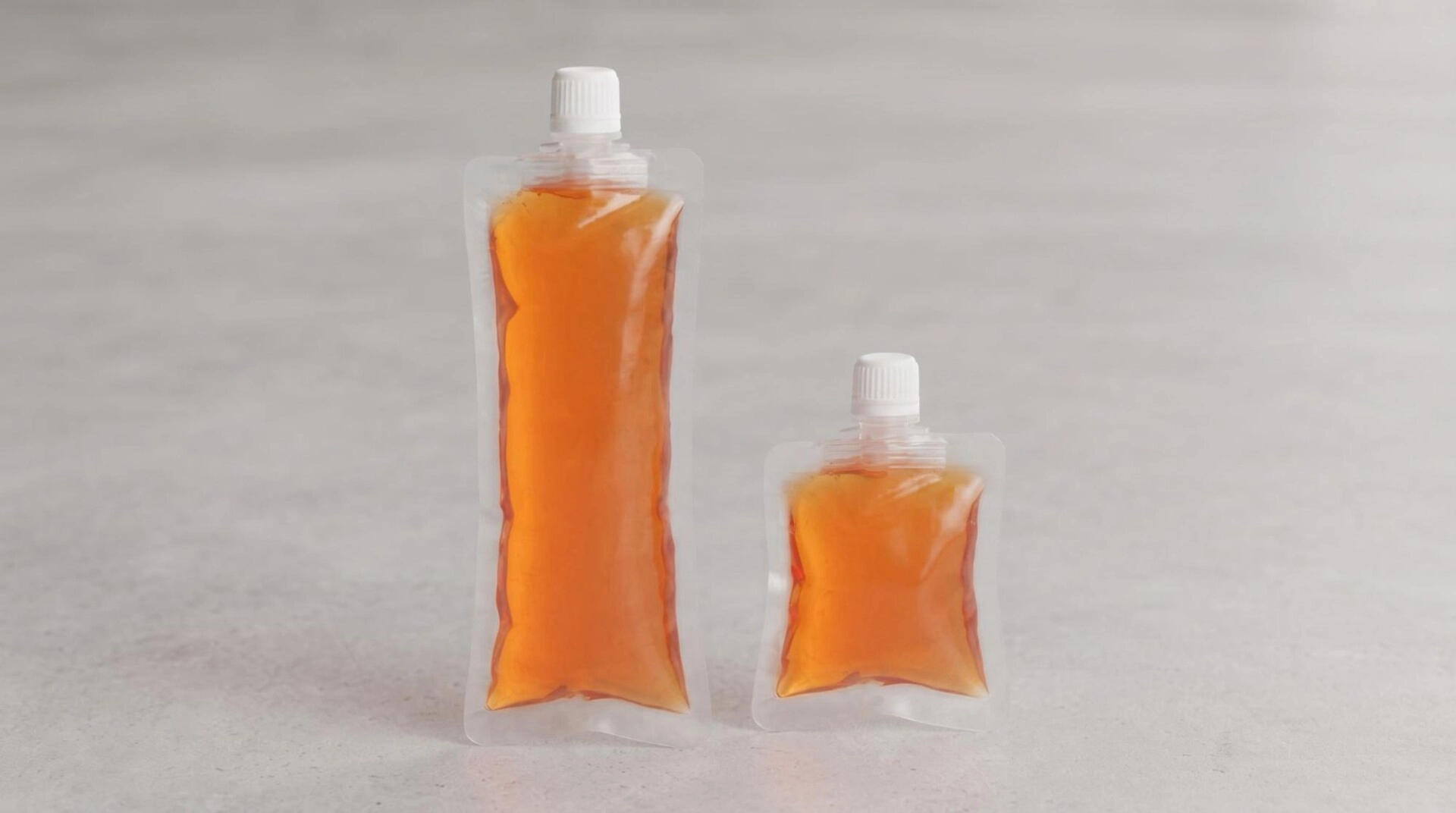
Flat Spouted Pouches
Flat pouches have no stand-up base. They can suit small portions that are stored flat or used in one sitting. A fruit purée pouch packed in a lunch bag is one example. Flat and stand-up refer to the pouch body. Both can have a resealable spout.
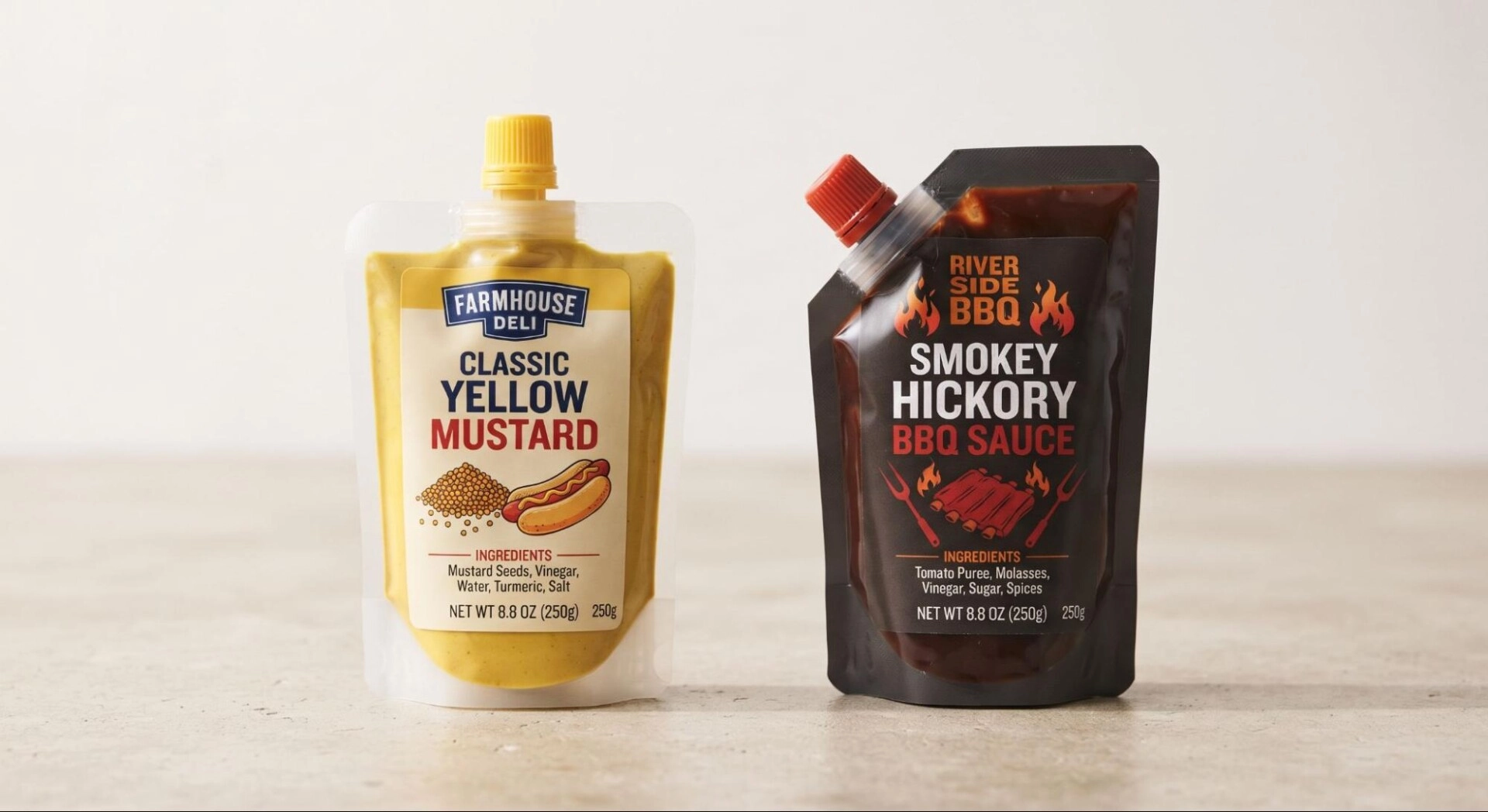
Top-Spout and Corner-Spout Pouches
A centered top spout can be easy to reach when someone holds the pouch upright and squeezes. A corner spout can make it easier to aim the flow when tilting a pouch into a bottle. Both placements are available for stand-up formats. The choice also affects how the filling line handles the pouch.
Reusable Spout Pouches
Reusable spout pouches are designed for repeated filling and cleaning. For example, a refillable snack pouch may have a wide opening for adding homemade purée and a smaller spout for dispensing it. A retail screw-cap pouch can be resealed after opening. If the pack will be washed and refilled, choose one designed for those conditions.
How Are Spouted Pouches Used in Different Industries?
Food and Beverage Packs for Drinking, Squeezing and Serving
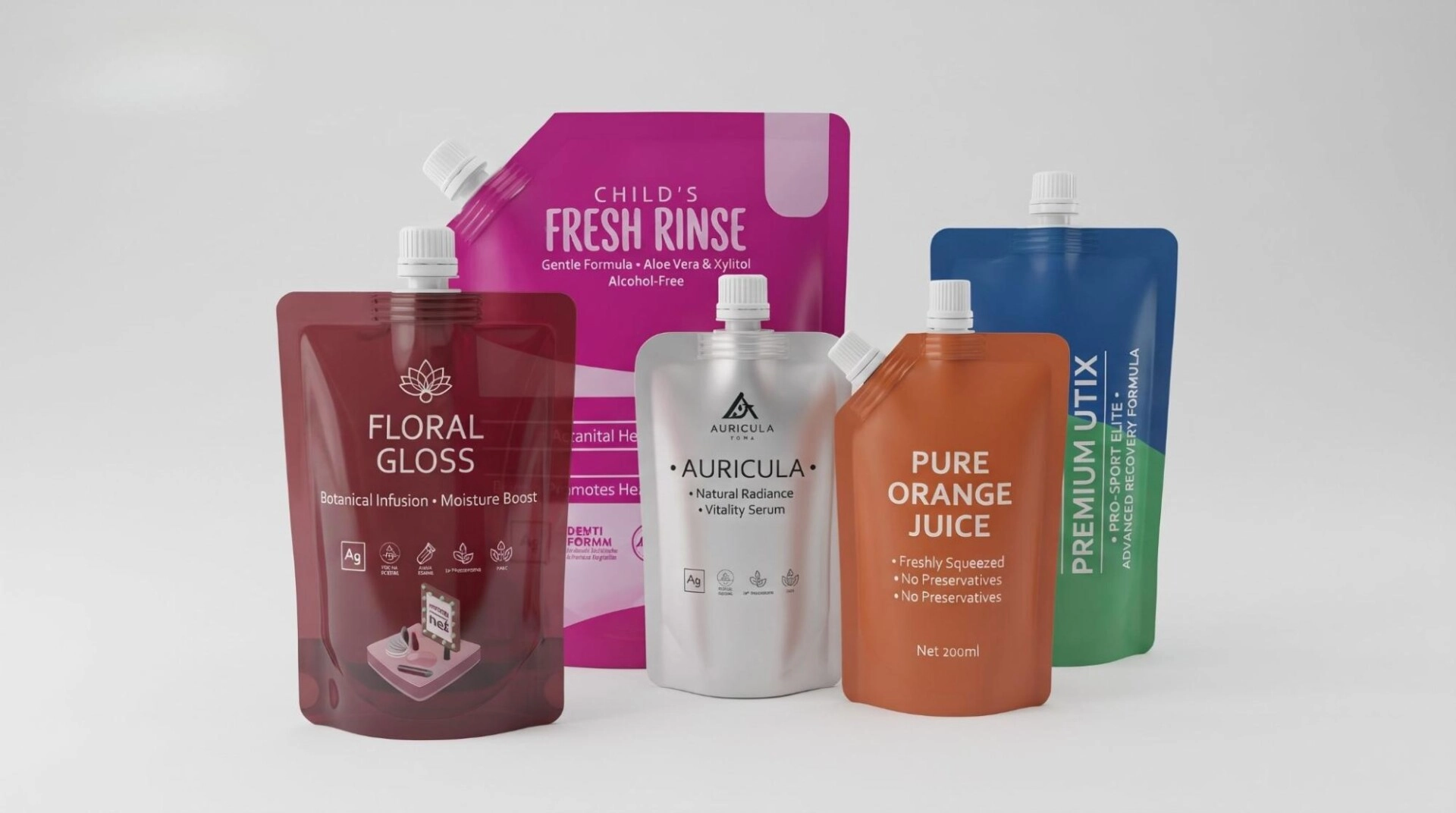
Spouted pouches for food and beverages can serve one person or hold enough for several uses. A drink pouch may go into a lunch bag and be sipped directly. A baby food pouch lets a caregiver squeeze a portion onto a spoon. In food service, staff can pour a sauce or concentrate into a preparation container. Each task needs a different amount of flow control.
Personal Care Packs for Travel and Refills
Personal care brands use pouches with dispensing spouts for products people apply directly or transfer to another container. A traveler can squeeze body wash into their hand. Someone refilling a pump bottle can guide liquid soap through its narrow neck. The bottle opening and the way the user grips the pouch matter when choosing the spout.
Household Packs for Measuring and Transferring Liquids
Household spouted pouch applications include pouring detergent into a dosing cup and transferring a cleaning solution into a spray bottle. A smaller opening can help with measuring a thin concentrate. A larger opening may make it easier to transfer a thick detergent. Brands also need to check how the full formula interacts with the pouch film and closure during storage.
What Products Can Be Packed in Spouted Pouches?
Spout pouch uses cover thin liquids, thicker creams and smooth pastes. Two products sold for the same purpose can still need different spout openings or filling conditions.
| Product | What affects how it’s packed or dispensed |
|---|---|
| Water and juice | Water flows quickly. Juice with pulp needs enough room at the opening for the pulp to pass. |
| Milk and smoothies | Match the pouch to the actual processing and storage conditions. A thick smoothie may also need a wider opening. |
| Baby food and yogurt | Check how much comes out with a gentle squeeze. A smooth purée and a blend with soft pieces may flow differently. |
| Sauces and cooking oils | Herbs or pieces in a sauce can catch in a small spout. With a freely flowing oil, the main concern may be controlling the pour. |
| Shampoo, conditioner and body wash | A thicker formula may take more pressure to dispense. Try the pack with wet hands and again when it’s nearly empty. |
| Liquid soap, detergent and cleaning solutions | Test the pour into the actual bottle or measuring cap. Check that the formula is compatible with the pack over its intended storage period. |
What Are the Benefits of Spouted Pouch Packaging?
- Controlled pouring. A dispensing spout directs the flow into a spoon, cup or narrow bottle opening. The benefit depends on matching the opening to the product.
- Resealing between servings. A screw cap makes it possible to use part of the contents and close the pouch again. Storage instructions still apply after opening.
- Squeezing out thick products. The flexible walls let the user push a cream, sauce or purée toward the spout. Test how much gets trapped in the base folds.
- Compact storage before filling. Empty pouches can lie flat. This can save space before production, though the spouts and caps still add bulk.
- Different ways to use the same format. A pouch can serve as a drink container, a portion pack or a refill. The pouch shape and closure can be selected around that use.
How Are Spouted Pouches Manufactured?
Forming the Body and Sealing the Spout
A packaging line can form pouches from a roll of film or start with pre-made pouches. During forming, the machine shapes the film, creates a bottom fold if required and joins the edges by heat sealing. The spout is fixed into the top or corner, depending on the design.
Filling Through the Spout or an Open Edge
In one setup, the machine fills the pouch through the spout and applies the cap afterward. In another, the product goes through an open edge that the machine then seals. The filling process depends on the pouch design, the equipment and how easily the product moves. Water and thick yogurt can require different filling settings.
Testing the Finished Pack
Quality testing can check the seams, the spout joint and the cap. A leak test checks whether the filled pouch stays closed under specified conditions. Handling tests can show what happens if it gets dropped or compressed. A dispensing trial answers a different question. Can someone pour or squeeze out the product without clogging, splashing or applying too much force?
Are Spouted Pouches Suitable for Food and Liquid Packaging?
Yes. Liquid packaging pouches can hold foods, drinks and nonfood liquids when the complete pack suits the formula and the way it is processed, filled and stored. For food, check the intended use of each component that contacts the contents. US FDA guidance distinguishes among food types such as acidic foods, dairy and oils. It also treats refrigerated storage, hot filling and high-temperature sterilization as different conditions of use.
Leak resistance and product preservation are separate checks. A pouch may hold liquid without leaking and still let in more oxygen than a particular product can tolerate. A chilled smoothie, a hot-filled sauce and an oil may need different liquid packaging solutions. Shelf life depends on the product, process, finished pack and storage conditions.
How to Choose the Right Spouted Pouch for Your Product?
- Start with the action. Decide whether people will drink from the pouch, squeeze out portions, pour a measured dose or refill a bottle.
- Check how the formula flows. Note its thickness and any pulp, seeds or pieces. Try the real product through the proposed spout.
- Write down the filling and storage conditions. Include fill temperature, any treatment after filling and the expected storage temperature.
- Compare spout packaging solutions on the filling line. Check how the line loads, fills, seals and caps each option. Confirm whether it fills through the spout or an open edge.
- Test the pouch the way people will use it. Try it full and nearly empty. Open and close it several times if it’s a pack people will use over multiple servings. For a refill, pour it into the actual bottle.
Order Custom Spouted Pouches from Hot Custom Boxes
Choose custom spouted pouches that match your product, filling process and dispensing needs. Hot Custom Boxes offers custom packaging options with flexible material structures, different pouch sizes, spout placements and printing choices. Whether you need pouches for beverages, sauces, baby food, personal care products or household liquids, our team can help you select a suitable packaging format. Contact us today to discuss your custom spouted pouch packaging requirements and request a quote.
Frequently Asked Questions
They’re used to package products people drink, pour or squeeze out in portions. Examples include fruit drinks, baby food, sauces and household refills.
Remove the cap and tilt the pouch to pour or squeeze the walls to dispense thicker contents. Replace the cap to close the opening between uses.
Suitable examples include water, juice, yogurt, cooking oil, shampoo and liquid detergent. The product needs to flow through the spout and be compatible with the complete pack.
They’re used in grocery retail, food service and household refill systems. People also use them for portable snacks and travel-size personal care products.
The opening directs the liquid during pouring. A screw cap lets users close the pouch after dispensing part of the contents.
Food, beverage, personal care and household cleaning brands use spouted pouch packaging. Common formats include single servings, packs used over several days and refills.