














Table of Contents
Related Products
$0.50 Original price was: $0.50.$0.10Current price is: $0.10.
In Stock
$0.50 Original price was: $0.50.$0.10Current price is: $0.10.
In Stock
$0.50 Original price was: $0.50.$0.10Current price is: $0.10.
In Stock
$0.50 Original price was: $0.50.$0.10Current price is: $0.10.
In Stock
Get A Free Quote
A display box needs to fit your products and work in the store space. Customers should be able to read labels, see what’s available and take an item out easily. Appearance matters. So does a box that keeps its shape through daily use.
Start with product measurements when you choose the right display boxes for your business. Check the weight and decide how many items each box will hold. Then measure the selling space. You’ll have a clearer basis for comparing styles and materials within your printing budget.
Glass skincare bottles need different support from wrapped bakery cookies. Here’s what to check before ordering.
1. Understand Your Product Display Needs
Measure products with their retail packaging on. Count the cap and wrapping in those measurements, including anything that sticks out. Weigh one finished item. Then work out how many will go in each display.
Shape makes a difference too. A tall bottle can tip after someone takes the item beside it. Round candles may slide across a wide tray. Separate sections often help keep small accessories sorted by style.
Bottle Display Packaging needs to suit the bottle’s base and height without covering the label. With Candle Display Boxes, check the combined weight of the candles and their glass jars.
Custom Display Boxes with Dividers are worth considering when items need their own spaces. The dividers keep stock apart and organized. But don’t make the compartments too tight. Customers need room to lift each product out.
2. Choose the Right Type of Display Box
Where will shoppers see the box? Think about how they’ll use it there. Some categories do similar jobs, so compare their structures and sizes. Check how people will reach the products too.
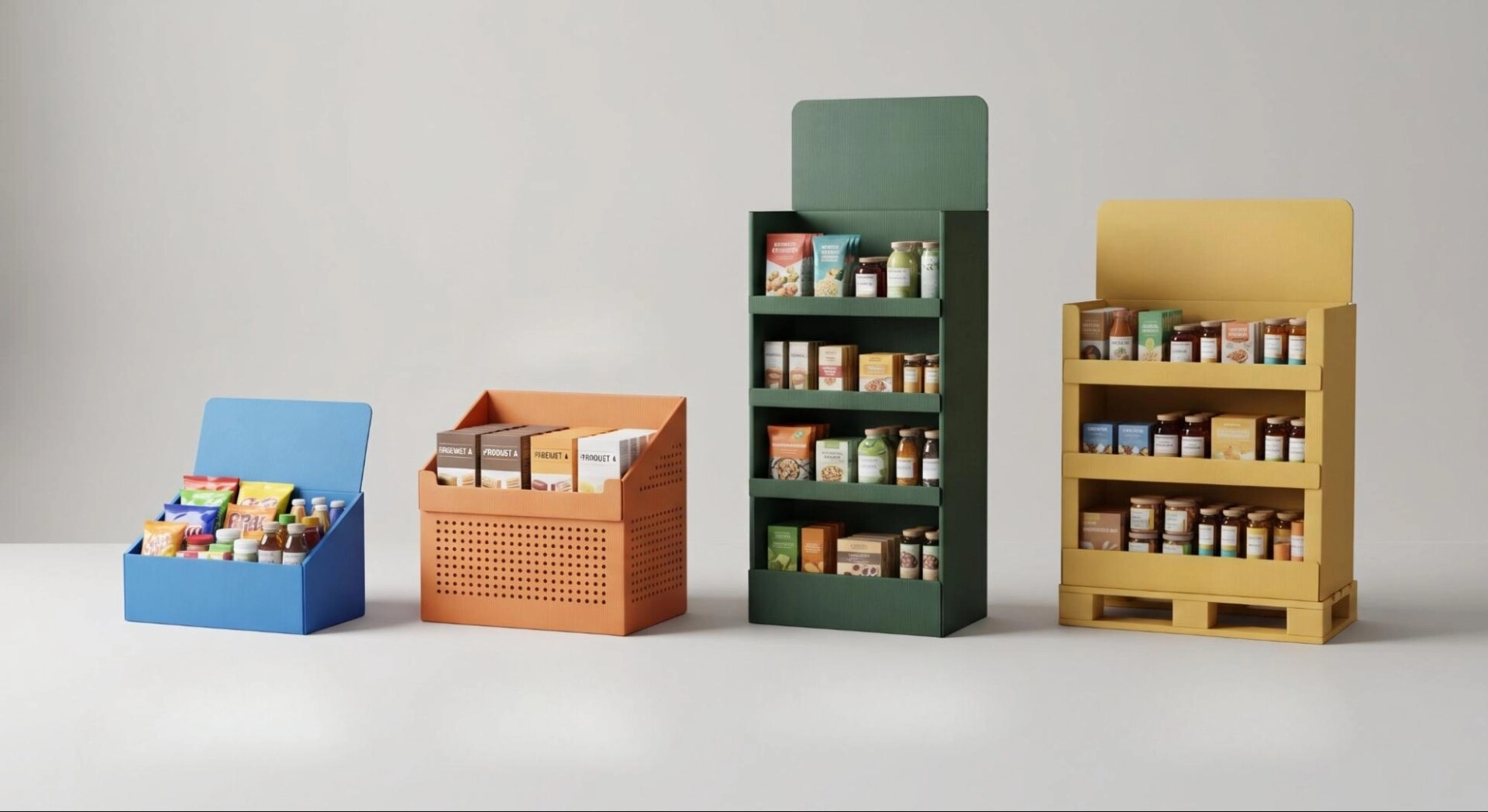
Countertop Display Boxes
Small products often fit well in Counter Display Boxes near checkout counters or service desks. Stores use them for lip balms and samples, as well as snack bars and accessories. They keep stock visible in a small space.
A Custom Pop Counter Display Tray can feature one product or support a short checkout promotion. Confirm its measurements with the retailer first. Staff still need room to serve customers and take payments.
Floor Display Boxes
Floor Display Boxes give a product range its own selling space. They hold larger quantities or several related items. Stores commonly use them for seasonal collections, packaged snacks or promotional stock.
The retailer needs to approve the space before you choose a floor display. Check the base and shelf support before ordering. And make sure shoppers can reach the stock easily.
Shelf Ready Display Boxes
Staff can put shelf ready packaging on display with less unpacking. On some designs, they remove a lid or panel to leave the products sitting in a tray.
PDQ Boxes, often called “pretty darn quick” displays, help speed up setup. A Custom Front Cut Out Display Tray leaves product fronts exposed while supporting the sides. Check the fit on the shelf after opening it.
Point of Purchase Display Boxes
Point of purchase, or POP, displays bring attention to products where buying decisions happen. They may sit on shelves or counters. Some stand on the floor. Point of sale displays usually go near payment areas.
Product Display Boxes can group a featured range in one place. Retail Display Boxes need to suit the store layout and give shoppers room to browse. Put them where people can notice and reach the products.
3. Consider Where the Display Boxes Will Be Placed
Check the available height as well as the width and depth. Measure the whole display, including its header and anything extending past the box. Look above the space too. Shelves or fixtures may limit the fit.
At checkout, leave enough room for staff to work. Shelf displays should sit within the shelf edges. For floor displays, follow the retailer’s space requirements and leave walkways clear.
Placement also changes how staff refill the box and how shoppers take products out. Gravity Dispenser Boxes allow suitable items to move toward an opening as stock leaves. Test your products in the design. Their shape and weight affect movement, as does the surface.
Discuss the refill point and dispensing opening with the supplier when ordering Custom Gravity Dispenser Boxes. Staff need enough space to load stock without moving products nearby.
Ask which board the supplier intends to use. “Cardboard” covers several paper materials, and they don’t all perform the same way. Your choice affects strength and appearance. It affects the price too.
| Material option | When to consider it | What to check |
|---|---|---|
| Cardboard Display Boxes | Lightweight cosmetics and accessories or packaged snacks | Board strength and support with a full load |
| Corrugated Display Boxes | Heavier products or larger quantities, including boxes used for shipping and shelf display | Base strength and shelf support, plus assembly |
| Kraft Display Boxes | Products that suit a natural brown appearance | Print contrast and support for the product weight |
| Recyclable paperboard | Displays where recycling affects the buying decision | Coatings and attachments, plus local recycling acceptance |
The fluted paper layer between corrugated cardboard’s liners adds cushioning and support. Still, the box structure must suit the number of products and their combined weight.
Kraft paperboard has a brown surface that suits simple branding. That appearance doesn’t confirm recycled content. It also doesn’t tell you if local services will accept the finished box for recycling.
Tell the supplier how you’ll use Food Display Boxes. Will the food stay wrapped or touch the box? Direct food contact needs suitable materials and finishes. Mention grease or moisture exposure, along with any chilled conditions, before choosing the board.
5. Choose a Design That Represents Your Brand
Customers should recognize the range when they look at the display. Use familiar brand colors and a clear logo. Keep text readable, leave clear space on each panel and stick to a short main message.
Shade names or separate product labels may be needed on Cosmetic Display Boxes. Put them where shoppers can compare the items easily. They shouldn’t have to search through the stock to find those details.
For closed packaging, a window lets people see inside. Window Display Boxes can help when customers need to check the contents before buying. Clear Lid Boxes show products from above. Check how shoppers will open those too.
Gable Boxes With Window can work for products sold in separate carry packs. First decide what you need. Is it a box for each purchase or a shared display holding several products?
Give Hot Custom Boxes your artwork and brand colors when discussing printing. Explain where the display will sit. Then review the design with products loaded, checking that panels and graphics don’t cover important labels.
6. Focus on Product Visibility and Customer Access
Take a few steps back. Can you tell what the products are and read the main message? Move closer and take one out. Watch what happens to the stock beside it.
A front panel needs to hold the products without hiding their labels. If the box has several rows, check the back row too. Customers should be able to see those items and reach them.
For a Custom Double Wall Display Lid, check the opening action and product support. Use a sample to see how much space the opened structure takes up.
Look at a Custom Side Lock Tuck Top Display Box while it’s closed, then open it. Check that the locking parts hold securely. The lid and panels should leave enough room to reach the products.
Run through these checks again with some stock removed. The remaining items still need to be visible and easy to collect. Good access can help customers choose, but it doesn’t guarantee sales.
7. Set a Budget for Your Display Boxes
Look at the cost of the whole order. A affordable price per box doesn’t tell you everything. Assembly and shipping add to the bill, and printing affects it too.
Ask suppliers to show these costs in their quotes:
- Box production and printing. Ask for both costs as part of the quote.
- Dividers, inserts and support panels. Include the internal parts your display needs.
- Artwork preparation and setup. Have the supplier include this work in the price.
- Shipping and delivery. Ask for these charges with the order quote.
- Any assembly work. Include the cost of putting the displays together.
Send every supplier the same requirements. Otherwise, the quotes may cover different sizes or materials. The level of support may differ as well.
Ordering more may reduce the unit price. But you’ll need somewhere to keep the extra boxes. Use expected demand and the promotion’s length to set the quantity. Seasonal artwork can become outdated while unused stock remains.
8. Check Durability, Stability and Product Protection
Work out the display’s full load before discussing strength with the supplier. Add the retail packaging to the product weight. Count any inserts too, then share the total.
Look closely at the corners and joints. Check the base and support panels as well. Each shelf must carry its own load. Strong outside panels won’t fix a weak shelf or stop an unstable base from moving.
Use actual products to load the sample where possible. Take some out, then refill it. Look for loose joints or bending and watch for movement. With tall displays, remove stock from different sections to check stability.
Explain how you want delivery arranged. Boxes may arrive flat or assembled. They can also arrive filled with products. Each choice changes packing and shipping requirements, along with handling.
9. Consider Sustainability and Recyclability
Start with a box that fits the products. Large empty areas add bulk without helping the display work. Give extra panels and decorative parts a clear purpose so you don’t use material needlessly.
Ask where the material comes from and how much recycled content it contains. Paper packaging doesn’t always use recycled fibers. And local services may accept one box design while rejecting another.
Attached parts can affect recycling, as can windows and coatings. Check whether staff or customers must separate any components before putting the box out for disposal.
Look for specific details behind environmental claims. You need to know about the material and its use, plus how people can dispose of it. Broad wording alone won’t explain why an option is suitable.
10. Common Mistakes to Avoid When Choosing Display Boxes
A small mistake can become a problem in the store. Go through these checks before approving production.
- Choosing the wrong size.
Measure products in their finished packaging and check the usable space inside. Outside measurements don’t show exactly how much room the stock will have. - Ignoring product weight.
Give the supplier each item’s weight and the number going in one display. Test the box with the full load it must carry. - Overlooking store space limits.
Confirm the allowed height along with the width and depth. Count headers and open lids, including anything extending beyond the base. - Hiding products or labels.
Put stock in the display before reviewing it. Shoppers need to see names and prices, along with important product information. - Choosing by price alone.
Check strength and printing costs. Compare shipping and setup charges too, then confirm what each quote covers. - Forgetting access and refilling.
Have someone take products out and restock the sample. Fix openings that make either task awkward before ordering the full quantity.
11. Display Box Selection Checklist for Businesses
Keep this checklist beside you when comparing options or putting together a quote request.
- Record product measurements. Note the weight and quantity each display will hold too.
- Measure the available retail space. Keep those measurements with your display requirements.
- Choose a counter, shelf, floor or dispenser format. Record the format you want to compare.
- Check material strength. Review the support the display provides as well.
- Confirm compartment sizes. Check the dividers with those measurements.
- Review the branding. Check product label visibility at the same time.
- Compare full order costs. Review the quantities covered by each price.
- Confirm shipping requirements. Include the delivery requirements in your request.
- Test product access. Check how staff will refill the display too.
- Approve a sample or prototype. Complete this check where practical.
Still unsure how to choose the right display boxes for your business? Go back to the store requirements and product measurements. They’ll help narrow your choices before you spend time on artwork.
Discuss the Right Display Boxes for Your Business
Start with the products and the store space when choosing your display. Before approving the design, check its fit and strength. Try taking products out too. A sample helps you find problems while there’s still time to change things.
Send Hot Custom Boxes your product measurements and preferred style. Include the artwork and order quantity. Our team can help you compare options that suit your retail space. Explore our custom display boxes or request a quote for your next order.
Frequently Asked Questions
Yes. Each size needs support and a visible place in the layout. Separate compartments can keep a mixed range organized. Test every size to check that customers can take items out easily.
Only if the design meets every store’s requirements. Shelf sizes may differ, as can counter limits and setup rules. Check with each retailer before ordering displays for several locations.
They can save storage space before use. Staff will have to assemble them, though. Check the setup process and make sure the people receiving the boxes can put them together correctly.
Send product measurements and weight, plus the number of items per display. Include the selling location and preferred box style. The supplier also needs artwork, order quantity and the delivery destination.
Yes, if it’s still sound and the branding suits the promotion. Replaceable panels can make updates easier. Before loading it again, inspect the shelves and base. Check the joints too.
Related Products
$0.50 Original price was: $0.50.$0.10Current price is: $0.10.
In Stock
$0.50 Original price was: $0.50.$0.10Current price is: $0.10.
In Stock
$0.50 Original price was: $0.50.$0.10Current price is: $0.10.
In Stock
$0.50 Original price was: $0.50.$0.10Current price is: $0.10.
In Stock