















Table of Contents
Get A Free Quote
Rigid packaging is essential for premium products. Its strength, durability, and visual appeal make it ideal for consumer electronics, jewelry packaging, apparel packaging, and perfume packaging. Understanding rigid box sizes and material thickness helps brands protect products while maintaining a professional, luxury presentation.
Understanding Rigid Packaging Boxes
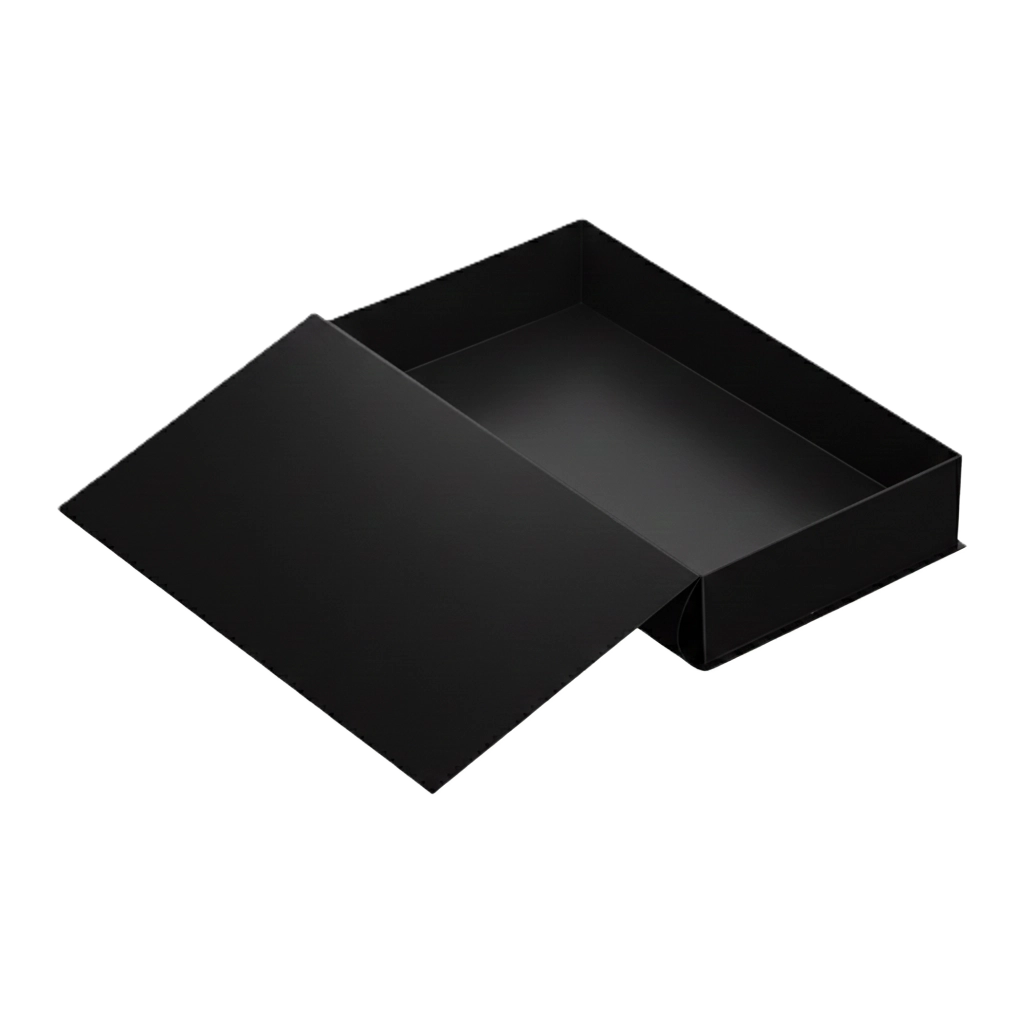
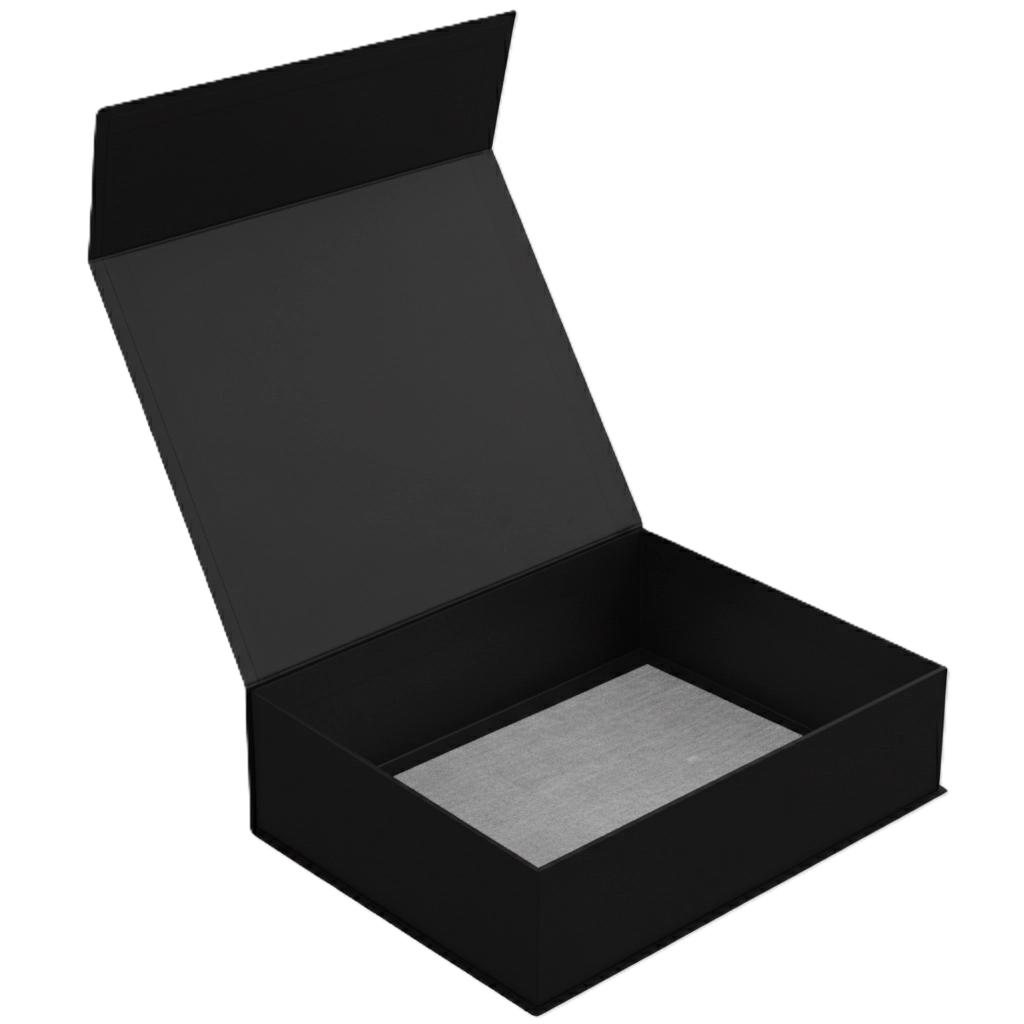
Rigid boxes are solid, non-collapsible containers that use high-grade boards like greyboard, paperboard, or cardboard. Unlike folding cartons, rigid boxes provide exceptional structural strength and impact protection, which is crucial for premium and luxury packaging applications.
The right box dimensions ensure that the product fits securely, avoiding movement that can cause surface damage. Both internal dimensions (the usable space inside the box) and external dimensions (including board thickness and covering materials are important. Manufacturing tolerances, often ±0.3 mm or ±0.5 mm, maintain packaging consistency and a professional appearance across mass production.
Custom packaging materials are often used for different types of rigid boxes and premium packaging, where the focus is on both product protection and packaging presentation. Understanding board thickness, lid clearance, and dimensional tolerances is key to achieving this balance.
Internal vs External Box Dimensions
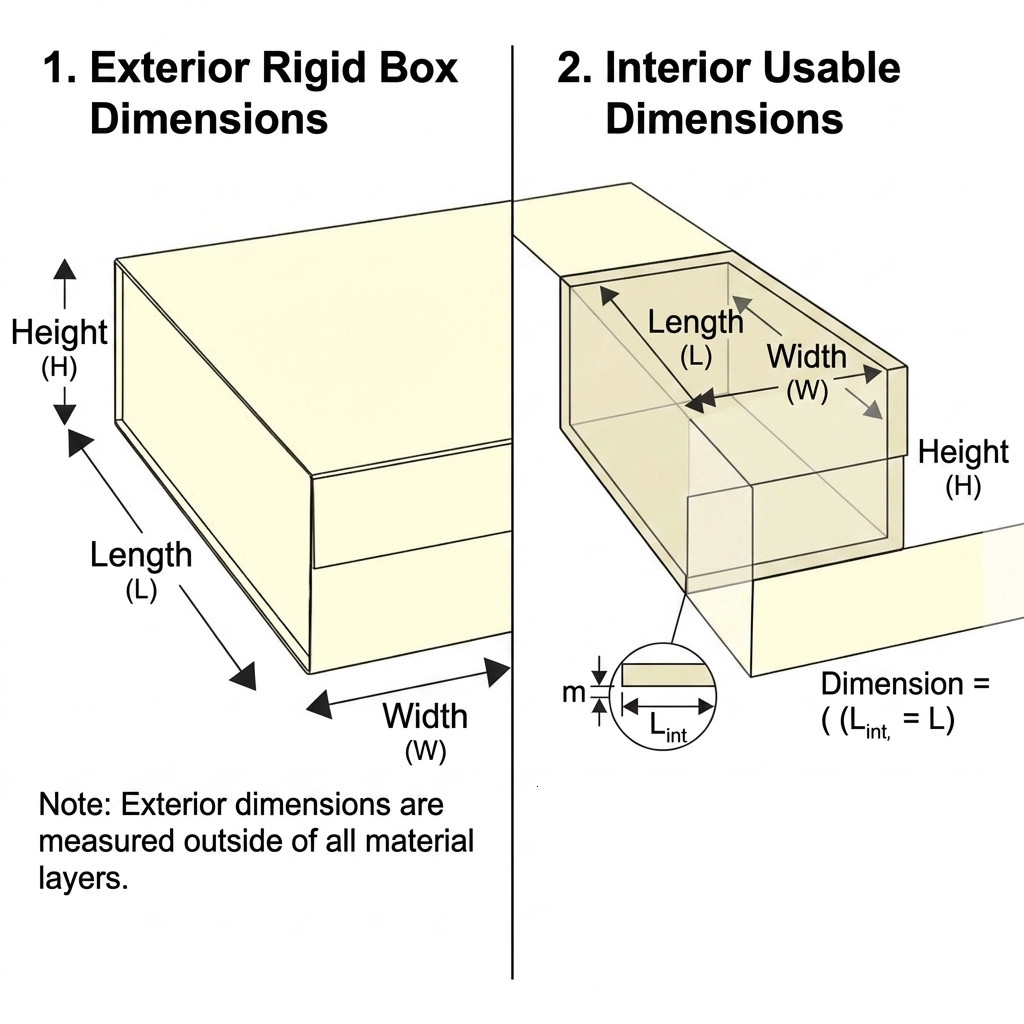
Internal dimensions represent the space where the product sits. Accurately measuring the product’s length, width, and height is critical. Miscalculations can lead to:
- Loose fit: causing product movement, surface damage, or misalignment
- Tight fit: causing pressure problems, misalignment, or difficulty in lid placement
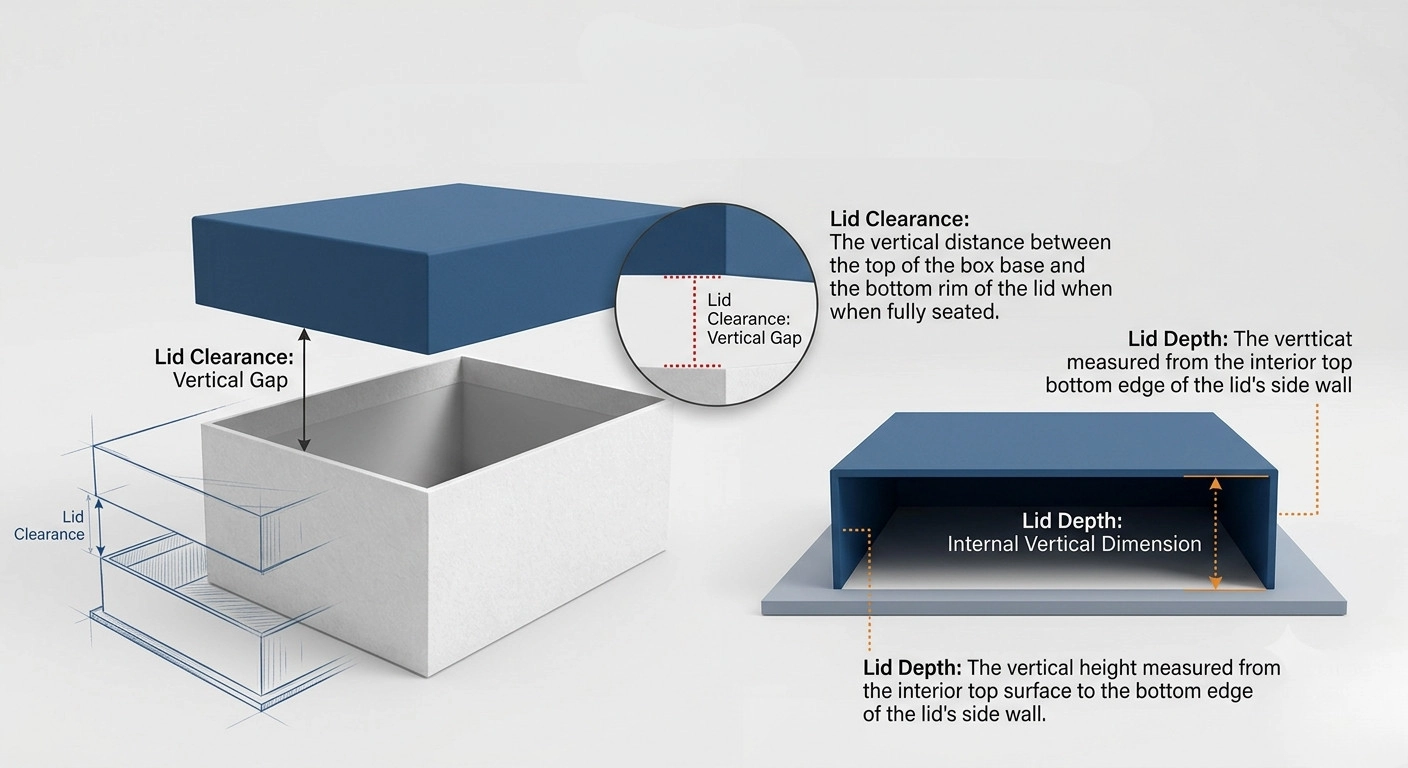
External dimensions include the thickness of the board and covering material. For example, a rigid jewelry box may have internal dimensions of 100 x 80 x 40 mm (L x W x H). If using 2 mm greyboard with a 1 mm covering, external dimensions increase to 104 x 84 x 44 mm. Lid clearance, lid depth, and fold lines must also be considered to ensure a snug or transition fit without damaging the product.
Accurate dimension calculation ensures sufficient internal capacity, proper lid-to-base clearance, and professional packaging presentation. This is particularly important for luxury rigid boxes and premium packaging, where the tactile experience contributes to the perceived value of the product.
How Board Thickness Affects Rigid Box Size
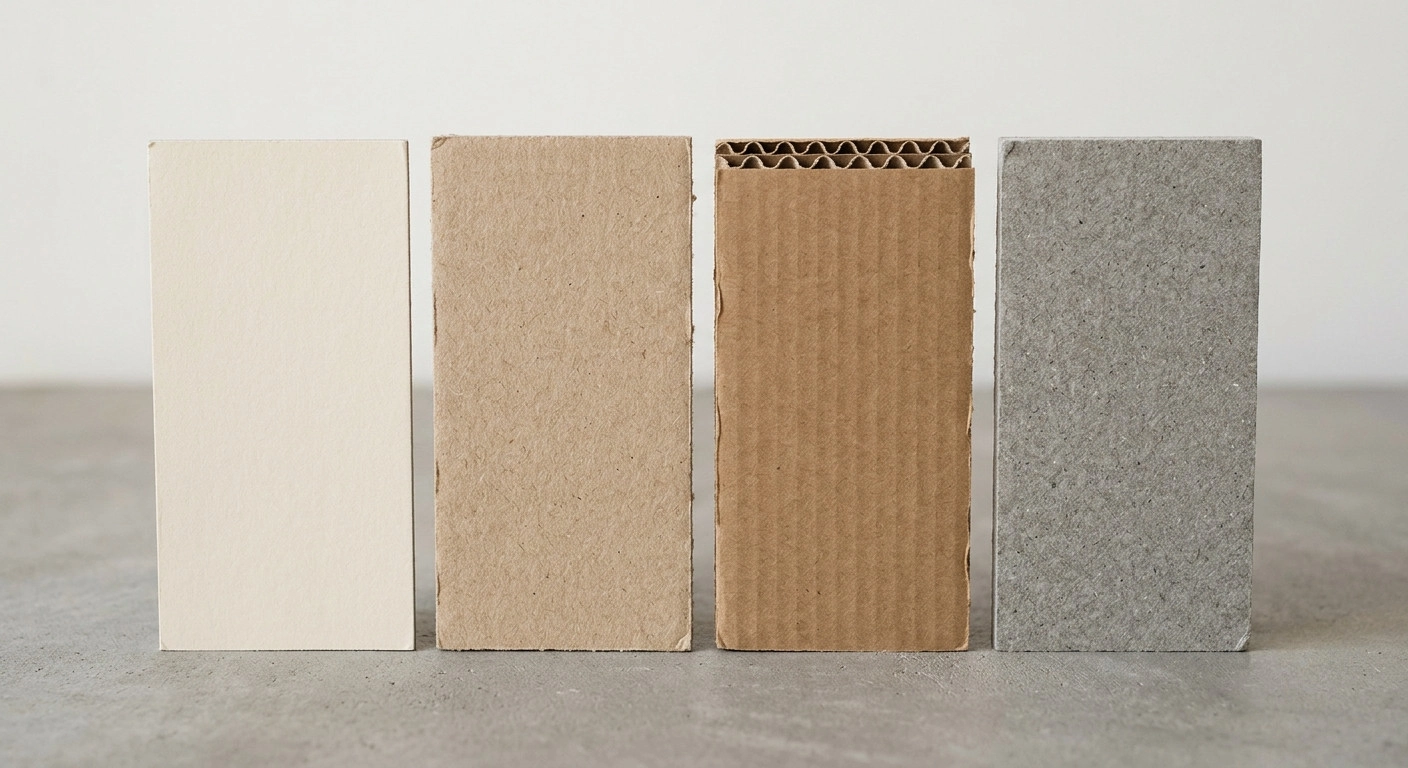
Board thickness directly affects box dimensions, structural strength, and durability. Thicker boards provide better impact protection and are essential for heavier or delicate items. However, thicker boards increase external dimensions, which may affect shipping costs and shelf space.
Common materials for rigid boxes include:
- Paperboard: Smooth, light weight and easy to wrap. Great for smaller luxury packaging & lighter products.
Cardboard: A little thicker than paperboard, more rigid. It is often used for gift packaging, accessories packaging.
Corrugated board: Provides the best protection from impacts. Fluted construction provides shock absorption making it perfect for shipping electronics or heavier luxury products.
Board grades are specified to satisfy structural strength requirements. For example, a jewelry box can be fine with 2 mm greyboard, but electronics packaging might need 3–4 mm. Final box size must allow for wrapping materials, adhesives and glue expansion and proper lid-to-base clearance and tight fit.
| Material | Thickness | Protection Level | Common Use Case |
| Paperboard | 1-2mm | Low – Moderate | Jewelry, small accessories |
| Cardboard | 2-3mm | Moderate | Apparel packaging, gift boxes |
| Corrugated Board | 3-5mm | High | Electronics, fragile products |
| Greyboard/Rigid Board | 2-4mm | Very High | Luxury rigid boxes, premium products |
Standard Rigid Box Sizes
Standard rigid box sizes simplify production and reduce material waste. These sizes are common in consumer electronics, gift packaging, and apparel packaging. Examples include:
- Small: 80 x 80 x 40 mm
- Medium: 150 x 100 x 50 mm
- Large: 300 x 200 x 100 mm
Standard sizes will make it easier to die-cut, wrap and assemble, but will also help keep the dimensions accurate. But for high-end products, it is often necessary to customize box dimensions to improve packaging presentation and ensure product protection. Here’s a breakdown of standard sizes with some examples of custom options for luxury products.
Custom Rigid Boxes and Premium Packaging
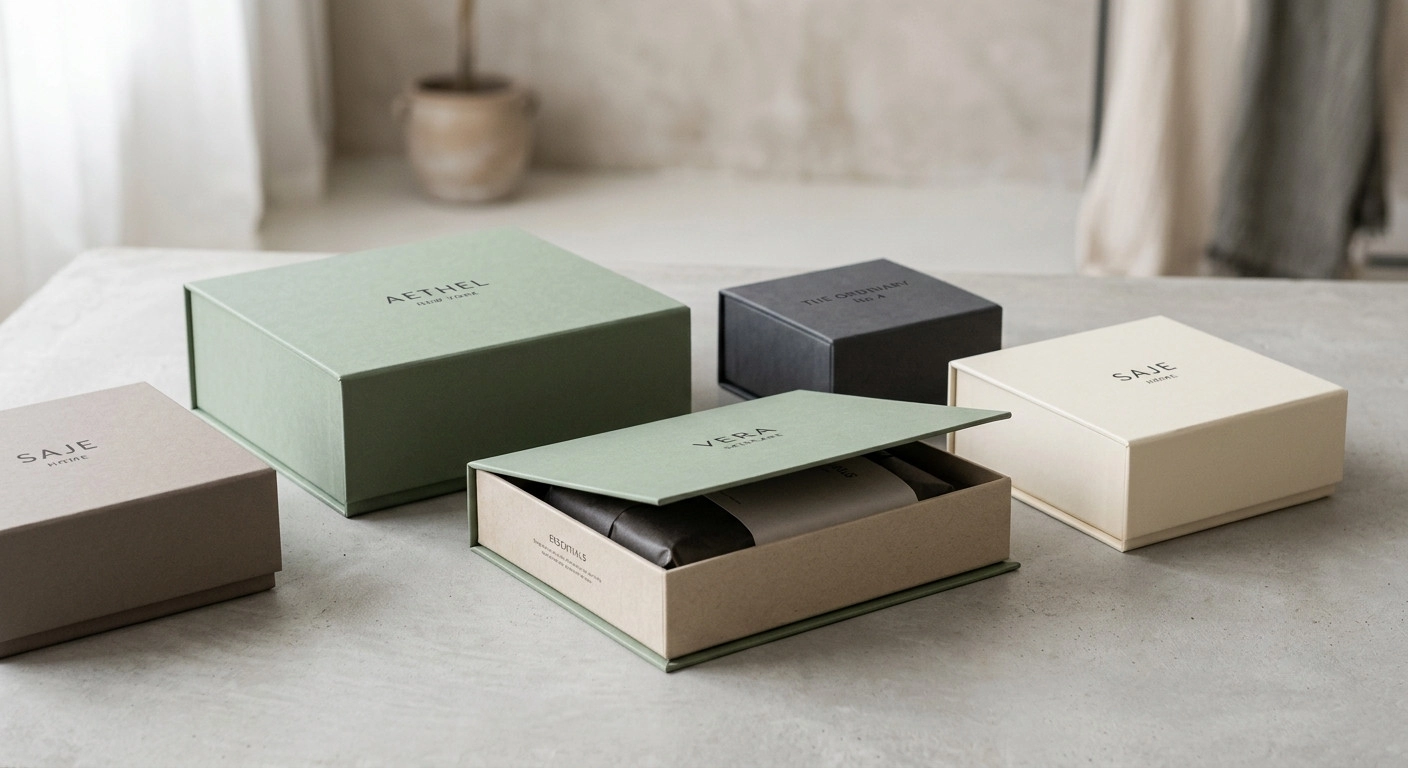
Custom rigid boxes allow brands to create precise internal and external dimensions according to the product. Accurate product measurements including length, width, height and diameter ensure the correct fit tolerances. In mass production, CAD design and automated cutting guarantee dimensional tolerance and consistency. Furthermore, well-designed boxes assist in the creation of a unique and memorable packaging experience for the customer and help to reinforce the brand identity. A popular type for such packaging could be flip-top boxes known for their secure closure and high-end presentation
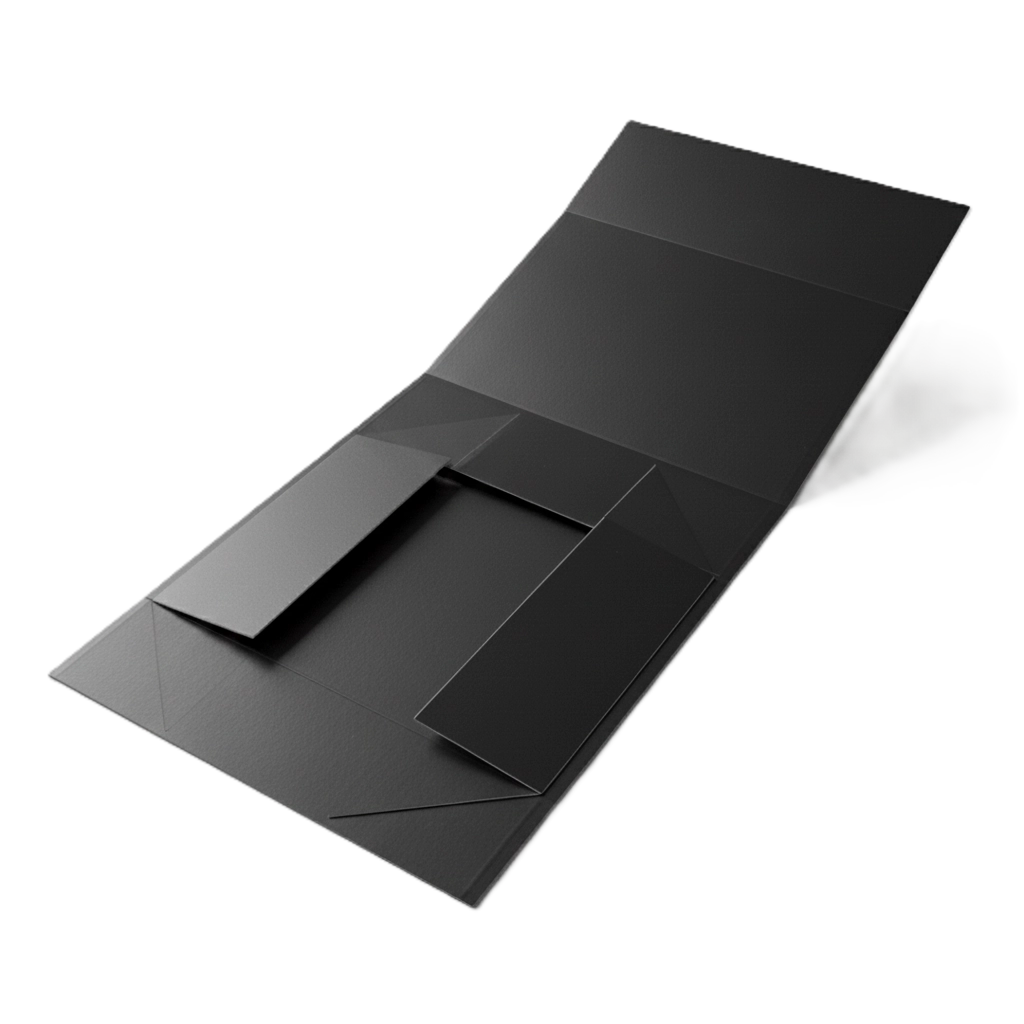
Custom packaging also improves professional packaging appearance. Die-cut steel dies produce precise fold lines and dielines, allowing quick and accurate box assembly. Proper lid clearance and lid depth prevent pressure on the product while creating an elevated unboxing experience.
Dimensional Tolerances in Rigid Boxes Manufacturing
Manufacturing tolerances account for small variations during production. Precision boxes often use ±0.3 mm, while larger boxes may allow +1 mm to +3 mm. Fit tolerances affect how the lid interacts with the base:
- Loose fit may allow product movement, causing surface damage.
- Tight fit may create pressure problems or misalignment.
- Snug fit balances protection and usability.
Maintaining accurate rigid box measurements ensures consistency and prevents packaging defects. Dimension standards help brands achieve predictable results, whether for mass production or custom rigid boxes.
Materials and Environmental Considerations
Material selection affects both structural strength and packaging functions. Greyboard and rigid board are common for high-end boxes, while paperboard and cardboard are suited for lighter products. Corrugated board provides extra protection for fragile or heavy items.
Environmental conditions, such as moisture or temperature fluctuations, can impact board thickness and lid fit. For example, paperboard may expand slightly in high humidity. Designers must consider dimension conventions and manufacturing tolerances to maintain accurate internal capacity and professional packaging appearance.
Also Read: Common Mistakes to Avoid When Ordering Custom Rigid Boxes
Precision Dimensions and Packaging Design
Precision dimensions are critical for protective packaging and luxury presentation. Accurate product measurements ensure proper fit tolerances, avoiding movement or pressure problems. Automated processes like CAD design and die-cutting improve measurement accuracy and reduce material waste.
Dimension calculation includes:
- Internal and external dimensions
- Lid clearance and lid depth
- Fold lines and dielines
- Internal capacity
For consumer electronics, an interference fit may prevent shifting. For jewelry or perfume packaging, a clearance fit enhances the unboxing experience. Proper board thickness and covering materials ensure durability while preserving a luxury packaging aesthetic.
Manufacturing Processes for Rigid Boxes
Rigid box manufacturing involves:
- Die-cutting steel dies for precise fold lines and dielines
- Wrapping the board with paper, cloth, or laminated coverings
- Applying adhesives while accounting for glue expansion
- Automated cutting and assembly for mass production
These steps affect dimensional tolerance and final product fit. Accurate measurement units, whether in millimeters or inches, prevent conversion mistakes and maintain packaging consistency.
Packaging Functions and Product Protection
Rigid boxes provide product protection and enhance packaging presentation. Structural strength, drop depth, and lid depth safeguard products during shipping. Accurate fit tolerances prevent product movement, surface damage, and misalignment. While custom inserts like foam inserts or molded trays can further secure the product and add extra protection.
Protective packaging works with luxury design to deliver a professional packaging appearance. Snug or transition fit tolerances ensure that high-end products like jewelry or perfume arrive securely while offering an elegant experience.
Luxury Packaging and Premium Product Presentation
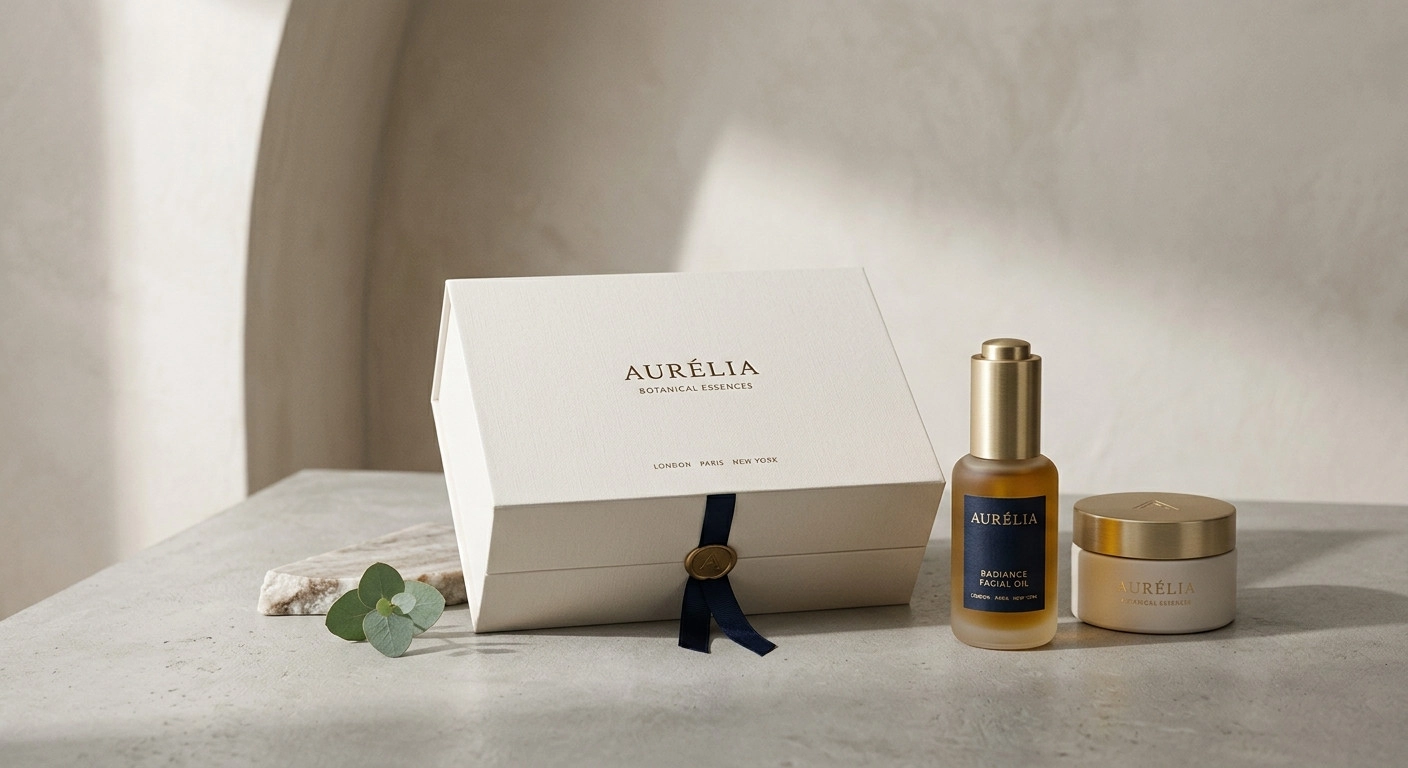
Luxury packaging requires attention to detail. Box dimensions, board thickness, covering material, and lid design contribute to a professional, elegant appearance.
Internal capacity must match product measurements, while external dimensions support consistent packaging structure. These packaging standards are especially important for high-end retail products, where presentation plays a major role in customer perception and product value. Durability, environmental resistance, and packaging consistency are also important.
Premium rigid boxes use dense greyboard, high-quality coverings, and accurate tolerances to deliver professional packaging appearance across all units while maintaining a refined and consistent luxury packaging experience.
Final Box Size Considerations
The final box size is determined by:
- Internal dimensions
- Board thickness and covering layers
- Lid depth and clearance
- Manufacturing tolerances
The right size fits right, doesn’t damage the product, and maintains the luxury look. To achieve a professional appearance of packaging and accurate product measurements, fold lines, dielines and glue expansion should also be considered in the dimension calculation.
Conclusion
Material thickness and rigid box sizes are key to both protective and luxury packaging. Standard rigid box sizes are easier to produce, while custom rigid boxes allow for exact personalizing to special products. Brands can ensure consistent durability, protection and visual appeal by understanding internal and external dimensions, board thickness, fit tolerances and material selection.
Accurate measurement of rigid box dimensions and an understanding of dimension standards are key to getting products to consumers safely and delivering a premium packaging experience. Professional and reliable rigid packaging is based on the right choice of materials, such as greyboard, paperboard, cardboard and corrugated board, and calculating the right dimensions.
Ready to improve your packaging thickness strategy? Contact Hot Custom Boxes for expert guidance on choosing rigid boxes for your brand. We help you find the right balance of protection, presentation, and cost for your packaging needs.