












Table of Contents
Related Products
$0.50 Original price was: $0.50.$0.10Current price is: $0.10.
In Stock
$0.50 Original price was: $0.50.$0.10Current price is: $0.10.
In Stock
$0.50 Original price was: $0.50.$0.10Current price is: $0.10.
In Stock
$0.50 Original price was: $0.50.$0.10Current price is: $0.10.
In Stock
Get A Free Quote
Shoppers need to see products clearly and pick them up without difficulty. Display boxes keep merchandise arranged for that purpose. They sit on retail shelves and store counters, with freestanding units also appearing near shopping aisles. The structure holds the stock while presenting it to customers.
This guide covers the main types of display boxes and the materials behind them. It also explains their everyday retail uses and how to choose packaging around your products and available space.
What Are Display Boxes?
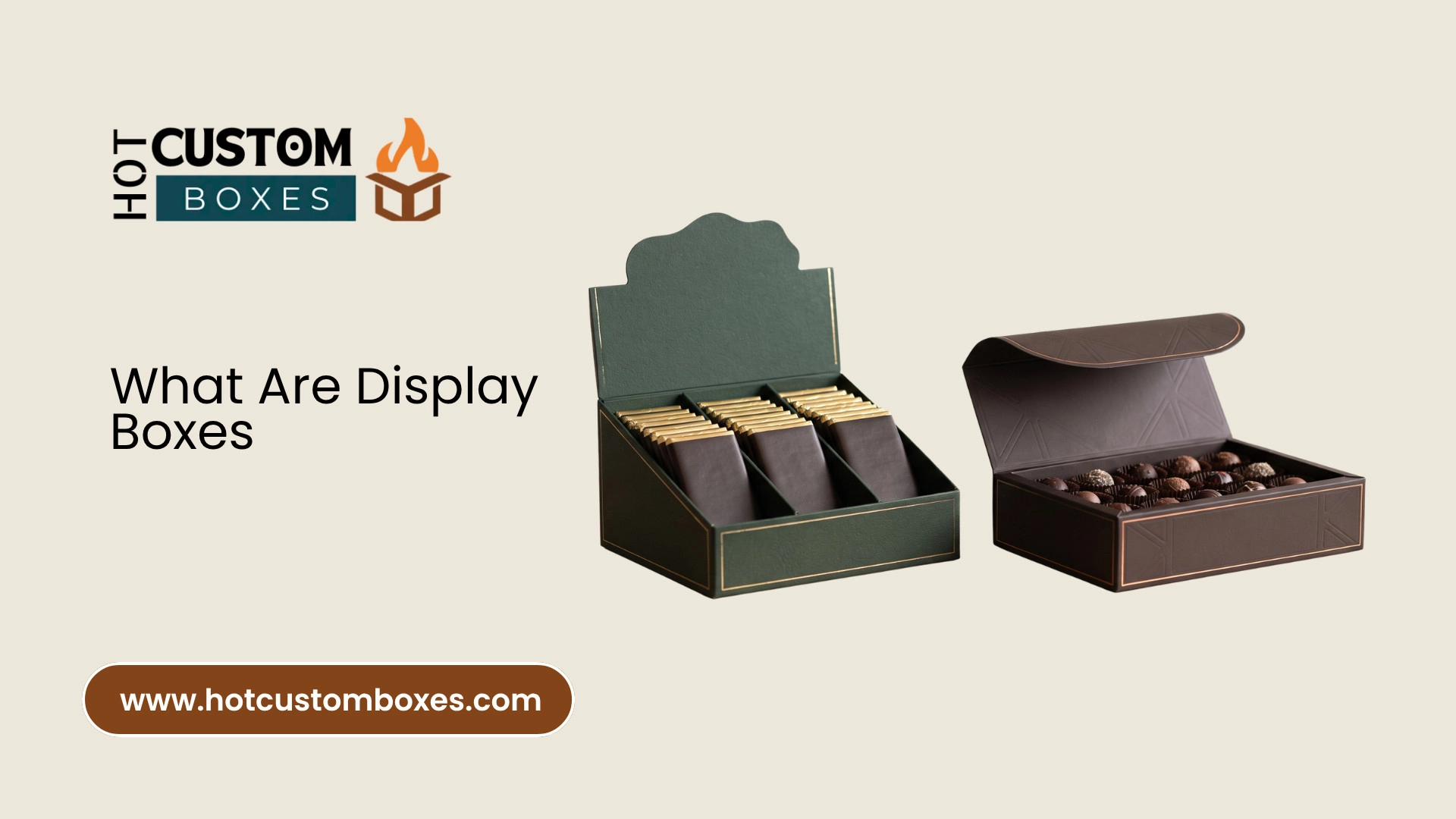
Display boxes are packaging structures that present merchandise while keeping it contained and organized. Some hold several individually packaged items. Others show a single product through a window or opening.
A low front and raised back panel are common features. Compartments and printed product information may form part of the design too. Some boxes arrive flat for staff to assemble. Others come filled, ready for use once someone removes a cover or lid.
Think of individually wrapped candy bars in a cardboard checkout tray. Shoppers can reach over its low front to take a bar. Behind the stock, a raised panel carries the brand name and product details.
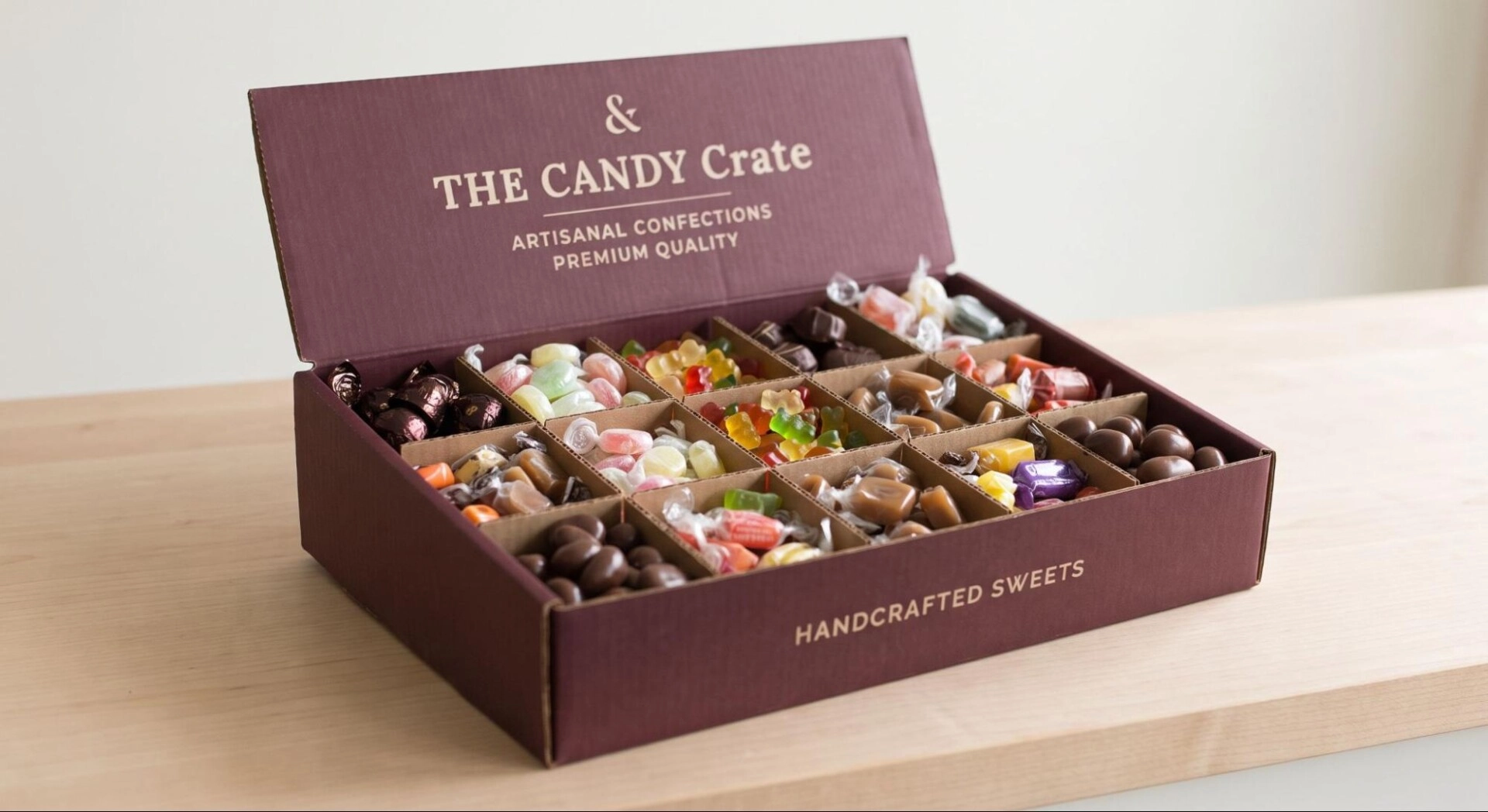
Regular packaging often encloses an item for storage or handling, including delivery. Display packaging also addresses what happens while the product sits in the selling area. Can shoppers see it? Can they reach it easily?
What Are the Different Types of Display Boxes?
Placement and structure help define types of display boxes, along with their purpose. But the categories overlap. One small countertop tray could be a PDQ display and serve as a checkout promotion.
Countertop Display Boxes
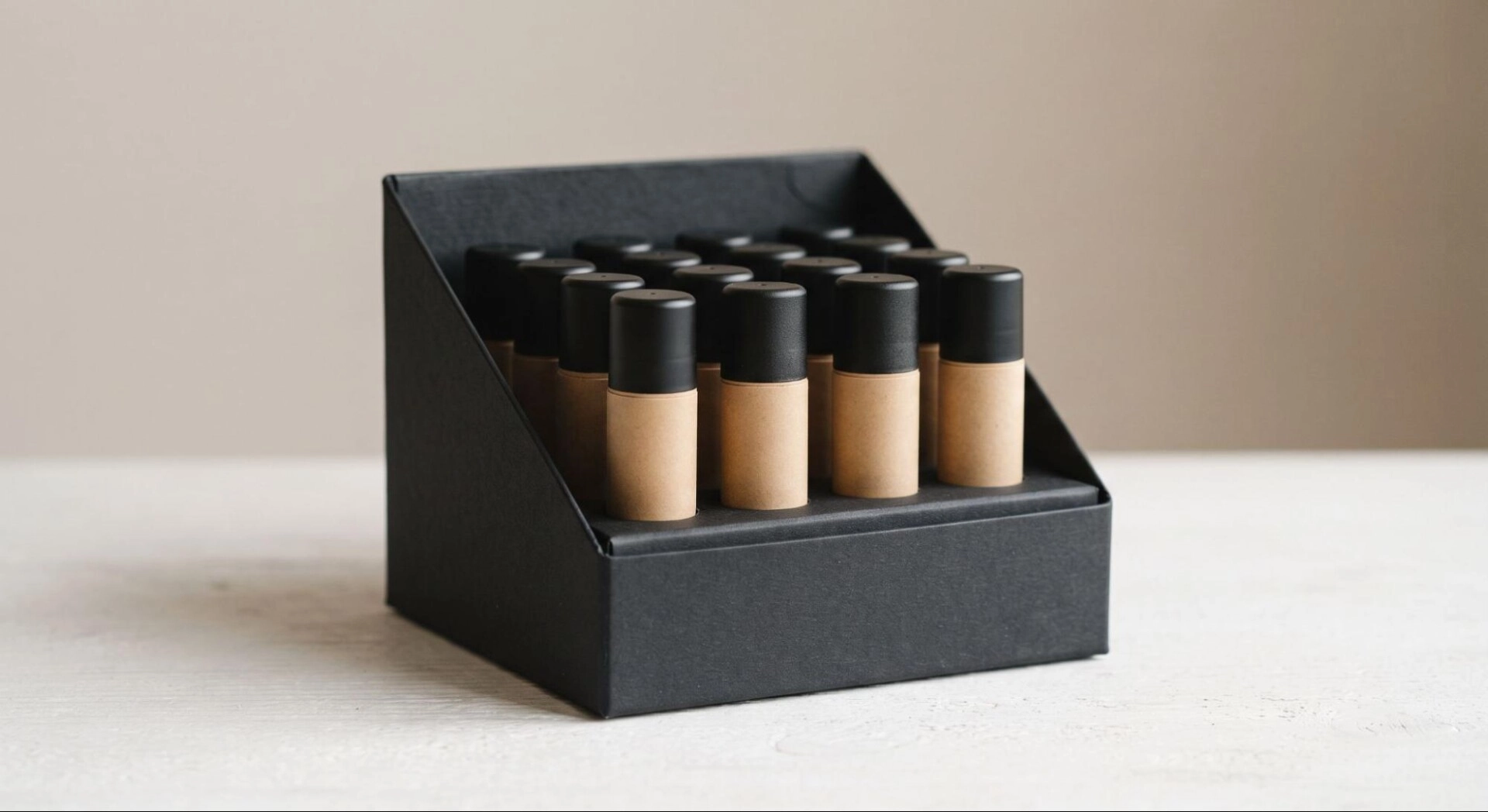
Counter display boxes use checkout counters and service desks, including other raised surfaces. A compact base limits the space they occupy, while an open front gives customers access to individual products.
Candy bars and lip balms suit them, as do travel skincare products and small accessories. A raised back panel adds a logo or short message without using more counter space.
Shelf Display Boxes
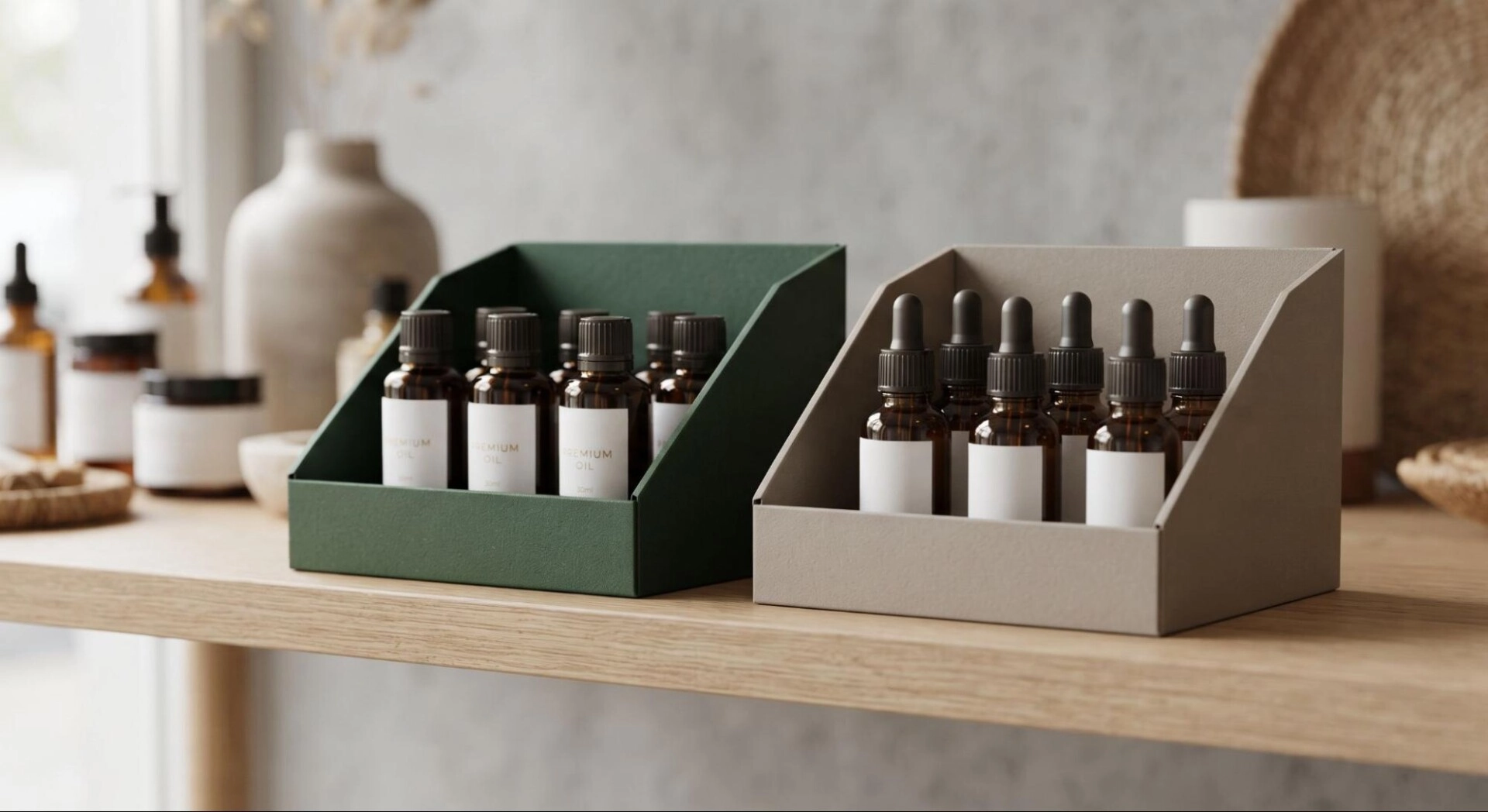
Shelf display boxes give products a defined place on retail shelves. Low front edges reveal labels, and the side panels help keep stock from spreading into neighboring items.
Snack pouches and small cosmetic cartons work well in them, along with stationery.
Compartments can separate flavors or colors, including different sizes, so customers can compare them.
Floor Display Boxes
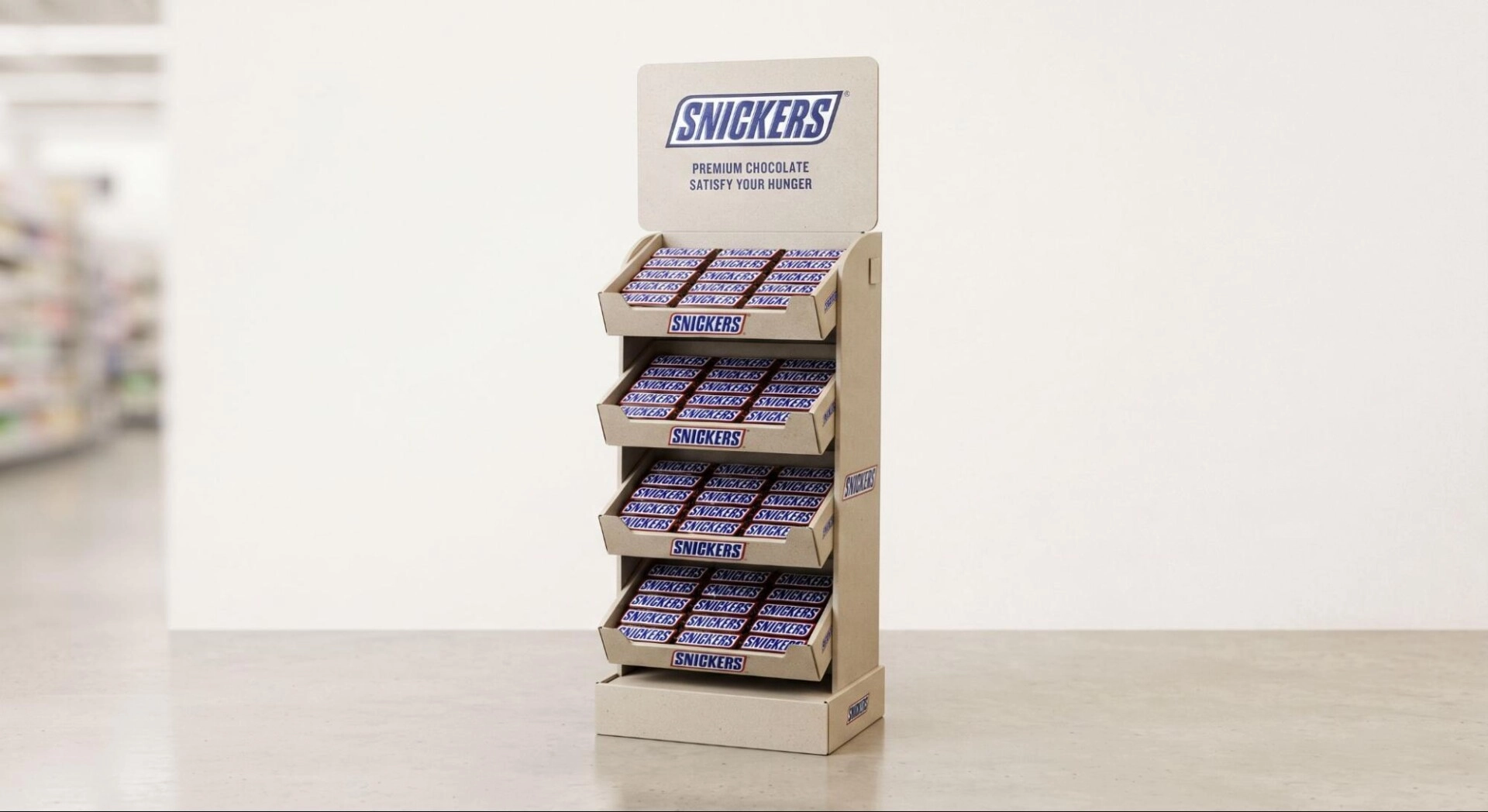
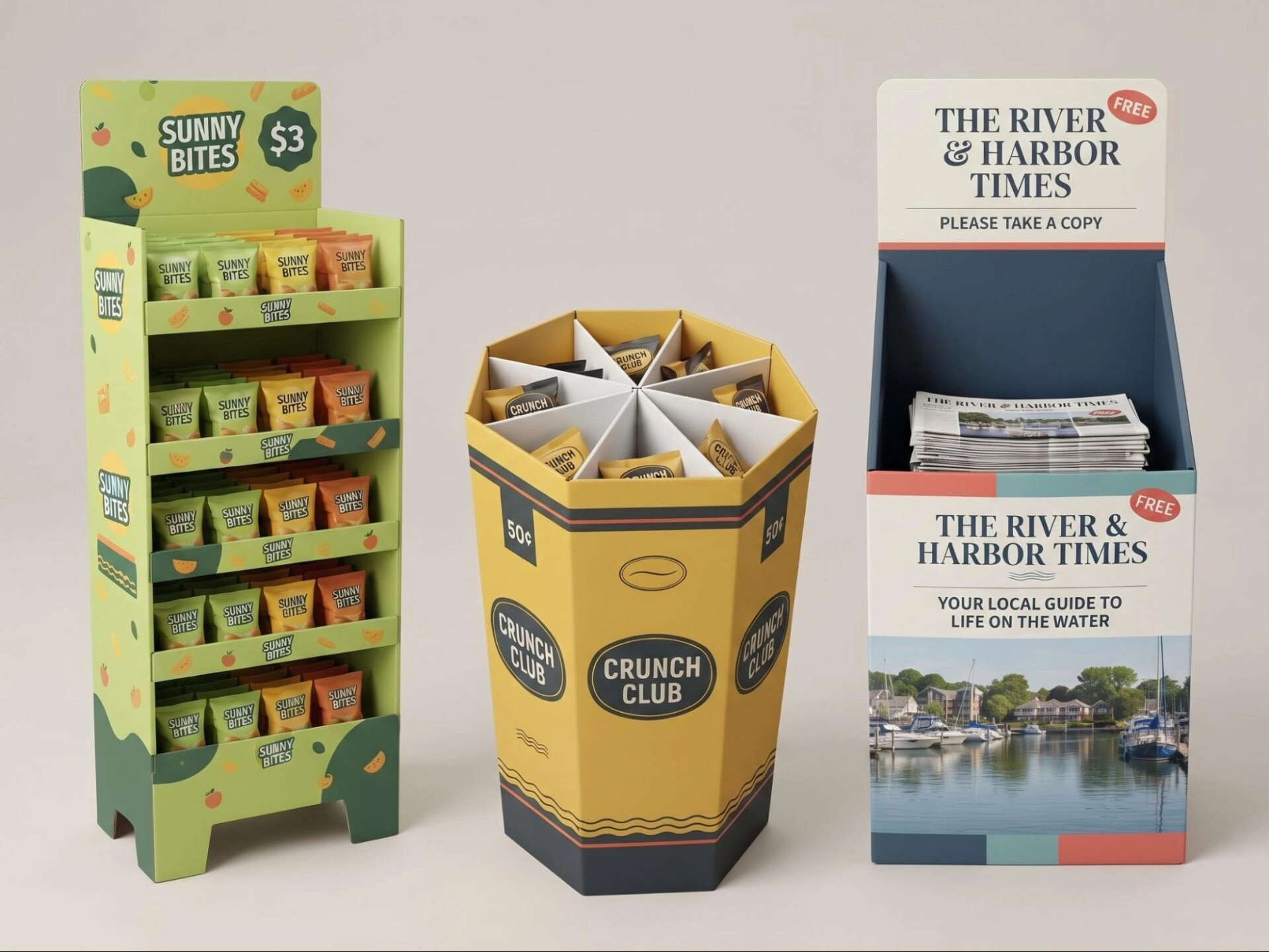
Floor display boxes stand independently and hold products above floor level. They may have several shelves or trays, sometimes with an upright header panel.
Point of Sale (POS) Display Boxes
Point of purchase display boxes show merchandise in places where shoppers consider buying it. Store aisles and promotional sections are examples, alongside other browsing areas.
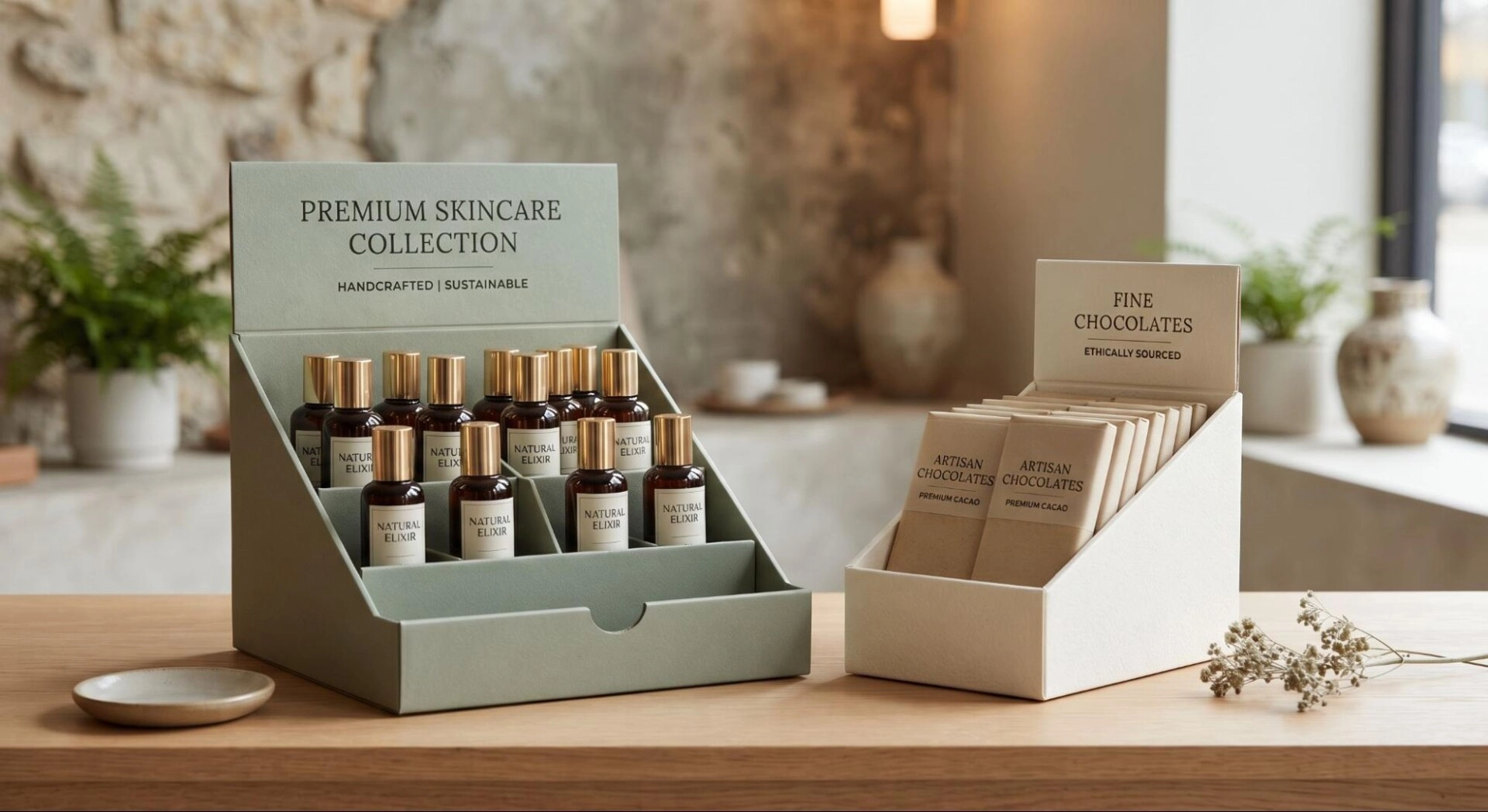
A POP display may feature a new range or limited offer, or explain a product feature. A skincare unit, for instance, could pair a cleanser with a matching moisturizer and explain each one’s purpose.
Cake Boxes and Food-Safe Folding Cartons
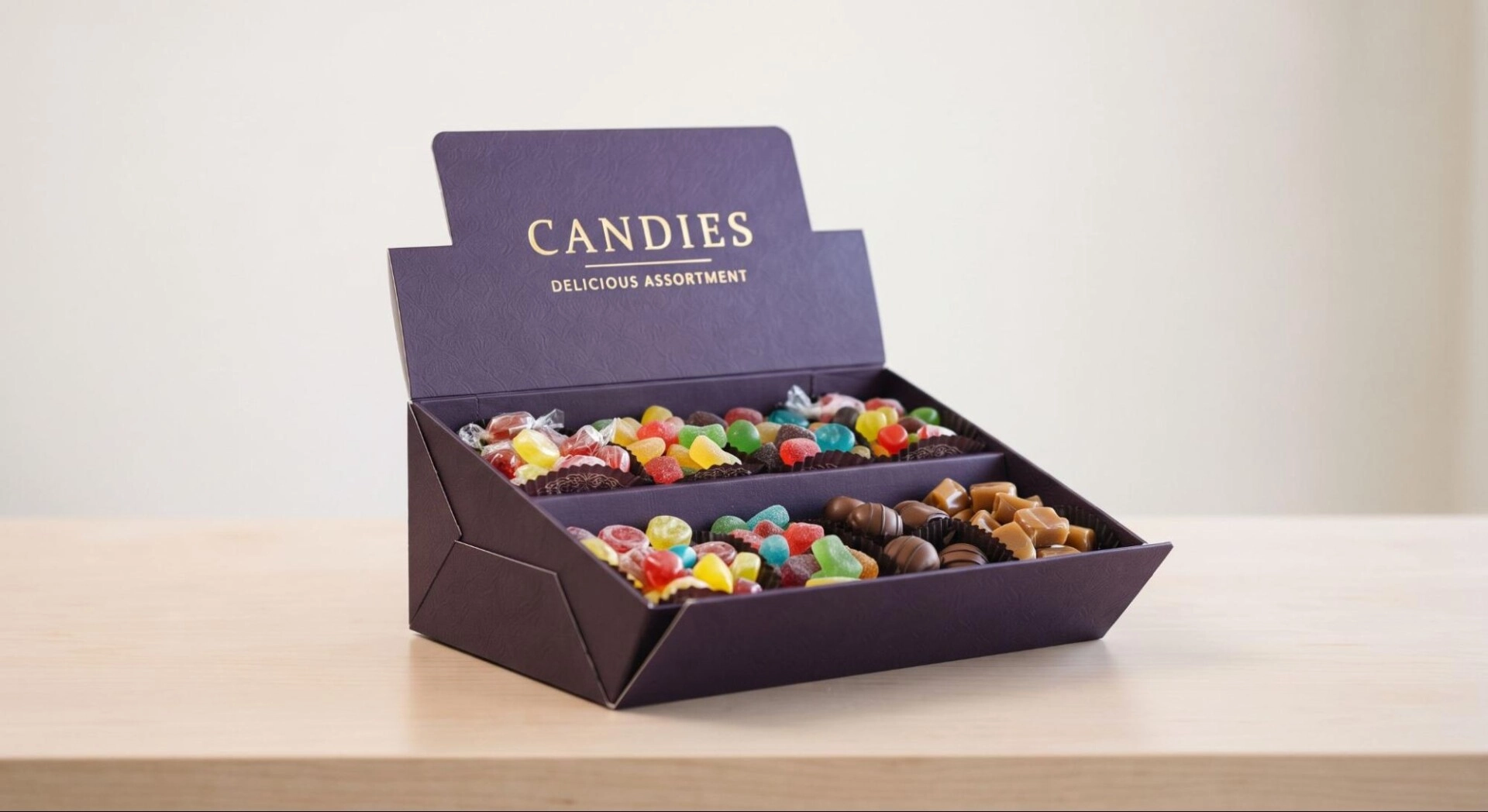
Point of sale display boxes usually belong near payment or checkout areas. Customers can notice small additions while finishing their purchase, such as chewing gum or small gifts, including charging cables.
Packaging suppliers sometimes use POP and POS terminology interchangeably. Confirm where the box will go when discussing the design.
Shelf-Ready Packaging Boxes
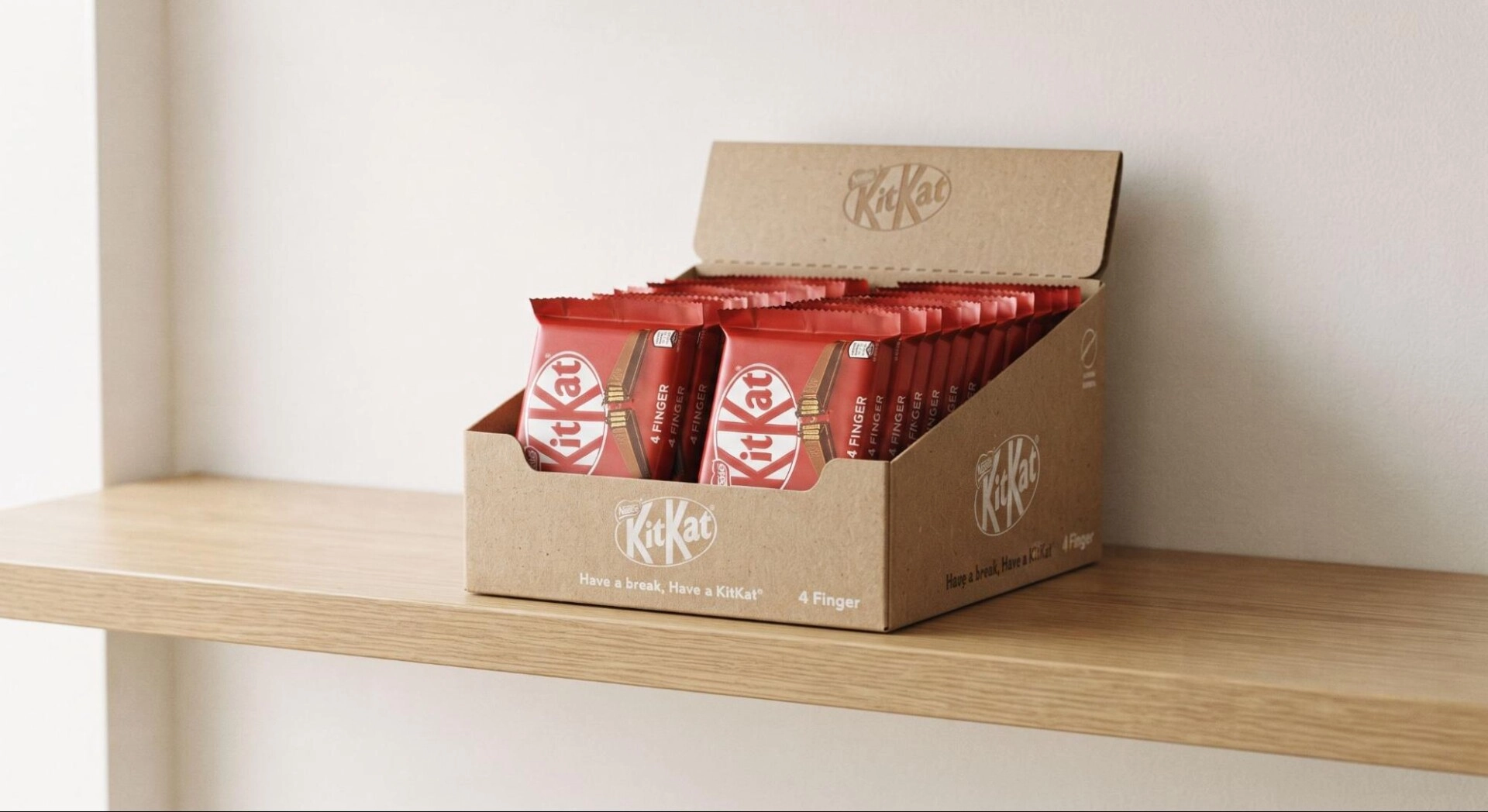
Shelf-ready packaging lets staff place several products on a shelf with less individual handling.
A shipping case may turn into a tray when someone removes its top or tearaway section.
Staff should find it easy to identify and open, then position on the shelf. Shoppers need easy product access too, and staff must be able to clear the empty packaging.
PDQ Display Boxes
Quick setup is the purpose of PDQ displays. The term commonly means “pretty darn quick” and often refers to trays delivered with products already arranged inside.
Staff take off a protective cover or follow a few assembly steps before positioning them.
Depending on size, PDQ display boxes can sit on shelves or counters, including larger display units.
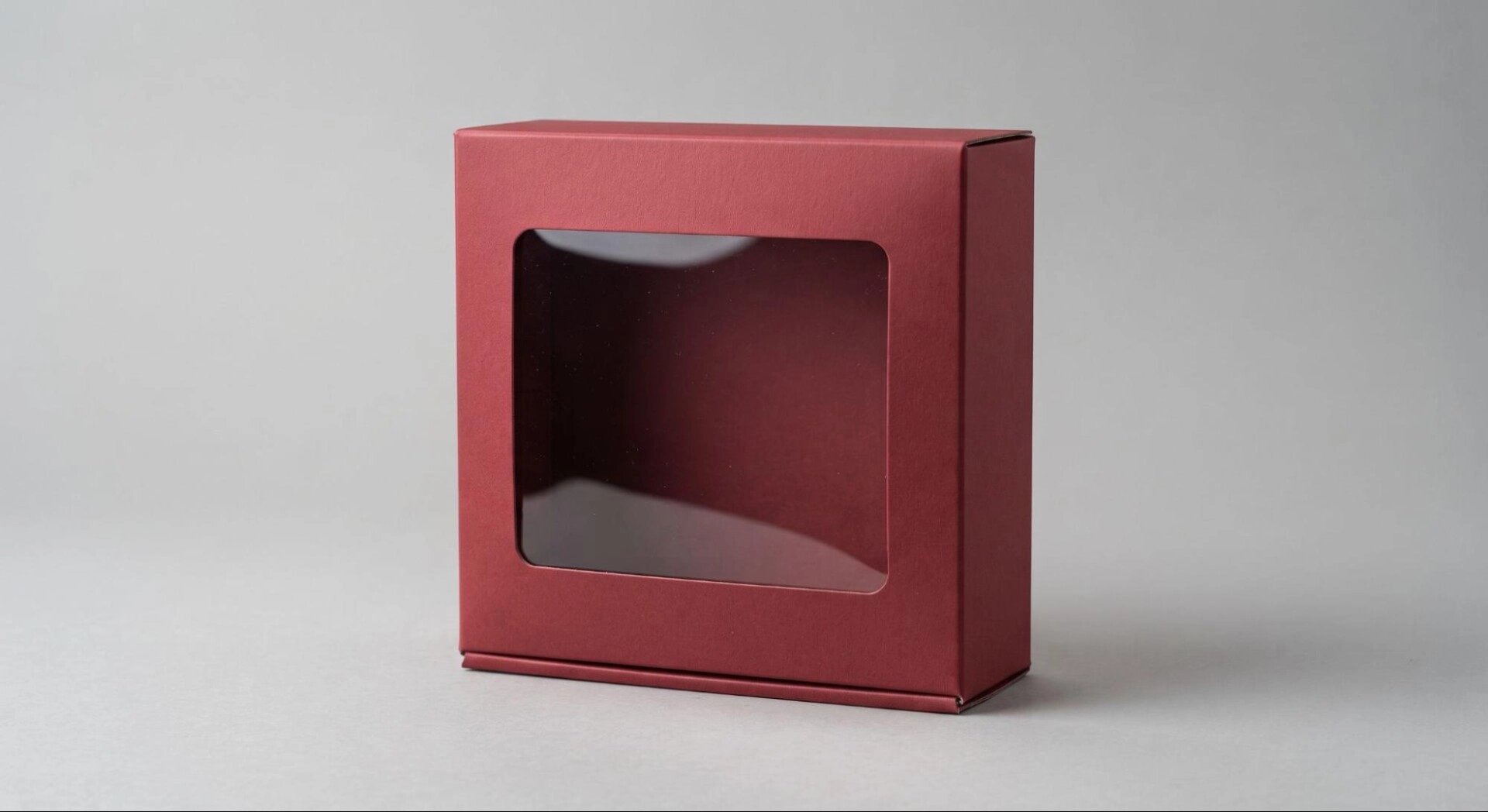
Window Display Boxes
Window display boxes reveal the contents through an opening. It may be uncovered or fitted with transparent film to help keep the product enclosed. Gifts and candles suit this approach, along with packaged accessories whose appearance matters.
Here, “window” describes part of the packaging. It doesn’t mean a display in a storefront window.
Hanging Display Boxes
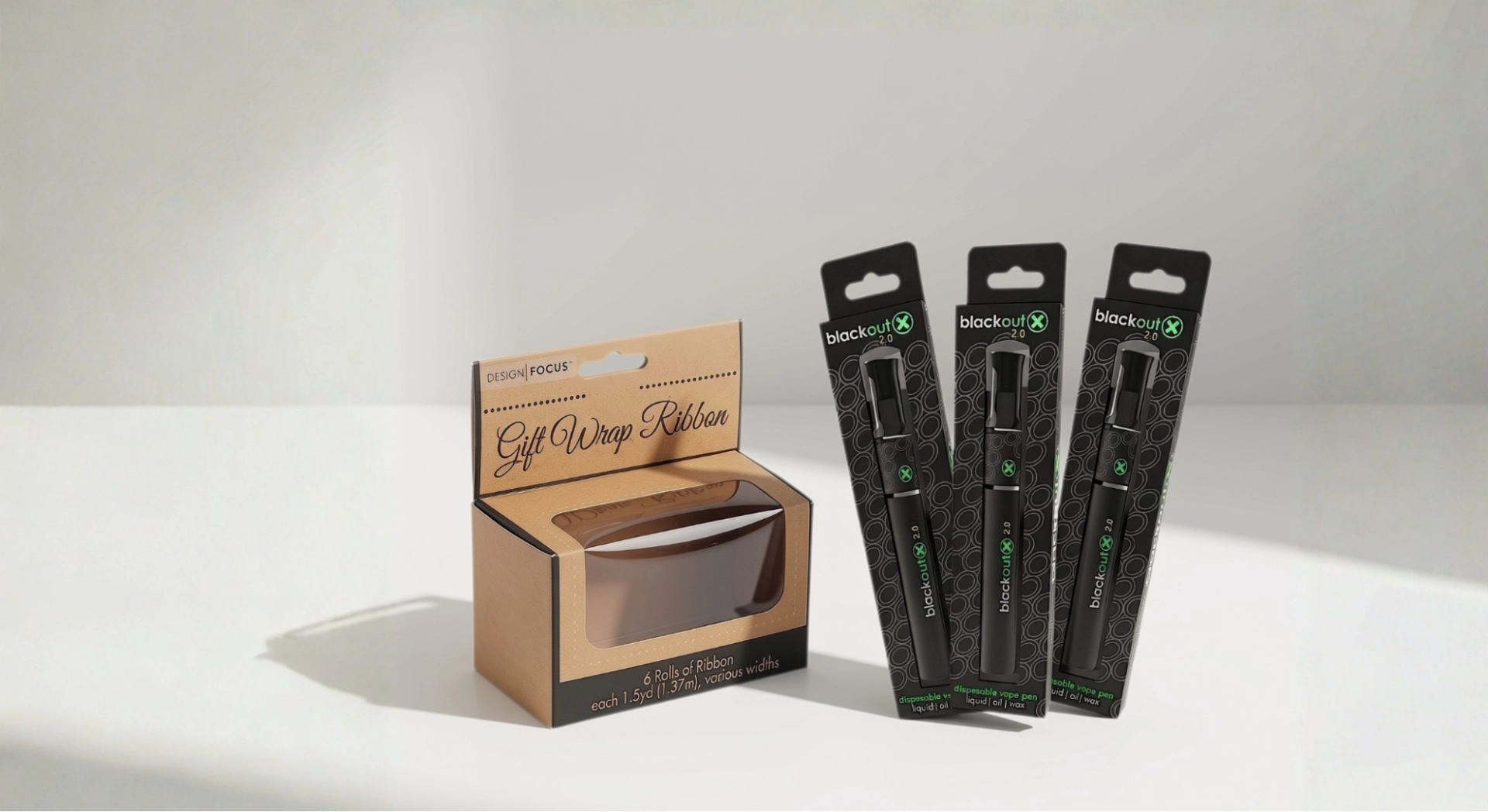
Hanging display boxes use a reinforced tab or hole to hang from retail hooks and pegboards. They keep the product contained while making use of vertical selling space.
Craft supplies and small electronics often suit this format, as do fashion accessories. The hanging section needs to carry the packed weight without tearing through normal handling.
Dump Bin and Tiered Display Boxes
Dump bins give shoppers a large open compartment to browse. Individually packaged promotional toys or durable seasonal products can suit them when the items don’t require a fixed arrangement.
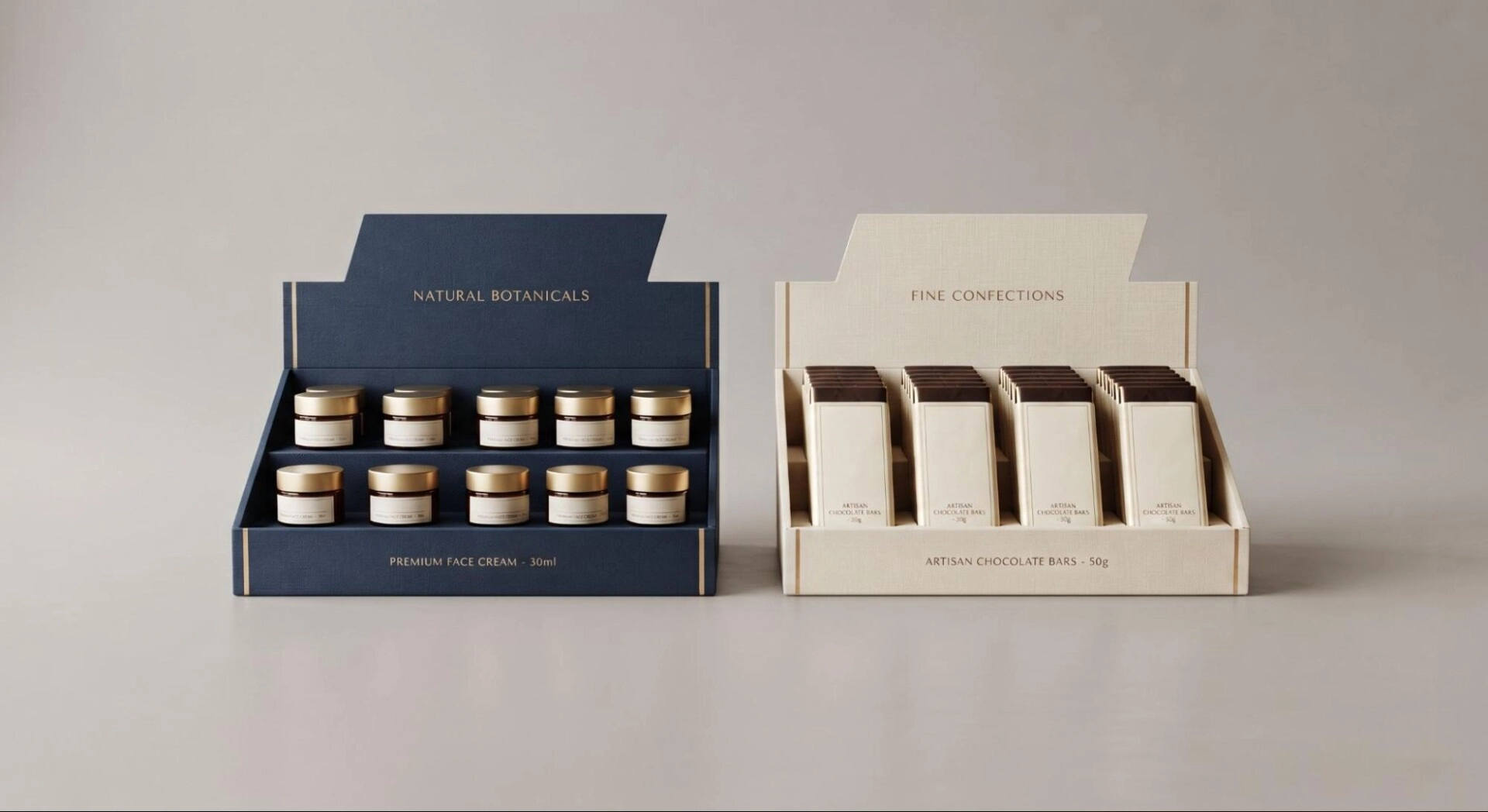
Tiered displays raise successive rows on stepped levels. Small skincare products and nail polish work well this way, alongside collectibles, because the front row is less likely to hide what’s behind it.
What Materials Are Used to Make Display Boxes?
The material influences strength and printing appearance. It also affects how the box behaves in use. Ask suppliers which board construction they recommend, since “cardboard” is a broad everyday term. Learn more about the materials used to make display boxes to find the right fit for your products.
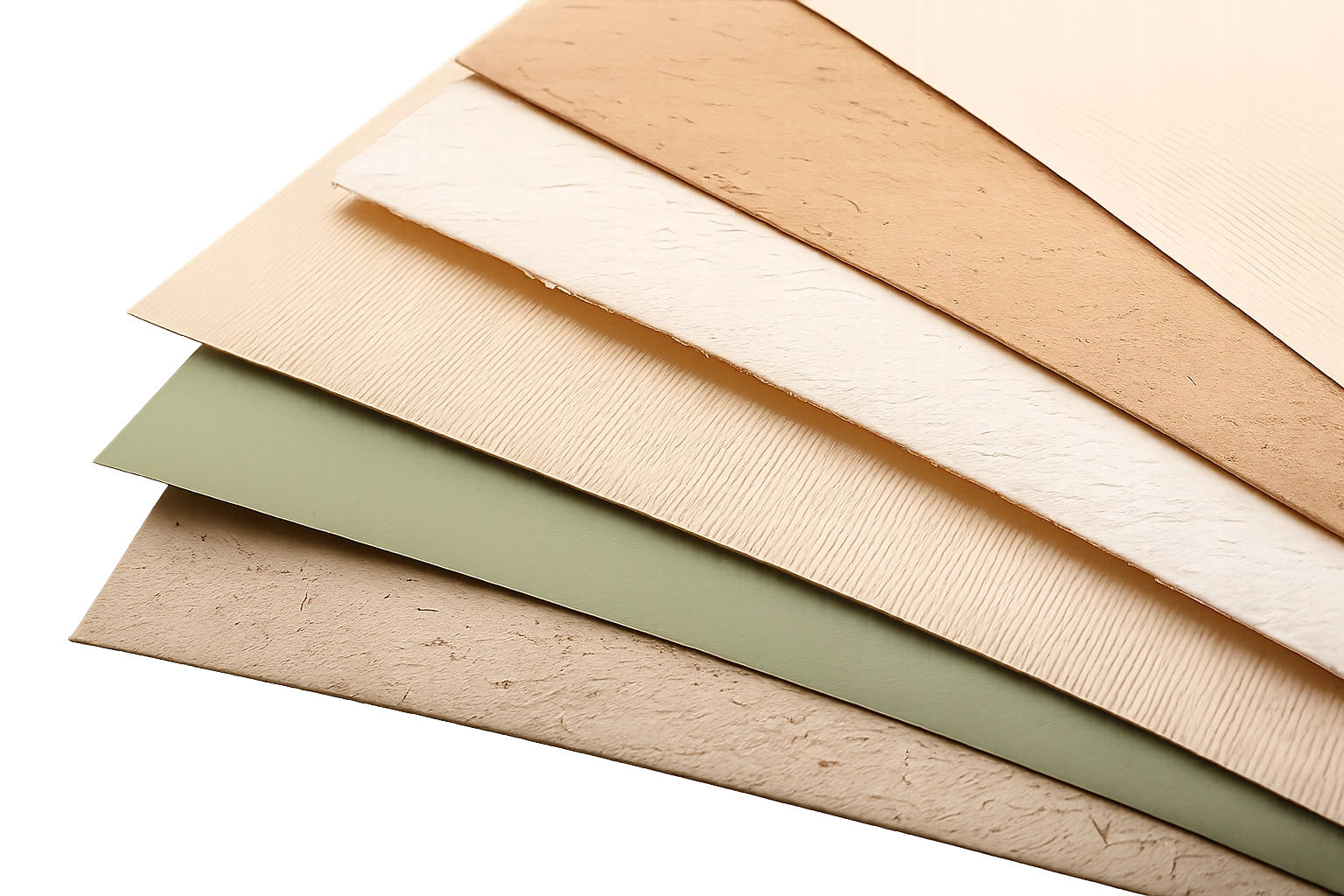
Cardboard and Paperboard
Relatively thin and stiff, paperboard forms folding cartons and smaller trays. Cardboard display boxes made from folding paperboard often carry lightweight cosmetics or candy, including accessories.
Suitable surfaces reproduce product information and detailed images, along with brand colors. Digital or offset printing may work, depending on the board and artwork, plus the order quantity.
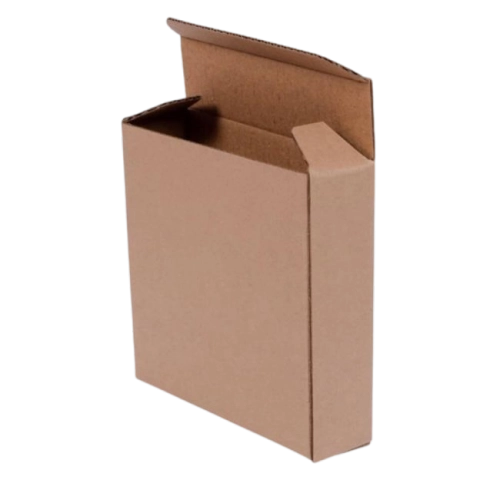
Corrugated Cardboard
A fluted paper layer sits between flat liners in corrugated cardboard. The flutes add thickness and help resist compression and bending.
Common uses include shipping cases and larger trays, along with floor displays. Safe load capacity depends on board grade and structure, plus weight distribution. Thickness alone won’t establish it.
Kraft Paperboard
Mailer packages feature hinged lids and side tabs. Corrugated layers add stiffness and drop protection for transit. Transit tests confirm glass safety prior to shipping. Decorative outer cartons often require plain shipping boxes.

Custom Halloween Boxes for Cosmetics and Beauty Products
Cosmetic, Skincare, and Makeup Cartons
Small product cartons suit lipstick tubes, mascara, compact makeup, and skincare bottles. Tall rectangular boxes fit upright containers. Wider cartons accommodate palettes or jars.
Product fit matters because a bottle that moves freely can strike the carton or sit crooked behind a window. Inserts can support narrow necks or separate a bottle from an included applicator.

Soap Boxes and Window Panels
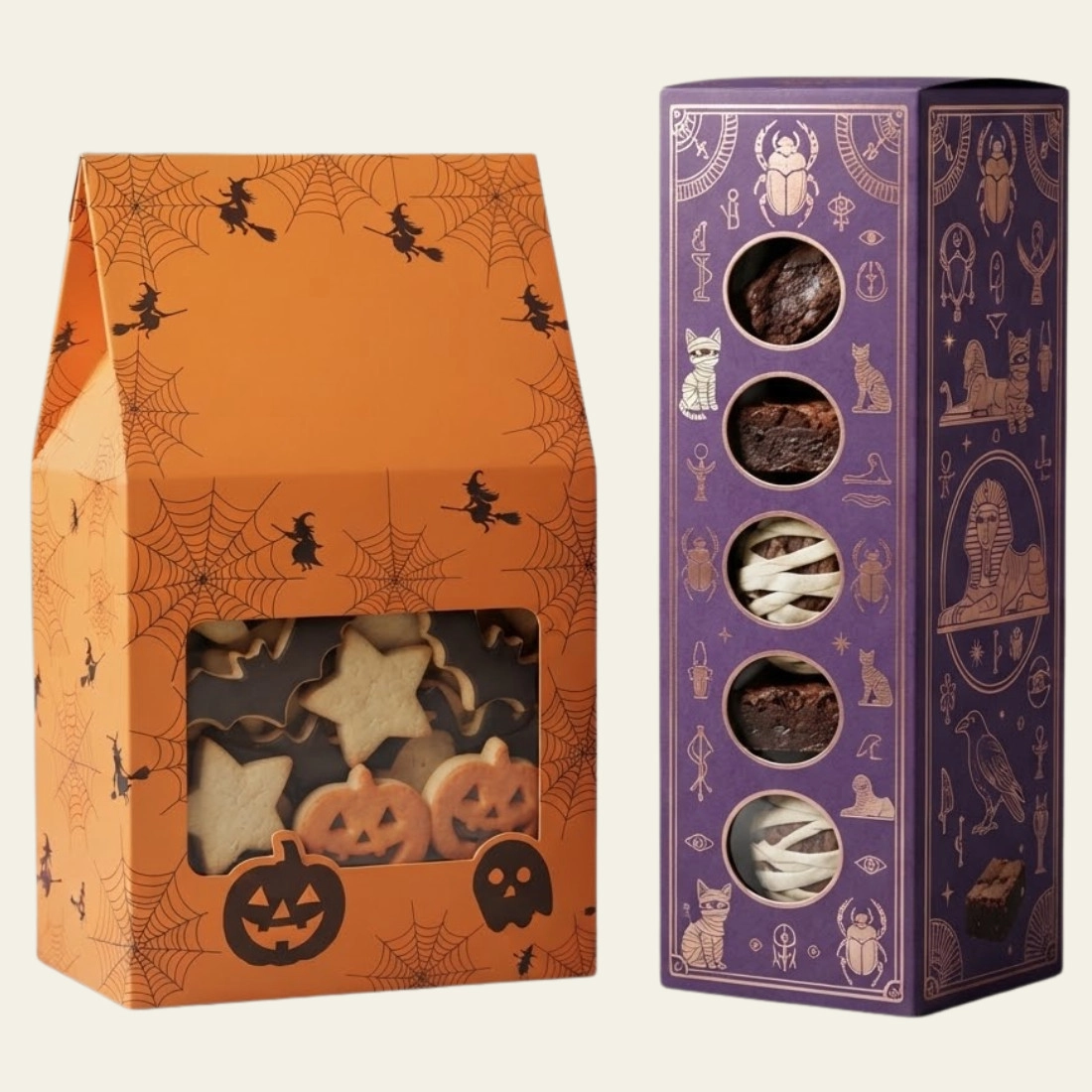
Folding cartons are frequently made for soap boxes to fit the bar. There is an option to add a small window with carved pumpkins or colors of the season. This allows customers to view a portion of the product rather than the whole bar.

Soaps can also be wrapped for giving as a gift and fit in a pillow box. The soap must have an appropriate box for the formula and storage. Unless treated, paperboard can be susceptible to oils and moisture.
Gift Set Boxes and Premium Finishes
Boxes for gift sets organize products sold together. A small box will store a soap bar and a hand cream tube, if desired. Several skincare products can fit inside a rigid box with a fitting insert in it.
Special printing finishes can be selected for the design as well. Selected areas will have a metallic appearance with foil stamping. Embossing is the process of raising a design, debossing is the process of pressing it downward.
Halloween graphics can be highlighted with these finishes. They should not, however, interfere with the closing or supporting function of the box.

Jewelry Boxes and Insert Boxes
Jewelry boxes use fitted pads, slots, or holders to secure small pieces. Earrings need attachment points. Rings need narrow slots. Necklaces need supports that reduce tangling.

Custom Halloween Jewelry Boxes can present a bat pendant or pumpkin charm in a compact rigid or two-piece structure. The insert keeps the item visible when the lid opens.
Pillow Boxes and Small Gift Boxes
Pillow packages use curved flaps for fast assembly. They suit lightweight charms, hair accessories, and favors. Curved edges reduce total interior space for goods. Fragile items require soft pouches inside the package.

Custom Halloween Boxes for Treats and Party Favors
Gable Boxes and Handle Boxes
Gable packages feature built-in top handles for carrying. They hold mixed party favors like candy and toys.

Bottom closures must support total packed item weight. Handles make carrying easy for young party guests.
Favor Boxes
Favor boxes hold single items for event giveaways. Rectangular boxes offer reliable room for multiple treats.
Sealed inner bags isolate edible sweets from toys. Crayons sit beside packaged candy without direct contact.

Custom Halloween Boxes for Retail Products
Folding Cartons and Product-Specific Boxes
Folding cartons suit many lightweight seasonal products including small toys or accessories as well as boxed beauty items with tuck-end versions giving you access from the top. Closures vary, honestly. Other closures can support heavier contents.

Window Boxes and Display-Ready Packaging
Clear window openings draw customer attention to unique product textures. Protective film layers keep dust off delicate fabric details. Accurate feature placement reduces buyer need to open cartons. Strong paperboard walls prevent box collapse on crowded shelves. Distinct product visibility speeds up store purchasing decisions.
Display units convert directly into counter-ready sales trays. They hold individually wrapped items for quick retail sales.
Perforated tear-away covers transform shipping boxes into retail trays. Integrated display headers feature high-impact brand artwork at checkout. Pre-packed counter units speed up store shelf stocking times. Organized product rows maintain clean presentation during high sales volume. Compact footprints maximize valuable retail counter revenue space.

Popular Types of Custom Halloween Boxes
Names can overlap, honestly. A box name might describe its structure or feature rather than its material category so a folding carton can have tuck ends with a die-cut window and a separate insert.
| Box type | What it is | Suitable Products and Main Advantage | Halloween application |
|---|---|---|---|
| Tuck-End Boxes | Cartons with end flaps that tuck inside | Candy bars or cosmetics as well as light candle tins. Compact shape with accessible ends. | Printed cartons for seasonal candy or lipstick. |
| Window Boxes | Boxes with a viewing opening that’s often film-covered | Decorated cookies or chocolates as well as accessories. Lets you see the product through the package. | Pumpkin windows showing themed treats. |
| Pillow Boxes | Rounded packages made with curved end flaps | Small wrapped gifts or charms as well as favors. Compact presentation for lightweight items. | Bat-patterned party favor packaging. |
| Gable Boxes | Cartons with peaked tops and integrated handles | Wrapped treats and mixed favors. Gives you a carrying grip. | Take-home Halloween treat assortments. |
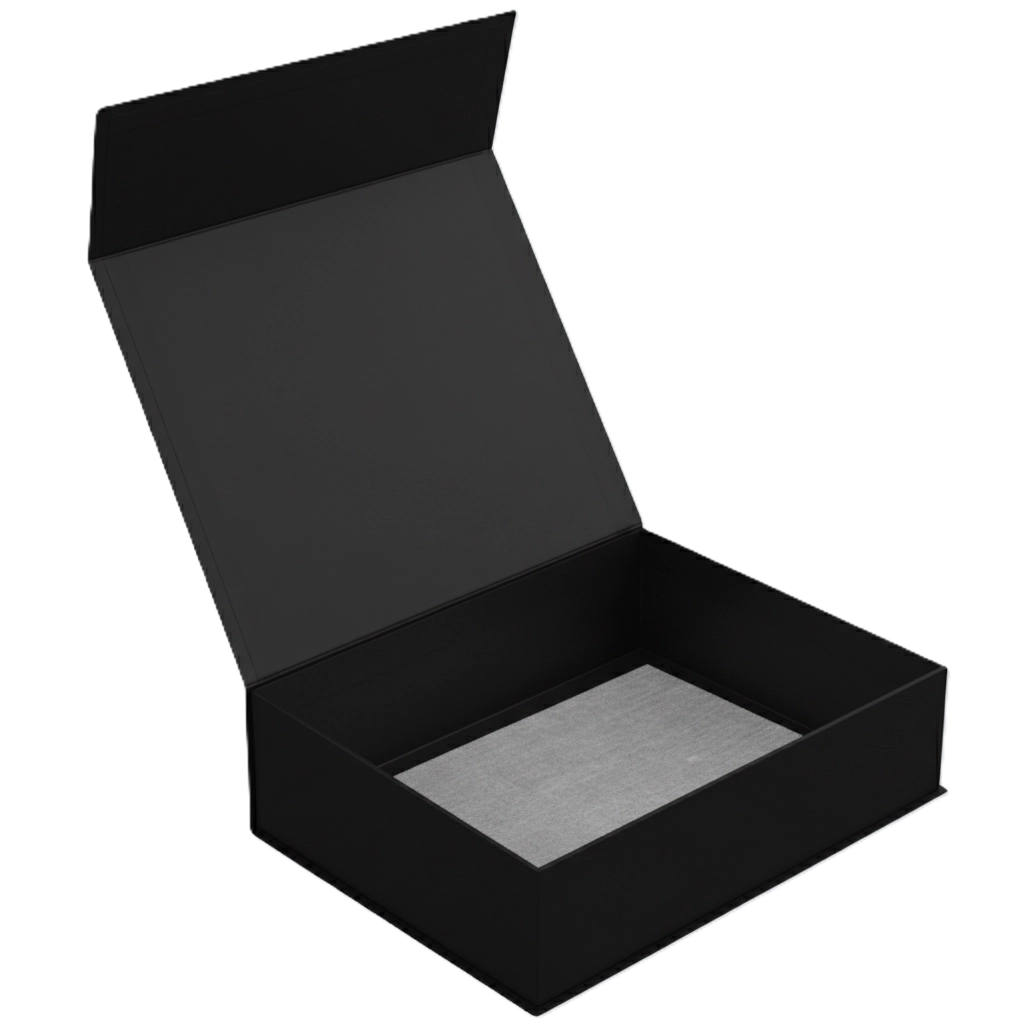
| Mailer Boxes | Hinged-lid boxes commonly made from corrugated board | Candles or beauty sets as well as shipped gifts. Supports protective packing arrangements. | Seasonal delivery kits with fitted inserts. |
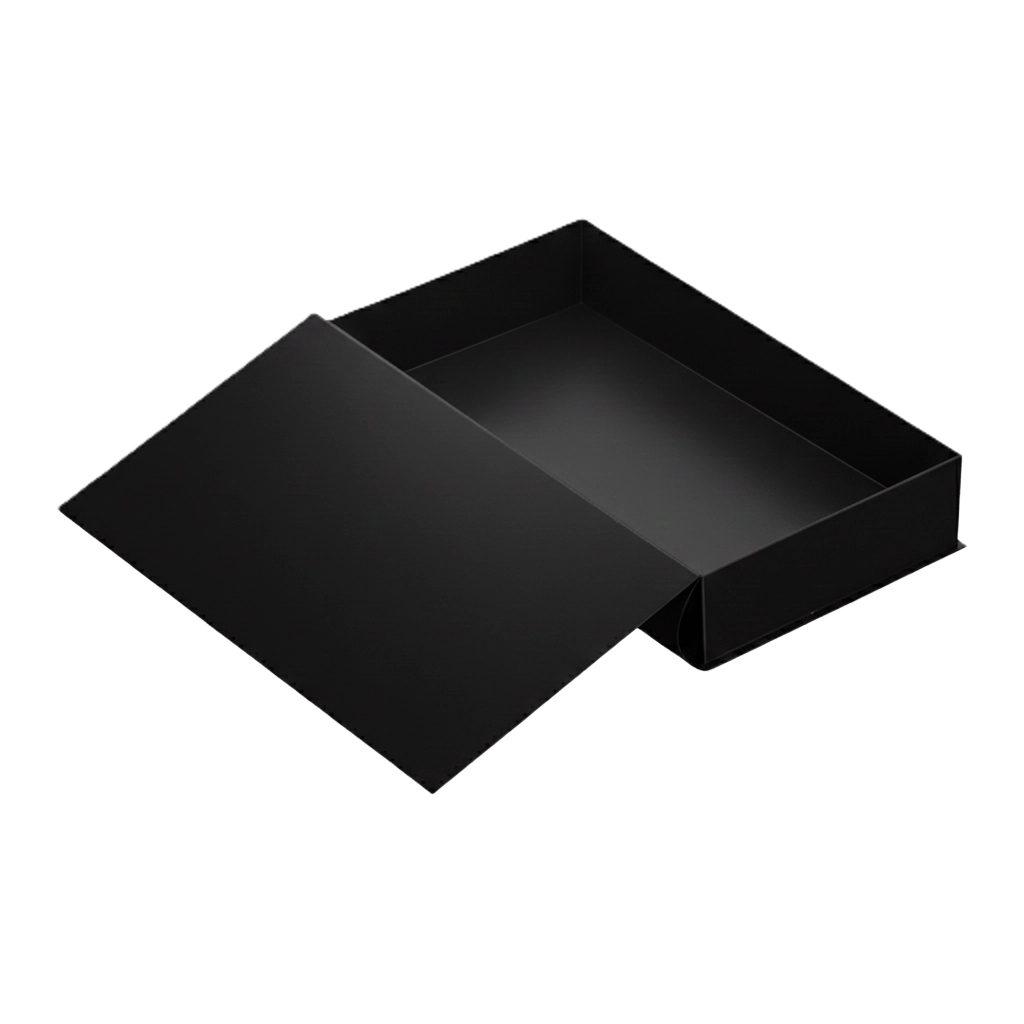
| Rigid Boxes | Sturdy boxes made with thick board | Jewelry and candle gift sets. Keeps its shape and supports fitted presentation. | Keepsake packaging for limited seasonal sets. |
| Die-Cut Boxes | Packages cut and creased to a specified design | Shaped candy packs and unusual retail items. Fits special outlines or openings. | Coffin-shaped chocolate cartons. |
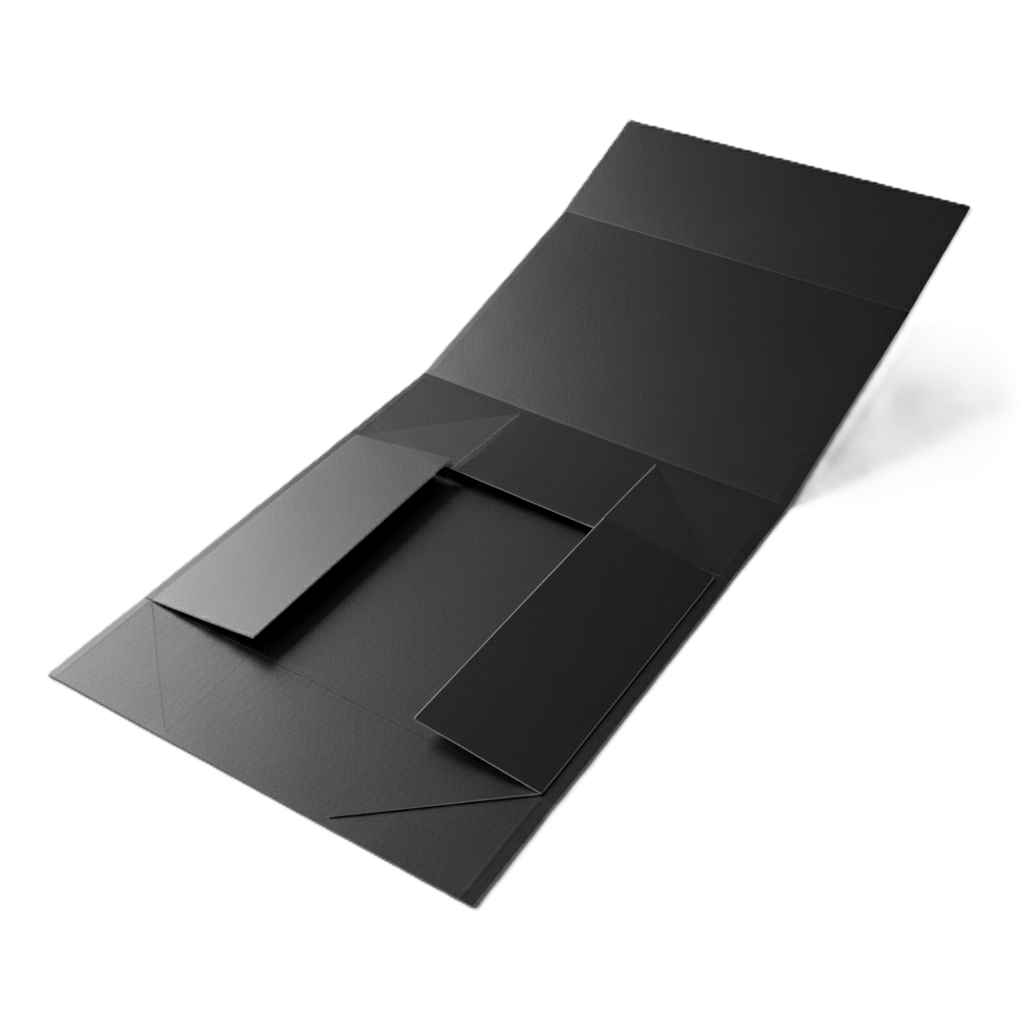
| Folding Cartons | Paperboard boxes folded from flat blanks | Soap or cookies as well as makeup and lightweight retail goods. Stores flat before assembly. | Custom Printed Halloween Boxes for seasonal ranges. |
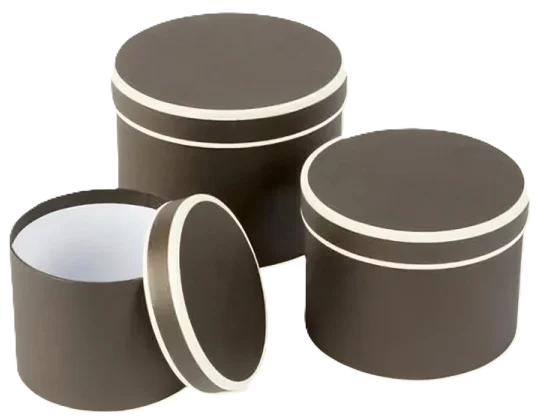
| Two-Piece Boxes | Boxes with separate bases and lids | Chocolate assortments or jewelry as well as gift sets. Shows the full arrangement when opened. | Halloween Gift Boxes with divided trays. |
Rigid and two-piece are not interchangeable terms. A two-piece box can use folding paperboard or rigid board. Likewise, a window does not determine the bottom closure or shipping strength.
How to Choose the Right Type of Halloween Box
Match Size, Shape, and Opening Style
Measure inner dimensions to calculate total product volume. Leave extra clearance for protective liners and inserts. Narrow bottles need tall layouts compared to flat cookies.
Precise interior sizing stops items from shifting inside packaging. Extra margin clearance accommodates protective bubble wrap linings. Custom shapes optimize product positioning for visual appeal. Tall containers demand broad bases to prevent tipping over. Measure complete packed arrangements rather than raw products.
Opening styles alter customer experience during product use. Side flaps assist cakes, while lift-off covers show assortments.
Side access panels simplify sliding delicate bakery items out. Hinged lids keep covers attached during online unpacking. Lift-off lids expose complete chocolate selections at once. Selected opening styles influence buyer perceptions of quality. Functional closure designs prevent spills during transit.
Account for Weight, Fragility, and Item Count
Heavy items require dense paperboard and reinforced bottoms. Fragile glass needs internal dividers to absorb shocks. Multi-item sets need separate compartments for organized presentation.
Thick paperboard grades prevent bottom sagging under heavy loads. Internal divider walls absorb external drop shocks in transit. Custom slots keep multiple products from hitting each other. Reinforced corners maintain box shape when stacked on pallets. Proper material weights match specific shipping demands.
Separate Display Needs From Shipping Needs
Retail boxes are used to display products on store shelves. Mailer boxes are needed to ship the items through courier services. Multi-functional packaging can be created by placing retail cartons inside larger shipping boxes.
Retail display boxes emphasize visual art to attract shoppers. Courier shipping cartons prioritize strength to resist drop forces. Combining display cartons inside outer mailers fulfills both requirements. Clear window films risk puncture without outer shipping boxes. Purpose-built packaging protects products across sales channels.
Select Materials and Printing Around the Structure
Clean white surface provided by solid bleached sulfate paperboard. For rustic designs, use natural brown tones with kraft paperboard. Corrugated board provides added strength from fluted layers that provide shipping boxes.
Bright holiday print colours can be achieved using pure white paperboard. Natural kraft board is an eco-friendly choice for natural lines. Fluted corrugated layers are used to reduce the impact within postal mailers. Choosing the right boards ensures quality print and structure. The materials used affect the final package durability.
Digital printing is ideal for short seasonal print runs. Large retail orders are suited to offset printing. Spot UV is a process that applies a glossy finish on matte surfaces.
For small orders, digital methods do away with setup plate charges. When using long runs, offset presses will yield a steady colour. Spot UV coatings are used to attract attention to holiday logos with high contrast and are clearly visible. Matte finishes reduce the incidence of light glare from bright store lights. Product perception on shelves is improved through quality surface treatments.
Get Custom Halloween Boxes for Your Products
Choose custom Halloween boxes that fit your product size, weight, and presentation needs. From candy and bakery packaging to candle boxes, beauty cartons, and retail displays, Hot Custom Boxes offers tailored packaging options with custom sizes, Halloween artwork, and print finishes. Contact Hot Custom Boxes to discuss your packaging requirements and prepare your products for the Halloween season.
Frequently Asked Questions
Common options include tuck-end, window, pillow, gable, mailer, rigid, die-cut, and two-piece boxes. Custom inserts adapt these base structures for various products.
Small candies are wrapped efficiently in tuck-end cartons. Loose chocolates fit into compartment trays. Large mixed assortments are carried easily using gable boxes.
Metal tins fit simple paperboard cartons. Thick protective inserts are required for glass jars. Shipped candles should be packed in durable corrugated mailers.
Flat iced cookies are protected by shallow cartons. Tall decorated cupcakes fit in insert boxes, while cake boxes offer plenty of base space and clearance.
Yes. Custom manufacturing adjusts dimensions for any product shape. Always measure full packed assemblies along with interior padding.
Folding cartons are ideal for light retail products. Special features are highlighted by window boxes. Display trays work best for counter sales.
Related Products
$0.50 Original price was: $0.50.$0.10Current price is: $0.10.
In Stock
$0.50 Original price was: $0.50.$0.10Current price is: $0.10.
In Stock
$0.50 Original price was: $0.50.$0.10Current price is: $0.10.
In Stock
$0.50 Original price was: $0.50.$0.10Current price is: $0.10.
In Stock