














Table of Contents
Related Products
$0.50 Original price was: $0.50.$0.10Current price is: $0.10.
In Stock
$0.50 Original price was: $0.50.$0.10Current price is: $0.10.
In Stock
$0.50 Original price was: $0.50.$0.10Current price is: $0.10.
In Stock
$0.50 Original price was: $0.50.$0.10Current price is: $0.10.
In Stock
Get A Free Quote
Retailers use point-of-sale display packaging to keep merchandise organized and easy to select. These displays also give new ranges a place in the store and support promotional campaigns.
The product and location determine which format works. A small cosmetics box might fit on a service counter. Beverage multipacks call for more support and a larger area on the floor.
This guide covers 10 options, including countertop boxes and shelf-ready trays. It also looks at pallet displays and interactive units. Each serves a purpose, though some names refer to overlapping formats.
What Is Point-of-Sale Display Packaging?
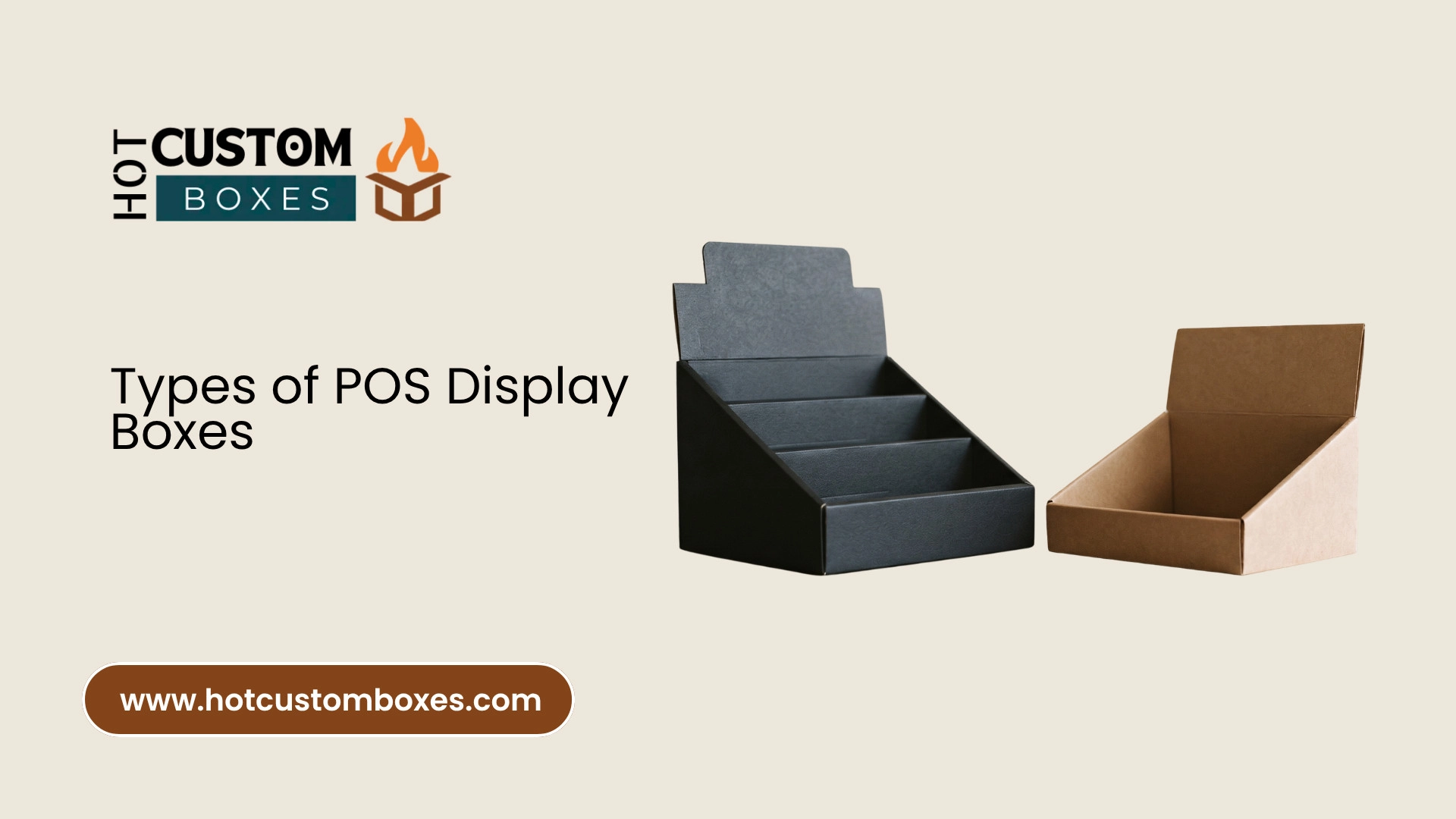
Point-of-sale display packaging holds merchandise while presenting it to shoppers. It might be a printed box or open tray. Larger versions can have shelves and separate product compartments.
You’ll find these displays beside shelves and on counters, including aisle ends and promotional areas. The structure keeps products within reach. Printed panels carry branding and product information.
POS and point-of-purchase, or POP, have closely related meanings. POS often describes displays near payment areas. POP generally includes displays across the store. But retailers and packaging suppliers also use POS in a broader sense, so the terms often overlap.

8 Types of Point-of-Sale Display Packaging
These types of point-of-sale displays cover structures and placement formats, along with technology-based options. They help you compare choices. They don’t all represent separate constructions.
1. Countertop Display Boxes
Countertop display boxes fit on service desks or counters. Most have a compact base with short sides. An open front gives access to the products, while a raised back panel carries printed details.
Small items suit these POS display boxes. That includes lip balms and snack bars, plus cosmetics and electronics accessories. Dividers or inserts can separate flavors and shades, including different product styles.
For example, A cosmetics store could put boxed lip balms beside its consultation counter. Separate compartments would organize each variety without covering the labels.
The small footprint is the main benefit. These boxes give products an organized space where a bigger unit won’t fit. Capacity is limited, though. Staff may need to refill them often, and the box must leave room for everyday counter tasks.

2. Floor-Standing Display Units
Floor-standing display units stand directly on the shop floor. Their trays or shelves hold merchandise independently of existing fixtures. Some use hooks instead.
They work in supermarkets and department stores, including specialty retail shops with approved promotional space. Brands can group related items in them or feature a range. Seasonal products are another use.
During a holiday campaign, a grocery store could display packaged baking decorations on a tiered unit. Each shelf would keep different packs organized within the same display.
These units create another product location away from the main shelf. But they take up floor space. The structure also needs to remain stable under its intended load.
Floor-standing units are often called freestanding display units, or FSDUs. In many cases, the names mean the same thing. Tromo POS.

3. Endcap Displays
Endcap displays sit at the ends of retail aisles. Some use existing shelves fitted with branded trays and graphics. Others are separate structures sized for the allocated area.
Retailers use this position for launches and special offers, including seasonal promotional campaigns. Packaged food and personal care items can suit it, as can household goods.
A supermarket might group pasta with sauce on an endcap, adding seasoning packets to complete the meal range. Separate trays would keep each product in place.
There’s room to present several products together. Still, the layout must meet the retailer’s stocking and space requirements. Confirm the location before ordering packaging made specifically for that aisle end.

4. Dump Bin Displays
Dump bin displays hold loose, individually packaged items in an open-top container. Customers browse through the contents and take products directly from it.
Promotional areas in discount stores and supermarkets can suit them, along with specialty shops. Packaged snacks and small toys are common contents. Other durable promotional products can work too.
A shallow bin in a convenience store could hold individually wrapped seasonal candy. The open top gives shoppers access, with the offer shown on a printed panel.
Staff don’t have to place every item in a set position. But mixed stock can become untidy, and the last few products may be hard to reach in a deep bin. Fragile items usually need a more controlled arrangement. So do products that must stay upright.

5. Shelf-Ready Display Trays
Shelf-ready display trays travel with the products and stay beneath them on the shelf. Staff might remove a lid or outer cover before placing the tray. Other designs open along a tear-away section.
Products arranged in repeated rows suit this shelf-ready display packaging for retail stores. Snack bars and seasoning sachets are examples, alongside small skincare cartons and packaged food products. Suppliers offer divided trays and other layouts to organize the stock. Landaal Packaging
For instance, a grocery employee could open a carton of seasoning packets and put the filled tray straight onto the shelf. There’s no need to arrange each packet individually.
The tray helps with replenishment and keeps a range together. Fit is the main concern. A high front can cover labels. Poor sizing can also waste shelf space or make products awkward to remove.

6. Sidekick Displays
Sidekick displays attach to suitable shelving fixtures, often alongside an endcap. These narrow units hold lightweight merchandise in pockets or small trays. Some use hooks.
They can work in pharmacies and convenience stores, including supermarkets with limited floor space. Positioning them beside related merchandise supports cross-selling.
A pharmacy could place travel-size toothpaste in a sidekick next to travel accessories. The products belong together, and no separate floor stand is needed.
This format uses vertical fixture space. Its capacity, however, depends on the attachment system as well as the display. Before production, confirm fixture requirements and the approved mounting method. Check the permitted load too. Supplier guidance notes that sidekick requirements differ between retailers. Grand Fly

7. PDQ Boxes
PDQ boxes are retail-ready display boxes designed to present products neatly on shelves or countertops. They often arrive pre-packed with merchandise, allowing store staff to place the display directly on the shelf with minimal setup. Their open-front design makes products easy for customers to see and access.
Retailers use PDQ display boxes for cosmetics, snacks, small accessories, and packaged promotional products. Printed branding, product information, and organized compartments can help shoppers identify items quickly.
For example, a cosmetics brand could use a PDQ box to display lip balms in organized rows near the checkout counter. The printed front panel features the brand name, while the open top and front allow customers to view and pick up products easily.
PDQ boxes work well when retailers need compact displays that simplify shelf stocking and product presentation. Their dimensions should match the packaged products, available shelf space, and required stock quantity.

8. Interactive Retail Displays
Interactive retail displays give shoppers a way to explore information or try a demonstration. They may use working samples or physical controls. Touchscreens are another option.
They suit cosmetics departments and electronics stores, including premium product retailers where customers need more detail. Manufacturers offer physical product displays combined with touchscreen kiosks or digital demonstrations. Product customization tools are available too. axisdisplaygroup.com
An electronics retailer might position demonstration headphones beside a screen explaining the controls. Separate trays could hold the boxed stock available to buy.
This category can combine a physical structure with digital technology. It doesn’t have to be made entirely from packaging materials.
The benefit is being able to explain or demonstrate the product at the display. But equipment security and maintenance need attention. Power and content updates add requirements too. Choose interaction when it meets a clear product need.

How to Choose the Right POS Display Packaging for Your Brand
Check the product and approved retail location first. Point-of-sale display packaging needs to suit both before you choose finishes or graphics.
Measure the packaged item and decide the quantity. Calculate the total loaded weight too. Small boxed cosmetics might work in a divided counter tray, while beverage multipacks may need a pallet-based setup. Ask the supplier to assess the loaded structure. An empty unit won’t show the same demands.
Find out exactly which space the retailer has approved. It might be a shelf section or counter position. An aisle end or floor area brings different requirements. Check height limits and fixture rules, including customer access. Sidekicks need compatible attachments. Floor units need a suitable footprint.
Think about shopping behavior in that space. Customers in a busy convenience store may need quick, easy access. An electronics shop may have room for a demonstration. Match the information and interaction to that environment.
Select materials to suit the structure. Corrugated cardboard commonly forms larger units and shipping trays. Paperboard can work for smaller boxes carrying lightweight products. The board and supports must suit the load, with construction matched to campaign conditions.
Review branding with stock in place. Which panels can customers see when the display is full? What remains visible when it’s partly empty? Keep names and prices readable, along with promotional messages. A header hidden by the store’s shelves won’t help.
Work out the full campaign cost. Count production and freight, then storage and assembly. Replenishment needs belong in the calculation too. Wholesale display packaging may bring lower unit prices at higher quantities, but unused units still cost money. Ask about minimum order quantity and volume pricing.
Plan how stores will receive the units and refill them. Flat-packed displays require assembly. Prefilled versions need appropriate transport protection and handling arrangements. Check whether staff can restock without shifting the display or removing several parts.
The best POS display packaging for retail brands fits the merchandise and approved location. It also works with the store’s daily routine.
How Custom POS Display Packaging Supports Retail Branding
Custom printing links the display to its contents. Logo placement and brand colors create a familiar presentation. Promotional graphics help maintain that connection across store locations.
The layout also needs to explain the range. Names and labels distinguish sizes or flavors, including variants. Compartments keep those choices separate so different products don’t become mixed.
Look at custom printed point-of-sale displays when they’re filled. Tall cartons can hide a logo behind them. Place important information where shoppers can see it as the stock level changes.
Businesses exploring custom display packaging and printed brand presentation can consider Hot Custom Boxes. Share the product details and artwork, along with the intended retail placement, to discuss a suitable tray or box layout.
When comparing custom retail display boxes, give each supplier the same specifications and quantities. Check what’s included in the quote. Design support and shipping may be relevant, as may setup charges.
Common Mistakes to Avoid When Choosing POS Displays
- Selecting a format that does not suit the product. Durable snack packs may work in a dump bin. Delicate cosmetics can become poorly organized there. Choose a structure around the product’s shape and handling needs.
- Ignoring weight and stability. A display’s empty appearance doesn’t show how it will behave with stock inside. Ask for an assessment using the intended load and its weight distribution.
- Overcrowding the display. Packing in too many items can obscure labels and make removal difficult. Set the quantity for each shelf or pocket. Give compartments a defined stock count too.
- Choosing a location before checking approval. Physically fitting in a store doesn’t mean the unit fits its merchandising plan. Confirm the exact position and retailer requirements before production.
- Overlooking customer access and restocking. Awkward openings or deep pockets can make everyday use difficult. Test whether shoppers can take products out and staff can refill the unit easily.
- Forgetting shipping, storage and assembly. A unit can work on the floor yet be awkward to deliver or build. Review the packed size and assembly steps, then check delivery arrangements before ordering.
- Prioritizing appearance over practical use. Unusual shapes and large graphics can get in the way of product access. Check the artwork on a loaded sample and keep important labels visible.
Find the Right POS Display Packaging for Your Retail Products
Limited counter space can suit compact countertop and checkout displays. Shelf-ready trays keep goods together on existing shelves, while sidekicks use compatible fixtures. Larger presentations can use endcaps or floor-standing units, including FSDUs. Dump bins let shoppers browse packaged items. Pallet displays accommodate higher quantities, and interactive units add demonstrations or information where needed.
Choose the format around product suitability and approved placement. Check practical store requirements too. Branding has a role, but staff also need a stable display that’s accessible and manageable.
Contact Hot Custom Boxes to discuss custom display packaging for your retail products. Send product measurements and loaded weight, along with quantity and intended placement, to request a quote for a suitable format.
Frequently Asked Questions
POS often means displays near checkout. POP generally covers displays throughout a store.
Usage differs across retailers and the industry, though, so suppliers sometimes use the terms interchangeably.
Countertop boxes work for small items on service counters. Checkout displays place them near payment areas.
Choose around the available space and product weight, including the quantity needed.
Paperboard and corrugated cardboard are common options. Paperboard suits many small display boxes, while corrugated board forms trays and larger structures.
The strength required determines the final material choice.
Yes. Cardboard POS displays can work for many lightweight products and temporary campaigns.
Check the structure and product load, then consider store conditions and how long the display will be used.
Yes. Custom POS display boxes can carry logos and brand colors, plus product information and promotional graphics.
Printing needs to suit the structure and remain visible with products in place.
Related Products
$0.50 Original price was: $0.50.$0.10Current price is: $0.10.
In Stock
$0.50 Original price was: $0.50.$0.10Current price is: $0.10.
In Stock
$0.50 Original price was: $0.50.$0.10Current price is: $0.10.
In Stock
$0.50 Original price was: $0.50.$0.10Current price is: $0.10.
In Stock