













Table of Contents
Related Products
$0.50 Original price was: $0.50.$0.10Current price is: $0.10.
In Stock
$0.50 Original price was: $0.50.$0.10Current price is: $0.10.
In Stock
$0.50 Original price was: $0.50.$0.10Current price is: $0.10.
In Stock
$0.50 Original price was: $0.50.$0.10Current price is: $0.10.
In Stock
Get A Free Quote
Customers need to see what’s in a display box and pick up a product easily. The shape and colours help tell them about the brand, along with the printed details. Sometimes a small change is enough. A clearer header or a better arrangement can improve the display’s appearance on a crowded retail shelf.
These Creative Display Box Ideas bring useful design features into product presentation. You might use fitted inserts or try a different shape. Each approach can work around your products and brand identity, with the available retail space guiding the design.
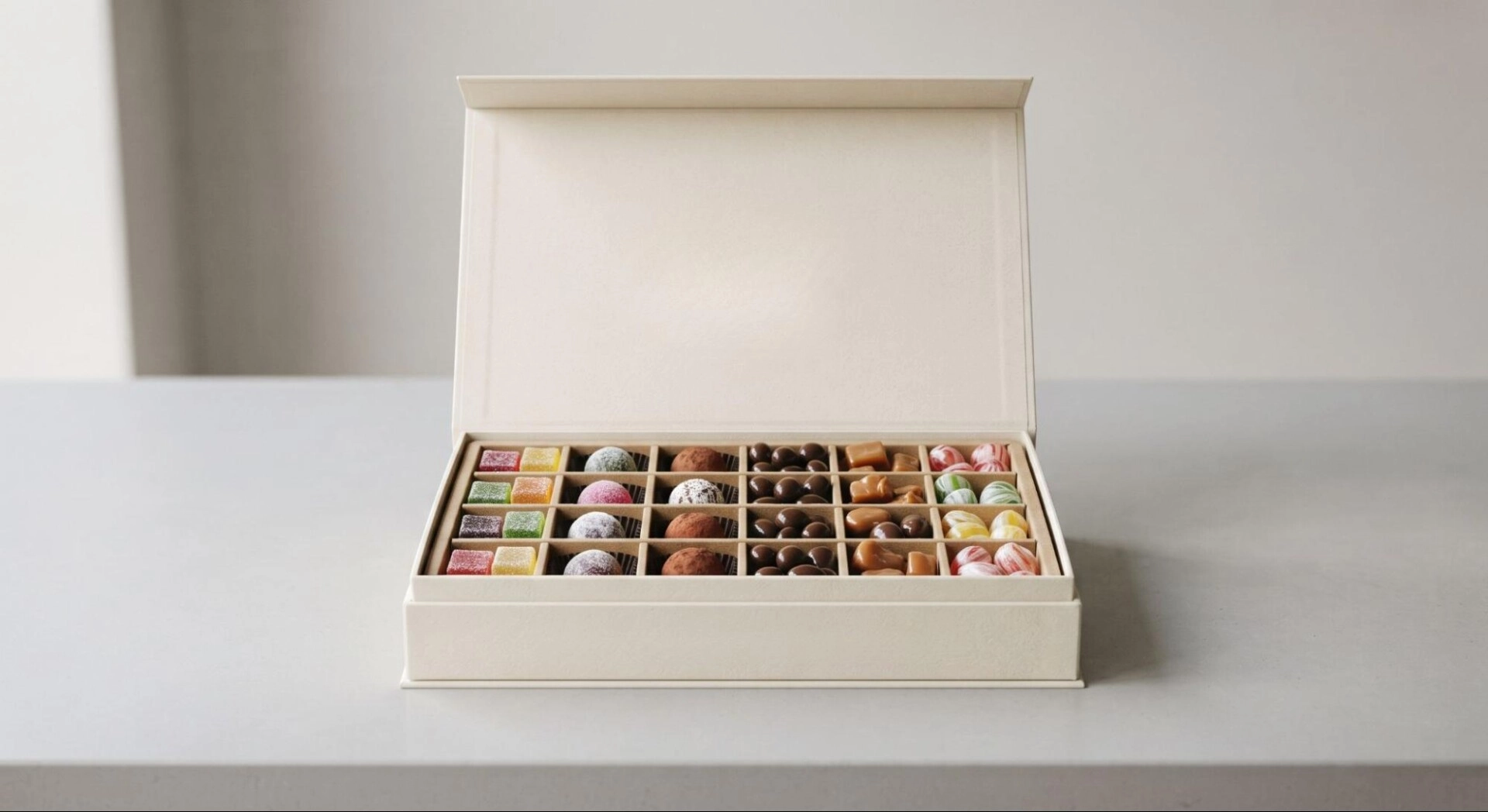
1. Custom Insert Display Boxes
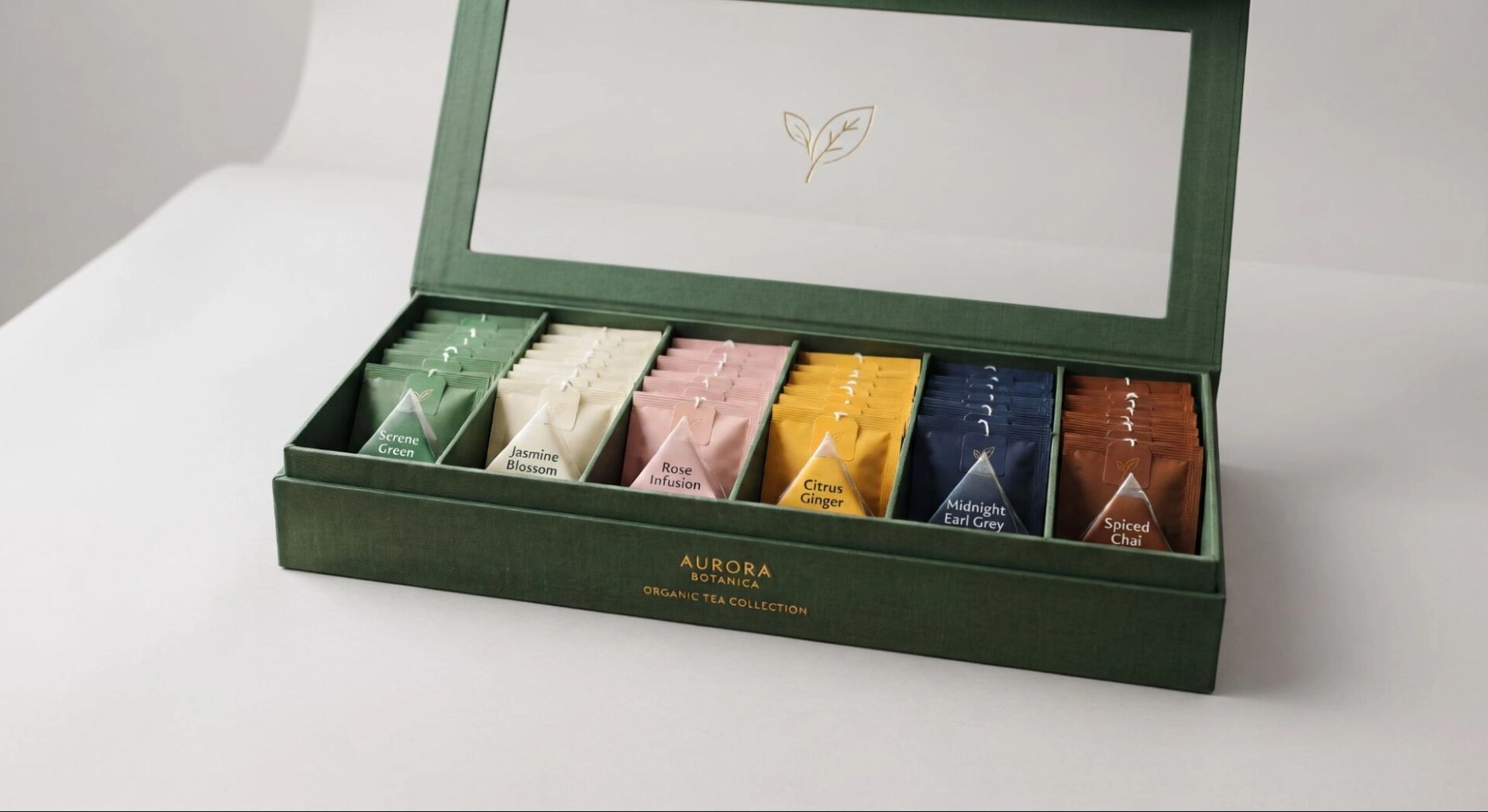
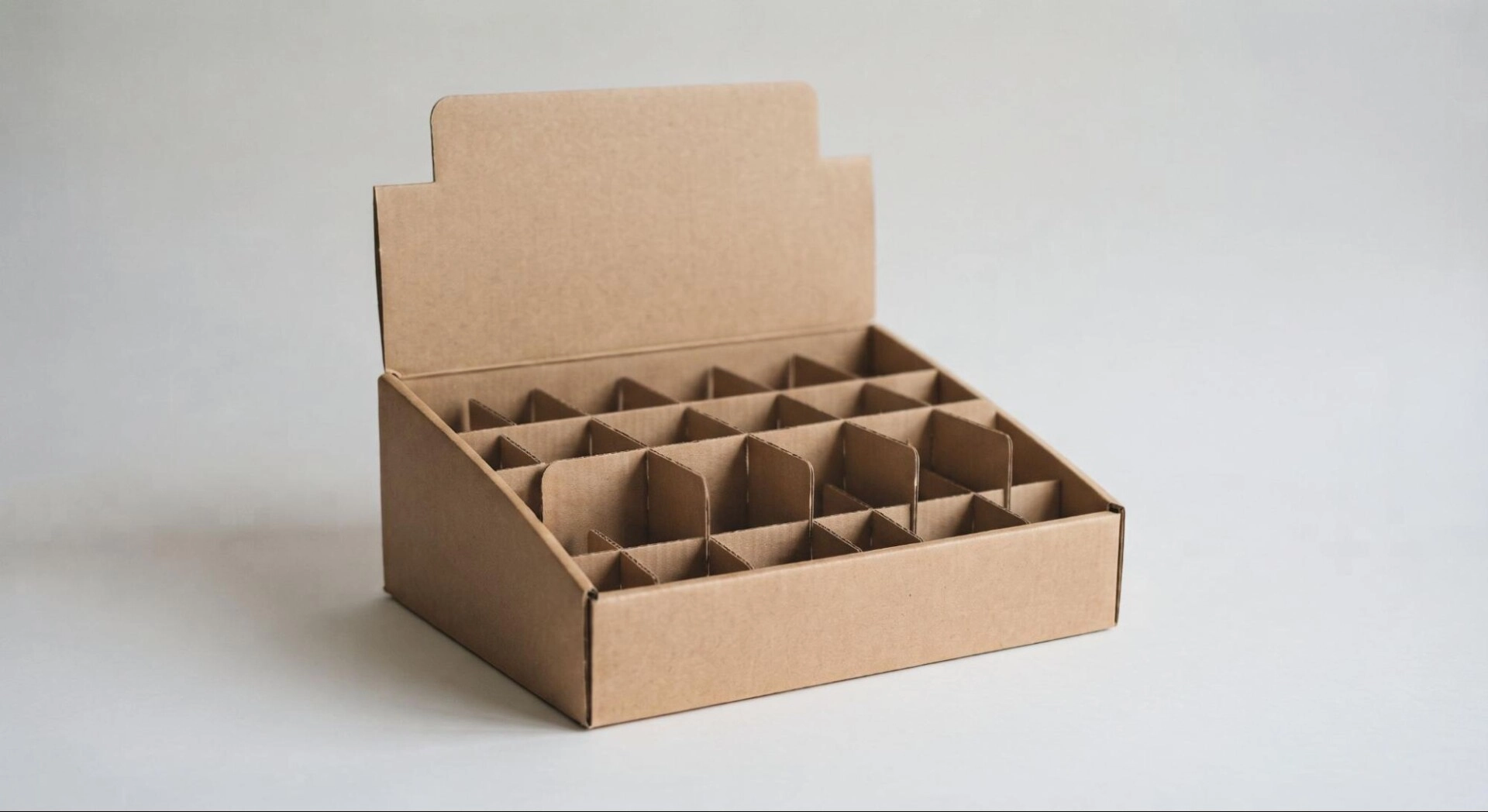
Each product gets its own place when an insert divides the display into compartments. Small bottles can sit upright in a fitted paperboard platform. Folded dividers keep boxed accessories apart and help staff organise different items.
A skincare display, for instance, could use separate slots for serum bottles beside a wider space for matching cartons. Don’t make the fit too tight. Customers need enough room to lift each item out comfortably.
Take measurements with caps and outer wrapping in place before planning the openings. Then check a physical sample. Staff should find it easy to refill each compartment. The insert also needs to leave product names and other important label details in view.
2. Minimalist Display Box Designs
A minimalist display gives a few details room to work. Put the brand name where it’s clear and keep the product description short. Simple typography and a small colour palette make the layout easy to read.
Neutral lip balm tubes in an ivory tray might need only a dark heading behind them. Soap cartons in a pale sage display could follow the same approach. Simple doesn’t have to mean white.
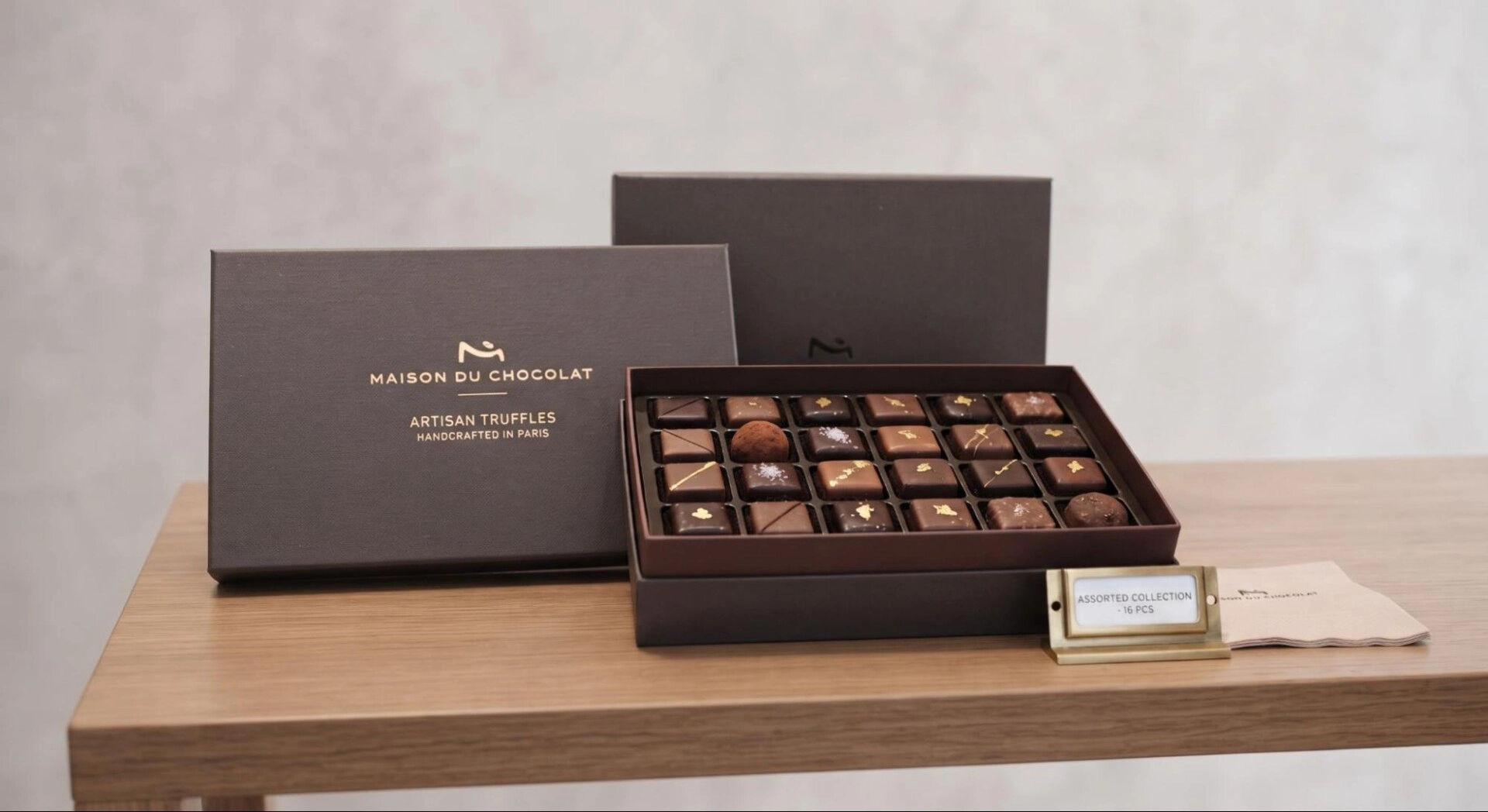
Keep the front panel low enough for customers to see important product details. Check the artwork at actual print size. Can you read it comfortably? This approach helps when the individual packs already have detailed graphics or colourful labels.
3. Metallic Foil Display Box Designs
Selected details catch the light when you use metallic foil stamping. A gold logo can stand out on burgundy board. Silver can pick out a product name against navy.
A heading or small emblem may be enough. That can work for fragrance samples and boxed chocolates, as well as beauty products. Keep nearby areas simpler so customers can distinguish the foil detail.
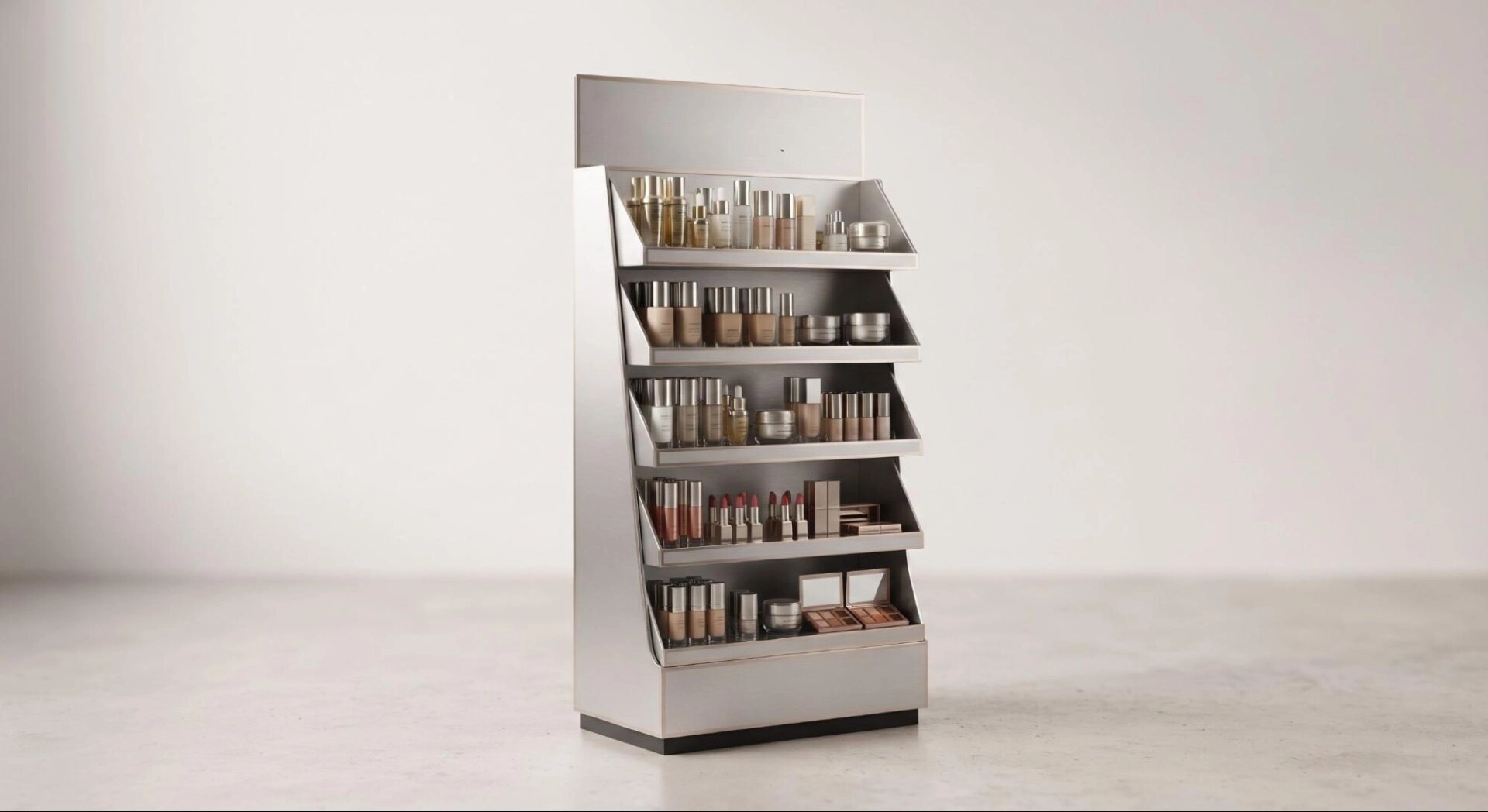
View a finished sample under lighting close to the store’s conditions. Fine lettering can become hard to read when reflections catch it at certain angles. Ask the printer which line thickness will work and how closely they can place the foil. That matters when it must line up with printed borders or illustrations.
4. Interactive Display Box Designs
Customers can explore product information through movable panels or pull-out features. A sliding panel on a tea display could show brewing guidance. For stationery, a hinged flap might reveal the available paper colours.
Give the moving feature its own space away from the product compartments. Someone should be able to open it without knocking stock over. It shouldn’t block access to the products either.
Make a working sample of these creative product display boxes before production. Try the sliding parts and check that hinged sections stay attached through repeated use. A thumb notch or visible tab shows people what to do. Open it fully too, checking that it stays clear of neighbouring displays.
5. QR Code Display Box Designs
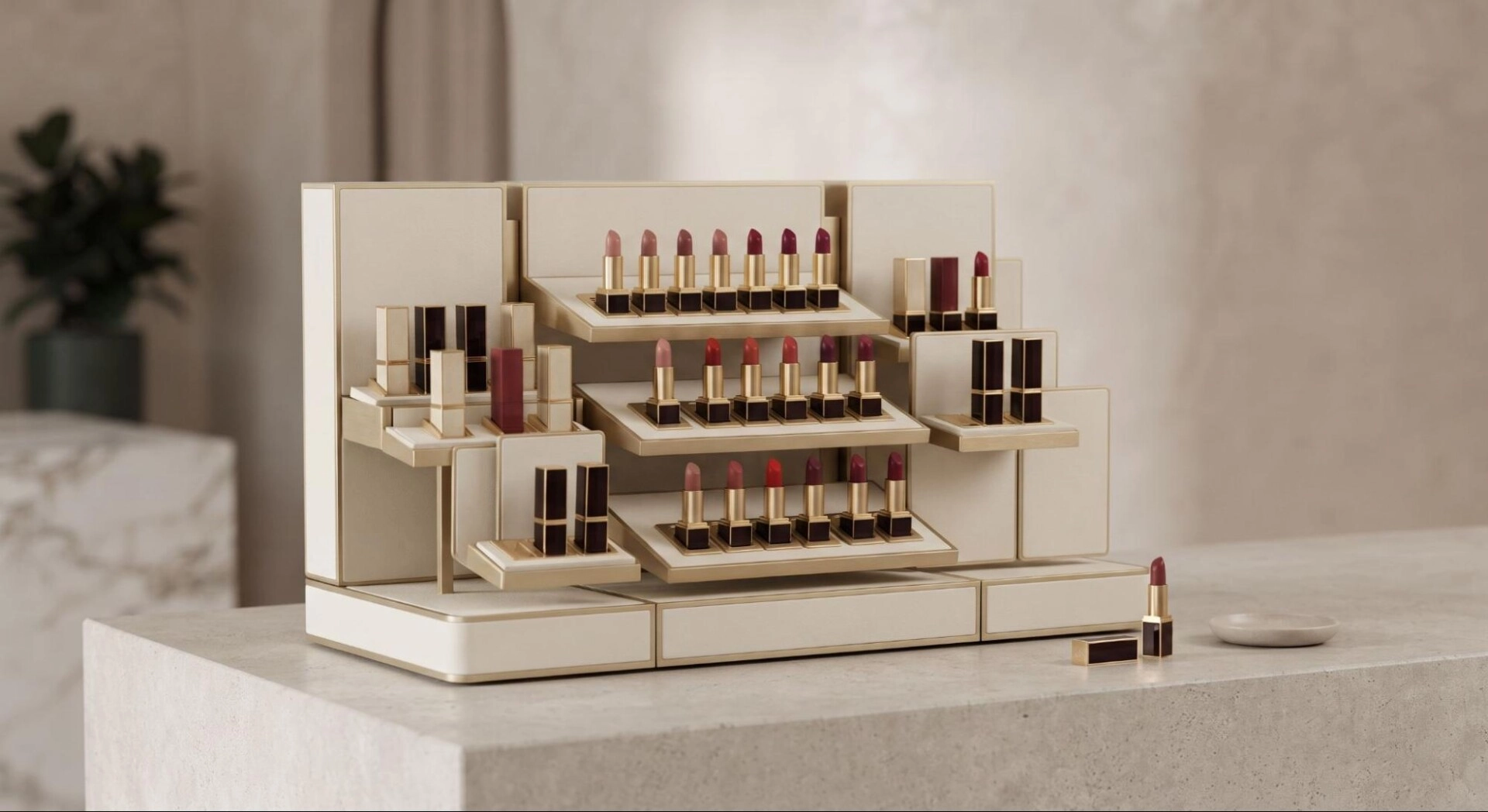
Some information won’t fit comfortably on packaging. A QR code gives it another place to go. A bicycle care display could link to a demonstration, while a code beside seed packets could open planting instructions.
Tell shoppers what they’ll get with a short line such as “Scan for the guide.” Put the code on a flat panel. Leave clear space around it and keep it away from folds or detailed graphics.
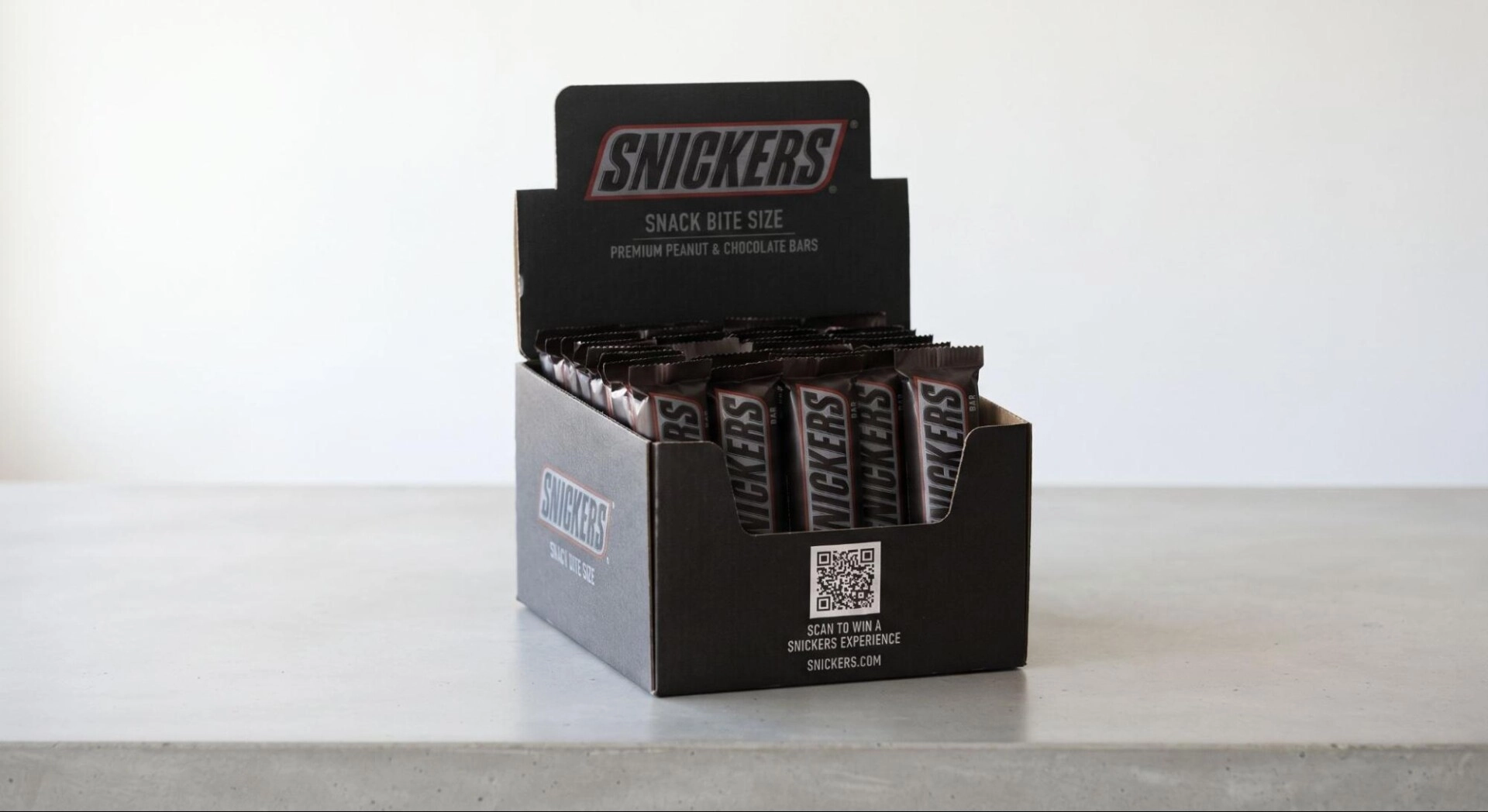
Try the printed sample with several phones from a realistic viewing distance. Then check the page on mobile. Keep the information customers need to buy on the packaging itself. The linked page can carry further product details or instructions, including demonstrations.
6. Bold and Colourful Display Box Designs
Large graphics and bright colours make a display visually strong. Orange shapes against cobalt blue could work for snacks. Playful stationery might suit magenta with lime.
Let one colour lead. The others can support it. If every panel competes for attention, shoppers may struggle to find the product name. Give the main heading a clear area and keep important details away from busy illustrations.
These product display box design ideas work best with colours that relate to the products or the brand’s existing palette. Check a printed proof on your chosen material before production. A colour on screen can look different on board.
7. Patterned Display Box Designs
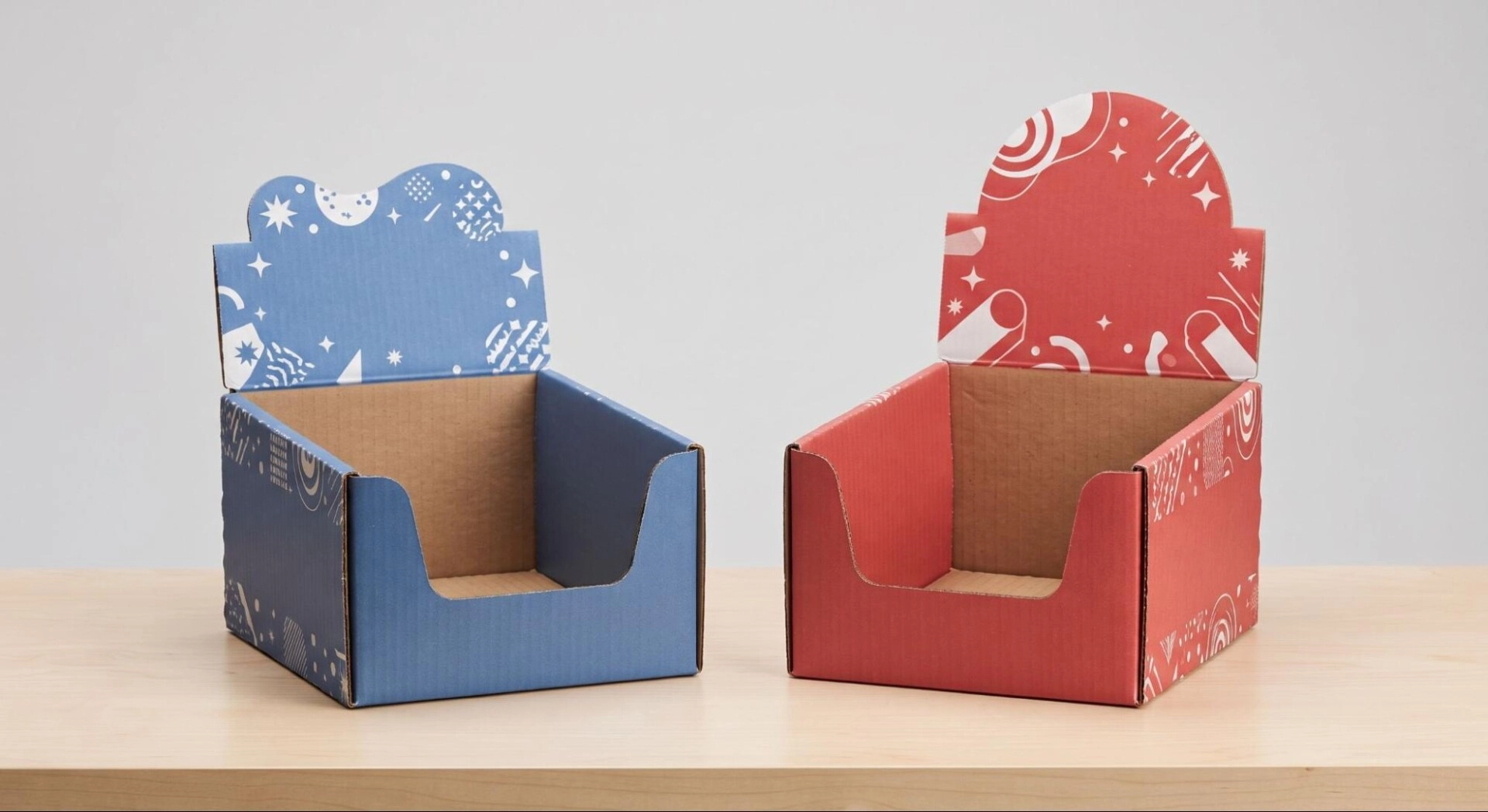
A pattern can carry the same theme around a display’s sides and front, then onto its header. Geometric shapes suit a structured style. Botanical drawings can link a tea or soap display to its ingredients.
Decide where the pattern belongs. Repeated drawings on side panels add interest, while a plain header leaves the product name readable. Small brand symbols can form a background too. You don’t need a large logo repeated everywhere.
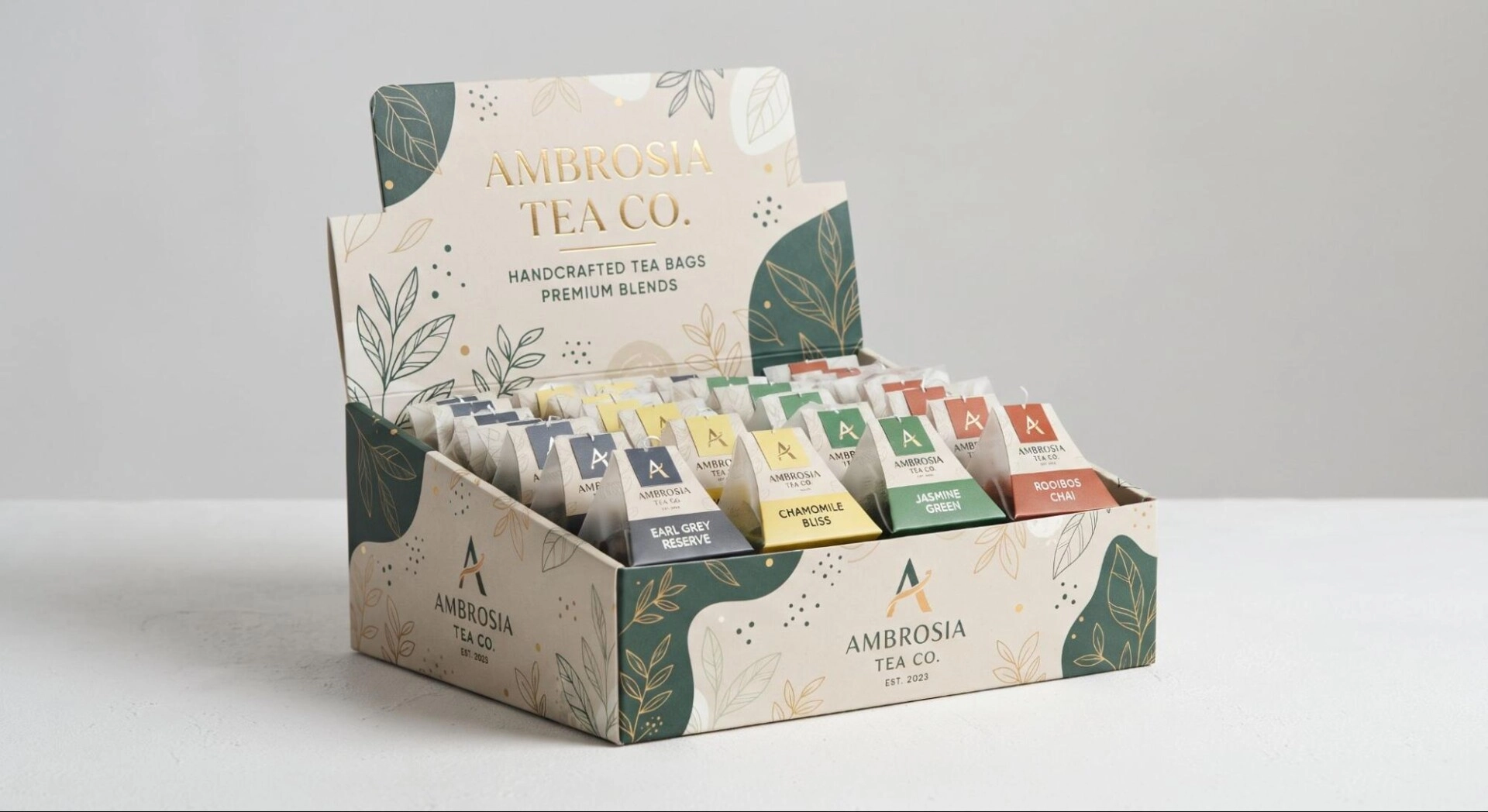
Look at the pattern on an assembled sample. Tiny details may disappear from shelf distance. Large motifs can sit awkwardly across folds. Keep important illustrations clear of glue areas and cut edges so the finished design looks complete.
8. High-Contrast Display Box Designs
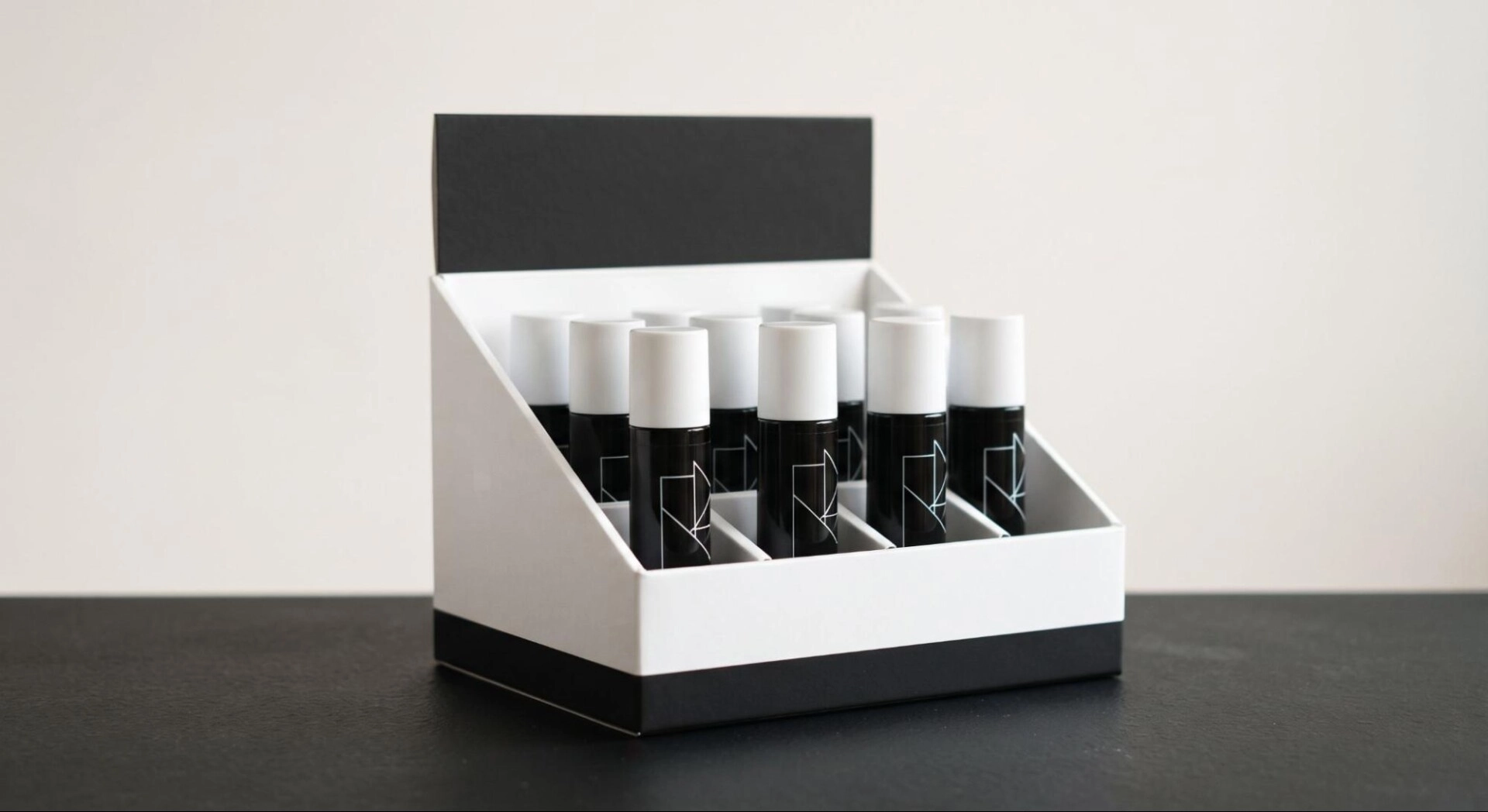
Products are easier to distinguish when their surroundings provide contrast. White accessory cartons have a clear outline against a black back panel. Deep purple can help pale yellow cosmetic tubes remain visible.
Check the merchandise as well as the lettering when choosing colours. A readable heading won’t help if the products disappear into the tray. Put actual items against printed background samples before approving the combination.
High-contrast custom display box designs can help small products with subtle packaging stand out. Place important text on solid backgrounds. Avoid thin lettering across detailed images, then review the assembled display from the height and angle customers will approach it.
9. Benefit-Focused Display Box Designs
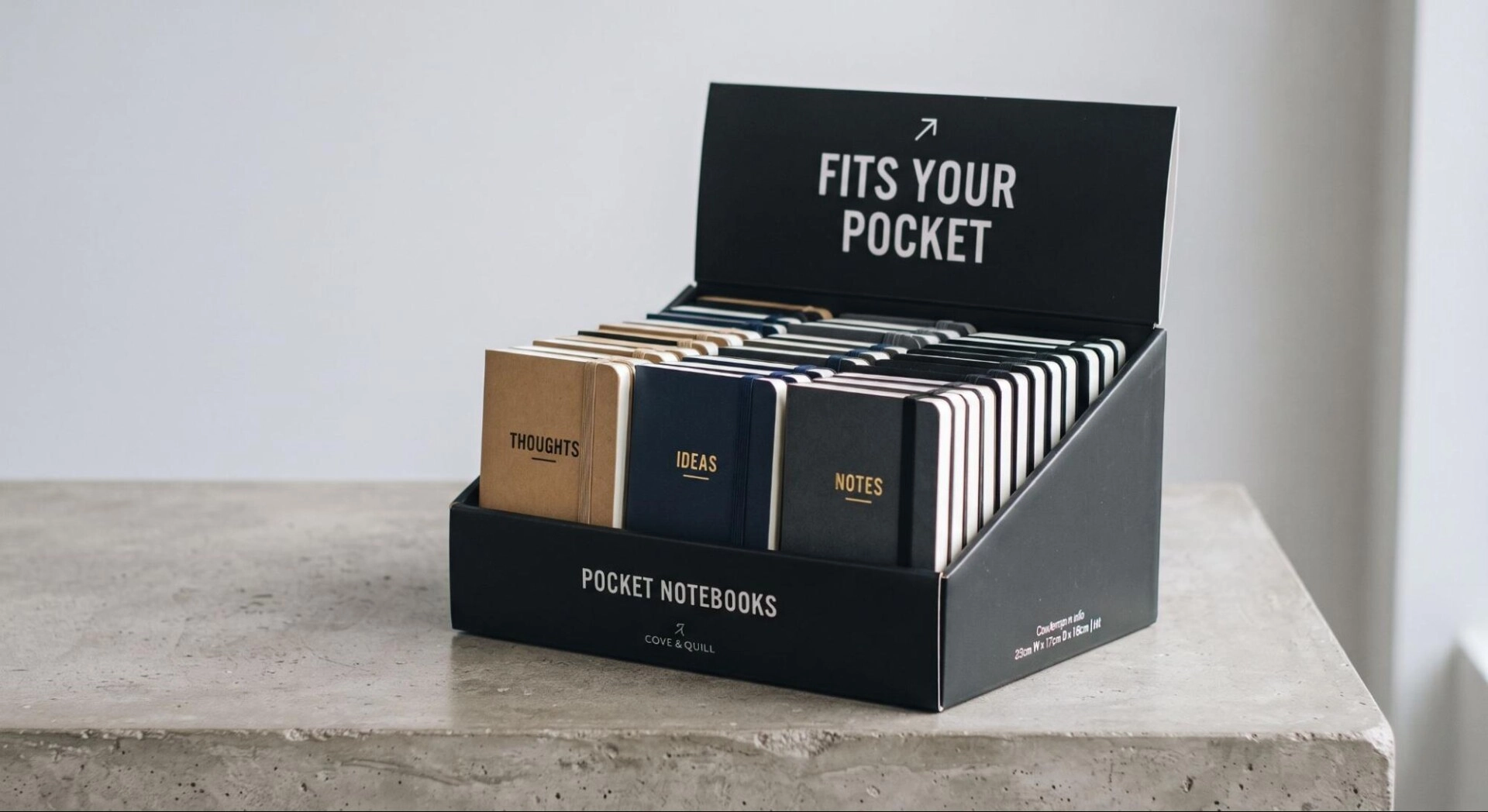
A headline can explain the everyday use before someone reads the individual pack. “Fits your pocket” could sit above pocket notebooks, with the page count below. For travel cutlery, “Lunch on the go” could work.
Pick one main benefit. Add a detail that supports it. Several messages at the same large size give customers no obvious place to start reading. Longer specifications can go on the product pack or a side panel they can reach.
These display packaging ideas suit products with a clear, straightforward purpose. Check that every statement describes the item accurately. The headline should read as one complete message. Give it some space instead of filling every panel with another selling point.
10. Colour-Coordinated Display Box Designs
Different colours can separate flavours or sizes within one display. They can also identify collections. A tea tray might pair mint with green and lemon with yellow. Berry could use red, with matching strips beneath the compartments.
Keep the typography and logo position consistent across the layout. Colour changes identify each variant while the shared design connects the range. Include written names as well. Customers shouldn’t have to identify products by colour alone.
Coloured bands could mark notebook sizes in a stationery display, separating small from medium and large. Give staff a clear replenishment layout so each size goes back in its place. Then remove some stock. Do the remaining labels still explain the arrangement?
11. Unconventional Die-Cut Display Box Designs
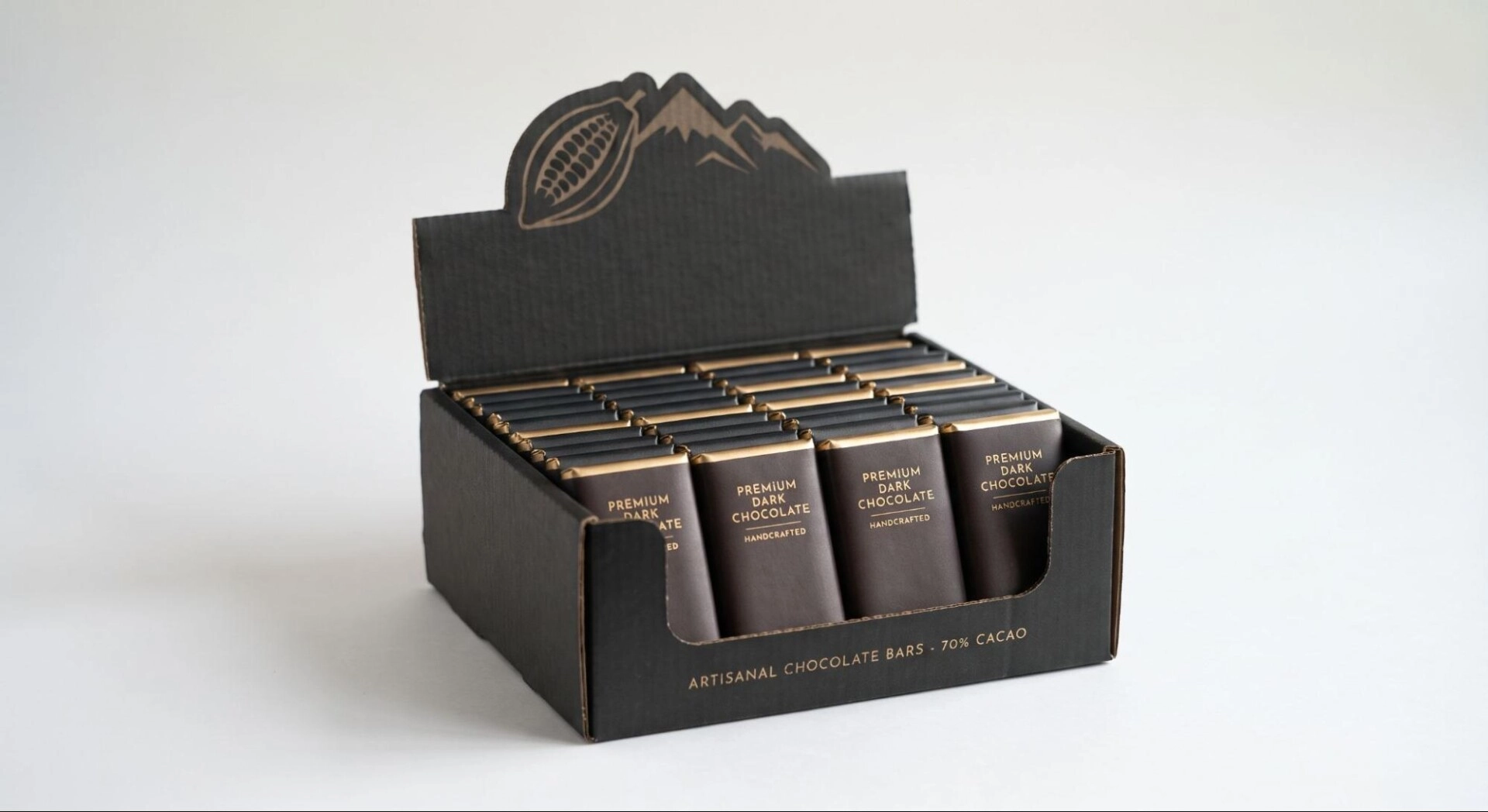
A die-cut shape changes the display’s outline instead of leaving all the work to printed graphics. Seed packets could sit beneath a flower-shaped header. A wave-shaped edge could link bath products to an ocean theme.
Side-panel window cutouts give customers another view inside. Keep them clear of structural folds and areas carrying the products’ weight. Enough board needs to remain for the tray to work properly.
Unique display box designs still need clear areas for branding and product information. Ask the manufacturer to assess narrow sections and pointed edges, along with decorative details. Check the finished header’s height beneath the shelf above. It must also stay clear of neighbouring merchandise.
12. Oversized Product-Inspired Display Designs
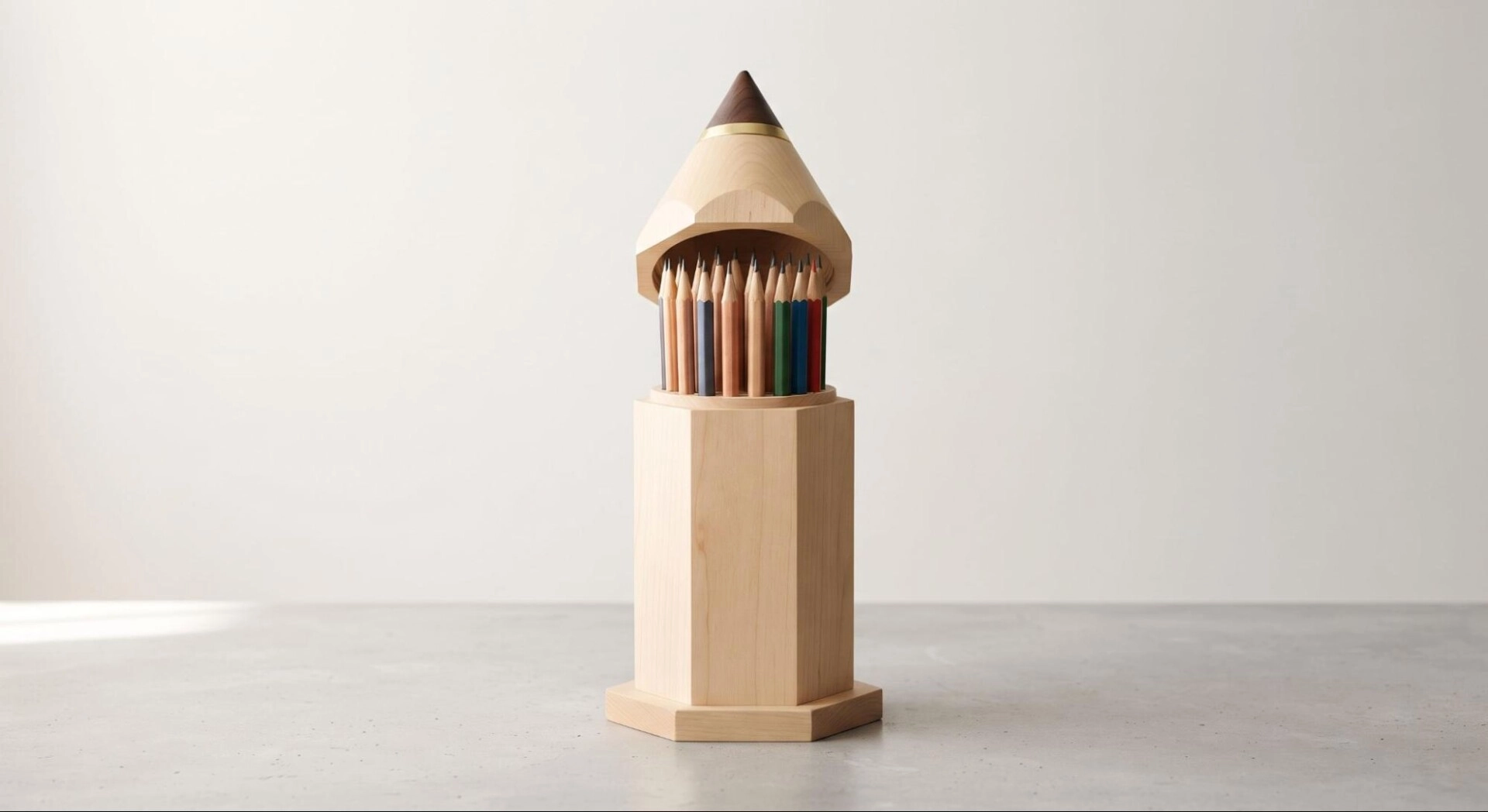
A familiar product feature can become an enlarged part of the structure. Pencil packs could sit on shelves framed by a pencil-shaped back panel. An orange-slice header might go above citrus sweets.
Make the connection easy to recognise. Customers shouldn’t have to hunt for the merchandise within the shape. Let the oversized feature frame the products while leaving shelves and compartments accessible.
These retail display box ideas can work in dedicated promotional spaces with room for a larger outline. Confirm the allowed footprint and height before starting artwork. For freestanding displays, have the supplier assess the load and base construction. Check stability with representative stock and include refill access in the first prototype.
13. Luxury Black Display Box Designs
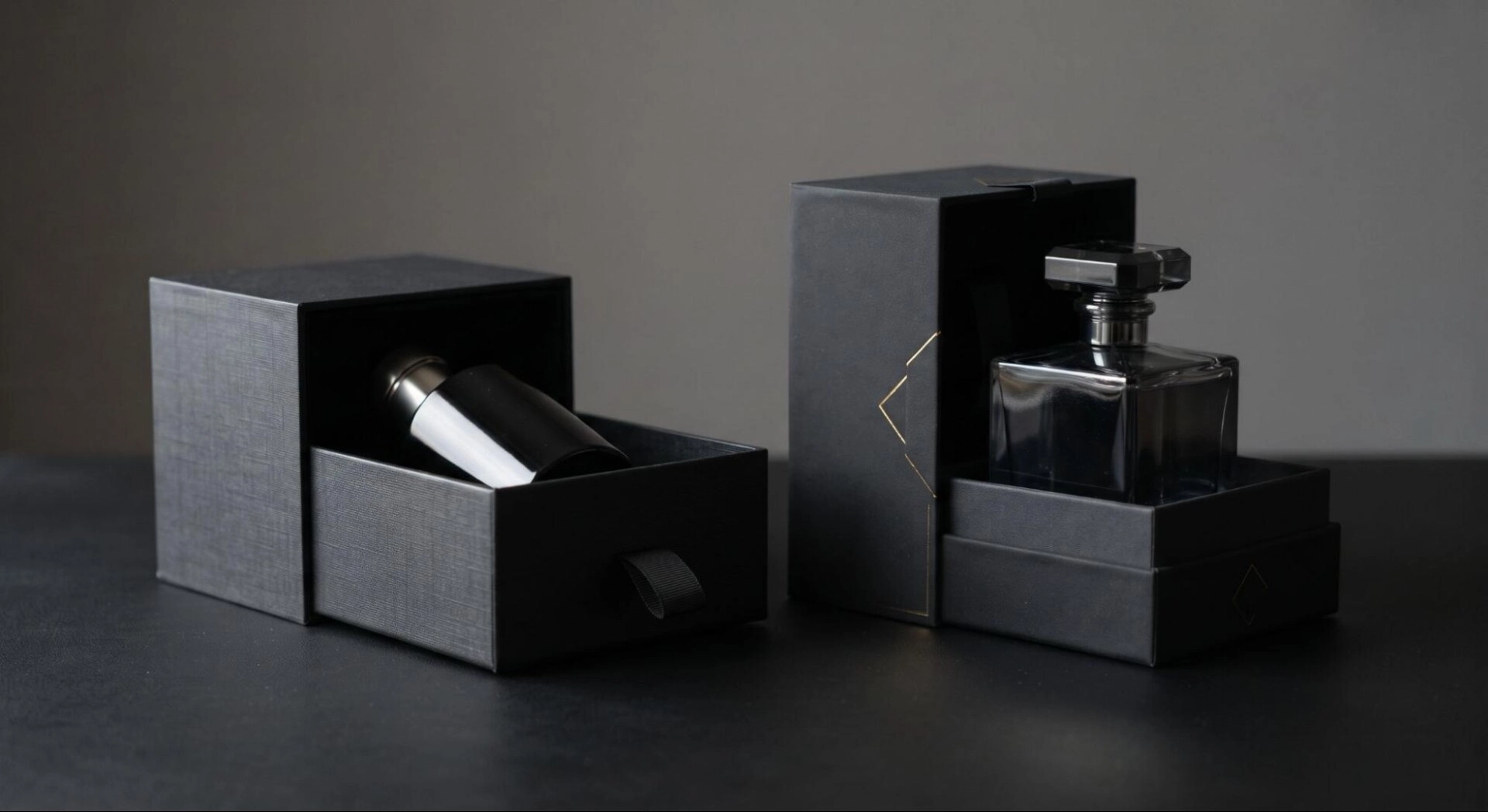
A black background can give fragrance and jewellery accessories a restrained setting. It can work for premium cosmetics too. Careful spacing gives the design room, with elegant typography and a small metallic accent adding character.
Matte and gloss produce different effects. Subtle foil details can work against matte, while spot UV coating creates gloss in selected areas. Where the material and structure allow, embossing raises details and debossing recesses them.
Get samples before combining treatments. Check how fine lettering works with dark printing and surface texture. Look for visible handling marks on the finish too. If the products are black as well, a contrasting insert can separate their outlines from the display interior.
14. Eco-Friendly Display Box Designs
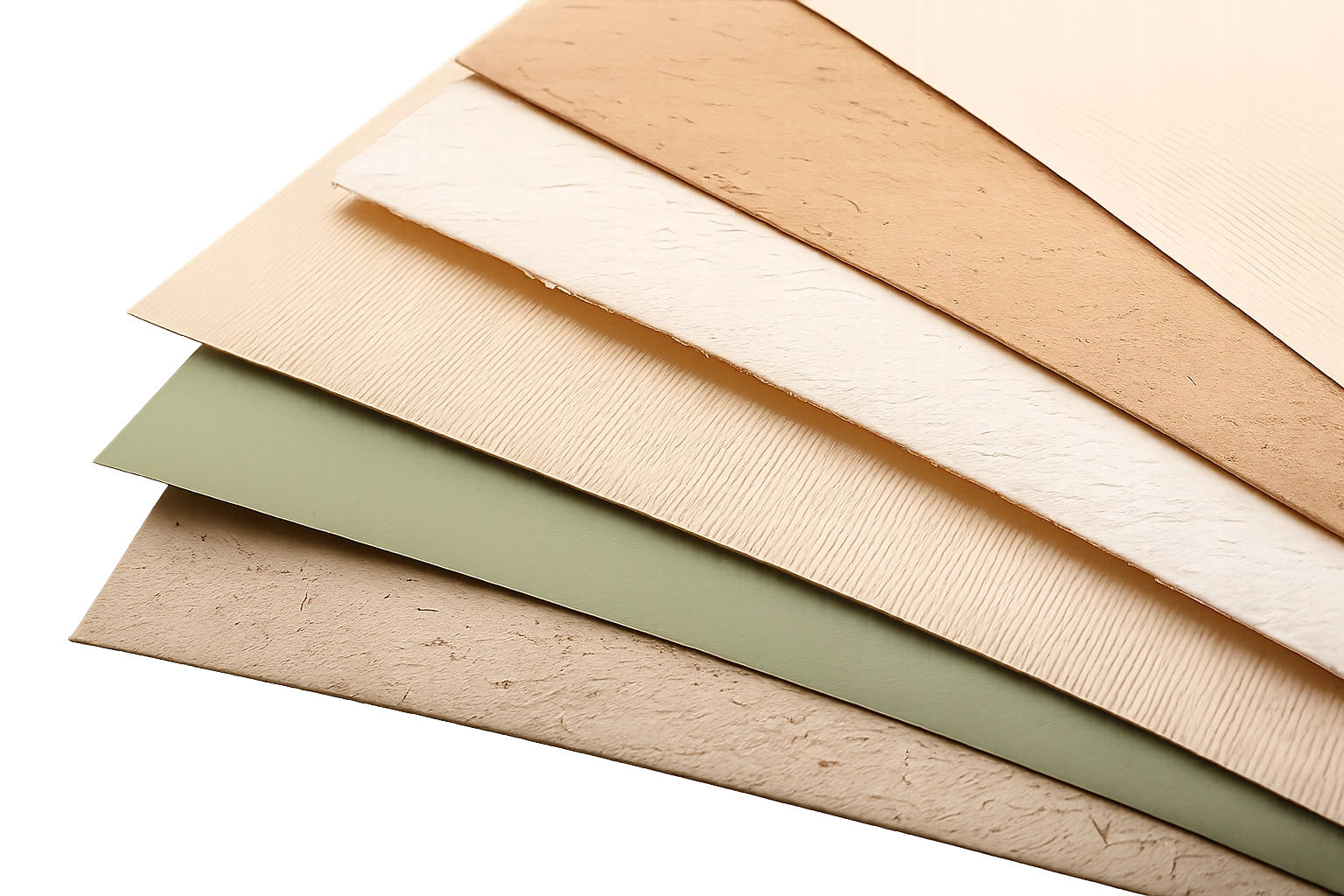
Kraft paper and recycled cardboard can form the starting point for a design led by its material. Simple printing on uncoated brown board can suit seed packets or paper-wrapped soaps. The board’s texture becomes part of the appearance.
Choose sustainable packaging materials based on verified specifications and what the display needs to do. Brown colour doesn’t prove recycled content or recyclability. Check attached components and coatings too, along with local collection arrangements.
Use environmental statements the supplier can back up, such as a documented recycled-content percentage. Leave out vague claims like “completely green.” Removable paperboard dividers can help people separate components. But disposal instructions need to match the finished display and the collection options in its intended market.
How to Choose the Best Display Box Design
Look at the products first, then where they’ll sit in the store. The design must fit that space and support the intended stock. Customers need room to take items out comfortably too.
Use these points to compare your options:
- Product dimensions and weight: Measure each finished pack and work out the weight of a fully stocked display.
Check compartment sizes and front-panel height, including how much space the products need above them. - Target audience: Match the visual style and message to the product and the information buyers need.
Playful stationery calls for a different approach from a restrained fragrance display. - Brand identity: Keep familiar colours and logos consistent, along with the typography.
Any new finish or shape should still connect with your existing retail packaging. - Retail space: Measure the available width and depth, then check the height.
Look at viewing angles and nearby products. Leave staff enough room to refill the display. - Material: Cardboard display boxes work for many arrangements of small products.
Corrugated cardboard may suit displays needing more support, but assess the board grade and construction too. - Printing options: Ask which printing processes work with the material you’ve chosen.
Check colours and foil on physical samples. Review coatings that way too, rather than relying on a screen. - Budget: Compare full quotes that include inserts and cutting tools, plus finishes and assembly.
Put features with a clear purpose first when deciding where to spend.
Ask for a prototype holding representative products before approving production. Take a few items out and refill the compartments. Look at it from different positions too. You’ll be able to spot problems with access or visibility, along with construction issues that flat artwork can’t reveal.
Make Your Products Stand Out with Custom Display Boxes
Good product display packaging gives each item a clear place and a message customers can read. Its appearance should reflect your brand. A fitted insert, distinctive header, or carefully chosen colour combination can help your products stand out on retail shelves.
Hot Custom Boxes offers custom display boxes tailored to your product dimensions, retail setting, and branding requirements. Choose custom printed boxes with suitable materials, finishes, and structural features. Before placing your order, review the design proof and confirm the dimensions, product fit, and finish to ensure the display meets your packaging needs.
Related Products
$0.50 Original price was: $0.50.$0.10Current price is: $0.10.
In Stock
$0.50 Original price was: $0.50.$0.10Current price is: $0.10.
In Stock
$0.50 Original price was: $0.50.$0.10Current price is: $0.10.
In Stock
$0.50 Original price was: $0.50.$0.10Current price is: $0.10.
In Stock